Prepare a complete, nutritious dinner with minimal effort using this slow cooker method. This recipe combines tender chicken and hearty vegetables in a rich garlic butter sauce.
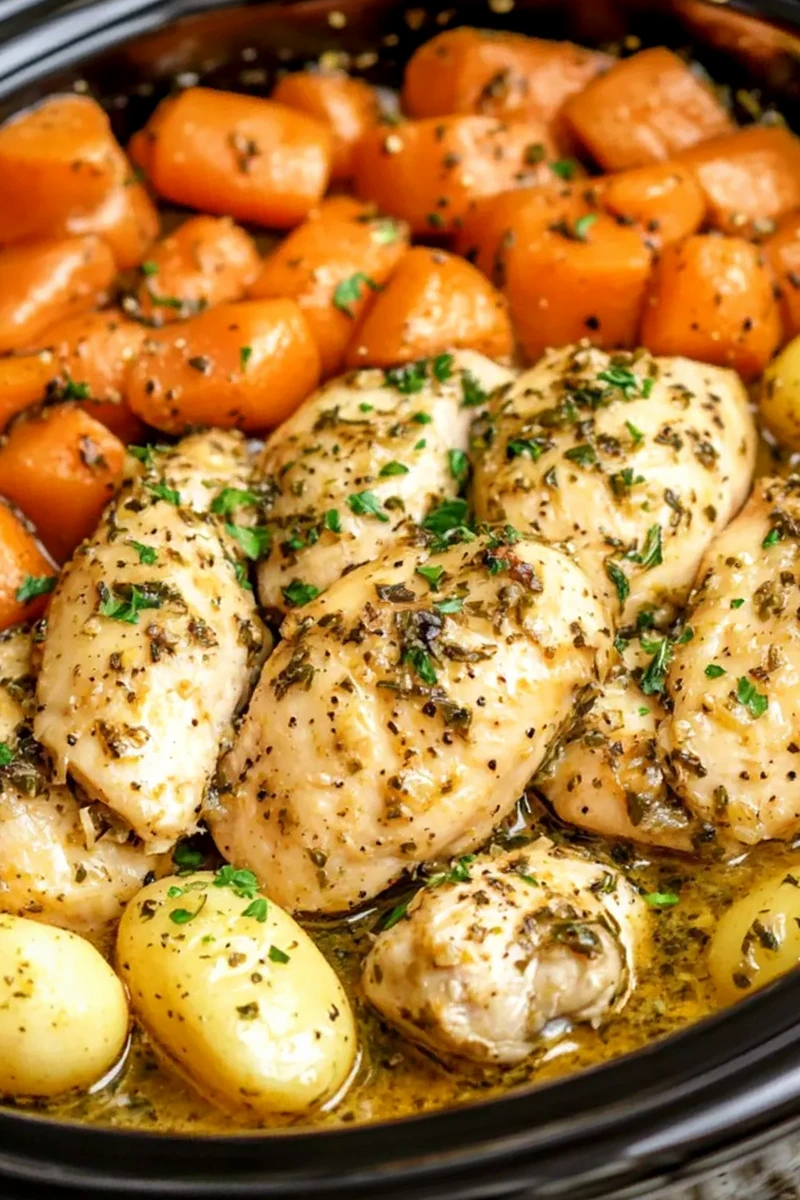
List of ingredients
- 2 lbs chicken breasts (boneless and skinless) – the primary protein source.
- 1 lb baby carrots (fresh) – adds natural sweetness and color.
- 1 lb Yukon Gold potatoes (cut into wedges) – provides a creamy texture.
- 1/2 cup butter (salted, melted) – creates a rich sauce and keeps meat moist.
- 3 tbsp garlic (minced) – provides a strong aromatic base.
- 1 tsp thyme (dried) – adds an earthy herbal note.
- 1 tsp parsley (dried) – contributes a light, fresh flavor.
- 1 tsp salt (kosher or table) – essential for seasoning the entire dish.
- 1/4 tsp black pepper (freshly ground) – adds a subtle warmth.
- 1/2 cup chicken broth (optional) – used for additional moisture and richness.
step-by-step instructions
- Layer the meat: Place the 2 lbs of boneless, skinless chicken breasts at the bottom of your crockpot.
- Add vegetables: Toss in 1 lb of fresh baby carrots and 1 lb of Yukon Gold potato wedges on top of the chicken.
- Prepare herb butter: In a bowl, combine 1/2 cup of melted salted butter, 3 tbsp of minced garlic, 1 tsp each of dried thyme and dried parsley, 1 tsp salt, and 1/4 tsp black pepper. Stir until it is a fragrant blend.
- Apply seasoning: Pour the garlic herb mixture evenly over the chicken and vegetables, ensuring all surfaces are covered.
- Add liquid: If desired, pour 1/2 cup of chicken broth around the edges of the crockpot.
- Slow cook: Secure the lid and cook on low for 6-8 hours or on high for 3-4 hours until the chicken is cooked through and vegetables are tender.
Pro Cooking Techniques for Better Results
Verify Internal Temperature for Safety
Always use a digital meat thermometer to check the thickest part of the chicken breast. Ensure it has reached an internal temperature of 165°F to guarantee it is safe for consumption. This prevents undercooking while ensuring the meat does not become overly dry.
Optimize Layering for Even Cooking
Placing the chicken at the bottom allows the meat to cook steadily while the vegetables on top steam in the aromatic butter. This prevents the potatoes from breaking down too much. The vegetables also act as a shield to keep the chicken from drying out during long cook times.
Using Fresh Herbs as a Substitute
If you prefer fresh herbs over dried, use a ratio of three to one. Replace one teaspoon of dried thyme or parsley with one tablespoon of fresh chopped herbs. Add fresh herbs toward the end of the cooking process to preserve their bright color and flavor.
Choosing the Correct Heat Setting
The low setting is generally preferred for chicken breasts to keep them succulent and tender over 6-8 hours. The high setting is useful for tighter schedules, but you must monitor the meat closely. High heat can sometimes cause the proteins to tighten and become tougher.
Selecting Complementary Side Dishes
Since this is a complete meal, pair it with a light, acidic side to balance the richness of the butter. A crisp green salad with a lemon vinaigrette or a side of steamed asparagus works well. Warm crusty bread is also an excellent choice for soaking up the garlic butter sauce.
Ingredient Substitutions and Customizations
Low-Carb Cauliflower Alternative
To reduce the carbohydrate content, replace the Yukon Gold potatoes with cauliflower florets. Cut the cauliflower into medium-sized pieces to ensure they do not disintegrate during the slow cooking process. Add them at the same time as the carrots for a consistent texture.
Plant-Based Protein Swaps
For a vegan version of this dish, use plant-based chicken alternatives. Replace the melted butter with an equal amount of extra-virgin olive oil or a vegan butter substitute. Use vegetable broth instead of chicken broth to keep the recipe entirely plant-based.
Experimenting with Different Herb Profiles
You can change the flavor profile by swapping thyme and parsley for rosemary and sage. Rosemary adds a piney depth that pairs exceptionally well with root vegetables. Sage provides a warm, autumnal flavor that complements the garlic and butter.
Introducing Spicy Elements
For those who prefer a zesty kick, add one teaspoon of red pepper flakes to the butter mixture. Alternatively, toss in some diced jalapeños or a pinch of cayenne pepper. These additions provide a heat that cuts through the richness of the butter.
Adding Seasonal Vegetables
You can increase the nutritional value by adding bell peppers, sliced zucchini, or green beans. Add these softer vegetables during the last two hours of cooking. This prevents them from becoming overcooked and mushy compared to the carrots and potatoes.
Alternative Broth Options
While chicken broth is standard, vegetable broth can be used for a cleaner taste. Mushroom broth is another excellent option that adds a deep, umami quality to the sauce. Ensure the broth is low-sodium if you are sensitive to salt, as the butter is already salted.
Storage and Preservation Guidelines
Managing Room Temperature Safety
Never leave the cooked chicken and vegetables at room temperature for more than two hours. Bacteria can grow rapidly in moist, protein-rich environments. Transfer leftovers to the refrigerator promptly after the meal is finished.
Optimal Refrigeration Methods
Store the leftovers in an airtight glass or plastic container to keep the flavors contained. The dish will typically stay fresh for up to three days in the refrigerator. Many users find the flavor improves on the second day as the herbs penetrate deeper into the vegetables.
Long-Term Freezing Instructions
Place the meal in a freezer-safe container or a heavy-duty freezer bag, removing as much air as possible. The dish can be frozen for up to three months without significant loss of quality. Thaw the container in the refrigerator overnight before reheating to maintain the texture of the chicken.
Best Practices for Reheating
To reheat, use a microwave on medium power or warm the food in a skillet over low heat. Add a tablespoon of water or broth to prevent the chicken from drying out. Heat until the internal temperature once again reaches 165°F.
Troubleshooting Common Issues
Preventing Mushy Root Vegetables
If your potatoes or carrots are too soft, ensure you are cutting the potatoes into larger wedges rather than small cubes. Avoid overcooking the dish beyond the recommended 8 hours on low. Using waxy potatoes like Yukon Gold helps them hold their shape better than starchy varieties.
Solving the Problem of Dry Chicken
Dry chicken usually results from cooking the meat for too long or using very lean breasts. Ensure you use the optional chicken broth to provide a moisture barrier. If you find the meat is dry, consider using chicken thighs for a more forgiving, juicy result.
Adjusting Bland Flavor Profiles
If the dish lacks depth, increase the amount of minced garlic or add a splash of lemon juice at the end. The acidity of the lemon brightens the fats in the butter and enhances the herbs. A final sprinkle of sea salt can also wake up the flavors.
Reducing Excess Liquid in the Pot
Slow cookers trap steam, which can sometimes lead to a thin sauce. To thicken the sauce, remove the chicken and vegetables and simmer the remaining liquid in a saucepan over medium-high heat. Reduce the liquid by half to create a concentrated glaze.
Frequently Asked Questions
Can I substitute other vegetables in this recipe?
Yes, you can substitute or add various vegetables. Cauliflower works well for low-carb needs, while bell peppers and zucchini add color; however, add softer vegetables in the last few hours of cooking.
How long does this dish last in the fridge?
When stored in an airtight container, the chicken and vegetables will remain fresh and safe to eat for up to three days.
Can I freeze the leftovers?
Yes, the dish freezes well for up to three months. Ensure you use a freezer-safe container and thaw it in the refrigerator before reheating.
How do I know when the chicken is fully cooked?
The most reliable method is using a meat thermometer to ensure the internal temperature has reached 165°F.
What are the best sides to serve with this?
This meal pairs perfectly with a light green salad, steamed green beans, or warm crusty bread to soak up the garlic butter sauce.
Print
Slow Cooker Garlic Herb Chicken and Root Vegetables
- Total Time: 8 hours 15 minutes
- Yield: 4 servings 1x
- Diet: General
Description
A delicious and effortless dinner option featuring Easy Crockpot Garlic Herb Chicken & Veggies (A Complete Dinner!).
Ingredients
- 2 lbs chicken breasts (boneless and skinless)
- 1 lb baby carrots (fresh)
- 1 lb Yukon Gold potatoes (cut into wedges)
- 1/2 cup butter (salted, melted)
- 3 tbsp garlic (minced)
- 1 tsp thyme (dried)
- 1 tsp parsley (dried)
- 1 tsp salt (kosher or table)
- 1/4 tsp black pepper (freshly ground)
- 1/2 cup chicken broth (optional)
Instructions
- Step: Place the 2 lbs of boneless, skinless chicken breasts at the bottom of your crockpot.
- Step: Toss in 1 lb of fresh baby carrots and 1 lb of Yukon Gold potato wedges on top of the chicken.
- Step: In a bowl, combine ½ cup of melted salted butter, 3 tbsp of minced garlic, 1 tsp each of dried thyme, dried parsley, 1 tsp salt, and ¼ tsp black pepper. Stir until it’s a fragrant blend.
- Step: Pour the garlic herb mixture evenly over the chicken and veggies.
- Step: If you like, pour ½ cup of chicken broth around the edges of the crockpot.
- Step: Secure the lid on your crockpot and cook on low for 6-8 hours or on high for 3-4 hours.
Notes
For even more flavor, try adding a pinch of rosemary or oregano to the butter mixture.
- Prep Time: 15 minutes
- Cook Time: 8 hours
- Category: Dinner
- Method: Slow Cooking
- Cuisine: American
Nutrition
- Serving Size: 1 serving
- Calories: 450 kcal
- Sugar: 5 g
- Sodium: 700 mg
- Fat: 25 g
- Saturated Fat: 10 g
- Unsaturated Fat: 12 g
- Trans Fat: 0 g
- Carbohydrates: 40 g
- Fiber: 5 g
- Protein: 35 g
- Cholesterol: 100 mg