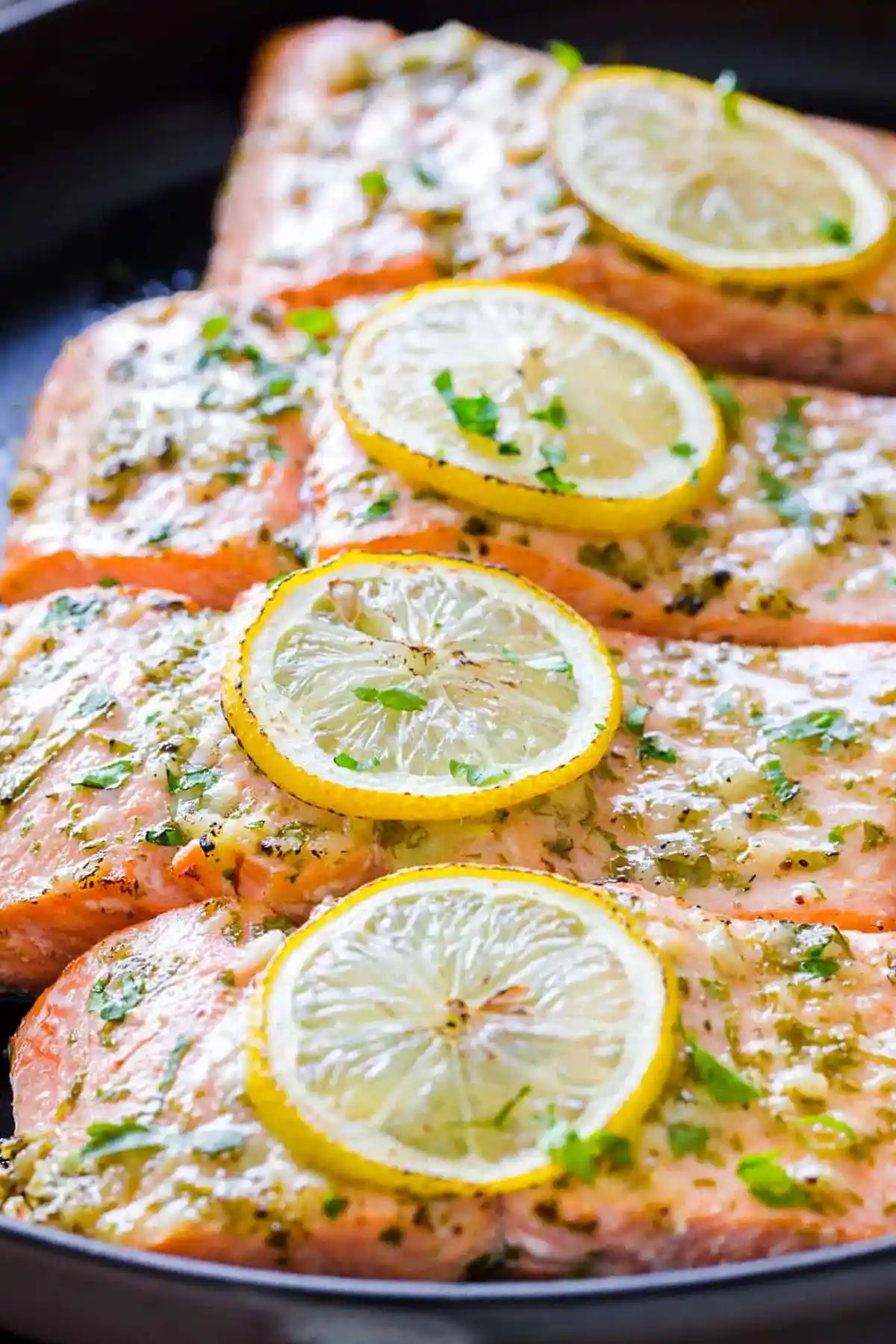
This easy oven-baked salmon features a zesty garlic and Dijon mustard marinade for a flavorful, flaky result. It is a quick 20-minute meal that delivers perfectly cooked fish every time.
List of ingredients
- 1 1/2 lb salmon fillet, cut into 4 filets – ensures even cooking across portions.
- 2 Tbsp fresh parsley, finely chopped – adds a fresh, herbal note.
- 2 Tbsp extra light olive oil or vegetable oil – provides moisture and prevents sticking.
- 2 Tbsp fresh lemon juice – brings a bright, acidic balance to the fish.
- 3 garlic cloves, minced, pressed, or grated – adds pungent, aromatic depth.
- 1/2 Tbsp Dijon mustard – provides a tangy, creamy base for the glaze.
- 1/2 tsp fine sea salt – enhances all the natural flavors.
- 1/8 tsp black pepper, freshly cracked – adds a subtle spicy heat.
- 1/2 lemon, sliced into 4 rings – used for garnish and extra citrus flavor.
step-by-step instructions
- Prepare the Oven and Pan: Preheat your oven to 450°F. Line a rimmed baking sheet with parchment paper, aluminum foil, or a silicone liner to prevent sticking and make cleanup easier. Arrange the salmon fillets skin-side-down on the pan.
- Mix the Marinade: In a small mixing bowl, combine the chopped parsley, minced garlic, olive oil, lemon juice, Dijon mustard, salt, and pepper. Stir the ingredients until they are well combined and smooth.
- Apply the Glaze: Generously spread the marinade over the top and sides of each salmon fillet using a brush or spoon. Place one lemon slice on top of each piece of fish for presentation and flavor.
- Bake the Fish: Bake uncovered at 450°F for 12-15 minutes. The salmon is done when it flakes easily with a fork and reaches an internal temperature of 145°F at the thickest part. Avoid overcooking to maintain juiciness.
Expert Salmon Selection and Preparation
Choosing the Best Salmon Cut
Opt for a center-cut fillet for the most consistent thickness across all portions. This ensures that every piece cooks at the same rate, preventing some fillets from drying out while others remain raw. Look for vibrant color and a firm texture that springs back when touched.
How to Identify and Remove Pin Bones
Run your fingertips firmly across the surface of the fillet to feel for small, needle-like pin bones. Because these bones are often translucent, feeling for them is more effective than looking. Use clean kitchen tweezers to grasp the bone and pull it out in the direction it is lying.
Proper Thawing Methods for Frozen Fillets
The safest way to thaw salmon is in the refrigerator overnight, which preserves the cellular structure of the fish. If you are short on time, place the vacuum-sealed salmon in a bowl of cold water, changing the water every 30 minutes. Never thaw salmon at room temperature or in warm water to avoid bacterial growth.
Managing Salmon Skin During Cooking
Keeping the skin on during the baking process acts as a protective barrier, preventing the flesh from overcooking. It also helps the fillet maintain its shape while in the oven. After cooking, the skin can be easily removed with a spatula or left on for added nutrients.
Advanced Cooking Techniques for Perfect Results
The Logic of High-Temperature Roasting
Baking salmon at 450°F quickly sears the exterior, which helps lock in the natural juices. This method prevents the fish from steaming in its own liquids, which can happen at lower temperatures. The result is a firmer exterior and a moist, flaky interior.
Using an Instant-Read Thermometer
An instant-read thermometer is the only way to guarantee the salmon is cooked to the exact temperature. Insert the probe into the thickest part of the fillet without touching the baking sheet. Remove the fish from the oven when it hits 145°F as per USDA safety guidelines.
Recognizing Visual Cues of Doneness
Aside from temperature, look for the salmon to change from a translucent raw look to an opaque pink. The fish should flake easily when pressed with a fork. If the flesh resists flaking, it needs another minute or two in the oven.
Avoiding Common Overcooking Mistakes
Overcooked salmon becomes dry, chalky, and develops a white albumin protein on the surface. To prevent this, start checking the temperature a few minutes before the minimum recommended time. Remember that carryover cooking will continue to raise the internal temperature slightly after the fish is removed from the heat.
Timing the Glaze Application
Apply the marinade immediately before placing the salmon in the oven. The citric acid in the lemon juice can begin to break down the proteins in the fish if left to sit, effectively ‘cooking’ the salmon. Baking immediately ensures the texture remains tender and succulent.
Flavor Customizations and Substitutions
Using Whole Grain Mustard for Texture
If you prefer a more rustic texture and a milder tang, replace the Dijon mustard with whole grain mustard. This substitution adds small mustard seeds to the glaze, providing a slight pop of flavor and a visual contrast. The ratios remain the same as the original recipe.
Adding Honey for a Balanced Sweetness
For those who enjoy a sweet and savory profile, stir one tablespoon of honey or maple syrup into the marinade. The sugar in the honey will caramelize under the high oven heat, creating a beautiful golden-brown crust. This pairs exceptionally well with the acidity of the lemon.
Substituting Parsley with Fresh Dill
Fresh dill is a classic pairing for seafood and can be used as a 1:1 replacement for parsley. Dill provides a more distinct, anise-like flavor that complements the richness of the salmon. Chop the dill finely to ensure it adheres well to the glaze.
Incorporating Smoked Paprika for Depth
Add a half-teaspoon of smoked paprika to the marinade to introduce a woody, smoky undertone. This mimics the flavor of grilled salmon while still utilizing the convenience of the oven. It also adds a deep reddish-orange hue to the finished dish.
Exploring Alternative Citrus Options
While lemon is standard, lime juice can be used for a more tropical, sharp citrus flavor. Orange juice can also be substituted for a sweeter, milder acidity that works well if you are adding honey to the recipe. Adjust the quantity slightly as different citrus juices vary in acidity.
Complementary Side Dish Pairings
Hearty Starch Options
Pair baked salmon with fluffy quinoa or wild rice to absorb the extra marinade from the pan. Creamy mashed potatoes or roasted fingerling potatoes provide a comforting contrast to the light fish. For a lower-carb option, cauliflower mash is an excellent substitute.
Nutritious Green Vegetables
Roasted asparagus or sautéed green beans almondine provide a crisp texture that cuts through the richness of the salmon. Steamed broccoli with a squeeze of lemon also mirrors the flavors in the marinade. These vegetables can often be roasted on the same pan if space permits.
Fresh and Light Salad Pairings
A classic Caesar salad with crisp romaine and parmesan cheese offers a salty contrast to the zesty fish. A cucumber and red onion salad with a vinegar dressing provides a cooling element. A simple arugula salad with olive oil and lemon juice keeps the meal light and healthy.
Storage and Long-Term Preservation
Refrigerating Cooked Salmon
Allow the salmon to cool to room temperature before transferring it to an airtight container. Store it in the coldest part of the refrigerator for up to 3 to 4 days. Ensure the container is tightly sealed to prevent the fish from absorbing other odors in the fridge.
Guidelines for Freezing Salmon
Wrap individual cooled portions tightly in plastic wrap to prevent freezer burn. Place the wrapped fillets into a heavy-duty freezer bag, removing as much air as possible. Properly frozen baked salmon can be stored for up to 3 months without significant loss of quality.
Safe Thawing Procedures for Cooked Fish
Always thaw frozen cooked salmon in the refrigerator overnight. Avoid thawing at room temperature to prevent the growth of bacteria. Once thawed, the fish is ready to be reheated using a gentle heat source.
Effective Reheating Strategies
Low and Slow Oven Reheating
Preheat the oven to 275°F and place the salmon on a baking sheet. Add a teaspoon of water or a small pat of butter on top to add moisture. Heat for 10-15 minutes until warmed through, avoiding high heat that would dry out the fish.
Utilizing an Air Fryer for Reheating
Set the air fryer to 300°F and place the fillet inside for 3-5 minutes. This method is faster than the oven and can help restore some of the exterior texture. Monitor closely to ensure the salmon does not overcook.
Stovetop Reheating Method
Place the salmon in a non-stick skillet over low heat with a tablespoon of water or olive oil. Cover the pan with a lid to create a steam chamber, which keeps the fish moist. Warm gently for a few minutes until the center is heated.
Why the Microwave is Not Recommended
Microwaving salmon often leads to uneven heating, resulting in rubbery edges and a cold center. The high-frequency waves can break down the delicate fats in the fish, altering the texture. If you must use a microwave, use the lowest power setting and heat in 30-second intervals.
Creative Leftover Transformations
Preparing Salmon Cakes
Flake the leftover cooked salmon into a bowl and mix with a beaten egg, breadcrumbs, and diced green onions. Form the mixture into small patties and sear them in a pan with olive oil. Serve with a dollop of tartar sauce or Greek yogurt.
Cold Salmon Cobb Salad
Cut the chilled salmon into bite-sized cubes and place them atop a bed of mixed greens. Add hard-boiled eggs, avocado, cherry tomatoes, and blue cheese. Drizzle with a lemon-vinaigrette to complement the original marinade flavors.
Salmon and Pasta Toss
Flake the salmon and toss it into cooked linguine or penne pasta. Add a splash of cream, lemon zest, and fresh parsley to create a simple sauce. The residual flavors from the Dijon marinade integrate well with a creamy pasta base.
Frequently Asked Questions
Can I bake salmon in foil packets?
Yes, you can wrap the salmon and marinade in foil to create a steam pocket. This method keeps the fish extremely moist and makes cleanup even easier, though you will lose the slight roast on the exterior.
How do I prevent the salmon from sticking to the pan?
Always line your baking sheet with parchment paper, aluminum foil, or a silicone mat. Additionally, ensuring the fillets are lightly coated in olive oil from the marinade helps create a barrier between the fish and the surface.
What is the best oil for roasting fish?
Extra light olive oil or vegetable oil are best because they have high smoke points and neutral flavors. This allows the taste of the garlic, lemon, and Dijon mustard to remain the primary focus of the dish.
Does the skin need to be removed before eating?
The skin is edible and contains high concentrations of omega-3 fatty acids. Whether you keep it or remove it is a matter of personal preference; many find the roasted skin provides a pleasant textural contrast.
Can I use frozen salmon fillets directly from the freezer?
It is not recommended to bake salmon straight from frozen as the outside will overcook before the center reaches a safe temperature. Always thaw the fillets completely in the refrigerator first for the best results.
How can I tell if my salmon is fresh?
Fresh salmon should have a mild, briny scent and no strong ‘fishy’ odor. The flesh should be firm and translucent, not dull or mushy, and there should be no slime on the surface of the fillet.
Print
Garlic and Dijon Baked Salmon
- Total Time: 20 minutes
- Yield: 4 servings 1x
- Diet: General
Description
This juicy, flaky, Baked Salmon recipe is full of flavor with a zesty citrus and tangy dijon mustard marinade. An easy, 20-minute meal for perfectly cooked salmon every time!
Ingredients
- 1 1/2 lb salmon fillet (cut into 4 filets)
- 2 Tbsp fresh parsley (finely chopped)
- 2 Tbsp extra light olive oil (or vegetable oil)
- 2 Tbsp fresh lemon juice
- 3 garlic cloves (minced, pressed, or grated)
- 1/2 Tbsp Dijon mustard
- 1/2 tsp fine sea salt
- 1/8 tsp black pepper (freshly cracked)
- 1/2 lemon (sliced into 4 rings for garnish)
Instructions
- Prepare: Preheat oven to 450°F and line a rimmed baking sheet with a silicone liner, parchment, or foil. Arrange salmon fillets on the prepared baking sheet, skin-side-down.
- Make Marinade: In a small bowl, add the marinade ingredients: parsley, garlic, oil, lemon juice, Dijon mustard, salt and pepper. Stir to combine.
- Baste: Generously spread the marinade, brushing over the top and sides of the salmon then top each piece with a slice of lemon.
- Bake: Bake uncovered at 450°F for 12-15 min or until just cooked through, flaky, and the salmon reaches an internal temperature of 145˚F at the thickest portion on an instant-read thermometer. Do not over-cook.
Notes
Once the glaze is applied, bake right away or the lemon juice will start to ‘cook’ the salmon, making it tough. There is no need for lengthy marinating in this recipe, just brush on the glaze and bake.
- Prep Time: 5 minutes
- Cook Time: 15 minutes
- Category: Main Course
- Method: Baking
- Cuisine: American
Nutrition
- Serving Size: 1 fillet
- Calories: 314 kcal
- Sugar: 1 g
- Sodium: 388 mg
- Fat: 18 g
- Saturated Fat: 3 g
- Unsaturated Fat: 15 g
- Trans Fat: 0 g
- Carbohydrates: 3 g
- Fiber: 1 g
- Protein: 34 g
- Cholesterol: 94 mg