This dish combines pan-seared salmon fillets with a bright, tropical fruit topping for a balanced meal. It is a fast-cooking recipe that delivers a professional result with minimal kitchen effort. Perfect for weeknight dinners, it pairs sweet honey glazes with zesty lime and fresh mango.
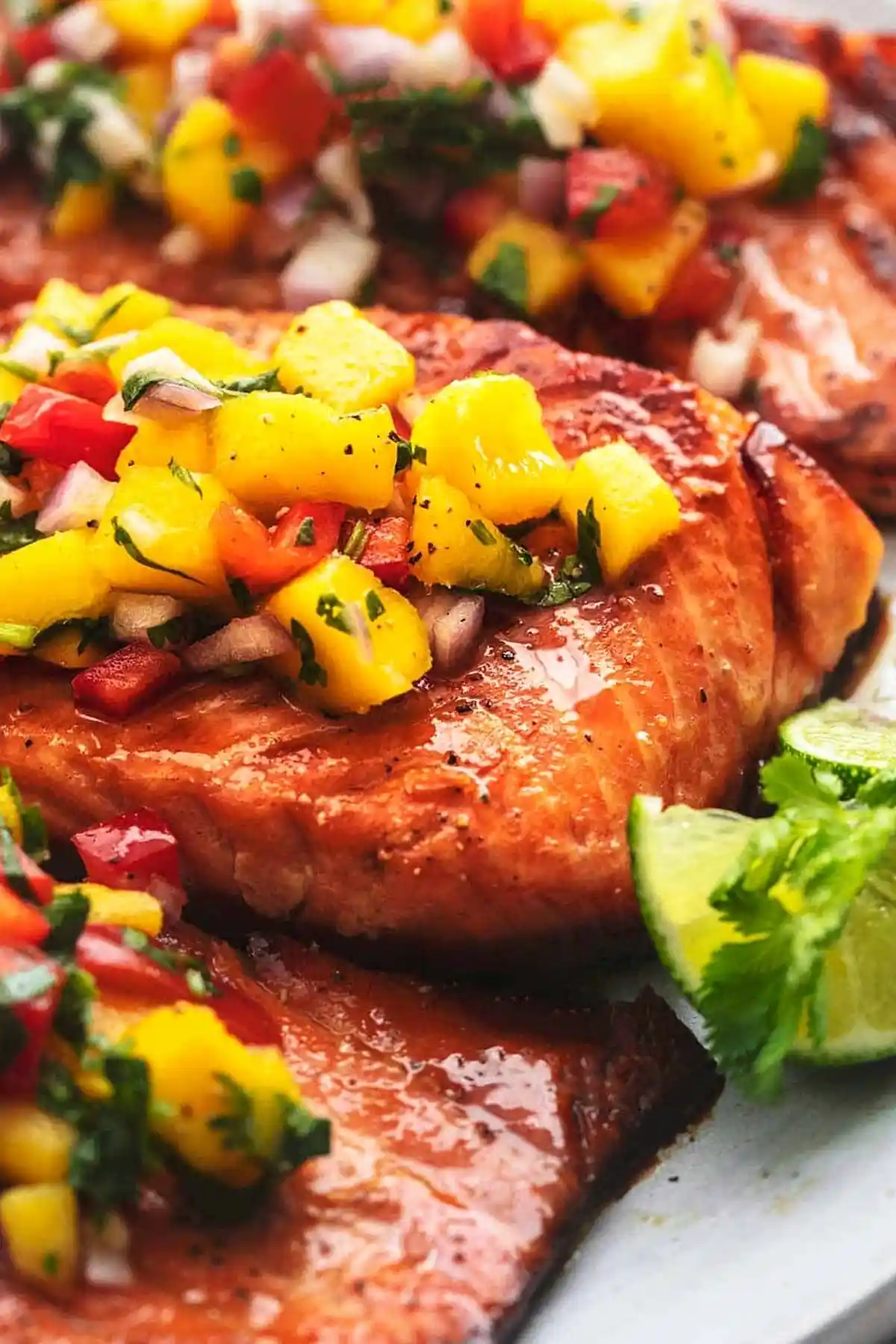
List of ingredients
- 4 6-ounce salmon fillets – use skin-on for better structure during cooking.
- 2 teaspoons olive oil – used for coating the fish to prevent sticking.
- Salt and pepper – used for basic seasoning on both sides.
- 2 tablespoons butter – provides a rich base for the glaze.
- 2 tablespoons honey – creates the sweet caramelization on the fish.
- 2 large mangoes, diced – the primary base for the fresh salsa.
- 1 red bell pepper, diced – adds a crunch and mild sweetness to the topping.
- ½ red onion, diced – provides a sharp contrast to the sweet fruit.
- Handful of cilantro, finely chopped – adds a fresh, herbal note.
- Juice of 1 lime – cuts through the richness of the salmon and honey.
- ¼ teaspoon salt – used to season the salsa to taste.
step-by-step instructions
- Mix the salsa base: Combine the diced mangoes, diced red bell pepper, diced red onion, and chopped cilantro in a medium mixing bowl.
- Season the salsa: Pour in the fresh lime juice and add the salt, stirring thoroughly to combine all ingredients.
- Rest the salsa: Taste the mixture and adjust the salt if needed, then set the bowl aside to let flavors meld.
- Prepare the fish: Rub each salmon fillet evenly with olive oil to ensure the seasonings adhere and the fish doesn’t stick.
- Season the fillets: Sprinkle salt and pepper generously on both the top and bottom of every fillet.
- Heat the pan: Melt the butter in a large skillet over medium-high heat until it begins to bubble.
- Create the honey glaze: Stir the honey directly into the melted butter until the two are fully integrated.
- Sear the salmon: Place the fillets in the skillet in a single layer, ensuring they do not touch each other to allow for proper browning.
- First side cook: Cook the salmon for 4 to 5 minutes without moving them to develop a caramelized crust.
- Flip and finish: Carefully flip the fillets and cook for another 5 to 8 minutes until the fish is opaque throughout.
- Plate and serve: Transfer the salmon to plates and spoon a generous amount of mango salsa over each fillet.
Alternative Sweetener Options
Substituting Honey with Maple Syrup
Maple syrup is an excellent alternative that provides a slightly more earthy and robust sweetness. Use it in a one-to-one ratio with honey to maintain the same glaze consistency. This version works particularly well if you prefer a less floral taste than honey.
Using Agave Nectar for a Neutral Flavor
Agave nectar has a thinner consistency and a more neutral sweetness compared to honey. It dissolves quickly into the butter, making it easy to distribute across the fillets. Ensure you do not overcook the glaze, as agave can brown slightly faster than honey.
Brown Sugar for a Richer Glaze
Brown sugar adds a hint of molasses, which creates a deeper color and a more complex sweetness. Melt the sugar into the butter slowly to avoid clumps before adding the salmon. This substitution results in a thicker, stickier coating on the fish.
Optimal Cooking Methods
Baking Salmon in the Oven
Preheat your oven to 425°F and place the seasoned fillets on a rimmed baking sheet. Roast for 4 to 6 minutes per half-inch of thickness, which usually totals 8 to 12 minutes for standard fillets. This method is ideal for cooking larger batches at once without needing to flip the fish.
Grilling the Fillets for Smoky Flavor
Preheat a grill to medium-high heat and lightly oil the grates to prevent sticking. Grill the salmon for about 5 minutes per side, brushing the honey butter mixture on during the last two minutes of cooking. This adds a charred, smoky dimension that complements the sweet mango salsa.
Air Frying for Quick Results
Place the seasoned fillets in an air fryer basket at 400°F for 7 to 10 minutes. Brush the honey butter on the fillets halfway through the cooking process to avoid burning the sugars. The circulating air creates a consistent crust on all sides of the fish.
Professional Searing Tips
Ensuring a Proper Sear with Pat-Dried Fish
Use a paper towel to pat the salmon fillets completely dry before applying olive oil and seasonings. Excess moisture on the surface of the fish creates steam, which prevents the honey and butter from caramelizing. Dry fish results in a crispier, golden-brown exterior.
The Importance of a Fish Spatula
A wide, thin fish spatula allows you to slide under the delicate fillets without breaking the meat. Tongs or forks often pierce the flesh, causing the fillets to flake apart prematurely during the flip. A proper spatula ensures the structural integrity of the salmon is maintained.
Monitoring Internal Temperature for Doneness
Insert a meat thermometer into the thickest part of the fillet to ensure it reaches an internal temperature of 145°F. Overcooking salmon leads to a dry, chalky texture, while undercooking may leave the center too raw for some preferences. Remove the fish from heat slightly before 145°F as carry-over cooking will finish the process.
Cooking Skin-Side Down for Protection
Always start the searing process with the skin-side down in the hot pan. The skin acts as a heat shield, protecting the delicate flesh from direct contact with the skillet. This method also makes it much easier to remove the skin after cooking if you prefer not to eat it.
Balanced Side Dish Pairings
Serving with Basmati or Jasmine Rice
Fragrant white rice is a neutral base that absorbs the excess honey butter glaze from the pan. Steam the rice until fluffy and serve the salmon directly on top. This pairing balances the acidity of the lime and the sweetness of the mango.
Pairing with Nutritious Quinoa
Quinoa offers a nutty flavor and higher protein content compared to white rice. Cook it in vegetable broth instead of water to add extra depth to the meal. The grainy texture of quinoa provides a nice contrast to the buttery softness of the salmon.
Adding Fresh Steamed Greens
Steamed asparagus, sautéed spinach, or roasted broccoli add a necessary bitterness and freshness to the plate. These vegetables cut through the richness of the butter and honey. Lightly season the greens with lemon juice and salt to mirror the flavors in the salsa.
Low-Carb Cauliflower Rice
For a lighter meal, sauté riced cauliflower with a small amount of olive oil and garlic. This provides the visual appeal of rice without the added carbohydrates. It works well as a bed for the salmon and allows the mango salsa to be the star of the dish.
Mango Salsa Variations
Swapping Mangoes for Fresh Pineapple
Pineapple provides a more tart and acidic profile than mango, which can make the dish feel even more refreshing. Ensure the pineapple is diced into small, uniform cubes to match the texture of the other vegetables. This variation is particularly effective when pairing the dish with grilled salmon.
Increasing Heat with Diced Jalapeños
Add one or two finely diced jalapeños to the salsa mixture for a spicy kick. Remove the seeds and white membranes to control the heat level. The spice of the pepper creates a dynamic contrast with the sweet honey glaze on the fish.
Using Papaya for a Milder Taste
Ripe papaya is a softer, milder alternative to mango and pairs well with the lime juice. It has a buttery texture that complements the richness of the salmon. Use a firm-ripe papaya to ensure the cubes hold their shape when stirred.
Storage and Preservation
Airtight Storage for Leftover Salmon
Place cooked salmon in an airtight glass container and refrigerate immediately after it has cooled to room temperature. It will remain safe to eat for 3 to 4 days. Keep the salmon separate from the salsa to prevent the fish from becoming soggy.
Preserving the Freshness of Mango Salsa
Store the mango salsa in a sealed jar or container for up to 3 days in the refrigerator. Note that the lime juice will continue to break down the fruit, making the salsa more liquid over time. Stir the salsa well before serving to redistribute the juices.
Reheating Salmon Without Drying It Out
Avoid using a high-power microwave, as this often makes salmon rubbery. Instead, place the fillet in a foil packet with a teaspoon of water or butter and heat in a 275°F oven for 10 to 15 minutes. This gentle heat restores the moisture and prevents the fish from overcooking.
Troubleshooting Common Issues
Preventing the Salmon from Sticking to the Pan
Ensure the skillet is fully heated before adding the butter and honey. If the pan is too cold, the fish will bond to the surface rather than searing. Allow the salmon to form a crust naturally before attempting to flip it; it will release from the pan on its own once caramelized.
Controlling Heat to Stop Honey from Burning
Honey contains natural sugars that burn quickly if the heat is too high. Keep the stove at a medium-high setting rather than high. If the butter starts to smoke or the honey turns dark brown too quickly, reduce the heat immediately to avoid a bitter taste.
Identifying and Correcting Overcooked Salmon
Overcooked salmon is identified by a white substance called albumin pushing out of the sides and a dry, flaky texture. If you notice this happening, remove the fish from the pan immediately. To salvage overcooked fish, serve it with extra mango salsa or a squeeze of fresh lime to add moisture back into the bite.
Frequently Asked Questions
Can I use frozen salmon for this recipe?
Yes, but you must thaw the salmon completely in the refrigerator overnight before cooking. Cooking frozen fillets directly in the pan leads to uneven cooking and prevents the exterior from searing properly. Pat them very dry after thawing.
Is salmon skin edible?
The skin is completely edible and contains healthy fats. When seared correctly, it becomes crispy and flavorful. If you prefer not to eat it, you can easily peel it off after the fish has finished cooking.
How often should I eat salmon?
Health organizations generally recommend eating fatty fish like salmon twice a week. This frequency provides a sufficient amount of Omega-3 fatty acids without overconsuming certain minerals. Balance it with other protein sources for a varied diet.
Can I make the salsa in advance?
The salsa can be made several hours ahead of time to allow the flavors to develop. However, adding the salt too early can draw excess water out of the mangoes. Add the salt just before serving for the best texture.
What if I don’t have a skillet?
You can use a non-stick frying pan or a cast-iron skillet. Cast iron is preferred for the best sear and heat retention, while non-stick is the safest option for preventing the honey glaze from sticking.
Print
Honey Lime Salmon with Mango Salsa
- Total Time: 30 minutes
- Yield: 4 servings 1x
- Diet: Gluten-free
Description
Sweet, buttery honey lime salmon fillets cooked perfectly flaky and tender and topped with sweet and tangy mango salsa with red peppers, onions, and cilantro.
Ingredients
- 4 6-ounce salmon fillets
- 2 teaspoons olive oil
- salt and pepper
- 2 tablespoons butter
- 2 tablespoons honey
- 2 large mangoes, diced
- 1 red bell pepper, diced
- ½ red onion, diced
- handful of cilantro, finely chopped
- juice of 1 lime
- ¼ teaspoon salt
Instructions
- Prepare the salsa: Combine mangoes, bell peppers, onions, and cilantro. Add lime juice and salt and give it a good stir. Taste, add salt to taste. Set aside.
- Prepare the salmon: Rub salmon all over with olive oil. Season generously with salt and pepper.
- Cook: Melt butter in a large skillet over medium heat. Once butter is just melted, stir in honey.
- Sear: Arrange salmon fillets in the pan in a single layer and not touching if you can help it. Cook for 4-5 minutes.
- Finish: Carefully flip salmon over and cook another 5-8 minutes until opaque throughout and salmon is caramelized on the outside.
- Serve: Top salmon with mango salsa and serve.
Notes
Spice it up: add 1-2 diced jalapenos (stems and seeds removed) to the salsa for an added kick!
- Prep Time: 15 minutes
- Cook Time: 15 minutes
- Category: Main Course
- Method: Pan-searing
- Cuisine: American
Nutrition
- Serving Size: 1 fillet with salsa
- Calories: 560 kcal
- Sugar: 33 g
- Sodium: 450 mg
- Fat: 31 g
- Saturated Fat: 9 g
- Unsaturated Fat: 22 g
- Trans Fat: 0 g
- Carbohydrates: 33 g
- Fiber: 3 g
- Protein: 36 g
- Cholesterol: 110 mg