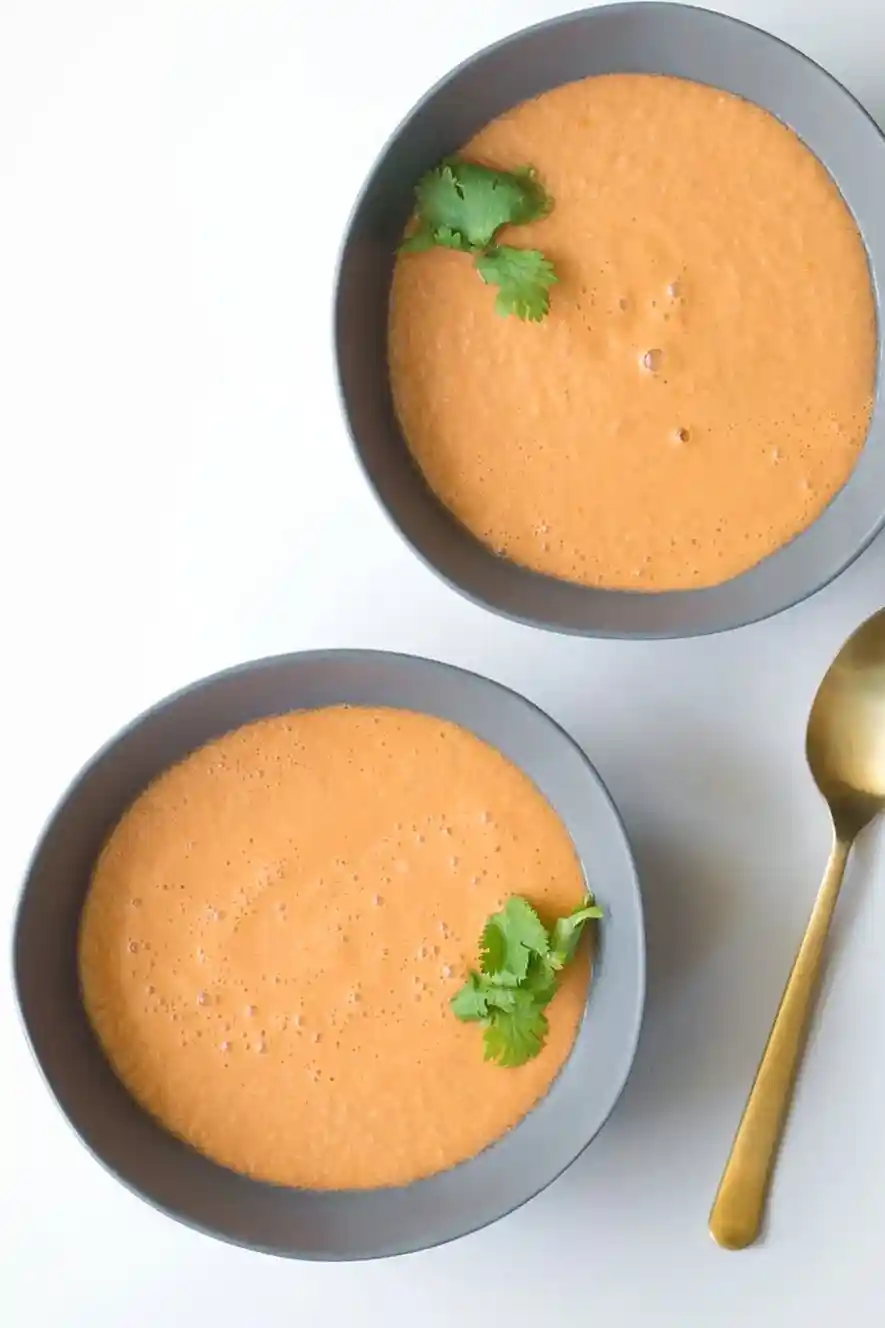
This refreshing cold soup is a classic summer dish made from a blend of fresh garden vegetables. It requires no cooking and relies on a high-powered blender to create a smooth, creamy texture. This meal is ideal for hot weather when a light yet nourishing option is needed.
List of ingredients
- 2 lbs vine ripe tomatoes – ensure they are deep red and soft for maximum flavor.
- 2 cloves of garlic – minced finely to distribute heat evenly.
- 6 inch cucumber – peeled and chopped into small pieces.
- 1 green bell pepper – chopped to provide a crisp, vegetal note.
- 1/2 cup white onion – chopped finely.
- 1/4 cup red wine vinegar – adds a necessary tangy acidity.
- 3/4 cup olive oil – provides richness and helps with emulsification.
- 1/2 tsp sea salt – plus additional amounts to adjust the seasoning.
- 1/2 tsp cumin – adds a subtle earthy depth.
- 1/2 tsp cayenne pepper – optional, used to add a mild heat.
- 3-4 inches French bread – cut into small pieces to thicken the soup.
step-by-step instructions
- Prep Vegetables: Chop all vegetables into small pieces and mince the garlic cloves to ensure they blend smoothly.
- Initial Blend: Place the chopped vegetables and bread pieces into the blender canister.
- Emulsify: Begin pulsing the blender. While the motor is running, slowly stream in the olive oil and red wine vinegar to create a stable emulsion.
- Season: Incorporate the cumin, sea salt, and optional cayenne pepper into the mixture.
- Final Smooth: Continue blending on high speed until the soup is completely smooth and no chunks of vegetable or bread remain.
- Chill: Transfer the mixture into a large bowl or airtight container. Refrigerate for a minimum of 1 hour, though 24 hours is recommended for the best flavor development.
Vegetable Selection and Preparation
Choosing the Ripest Tomatoes
Select tomatoes that are deep red and feel heavy for their size. Vine-ripened varieties provide the natural sweetness and water content required for the base. Avoid pale or mealy tomatoes as they lack the vibrant acidity needed for a balanced taste.
Preparing the Cucumber for Texture
Peeling the cucumber is essential to avoid a bitter taste and a grainy texture. Removing the skin ensures the soup blends into a consistent, creamy liquid. Chopping the cucumber into small cubes helps the blender process the vegetable more efficiently.
Handling Raw Garlic for Balance
Mince the garlic cloves finely before adding them to the blender. Raw garlic can be overpowering if left in large pieces, creating sharp bursts of flavor. Blending it thoroughly distributes the pungency evenly throughout the cold soup.
Selecting the Right Bell Pepper
Use a firm green bell pepper to provide a slightly bitter contrast to the sweet tomatoes. Ensure all seeds and white membranes are removed before chopping. This prevents the soup from having an unwanted bitter aftertaste.
Texture and Consistency Adjustments
Using Bread for Traditional Creaminess
The piece of French bread acts as a natural thickening agent and stabilizer. It helps the olive oil and vegetable juices bind together during the blending process. This results in the signature creamy mouthfeel characteristic of authentic Spanish gazpacho.
Modifying the Recipe for Gluten-Free Diets
If you need a gluten-free or Paleo version, simply omit the bread entirely. The soup will remain flavorful and fresh but will have a thinner, more liquid consistency. You can add a small amount of avocado if you want to regain some of that thickness.
Managing Soup Thickness with Water
If the soup appears too thick after blending, add a tablespoon of chilled water at a time. Blend briefly after each addition until the desired consistency is reached. Be careful not to over-dilute, as this can mute the intensity of the vegetables.
Achieving a Velvety Finish via Straining
For an ultra-smooth restaurant-style texture, pass the finished soup through a fine-mesh sieve. Use a spatula to push the liquid through, discarding any remaining seeds or skin fragments. This step is optional but recommended for those who prefer a completely uniform texture.
Flavor Enhancement and Customization
Balancing Acidity with Vinegar
Red wine vinegar is the traditional choice for a sharp, clean tang. If the soup tastes too flat, add an extra teaspoon of vinegar to brighten the flavors. Conversely, if it is too acidic, a pinch more salt or a small amount of extra olive oil can mellow the taste.
Adding Heat with Cayenne or Peppers
Cayenne pepper provides a subtle, lingering warmth that cuts through the richness of the olive oil. For a more pronounced heat, you can swap the cayenne for a finely chopped jalapeño. Always taste the soup after chilling, as spice levels can shift when cold.
Incorporating Avocado for Richness
Adding half a ripe avocado during the blending stage increases the creaminess of the soup. This is a great alternative for those omitting the bread. Avocado adds a buttery texture and healthy fats that complement the acidity of the tomatoes.
Using High-Quality Extra Virgin Olive Oil
Since olive oil is a primary ingredient, use a high-quality extra virgin variety. A fruity or peppery oil enhances the overall profile of the Mediterranean flavors. Avoid refined oils, as they lack the depth required for this no-cook recipe.
Essential Equipment for Success
High-Powered Blender Requirements
A blender with a high RPM is necessary to completely pulverize the vegetable fibers and bread. This prevents the soup from feeling grainy or chunky. If using a lower-powered blender, blend in smaller batches to ensure a smooth result.
Using a Food Processor as an Alternative
A food processor can be used if a blender is unavailable, though it may not achieve the same level of smoothness. Pulse the ingredients until they are as fine as possible. You may need to strain the soup afterward to remove any remaining coarse particles.
Importance of the Pulse Function
Start with the pulse setting to break down the large vegetable chunks before switching to a continuous blend. This prevents the motor from overheating and ensures that the ingredients are evenly incorporated. It also allows you to control the texture more precisely.
Storage and Preservation
Optimal Refrigeration Times
Gazpacho must be chilled to allow the flavors to meld and stabilize. While one hour is the minimum, refrigerating the soup for 8 to 24 hours significantly improves the depth of flavor. The cold temperature also mellows the raw onion and garlic.
Selecting the Right Storage Container
Store the soup in an airtight glass jar or a stainless steel container. Avoid plastic containers that may absorb smells or leach flavors into the soup. Ensure the lid is sealed tightly to prevent the soup from absorbing other odors from the refrigerator.
Guidelines for Shelf Life
The soup remains fresh and safe to consume for up to five days in the refrigerator. However, the peak flavor and texture are typically found within the first 48 hours. If the soup separates over time, simply stir or whisk it before serving.
Serving Suggestions and Pairings
Garnish Ideas for Visual Appeal
Top the served soup with finely diced cucumber, red bell pepper, and a drizzle of olive oil. A few leaves of fresh parsley or cilantro add a pop of color and a fresh herbal note. These garnishes provide a nice textural contrast to the smooth soup.
Complementary Side Dish Options
Pair this soup with a crisp green salad or a side of toasted sourdough bread rubbed with garlic. A light slaw with a citrus dressing also complements the acidity of the gazpacho. These pairings turn a light soup into a complete, satisfying meal.
Ideal Temperature for Serving
Serve the soup in chilled bowls to keep it cold throughout the meal. You can place the bowls in the freezer for ten minutes before pouring the soup. This ensures the refreshing nature of the dish is maintained from the first to the last spoonful.
Troubleshooting Common Issues
Fixing a Soup That Is Too Thick
If the bread has absorbed too much liquid, the soup may become like a puree. Stir in a small amount of chilled tomato juice or water to thin it out. Blend again on low speed to reintegrate the liquid smoothly.
Correcting Overly Acidic Tastes
If the red wine vinegar dominates the flavor, add a small pinch of sugar or honey. This neutralizes the sharp acidity without altering the overall flavor profile. Alternatively, adding more olive oil can help coat the palate and reduce the perception of sourness.
Managing Separation After Chilling
It is normal for the oil to separate slightly from the vegetable base after sitting in the fridge. Use a whisk or a spoon to stir the soup vigorously before pouring. For a perfectly emulsified look, give it a quick 5-second pulse in the blender.
Frequently Asked Questions
Can I use cherry tomatoes instead of vine-ripe?
Yes, cherry tomatoes can be used and often provide a sweeter flavor. However, you may need to add a small amount of water or extra vinegar to compensate for their lower water content compared to large tomatoes.
Do I need to peel the tomatoes?
Peeling the tomatoes is not necessary if you are using a high-powered blender that can pulverize the skins. If you prefer a perfectly smooth texture or are using a food processor, blanching and peeling the tomatoes first is recommended.
Can this soup be frozen?
Freezing is not recommended for gazpacho as the emulsion will break and the fresh vegetable flavors will degrade. The texture becomes watery and grainy upon thawing. It is best enjoyed fresh from the refrigerator.
Can I substitute the red wine vinegar with another type?
Apple cider vinegar is a suitable substitute and offers a slightly fruitier taste. Balsamic vinegar can also be used, though it will darken the color of the soup and add a sweeter, heavier profile.
Is it possible to make this without a blender?
While you can grate the vegetables and mince everything by hand, you will not achieve the creamy, emulsified texture of the original recipe. The result will be more like a chunky salsa than a traditional Spanish gazpacho.
Print
Authentic Spanish Cold Tomato Soup
- Total Time: 10 minutes
- Yield: 6 servings 1x
- Diet: Vegetarian
Description
This delicious Spanish gazpacho recipe is made the authentic way using just a few fresh ingredients, like vine ripe tomatoes, cucumber, and bell peppers. This easy soup is full of flavor and makes the perfect summer meal.
Ingredients
- 2 lbs vine ripe tomatoes
- 2 cloves of garlic
- 6 inch cucumber, peeled and chopped
- 1 green bell pepper, chopped
- 1/2 cup chopped white onion
- 1/4 cup apple cider vinegar
- 3/4 cup olive oil
- 1/2 tsp sea salt
- 1/2 tsp cumin
- 1/2 tsp cayenne pepper (optional)
- 3–4 inches french bread, cut into pieces
Instructions
- Step: Prepare your vegetables by ensuring they are chopped into small pieces (the garlic can be minced)
- Step: Add the vegetables and bread to the blender.
- Step: Begin to pulse. Slowly add oil and apple cider vinegar. Keep blending until smooth.
- Step: Add cumin, salt, and cayenne pepper (if using). Keep blending until the soup no longer has chunks and is pretty smooth.
- Step: Pour into a large bowl and refrigerate for at least 1 hour, up to 24 hours.
Notes
The soup will keep for about 5 days in the fridge, but is best within the first 48 hours. Cayenne pepper is optional for added heat. Bread is traditional but can be omitted for a Gluten-Free or Paleo version.
- Prep Time: 10 minutes
- Cook Time: 0 minutes
- Category: Soup
- Method: Blending
- Cuisine: Mediterranean
Nutrition
- Serving Size: 1 serving
- Calories: 280 kcal
- Sugar: 5 g
- Sodium: 204 mg
- Fat: 27 g
- Saturated Fat: 4 g
- Unsaturated Fat: 23 g
- Trans Fat: 0 g
- Carbohydrates: 9 g
- Fiber: 2 g
- Protein: 2 g
- Cholesterol: 0 mg