Prepare a delicious meal with tender pan-fried chicken breasts coated in a creamy ranch-flavored gravy. This recipe is ideal for busy weeknights as it requires minimal prep and basic kitchen ingredients.
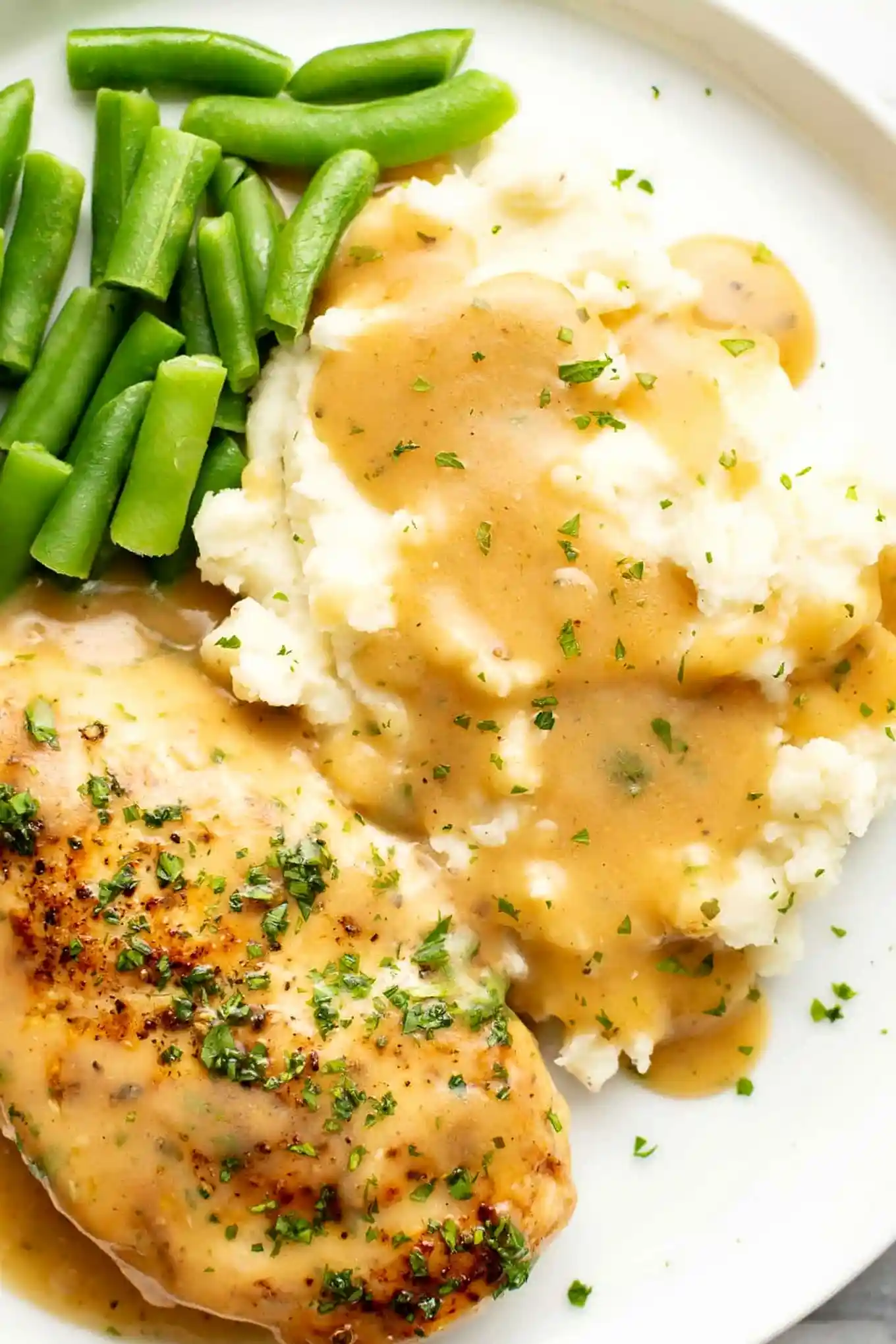
List of ingredients
- 2 large chicken breasts – sliced lengthwise into 4 thinner cutlets for faster cooking.
- Pepper to taste – used for basic seasoning of the meat.
- 1/2 teaspoon garlic powder – adds a savory depth to the chicken exterior.
- 1 tablespoon olive oil – prevents sticking and helps with the initial sear.
- 3 tablespoons butter (divided) – used for both searing and creating the roux.
- 2 tablespoons flour – the thickening agent for the gravy.
- 1 1/4 cups low sodium chicken broth – the base liquid for the sauce.
- 1 tablespoon ranch seasoning – provides the primary flavor profile of the dish.
- 1 tablespoon chopped fresh parsley (optional but recommended) – adds a fresh color and mild herb note.
step-by-step instructions
- Prepare the meat: Cut the chicken breasts in half lengthwise to create 4 thinner cutlets. Season each piece evenly with pepper and garlic powder.
- Heat the skillet: Place olive oil and 1 tablespoon of butter in a skillet over medium-high heat. Allow the pan to get hot for several minutes before adding the meat.
- Sear the chicken: Add the chicken cutlets to the pan and cook for approximately 4-5 minutes per side until they are golden brown. Move the cooked chicken to a plate and set it aside.
- Create the roux: Lower the heat to medium. Melt the remaining butter in the same skillet, then stir in the flour and cook for about one minute to remove the raw flour taste.
- Build the sauce: Slowly whisk in the chicken broth, ensuring the flour mixture is fully dissolved and no lumps remain.
- Add flavoring: Whisk the ranch seasoning into the broth mixture until fully incorporated.
- Finish cooking: Return the chicken and any juices from the plate to the skillet. Cook for another 4-5 minutes until the chicken reaches an internal temperature of 165F and the sauce has thickened.
- Garnish and serve: Sprinkle with fresh chopped parsley and serve immediately.
Optimizing the Searing Process
Selecting the Right Skillet
A heavy-bottomed skillet, such as cast iron or stainless steel, is best for this recipe. These materials distribute heat evenly and maintain a high temperature, which is essential for achieving a deep golden-brown crust on the chicken.
Testing Pan Temperature
Before adding the chicken, ensure the oil and butter are shimmering. You can test the heat by dropping a small piece of chicken into the pan; if it sizzles immediately, the pan is ready for the rest of the meat.
Avoiding Pan Crowding
Do not crowd the chicken cutlets in the skillet. If the pan is too full, the temperature will drop, and the chicken will steam in its own juices rather than searing, resulting in a pale color and less flavor.
Perfecting the Ranch Gravy
Preventing Flour Lumps
When adding the chicken broth, pour it in slowly while whisking constantly. This gradual integration allows the flour and butter roux to emulsify smoothly, preventing clumps from forming in the final sauce.
Controlling Sauce Consistency
If the sauce becomes too thick before the chicken is fully cooked, reduce the heat to a low simmer. You can also add an extra tablespoon of chicken broth to thin it out to your preferred consistency.
Managing Sodium Levels
Because ranch seasoning and chicken broth both contain salt, avoid adding extra salt to the dish. Using low-sodium broth is highly recommended to keep the overall flavor balanced and not overly salty.
Alternative Protein Options
Using Boneless Skinless Chicken Thighs
Chicken thighs can be used as a substitute for breasts for a juicier result. Keep in mind that thighs may require a few extra minutes of searing and simmering to reach a safe internal temperature.
Adapting for Chicken Tenders
Chicken tenders are a great alternative since they are already thin. Reduce the initial searing time to 3-4 minutes per side to avoid overcooking the smaller pieces of meat.
Recommended Side Dish Pairings
Starchy Accompaniments
Mashed potatoes are the classic choice for this dish, as they soak up the extra ranch gravy. Alternatively, serve the chicken over steamed white rice or buttered egg noodles for a comforting meal.
Green Vegetable Options
Steamed broccoli or sautéed asparagus provides a fresh, crisp contrast to the rich sauce. Garlic-sautéed mushrooms or roasted green beans also pair well with the savory ranch flavor.
Fresh Salad Pairings
A light garden salad with a lemon vinaigrette helps cut through the creaminess of the gravy. Use mixed greens, cucumbers, and cherry tomatoes for a refreshing side.
Storage and Preservation
Refrigerating Leftovers
Store any remaining chicken and gravy in an airtight container in the refrigerator. The dish will stay fresh and safe to eat for 3 to 4 days.
Freezing Guidelines
This dish can be frozen for up to 3 months. Place the chicken and sauce in a freezer-safe container, ensuring there is a bit of headspace for expansion during the freezing process.
Effective Reheating Methods
Stovetop Reheating
For the best texture, reheat the chicken and gravy in a small saucepan over low heat. Stir the sauce occasionally and add a splash of water or broth if the gravy has thickened too much in the fridge.
Microwave Reheating
If using a microwave, heat the chicken in 30-second increments. Stir between intervals to ensure the gravy is heated evenly and the chicken does not become rubbery.
Common Troubleshooting Tips
Fixing a Broken Sauce
If the sauce appears to separate or look oily, whisk it vigorously over medium-low heat. This helps re-emulsify the butter and flour with the liquid broth.
Preventing Dry Chicken
Use an instant-read meat thermometer to check for 165F. Removing the chicken from the heat the moment it reaches this temperature prevents the meat from drying out during the final simmering stage.
Adjusting a Too-Salty Sauce
If the gravy tastes too salty, stir in a small amount of heavy cream or a teaspoon of lemon juice. The acidity or fat helps neutralize the intensity of the salt.
Frequently Asked Questions
Can I use a different cooking oil?
Yes, any neutral oil with a high smoke point will work, such as avocado oil or canola oil. Avoid using extra-virgin olive oil if you plan to use very high heat, as it can smoke quickly.
How do I know when the chicken is done?
The most reliable method is using a meat thermometer to ensure the thickest part of the breast reaches 165F. Visually, the juices should run clear and the meat should be opaque throughout.
Can I make this in a different pan?
While a skillet is recommended, you can use a wide pot or a deep sauté pan. Ensure the pan is wide enough so the chicken cutlets can lay flat without overlapping.
Is it possible to use homemade ranch seasoning?
Yes, homemade seasoning is a great alternative. Ensure your homemade blend includes buttermilk powder, dried dill, and onion powder to mimic the store-bought flavor profile.
What if I don’t have fresh parsley?
Dried parsley can be used as a substitute, though the flavor is more muted. Use about one-third of the amount of dried parsley compared to the fresh version.
Can I thicken the sauce without flour?
You can use cornstarch mixed with a small amount of cold water as a slurry. Stir the slurry into the simmering broth at the end of the process until the desired thickness is achieved.
How do I cut the chicken breasts lengthwise?
Place the chicken breast flat on the cutting board. Position your knife in the center of the thickest part and slice downward, splitting the breast into two thinner halves.
} Print
Savory Ranch Gravy Chicken
- Total Time: 30 minutes
- Yield: 4 servings 1x
- Diet: General
Description
This ranch chicken recipe has tender pan-fried chicken smothered in an irresistible ranch gravy. It comes together fast and uses only a few everyday ingredients!
Ingredients
- 2 large chicken breasts
- Pepper to taste
- 1/2 teaspoon garlic powder
- 1 tablespoon olive oil
- 3 tablespoons butter, divided
- 2 tablespoons flour
- 1 1/4 cups low sodium chicken broth
- 1 tablespoon ranch seasoning
- 1 tablespoon chopped fresh parsley
Instructions
- Step 1: Cut the chicken in half lengthwise so you’ve got 4 thinner cutlets. Season each piece with pepper and the garlic powder.
- Step 2: Add the olive oil and 1 tablespoon of the butter to a skillet over medium-high heat. Let the pan heat up for a few minutes.
- Step 3: Add the chicken to the pan and cook for about 4-5 minutes/side until golden. Transfer the chicken to a plate and set aside.
- Step 4: Reduce the heat to medium. Add the remaining butter to the skillet, and once it’s melted, stir in the flour and cook for about a minute.
- Step 5: Slowly whisk in the broth until the roux has fully dissolved.
- Step 6: Whisk in the ranch seasoning.
- Step 7: Add the chicken back to the skillet, along with any juices from the plate, and cook for another 4-5 minutes or until it has finished cooking through (165F) and the sauce has thickened up a bit more.
- Step 8: Sprinkle with fresh parsley if using, and serve immediately.
Notes
Use an instant read meat thermometer to ensure that chicken isn’t overcooked or undercooked. This recipe is fairly salty due to the ranch seasoning and chicken broth.
- Prep Time: 10 minutes
- Cook Time: 20 minutes
- Category: Main Course
- Method: Pan-frying
- Cuisine: American
Nutrition
- Serving Size: 1 serving
- Calories: 273 kcal
- Sugar: 1 g
- Sodium: 510 mg
- Fat: 15 g
- Saturated Fat: 7 g
- Unsaturated Fat: 8 g
- Trans Fat: 0 g
- Carbohydrates: 6 g
- Fiber: 1 g
- Protein: 26 g
- Cholesterol: 95 mg