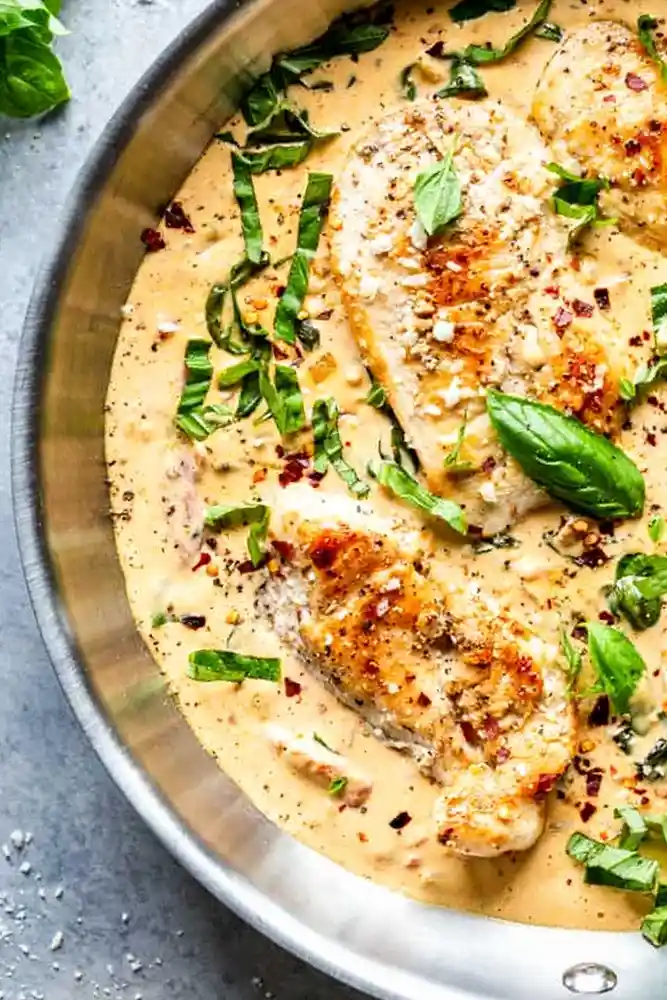
This creamy chicken dish uses a one-pan method to deliver restaurant-quality flavor in under 40 minutes. It combines rich parmesan and fresh basil for a satisfying weeknight meal that pairs well with various sides.
List of ingredients
- 1 pound chicken breast (2 large breasts) – sliced lengthwise and pounded for even cooking.
- 3 tablespoons butter – divided for searing and sautéing aromatics.
- 4 large garlic cloves (minced) – provides a pungent, aromatic base for the sauce.
- 1/2 yellow onion (finely minced) – adds sweetness and depth to the pan sauce.
- 3-4 ounces roasted red peppers (thinly sliced) – adds a smoky, sweet element.
- 1/4 teaspoon paprika – used for color and a mild earthy flavor.
- 1 1/2 cups heavy cream – creates the rich, velvety texture of the sauce.
- 1 cup packed fresh basil leaves – plus extra for garnish to provide a fresh, peppery finish.
- 1 cup fresh grated parmesan – adds saltiness and helps thicken the sauce.
- 1/4 teaspoon crushed red pepper flakes – adds a subtle heat to balance the cream.
- 1/2 cup chicken stock – used to deglaze the pan and add savory depth.
- salt (to taste) – used for seasoning the chicken and adjusting the sauce.
- black pepper (to taste) – provides a sharp, spicy contrast.
step-by-step instructions
- Prepare the chicken: Cut the chicken breasts in half lengthwise to create thinner fillets, then pound them to an even thickness using a rolling pin and a plastic bag.
- Sear the meat: Melt 2 tablespoons of butter in a large non-stick pan over medium-medium high heat. Season the chicken with salt and pepper, then sear for 4-5 minutes per side until just cooked through; remove and set aside on a plate.
- Sauté the aromatics: Add the remaining 1 tablespoon of butter to the same skillet. Stir in the minced onion, garlic, sliced roasted red peppers, paprika, red chili pepper flakes, salt, and pepper, sautéing for about five minutes until the vegetables soften.
- Deglaze the pan: Pour in the chicken stock to deglaze the skillet, scraping up the browned bits from the bottom. Bring the liquid to a gentle simmer and allow it to reduce by half.
- Build the creamy sauce: Reduce the heat to medium-low and pour in the heavy cream. Stir continuously until the sauce becomes creamy, then taste and adjust the seasoning with salt and pepper.
- Finish with cheese and herbs: Stir in the grated parmesan cheese until it is completely melted into the sauce. Fold in the fresh basil leaves and simmer for 1-2 minutes until the basil is wilted.
- Combine and serve: Return the seared chicken to the skillet, allowing it to warm through in the sauce. Serve immediately.
Techniques for Maximum Chicken Tenderness
Slicing the Breast Lengthwise
Cutting the chicken breast in half lengthwise, also known as butterflying, ensures that the thickest part of the meat is reduced. This prevents the edges from drying out while the center reaches a safe internal temperature. It results in a more uniform piece of meat that cooks significantly faster.
Pounding for Consistent Thickness
Use a rolling pin or meat mallet to flatten the fillets to an even thickness across the entire surface. Placing the meat inside a sealed zip-top bag prevents the chicken from tearing and keeps your kitchen counter clean. Consistent thickness ensures that every bite is equally tender and avoids rubbery overcooked spots.
Proper Seasoning Before Searing
Apply salt and black pepper generously to both sides of the meat immediately before it hits the pan. Salt helps to draw moisture to the surface, which facilitates better browning and creates a flavorful crust. This foundational step ensures the meat is seasoned internally, not just coated in sauce.
Ingredient Substitutions and Adaptations
Alternative Dairy Options
If heavy cream is unavailable, you can use half-and-half, though the sauce will be slightly thinner and less rich. To compensate for the lower fat content, you can whisk in a small amount of cornstarch mixed with water to achieve the desired thickness. Avoid using skim milk as it may curdle under the heat of the parmesan.
Using Dried Herbs
While fresh basil is preferred for its aromatic qualities, dried basil can be used in a pinch. Use a ratio of one teaspoon of dried basil for every tablespoon of fresh leaves. Stir dried herbs in earlier during the sauce-building process so they have time to rehydrate and release their oils.
Swapping the Cheese
Pecorino Romano is a great substitute for parmesan if you prefer a saltier, sharper flavor profile. If you want a milder taste, a high-quality white cheddar can work, though it will change the Italian character of the dish. Ensure the cheese is finely grated to ensure it melts smoothly without clumping.
Vegetable Variations
If you cannot find roasted red peppers, fresh red bell peppers sautéed until soft are an excellent alternative. You can also add baby spinach or chopped kale at the end for additional nutrients and color. These greens should be stirred in at the same time as the basil to avoid overcooking.
Recommended Serving Suggestions
Pairing with Classic Pasta
Fettuccine or linguine are the ideal choices for this recipe because their wide surface area captures the creamy parmesan sauce. Toss the cooked pasta directly into the pan with the sauce before adding the chicken back in. This ensures every strand of pasta is thoroughly coated in the basil and cheese mixture.
Low Carb Vegetable Bases
For a ketogenic or low-carb meal, serve the chicken over a bed of roasted cauliflower florets. The charred flavor of the cauliflower complements the richness of the cream sauce perfectly. Alternatively, steamed zoodles (zucchini noodles) provide a fresh, light base that cuts through the heavy dairy.
Fresh Green Side Dishes
Steamed asparagus or sautéed broccolini add a necessary brightness and snap to the plate. The bitterness of these green vegetables balances the saltiness of the parmesan and the sweetness of the roasted red peppers. A light squeeze of lemon juice over the vegetables enhances the overall flavor profile.
Accompaniments for the Sauce
Serve the dish with a side of toasted sourdough or a crusty baguette. This allows you to soak up the excess creamy basil sauce remaining on the plate. Garlic bread is another excellent choice, adding an extra layer of savory flavor to the meal.
Storage and Reheating Guidelines
Refrigeration Methods
Store leftover chicken and sauce in an airtight glass container in the refrigerator for up to three to four days. Ensure the chicken is fully submerged in the sauce to prevent the meat from drying out during storage. Allow the pan to cool slightly before sealing the lid to prevent excessive condensation.
Best Reheating Techniques
To maintain the sauce emulsion, reheat the dish slowly over low heat in a skillet on the stove. Add a tablespoon of water or chicken stock to loosen the sauce, as the parmesan and cream tend to thicken in the fridge. Avoid using the microwave on high heat, as this can cause the sauce to separate or the chicken to become tough.
Freezing Instructions
This dish can be frozen for up to two months, although the cream sauce may change texture slightly upon thawing. Freeze the chicken and sauce together in a freezer-safe container or vacuum-sealed bag. Thaw completely in the refrigerator overnight before reheating gently on the stovetop.
Cooking Troubleshooting
Preventing Sauce Separation
If the sauce begins to separate or look oily, it is usually due to excessive heat causing the fats to break. Immediately reduce the heat to low and whisk in a small amount of cold heavy cream or a splash of chicken stock. Stirring constantly over low heat helps re-emulsify the fats and solids.
Correcting a Sauce That Is Too Thin
If the sauce hasn’t thickened enough, simmer it for a few extra minutes without the lid to allow more moisture to evaporate. You can also stir in an extra tablespoon of grated parmesan cheese, which acts as a natural thickener. Avoid adding flour at this stage as it can create lumps in the finished sauce.
Avoiding Overcooked Chicken
Because the chicken breasts are sliced thin, they cook very quickly during the initial searing process. Use a meat thermometer to ensure they reach an internal temperature of 165 degrees Fahrenheit. Since they are returned to the sauce at the end, remove them from the pan while they are slightly underdone to prevent overcooking during the final warming step.
Maintaining Basil Color
Fresh basil can turn brown if it is exposed to high heat for too long. Always stir the basil in at the very end of the cooking process and only simmer for one to two minutes. This preserves the vibrant green color and the delicate, fresh aroma of the herb.
Frequently Asked Questions
Can I use chicken thighs instead of breasts?
Yes, boneless skinless chicken thighs can be used and will remain very juicy. Since thighs are naturally thicker and have more fat, you do not need to pound them as much, but searing them for 5-7 minutes per side is recommended.
How do I prevent the garlic from burning?
Add the garlic to the pan after the onions have already started to soften. Garlic burns much faster than onion and can become bitter if it hits the hot butter too early; sautéing it for only the last 1-2 minutes of the aromatic stage is ideal.
Which type of parmesan cheese works best?
Freshly grated parmesan from a block is superior to pre-shredded bagged cheese. Pre-shredded cheeses are often coated in cornstarch or cellulose to prevent clumping, which can prevent the cheese from melting smoothly into the cream sauce.
Print
Creamy Parmesan Basil Chicken
- Total Time: 35 minutes
- Yield: 4 servings 1x
- Diet: Low Carb
Description
This Creamy Parmesan Basil Chicken Recipe is a quick chicken breast recipe that tastes like it came from a restaurant! This one pan chicken dish is easy to make for a weeknight dinner, and is full of so much flavor!
Ingredients
- 1 pounds chicken breast (2 large breasts)
- 3 tablespoons butter
- 4 large garlic cloves (minced)
- 1/2 yellow onion (minced)
- 3–4 ounces roasted red peppers (thinly sliced)
- 1/4 teaspoon paprika
- 1 1/2 cups heavy cream
- 1 cup packed fresh basil leaves plus more for garnish
- 1 cup fresh grated parmesan
- 1/4 teaspoon crushed red pepper flakes
- 1/2 cup chicken stock
- salt (to taste)
- black pepper (to taste)
Instructions
- Step: Cut breasts in half lengthwise, pound to even thickness
- Step: In a large non stick pan on medium-medium high heat, melt 2 tablespoons butter. Season chicken with salt and pepper, then sear, 4-5 minutes on each side, until just cooked. Remove from the pan and set aside.
- Step: In the same skillet add 1 tablespoons butter. Add onion, garlic, peppers, paprika, red chili pepper flakes, salt and pepper. Saute for about five minutes, until onions and peppers are softened.
- Step: Add chicken stock to deglaze the skillet and bring to a gentle simmer until reduced by half.
- Step: Reduce heat to medium low. Add cream to the skillet and stir until a creamy sauce forms. Taste and adjust seasoning with salt and pepper. Add Parmesan, stir until melted into sauce. Stir in basil, simmer until wilted, 1-2 minutes.
- Step: Add chicken back to the skillet, allow to warm up if needed. Serve.
Notes
To pound chicken breasts, I slice them in half lengthwise (like a book), then place them in a sealed ziptop bag. I use a rolling pin to pound them to an even thickness. This is great served with pasta, but if you want to keep it low carb, it tastes great with roasted cauliflower!
- Prep Time: 10 minutes
- Cook Time: 25 minutes
- Category: Dinner
- Method: Stovetop
- Cuisine: Italian
Nutrition
- Serving Size: 1 serving
- Calories: 661 kcal
- Sugar: 1 g
- Sodium: 919 mg
- Fat: 52 g
- Saturated Fat: 31 g
- Unsaturated Fat: 21 g
- Trans Fat: 0 g
- Carbohydrates: 8 g
- Fiber: 1 g
- Protein: 36 g
- Cholesterol: 239 mg