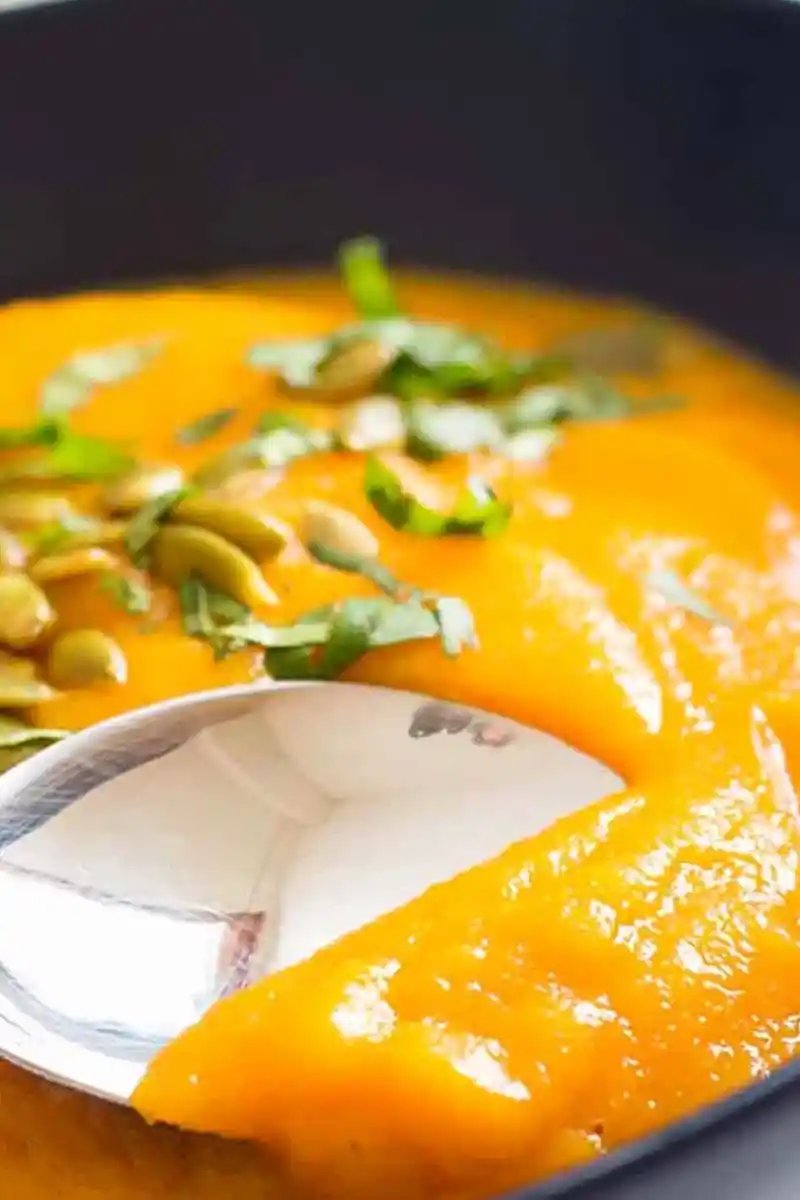
This vibrant and comforting soup transforms simple roasted vegetables into a velvety, nutrient-dense meal perfect for chilly days. By roasting the butternut squash and carrots before blending, you develop a deep, caramelized sweetness that is both nourishing and deeply satisfying. This recipe is naturally vegan and gluten-free, making it an excellent choice for a variety of dietary preferences.
List of ingredients
- 1 bag (20 oz/4 cups) butternut squash cubes
- 1 lb (450 g) carrots, cut into 1/2-inch pieces
- 1 small onion, quartered
- 3 cloves garlic, skin on
- 2 tablespoons avocado or olive oil
- salt & pepper to taste
- 4 cups vegetable broth
- 2 tablespoons maple syrup
- 1 teaspoon paprika powder
- 1/2 teaspoon cumin
- 1/8-1/2 teaspoon cayenne powder
- 2 cups cooked quinoa
- roasted pumpkin seeds for garnish
- fresh cilantro for garnish
step-by-step instructions
- Step: Preheat your oven to 400°F and prepare two baking sheets.
- Step: Place butternut squash on one sheet; arrange carrots, onion, and garlic on the other. Drizzle with oil and season with salt and pepper.
- Step: Roast for 25-30 minutes until tender, flipping halfway through.
- Step: If using a high-speed blender: Add broth, maple syrup, paprika, cumin, and cayenne to the jar. Add roasted vegetables (peel garlic and remove onion root first) and blend until smooth and steaming.
- Step: If using a stovetop: Bring broth and seasonings to a boil in a large pot. Add roasted vegetables and use an immersion blender until completely smooth.
- Step: Serve bowls with 1/2 cup of cooked quinoa each, topped with pumpkin seeds and cilantro.
Refining Your Roasted Flavors
The secret to a complex soup lies in the quality of your roast. Ensure your oven is fully preheated before sliding the trays in to start the Maillard reaction, which creates the essential browning. Do not crowd your pans; if the vegetables are touching, they will steam instead of roasting, resulting in a less intense flavor profile.
The Role of Aromatics
Roasting the garlic in its skin is a simple but effective technique that results in a paste-like, sweet, and mild flavor. Once cooked, the garlic squeezes out of the papery skin easily, adding a mellow savory quality that raw garlic simply cannot match. If you find the onion layers separating, leaving the root intact keeps them compact during the high-heat roasting process.
Customizing Your Soup Base
This soup is a versatile canvas that welcomes various global flavor profiles. You can transform the base notes entirely by adjusting the spices before you blend. For instance, incorporating fresh ginger adds a bright, zesty contrast to the dense squash, while curry powder nudges the dish toward a more exotic, warming curry-style experience. Using high-quality vegetable broth ensures the foundation of the soup remains clean and balanced, though you can adjust salt levels as the liquid reduces during simmering.
Sweetness and Heat Balance
The ratio of maple syrup to cayenne pepper allows you to pull the flavor in two directions simultaneously. If you prefer a sharper, more aggressive heat, increase the cayenne in small increments, tasting between additions. If the soup tastes too earthy, adding a tiny splash of extra maple syrup can brighten the overall profile and round out the deep vegetable sugars.
Practical Serving Suggestions
To turn this soup into a complete, sustaining meal, consider the texture and protein content. The addition of cooked quinoa is more than just a garnish; it absorbs the creamy liquid and adds a chewy bite that mimics a thick, hearty stew. If you are not strictly following vegan guidelines, you might consider adding a dollop of Greek yogurt or a swirl of coconut milk to introduce a different kind of creaminess that cuts through the thickness of the pureed squash.
Adding Crunch for Contrast
A silky-smooth puree benefits significantly from textural variety. Roasted pumpkin seeds, also known as pepitas, provide a necessary salt-and-crunch factor that keeps each spoonful interesting. If you have extra cilantro on hand, chop the leaves finely and scatter them over the top right before serving to provide a clean, herbal finish that cuts the richness of the root vegetables.
Managing Storage and Reheating
This soup is an ideal candidate for batch cooking because the flavors often meld and improve after sitting for a day in the refrigerator. When cooling the soup for storage, spread it out in a shallow container rather than a deep, narrow one to help it drop to room temperature quickly. Once cool, transfer it to airtight containers to prevent it from absorbing other flavors in your fridge.
Safe Freezing Methods
You can successfully freeze this soup for up to three months. To avoid any potential issues with containers, use BPA-free freezer-safe containers rather than glass, filling them only about 90 percent of the way to allow for the expansion of the liquid. Thawing the soup slowly in the refrigerator overnight is the best practice, as it preserves the integrity of the vegetable emulsion, preventing the soup from breaking or separating upon reheating.
Troubleshooting Common Issues
If your soup turns out thinner than you prefer, do not add flour or starch, which can mask the natural flavor. Instead, return the soup to the pot and simmer it over medium-low heat for ten to fifteen minutes; the reduction of liquid naturally concentrates the flavors and thickens the body. If the soup is too thick, simply whisk in a splash of warm broth until it reaches your desired consistency.
Handling Emulsion Issues
If you find that the soup feels slightly grainy, it is usually because the fibers in the carrots or squash were not fully broken down. A high-speed blender is your best friend here, as it can shear through fibrous vegetable matter better than a standard food processor. If you only have a standard blender, process the soup in smaller batches to give the blades more room to circulate the liquid and solids effectively.
Frequently Asked Questions
Can I make this soup in a slow cooker?
Yes, although you lose the caramelization from roasting. You can add all ingredients to the slow cooker and cook on high for 4 hours, then puree with an immersion blender.
Is this soup suitable for a low-sodium diet?
Absolutely. You can substitute commercial vegetable broth with homemade broth that has no added salt or use plain water and season the soup with herbs like thyme, rosemary, or parsley to replace the need for extra sodium.
How do I make the soup creamier without adding dairy?
Adding a cooked potato or two during the roasting process is a common trick. Once blended, the starch in the potatoes creates a naturally luxurious and creamy mouthfeel without the need for any animal products.
Why did my soup lose its vibrant color?
Over-cooking the vegetables can sometimes lead to a dulled color. Ensure you roast them only until they are tender, and avoid over-boiling the broth during the final steps to maintain the brightness of the orange pigments found in the carrots and squash.
Print
Roasted Butternut Squash and Carrot Soup
- Total Time: PT45M
- Yield: 4 servings 1x
- Diet: Vegan, Gluten-Free
Description
This healthy roasted Butternut Squash and Carrot Soup is perfect cold weather food and is super easy to make. The recipe is vegan, gluten free, clean eating and can also be adapted for paleo or Whole30 diets.
Ingredients
- 1 bag (20 oz/4 cups) butternut squash cubes
- 1 lb (450 g) carrots, cut into 1/2-inch pieces
- 1 small onion, quartered
- 3 cloves garlic, skin on
- 2 tablespoons avocado or olive oil
- salt & pepper to taste
- 4 cups vegetable broth
- 2 tablespoons maple syrup
- 1 teaspoon paprika powder
- 1/2 teaspoon cumin
- 1/8–1/2 teaspoon cayenne powder
- 2 cups cooked quinoa
- roasted pumpkin seeds for garnish
- fresh cilantro for garnish
Instructions
- Step: Preheat your oven to 400°F and prepare two baking sheets.
- Step: Place butternut squash on one sheet; arrange carrots, onion, and garlic on the other. Drizzle with oil and season with salt and pepper.
- Step: Roast for 25-30 minutes until tender, flipping halfway through.
- Step: If using a high-speed blender: Add broth, maple syrup, paprika, cumin, and cayenne to the jar. Add roasted vegetables (peel garlic and remove onion root first) and blend until smooth and steaming.
- Step: If using a stovetop: Bring broth and seasonings to a boil in a large pot. Add roasted vegetables and use an immersion blender until completely smooth.
- Step: Serve bowls with 1/2 cup of cooked quinoa each, topped with pumpkin seeds and cilantro.
Notes
Nutrition data includes 1/2 cup of quinoa per serving. Recipe is naturally vegan and gluten-free.
- Prep Time: PT10M
- Cook Time: PT30M
- Category: Main Course
- Method: Roasting
- Cuisine: American
Nutrition
- Serving Size: 1 bowl
- Calories: 332 kcal
- Sugar: 16 g
- Sodium: 1059 mg
- Fat: 9.9 g
- Saturated Fat: 1.5 g
- Unsaturated Fat: 7 g
- Trans Fat: 0 g
- Carbohydrates: 57 g
- Fiber: 9.2 g
- Protein: 7.7 g
- Cholesterol: 0 mg