This salmon cobb salad is a nutrient-dense meal featuring pan-seared salmon and a zesty, homemade dill dressing. It is an excellent choice for a healthy lunch or a refreshing dinner party appetizer that balances protein and fresh vegetables.
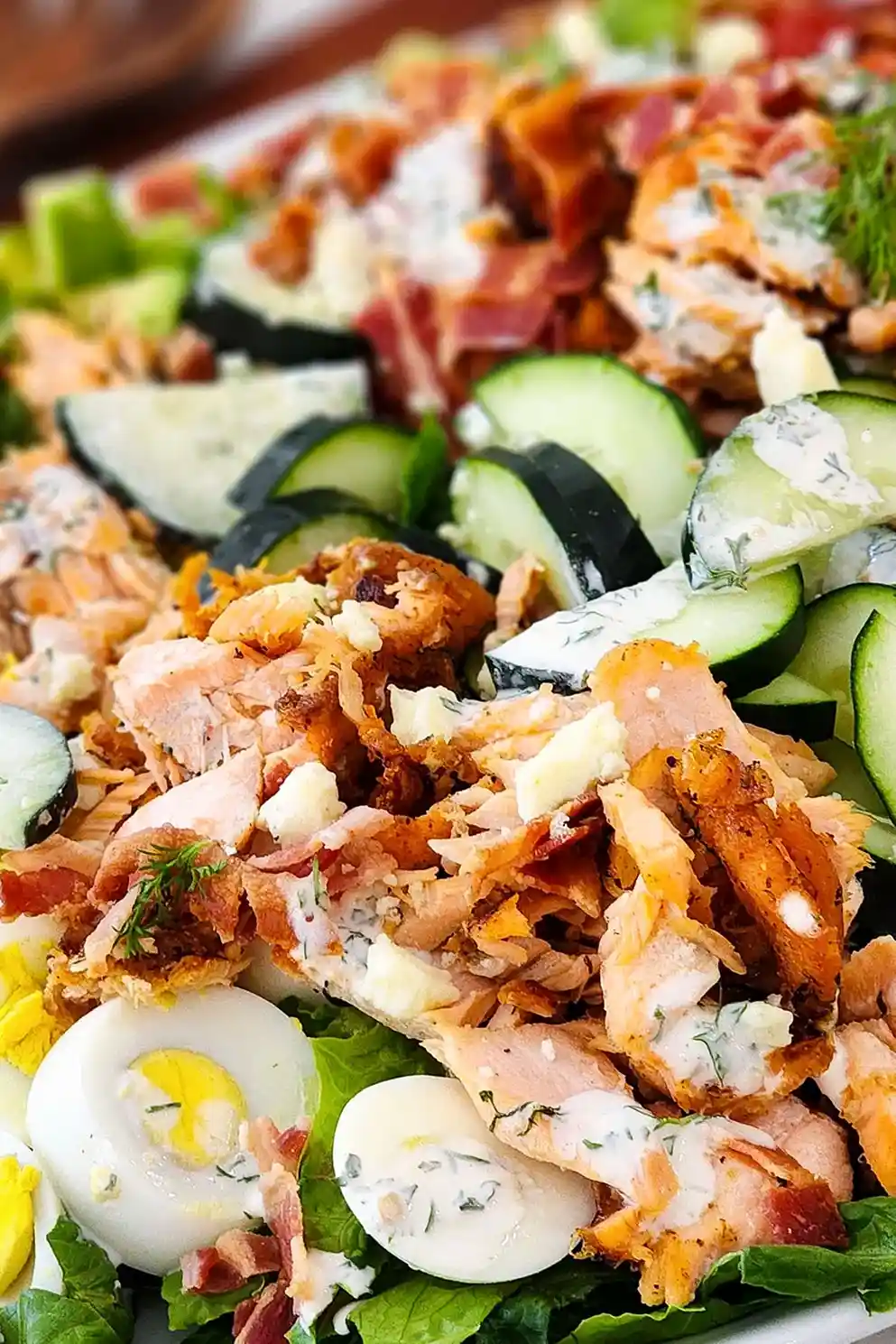
List of ingredients
- 1 lb boneless, skinless salmon – cut into fillets for searing.
- 2 teaspoons garlic powder – for savory seasoning.
- 1 tablespoon fresh dill, minced – adds a fresh herbal note to the fish.
- 1 tablespoon olive oil – used for pan-searing.
- Salt and pepper – to taste.
- 1 large head romaine lettuce – chopped, rinsed, and spun dry for a crisp base.
- ½ medium red onion – chopped for a sharp contrast.
- 1 cucumber – sliced into rounds or half-moons.
- 4 large hard-boiled eggs – peeled and sliced.
- 2 avocados – peeled, pitted, and chopped.
- 1 ½ cups cherry tomatoes – halved.
- 4 slices cooked turkey bacon – crumbled for a smoky flavor.
- ½ cup crumbled blue cheese – adds a tangy, salty element.
- 1 cup plain Greek yogurt – provides a creamy, protein-rich base for dressing.
- ½ cup mayonnaise – adds richness and smooth texture.
- ¼ cup fresh dill, finely chopped – the primary flavor of the dressing.
- 1 garlic clove – pressed or finely minced.
- 3 tablespoons lemon juice – for acidity and brightness.
- Salt and pepper – to taste for the dressing.
step-by-step instructions
- Season and Sear the Salmon: Rub the salmon with garlic powder, minced dill, salt, and pepper. Heat 1 tablespoon of olive oil in a large non-stick skillet over medium-high heat; once hot, place salmon top-side down and cook for 4 minutes until golden and crisp. Flip the fillets and cook for another 4 minutes, or until the fish is cooked through based on the thickness.
- Prepare the Protein: Transfer the cooked salmon to a plate. Allow it to cool slightly before using two forks to flake the fish into bite-sized pieces.
- Assemble the Salad: Place the chopped romaine lettuce on a large serving platter to create a bed of greens. Arrange the flaked salmon, eggs, avocado, tomatoes, turkey bacon, blue cheese, cucumber, and red onion in neat rows over the lettuce.
- Mix and Apply Dressing: Combine the Greek yogurt, mayonnaise, chopped dill, minced garlic, and lemon juice in a measuring cup or bowl. Stir until the mixture is smooth and combined, then drizzle the dressing evenly over the salad just before serving.
Mastering the Pan-Searing Process
Pat the Salmon Dry for a Better Sear
Before applying seasonings, use a paper towel to pat the salmon fillets completely dry. Removing excess surface moisture prevents the fish from steaming in the pan and ensures a golden-brown crust. This step is essential for achieving a professional sear.
Maintain Consistent Medium-High Heat
Ensure the olive oil is shimmering and hot before adding the fish to the skillet. If the pan is too cool, the salmon will stick to the surface and lose its juices. Medium-high heat allows for a quick sear that locks in moisture while creating a crisp exterior.
Avoid Overcooking the Fillets
Salmon continues to cook for a few minutes after being removed from the heat due to carryover cooking. Remove the fillets when they are just barely opaque in the center. This prevents the fish from becoming dry or rubbery when flaked.
Guide to Selecting Fresh Produce
Choosing the Ripe Avocado
Select avocados that yield slightly to gentle pressure but do not feel mushy. If the avocado is too hard, it will not provide the creamy texture needed for the salad. Store unripe avocados at room temperature until they reach the desired softness.
Preparing the Romaine for Maximum Crunch
Rinse romaine lettuce in cold water and use a salad spinner to remove all excess moisture. Water clinging to the leaves will dilute the dressing and make the salad soggy. Dry leaves allow the creamy dill dressing to adhere better to the greens.
Selecting the Best Cherry Tomatoes
Look for cherry tomatoes that are firm to the touch and have a deep, uniform red color. Avoid those with soft spots or cracked skins. Halving them lengthwise allows the dressing to penetrate the center for more flavor in every bite.
Slicing Red Onion for Mild Flavor
If you find raw red onion too pungent, soak the chopped pieces in ice water for ten minutes before adding them to the salad. This process removes the harsh sulfur compounds while keeping the crunch. Pat the onions dry before placing them on the platter.
Dressing Customizations and Alternatives
Substituting Greek Yogurt for Other Bases
If you prefer a richer dressing, you can replace the Greek yogurt with sour cream or a plant-based Greek-style yogurt. Sour cream provides a traditional tang, while plant-based versions keep the salad vegetarian. Maintain the same ratio of mayonnaise to base for the correct consistency.
Adjusting the Acidity Levels
Depending on the ripeness of your lemons, you may want to adjust the amount of lemon juice. Start with two tablespoons and taste the dressing before adding the third. If the dressing feels too heavy, a small splash of apple cider vinegar can add a different dimension of acidity.
Using Dried Herbs Instead of Fresh
If fresh dill is unavailable, you can use dried dill, but reduce the quantity to one-third of the original measurement. Fresh herbs provide a brightness that dried herbs cannot fully replicate. Consider adding a pinch of dried parsley to mimic the freshness of the green herbs.
Controlling the Dressing Thickness
If the dressing is too thick to drizzle, stir in a teaspoon of water or extra lemon juice at a time. Continue mixing until it reaches a pourable consistency. Conversely, add an extra tablespoon of Greek yogurt if you prefer a thicker, dip-like consistency.
Serving and Presentation Techniques
Arranging the Classic Cobb Row Style
To achieve the professional Cobb look, place the lettuce first and then lay each ingredient in a distinct, colorful strip. This allows guests to see every component of the meal and customize their bites. Start with the most colorful ingredients, like tomatoes and avocados, to make the dish pop.
Serving in Individual Bowls
For a more casual lunch, divide the romaine among individual bowls and top them with portions of the other ingredients. Instead of rows, you can toss the ingredients lightly or layer them. This method is more practical for meal prep or office lunches.
Adding a Final Garnish
Sprinkle a few extra sprigs of fresh dill or a pinch of cracked black pepper over the finished platter. This adds a professional touch and reinforces the flavor profile of the dressing. A light dusting of paprika can also add a subtle color contrast to the eggs and salmon.
Storage and Freshness Guidelines
Storing the Salmon Separately
If you are prepping the salad in advance, store the cooked and flaked salmon in its own airtight container. Keep it refrigerated until you are ready to assemble the salad. This prevents the fish from absorbing other flavors and maintains its texture.
Preventing Avocado Browning
Toss the chopped avocado pieces in a small amount of lemon juice before adding them to the platter. The citric acid prevents oxidation, which is what causes avocados to turn brown. This is especially important if the salad is sitting out during a party.
Managing Dressing Shelf Life
The homemade creamy dill dressing can be stored in a sealed jar in the refrigerator for up to three to five days. Shake the jar well before using, as some separation may occur. Do not freeze the dressing, as the yogurt and mayo will break down.
Keeping Lettuce Crisp During Storage
Do not dress the salad until the moment of serving. Once the dressing touches the romaine, the salt and acid will begin to break down the cell walls of the lettuce, leading to wilting. Store the dressed salmon and vegetables separately from the greens.
Make-Ahead and Reheating Advice
Prepping Ingredients the Day Before
You can hard-boil the eggs and chop the red onion, cucumber, and carrots a day in advance. Store these in separate containers to keep the flavors distinct. The salmon can also be seared and chilled, which actually makes it easier to flake into uniform pieces.
Reheating the Salmon Correctly
If you prefer the salmon warm, gently reheat the flaked pieces in a pan over low heat for one to two minutes. Avoid the microwave, as it can make the fish rubbery and remove the crispness of the sear. Place the warm salmon on the cool lettuce just before serving.
Assembling for Meal Prep
For meal prep, use glass containers with compartments to keep the lettuce separate from the heavier vegetables. Place the dressing in a small separate container. Assemble the salad by adding the dressing and tossing everything together right before eating.
Common Troubleshooting Steps
Fixing a Broken or Curdled Dressing
If the dressing looks separated or curdled, it is likely due to temperature differences between the yogurt and mayo. Whisk the mixture vigorously by hand or use a small immersion blender to emulsify the fats. Ensuring all ingredients are at room temperature can prevent this.
Preventing Salmon from Sticking to the Pan
If your salmon sticks, you may be flipping it too early. Wait until a natural crust has formed; the fish will release itself from the pan once it is properly seared. Using a high-quality non-stick skillet or a well-seasoned cast iron pan can also help.
Reducing Excess Moisture in the Salad
If you notice liquid pooling at the bottom of the platter, your vegetables may not be dry enough. Use a paper towel to pat the cucumber slices and tomatoes dry before adding them. Ensuring the romaine is spun dry is the most critical step in preventing a watery salad.
Balancing an Overly Salty Dressing
If you accidentally add too much salt to the dressing, stir in an extra tablespoon of Greek yogurt or a squeeze of fresh lemon. The creaminess of the yogurt and the acidity of the lemon help neutralize the saltiness. Always taste your dressing before adding salt.
Frequently Asked Questions
Can I use frozen salmon for this recipe?
Yes, you can use frozen salmon, but it must be completely thawed and patted dry before cooking. Thaw the fillets in the refrigerator overnight for the best texture. Using partially frozen fish will lead to steaming rather than searing, resulting in a lack of crust.
What is the best way to peel hard-boiled eggs?
Immediately place your hard-boiled eggs in an ice bath for five to ten minutes after cooking. This shocks the egg and causes the membrane to pull away from the shell. Gently crack the shell all over and peel under cool running water for a smooth finish.
Can I substitute Greek yogurt with sour cream?
Yes, sour cream is an excellent substitute and provides a very similar flavor and texture. While you will lose some of the probiotic benefits and protein of Greek yogurt, the taste will be slightly richer. Use a 1:1 ratio for the substitution.
Is it possible to make this salad vegan?
To make this vegan, replace the salmon with grilled tofu or chickpeas, and use a vegan mayonnaise and plant-based yogurt. Substitute the eggs with diced boiled potatoes or extra avocado. Replace the blue cheese with a vegan almond-based feta or omit it entirely.
How do I know when the salmon is perfectly cooked?
The salmon is done when the internal temperature reaches 145°F (63°C) or when the thickest part of the fillet flakes easily with a fork. The center should be slightly translucent to opaque. Overcooking will result in a white albumin protein leaking out of the fish.
What other greens work well in this salad?
While romaine is traditional for a Cobb salad, you can use a mix of spring greens, baby spinach, or chopped kale. If using kale, massage it with a little olive oil and salt first to soften the tough fibers. This ensures the greens blend well with the creamy dressing.
Print
Salmon Cobb Salad with Creamy Dill Dressing
- Total Time: 30 minutes
- Yield: 6 servings 1x
- Diet: General
Description
A nutritious and flavorful Salmon Cobb Salad featuring pan-seared salmon, fresh vegetables, and a homemade creamy dill dressing.
Ingredients
- 1 lb salmon (boneless, skinless)
- 2 teaspoons garlic powder
- 1 tablespoon fresh dill (minced)
- 1 tablespoon olive oil
- Salt/pepper to taste
- 1 large head of romaine lettuce (chopped, rinsed and spun dry)
- ½ medium red onion (chopped)
- 1 cucumber (sliced)
- 4 large hard-boiled eggs (peeled and sliced)
- 2 avocados (peeled, pitted and chopped)
- 1 ½ cups cherry tomatoes (halved)
- 4 slices cooked plant-based bacon (crumbled)
- ½ cup crumbled blue cheese
- 1 cup plain Greek yogurt
- ½ cup mayonnaise
- ¼ cup fresh dill (finely chopped)
- 1 garlic clove (pressed or finely minced)
- 3 tablespoons lemon juice
- Salt/pepper to taste
Instructions
- Step: Season salmon with garlic powder, dill, and salt and pepper.
- Step: Heat 1 tablespoon of olive oil in a large non-stick skillet over medium-high heat.
- Step: Once oil is hot add in the salmon, top-side down and cook until golden and crisp on the first side (4 minutes) then flip salmon and continue cooking another 4 minutes or until cooked through.
- Step: Transfer salmon to a plate and let cool before flaking the salmon with forks into bite-sized pieces.
- Step: Arrange romaine lettuce on a large platter.
- Step: Arrange salad ingredients, along with the salmon, in rows over the romaine lettuce.
- Step: Combine dressing ingredients in a measuring cup and stir to combine.
- Step: Drizzle evenly over the salad just before serving.
Notes
Nutrition info per serving: 512 Calories, 11g Carbohydrates, 38g Protein, 37g Fat.
- Prep Time: 20 minutes
- Cook Time: 10 minutes
- Category: Salad
- Method: Pan-Searing
- Cuisine: American
Nutrition
- Serving Size: 1 serving
- Calories: 512 kcal
- Sugar: 4 g
- Sodium: 546 mg
- Fat: 37 g
- Saturated Fat: 9 g
- Unsaturated Fat: 28 g
- Trans Fat: 0 g
- Carbohydrates: 11 g
- Fiber: 5 g
- Protein: 38 g
- Cholesterol: 210 mg