This vibrant, one-skillet salmon dish captures the bright, zesty essence of Mediterranean cooking with minimal cleanup. By searing the fish to perfection and tossing it with fresh vegetables, garlic, and citrus, you create a restaurant-quality meal in under thirty minutes. It is an ideal solution for busy weeknights when you want something nourishing, colorful, and deeply satisfying without spending hours in the kitchen.
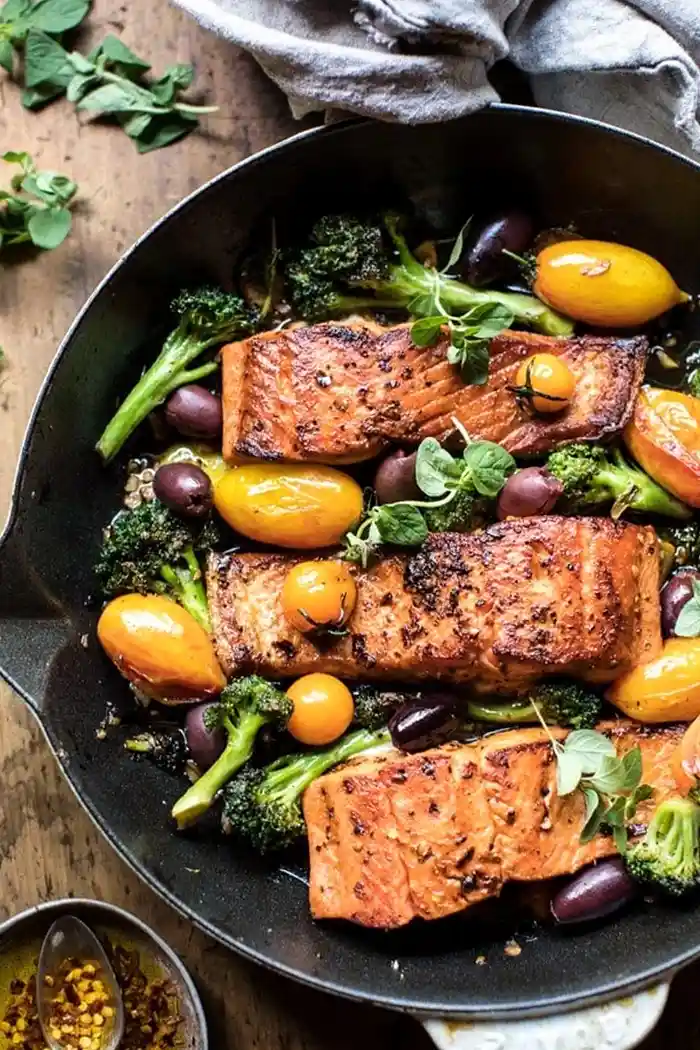
List of ingredients
- 4 salmon fillets
- Extra virgin olive oil, for rubbing and cooking
- Juice from 1 lemon
- 1 teaspoon red pepper flakes
- 1 teaspoon paprika
- Kosher salt and pepper to taste
- 1 large head of broccoli, cut into florets
- 1 cup cherry tomatoes
- 2 cloves garlic, minced or grated
- 2 tablespoons chopped fresh oregano
- Zest from 1 lemon
- 1 splash of vegetable stock (as a savory cooking liquid)
- 1/2 cup pitted kalamata olives
step-by-step instructions
- Step: Heat a drizzle of olive oil in a large skillet over medium high heat.
- Step: Rub the salmon all over with olive oil and lemon juice. Sprinkle with chili flakes, paprika, salt, and pepper. Place flesh side down in the skillet and sear until crisp and just beginning to caramelize, about 2-3 minutes. Flip and cook 1 minute more or until your desired doneness is reached. Remove the salmon from the skillet.
- Step: Add another drizzle of oil to the pan, add the broccoli and cook until tender, about 5 minutes. Add the tomatoes, garlic, oregano, lemon zest, salt and pepper and cook until the tomatoes begin to burst, about 5 minutes. Remove from the heat and add a splash of vegetable stock to create a sauce. Add the olives and slide the salmon back into the skillet to warm throughout.
- Step: Serve the salmon with a side of veggies and any sauce left in the skillet. Garnish with fresh oregano.
Refining your pan-searing technique
Managing skillet heat for optimal crust
Achieving that perfect golden-brown crust on your salmon relies entirely on the initial temperature of your skillet. If the pan is not hot enough, the salmon will stick to the surface and pull apart rather than developing a crispy, caramelized finish. Aim for a medium-high setting, and always wait until the oil looks fluid and shimmery before placing the fish in the pan. If the salmon starts to release too much moisture immediately, your pan was likely too cool, so adjust your dial accordingly for future batches.
Preventing the salmon from overcooking
Salmon is a delicate protein that can transition from succulent to dry in less than sixty seconds. To ensure the texture remains tender, use a gentle touch when flipping the fillets and avoid pressing down on them while they are in the skillet. If you are unsure if the fish is finished, look for the flesh to turn opaque and flake easily when nudged with a fork. It is always better to remove the salmon from the pan just a moment before you think it is fully done, as it will continue to cook slightly while the vegetables are finishing.
Selecting and preparing your produce
Tips for crisp, vibrant broccoli
The key to perfect broccoli in a skillet is keeping the florets small and uniform in size. If the florets are too large, the outsides will burn before the inner stalks are properly cooked through. Blanching the broccoli for thirty seconds in boiling water before searing can guarantee a perfect, vibrant green finish, though it is not strictly necessary if you sauté them patiently over medium heat. Always aim for a slight char on the edges of the florets, as this depth of flavor complements the acidity of the tomatoes and the richness of the salmon.
Handling tomatoes for maximum flavor
When selecting tomatoes for this recipe, look for ones that feel firm to the touch but have a deep, vibrant color. Cherry and grape tomatoes are preferred because their high sugar content allows them to caramelize and burst easily, creating a natural, savory sauce when mixed with the aromatics. If your tomatoes are quite large, slice them in half to ensure they release their internal liquid promptly. Be careful not to mash them prematurely; you want them to retain some structural integrity while providing enough juice to coat the broccoli and fish.
Flavor enhancement strategies
The role of fresh herbs
Fresh oregano provides a robust, slightly earthy aroma that cuts through the fattiness of the salmon. If you find yourself without fresh oregano, you can substitute with a mix of fresh parsley and a tiny pinch of dried thyme. Always add fresh herbs at the very end of the cooking process to preserve their bright, volatile oils. If you cook them for too long, they lose their distinct fragrance and can take on a muddy flavor profile that detracts from the vibrancy of the dish.
Balancing acidity and salt
The combination of lemon juice, zest, and kalamata olives creates a powerful flavor profile that needs to be balanced by the natural sweetness of the tomatoes. If your sauce tastes too sharp, taste the vegetables before serving and add a tiny pinch of sugar or honey to round out the acidity. Similarly, because kalamata olives are naturally salty, be cautious when seasoning the vegetable mixture with additional kosher salt. Taste the sauce as you go, as the olives and the reduction will concentrate the salinity of the dish significantly as the liquid evaporates.
Storing and reheating guidelines
Proper refrigeration techniques
Store any leftover salmon and vegetables in an airtight glass container to maintain freshness for up to two days. Avoid keeping the fish for longer than this, as the texture of salmon degrades quickly once it has been cooked. If you know you will have leftovers, it is best to store the salmon separately from the vegetables so you can reheat the fish gently without turning the broccoli into mush.
Reheating for optimal texture
The best way to reheat this dish is in a skillet over low heat with a tiny splash of broth or water. Cover the pan with a lid to create a steam effect, which will gently warm the salmon through without drying out the flesh. Avoid using a microwave whenever possible, as the intense, uneven heat will cause the protein fibers in the salmon to toughen instantly, resulting in a rubbery texture that is far from the original quality of the freshly prepared meal.
Common cooking questions
Can I substitute the salmon with other proteins?
Yes, this recipe works remarkably well with firm white fish like cod, halibut, or even sea bass. If you prefer to use a poultry option, boneless, skinless chicken breasts or thighs can be cooked using the exact same method. Just be aware that chicken requires a longer cooking time to ensure it reaches a safe internal temperature; always ensure the juices run clear before removing the poultry from the heat.
How do I stop the pan sauce from becoming too thin?
If you prefer a thicker, more syrupy sauce, simply simmer the liquid for an extra minute or two before adding the salmon back into the pan. You can also toss in a small knob of cold butter at the very end to emulsify the juices and give the sauce a glossy, luxurious finish. This small addition creates a wonderful coating that clings to the vegetables and enhances the overall mouthfeel of the dish.
Are there variations for additional vegetables?
This recipe is highly adaptable and welcomes various seasonal vegetables. Thinly sliced bell peppers, zucchini rounds, or baby spinach are excellent additions that cook quickly. If you decide to add harder vegetables like asparagus or green beans, include them at the same time as the broccoli to ensure they reach the correct level of tenderness. Always be mindful not to overcrowd the skillet, as this will cause the vegetables to steam rather than sear, leading to a loss of the deep, savory flavor you are aiming for.
Print
Sicilian Style Salmon with Garlic Broccoli and Tomatoes
- Total Time: 25 minutes
- Yield: 4 servings 1x
- Diet: Pescatarian
Description
This colorful Sicilian-style salmon skillet is a vibrant, healthy meal packed with fresh broccoli, sweet cherry tomatoes, and aromatic Mediterranean flavors. It is perfect for a quick, nutritious weeknight dinner.
Ingredients
- 4 salmon fillets
- Extra virgin olive oil, for rubbing and cooking
- Juice from 1 lemon
- 1 teaspoon red pepper flakes
- 1 teaspoon paprika
- Kosher salt and pepper to taste
- 1 large head of broccoli, cut into florets
- 1 cup cherry tomatoes
- 2 cloves garlic, minced or grated
- 2 tablespoons chopped fresh oregano
- Zest from 1 lemon
- 1 splash of vegetable stock (as a savory cooking liquid)
- 1/2 cup pitted kalamata olives
Instructions
- Step: Heat a drizzle of olive oil in a large skillet over medium high heat.
- Step: Rub the salmon all over with olive oil and lemon juice. Sprinkle with chili flakes, paprika, salt, and pepper. Place flesh side down in the skillet and sear until crisp and just beginning to caramelize, about 2-3 minutes. Flip and cook 1 minute more or until your desired doneness is reached. Remove the salmon from the skillet.
- Step: Add another drizzle of oil to the pan, add the broccoli and cook until tender, about 5 minutes. Add the tomatoes, garlic, oregano, lemon zest, salt and pepper and cook until the tomatoes begin to burst, about 5 minutes. Remove from the heat and add a splash of vegetable stock to create a sauce. Add the olives and slide the salmon back into the skillet to warm throughout.
- Step: Serve the salmon with a side of veggies and any sauce left in the skillet. Garnish with fresh oregano.
Notes
Serve this dish alongside crusty whole grain bread, polenta, or roasted potatoes to soak up the delicious pan sauce. Can be substituted with chicken fillets if preferred.
- Prep Time: 10 minutes
- Cook Time: 15 minutes
- Category: Main Course
- Method: Stovetop
- Cuisine: Mediterranean
Nutrition
- Serving Size: 1 fillet with vegetables
- Calories: 451 kcal
- Sugar: 4 g
- Sodium: 480 mg
- Fat: 22 g
- Saturated Fat: 4 g
- Unsaturated Fat: 16 g
- Trans Fat: 0 g
- Carbohydrates: 12 g
- Fiber: 4 g
- Protein: 45 g
- Cholesterol: 95 mg