Experience the aromatic depths of traditional Vietnamese noodle soup in a fraction of the usual time. This streamlined method utilizes toasted spices and a rapid infusion process to create a restaurant-quality broth that is both light and intensely flavorful. It is the perfect solution for busy weeknights when you desire a comforting, restorative bowl of soup without the hours of long-simmering commitment.
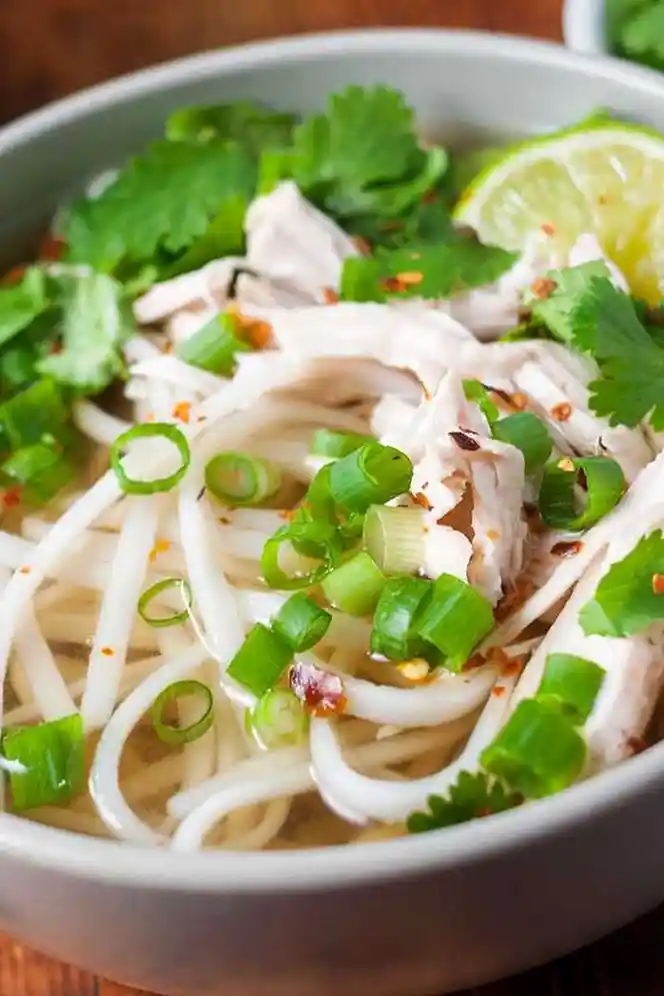
List of ingredients
- 3/4-inch section ginger
- 2 medium-large green onions
- 1 very small bunch cilantro sprigs
- 1 1/2 teaspoons coriander seeds
- 1 whole clove
- 3 1/2 to 4 cups low-sodium chicken broth
- 2 cups water
- 6 to 8 ounces boneless, skinless chicken breast or thighs
- 1/2 teaspoon fine sea salt
- 5 ounces dried narrow flat rice noodles
- 2 to 3 teaspoons fish sauce
- 1/2 teaspoon organic sugar, or 1 teaspoon maple syrup
- Pepper
- Optional: Bean sprouts, mint sprigs, Thai basil, cilantro leaves, lime wedges, thinly-sliced chili peppers
step-by-step instructions
- Prep: Peel and slice ginger into coins and smack with a mallet. Thinly slice green parts of onions for garnish; bruise the remaining white sections. Chop cilantro tops for garnish; keep sprigs separate.
- Toast: In a pot, toast coriander seeds and clove over medium heat until fragrant. Add ginger and onion sections, stirring for 30 seconds.
- Simmer: Remove from heat briefly, add broth, water, cilantro sprigs, chicken, and salt. Bring to a boil, then lower to a gentle simmer.
- Cook: Simmer chicken for 5-10 minutes until cooked through. Remove chicken, then simmer remaining broth for 15-20 minutes.
- Shred: Cool the chicken in cold water, drain, and shred into bite-size pieces.
- Noodles: Soak rice noodles in hot water until pliable, then drain and set aside.
- Strain & Season: Strain broth into a pot and discard solids. Season with fish sauce and sugar or maple syrup.
- Serve: Bring broth to a boil. Briefly dunk noodles in broth to warm, divide into bowls, top with chicken, and ladle hot broth over. Garnish with onions, cilantro, and pepper.
Refining Your Broth Technique
The Role of Aromatics
The secret to achieving a complex profile in a short timeframe lies entirely in how you handle your spices. Toasting the coriander seeds and cloves is not optional; this step releases essential oils that provide depth. Similarly, bruising the ginger and green onions helps them yield their juices quickly into the liquid, ensuring maximum flavor extraction during the short thirty-minute simmer.
Achieving Clarity
For a professional-looking, crystal-clear soup, the straining process is vital. Using a fine-mesh sieve helps, but lining that sieve with a layer of muslin or a clean, thin kitchen towel is the gold standard for trapping fine particles. By removing every bit of solids, you are left with a vibrant, clean-tasting broth that focuses entirely on the infused spices rather than stray herbs.
Understanding Ingredient Roles
Selecting the Right Fish Sauce
Fish sauce acts as the salt component but provides far more than just salinity. It introduces a complex umami quality that cannot be replicated by salt alone. Choose a high-quality brand that lists only fish and salt as ingredients, as these are cleaner and offer a more sophisticated flavor profile that integrates seamlessly into the broth.
Customizing with Noodles
The texture of your rice noodles can significantly change the experience of the dish. While soaking them in hot water is sufficient for this recipe, many home cooks prefer to blanch them briefly in the boiling broth just before serving. This ensures that the noodles are piping hot and have a chance to absorb some of the savory broth, preventing them from feeling like a separate, plain component added to the soup.
Essential Serving Strategies
The Importance of Fresh Garnishes
Pho is as much about the fresh, crunchy, and herbaceous additions as it is about the soup itself. Bean sprouts provide a necessary textural contrast to the soft noodles and tender chicken, while Thai basil and mint introduce cooling, aromatic elements that cut through the richness of the broth. Always arrange these on the side or add them just before eating to maintain their crispness and vibrant color.
Balancing the Bowl
When you sit down to eat, consider the final acidity level. A wedge of fresh lime is not just a garnish; it is an active ingredient. The bright citrus acid elevates the savory notes of the broth and helps balance the natural sweetness of the rice noodles. We recommend adding it in small increments, tasting as you go, to find the perfect balance for your personal palate.
Managing Storage and Reheating
Proper Cold Storage
If you find yourself with leftovers, store the broth and the noodles in separate containers. Rice noodles continue to absorb liquid and will become mushy if left in the broth for too long in the refrigerator. The broth will keep well in an airtight container for up to three days, while the cooked chicken should be consumed within two days for the best quality.
Restoring the Soup
When reheating, bring the broth to a gentle simmer in a small saucepan. Never boil the broth aggressively once the chicken has been added back in, as this can toughen the meat. For the noodles, place them in a colander and rinse them under hot tap water until they are warm and loosened before placing them in your serving bowl to be covered with the reheated broth.
Common Questions Addressed
Why does the recipe suggest adding water to the broth?
Most store-bought broths are formulated to be quite intense and salty on their own. Adding water achieves two goals: it lightens the broth to the authentic consistency found in traditional pho shops and it creates a larger volume, allowing the aromatic spices to properly infuse without the liquid becoming overly reduced or aggressively salty.
Can I substitute the chicken with another protein?
Yes, you can adapt this method for thinly sliced beef, though it should be added to the bowl raw and cooked by the boiling broth poured over it. If using shrimp, poach them for only 2 to 3 minutes during the final stages of the broth simmering to prevent them from becoming rubbery.
Is there a way to make this spicier?
If you enjoy a fiery bowl of soup, adding fresh chili peppers is the best approach. Avoid adding dried chili flakes to the broth during the simmer, as they can sometimes create an uneven, dusty heat. Instead, thinly slice fresh bird’s eye chilies or jalapeños and serve them on the side so each person can control the heat level to their preference.
How do I prevent the noodles from sticking?
Rice noodles are prone to clumping once they have been soaked and drained. To prevent this, toss them with a tiny drop of neutral oil immediately after rinsing. This will keep them separated and easy to portion into your bowls right before the final assembly step.
Print
Quick Chicken Pho
- Total Time: PT40M
- Yield: 2 servings 1x
- Diet: Gluten-free
Description
Make a quicker take on the classic Vietnamese rice noodle soup in just 30-minutes thanks to these helpful tips for a fragrant, savory chicken pho.
Ingredients
- 3/4-inch section ginger
- 2 medium-large green onions
- 1 very small bunch cilantro sprigs
- 1 1/2 teaspoons coriander seeds
- 1 whole clove
- 3 1/2 to 4 cups low-sodium chicken broth
- 2 cups water
- 6 to 8 ounces boneless, skinless chicken breast or thighs
- 1/2 teaspoon fine sea salt
- 5 ounces dried narrow flat rice noodles
- 2 to 3 teaspoons fish sauce
- 1/2 teaspoon organic sugar, or 1 teaspoon maple syrup
- Pepper
- Optional: Bean sprouts, mint sprigs, Thai basil, cilantro leaves, lime wedges, thinly-sliced chili peppers
Instructions
- Prep: Peel and slice ginger into coins and smack with a mallet. Thinly slice green parts of onions for garnish; bruise the remaining white sections. Chop cilantro tops for garnish; keep sprigs separate.
- Toast: In a pot, toast coriander seeds and clove over medium heat until fragrant. Add ginger and onion sections, stirring for 30 seconds.
- Simmer: Remove from heat briefly, add broth, water, cilantro sprigs, chicken, and salt. Bring to a boil, then lower to a gentle simmer.
- Cook: Simmer chicken for 5-10 minutes until cooked through. Remove chicken, then simmer remaining broth for 15-20 minutes.
- Shred: Cool the chicken in cold water, drain, and shred into bite-size pieces.
- Noodles: Soak rice noodles in hot water until pliable, then drain and set aside.
- Strain & Season: Strain broth into a pot and discard solids. Season with fish sauce and sugar or maple syrup.
- Serve: Bring broth to a boil. Briefly dunk noodles in broth to warm, divide into bowls, top with chicken, and ladle hot broth over. Garnish with onions, cilantro, and pepper.
Notes
You can leave the broth at a low simmer when serving if you prefer not to bring it to a boil again. Dunking noodles in the broth is optional but adds extra flavor.
- Prep Time: PT10M
- Cook Time: PT30M
- Category: Dinner, Soup, Restaurant Favorite
- Method: Simmering
- Cuisine: Vietnamese
Nutrition
- Serving Size: 1 bowl
- Calories: 360 kcal
- Sugar: 1 g
- Sodium: 1381 mg
- Fat: 16 g
- Saturated Fat: 4 g
- Unsaturated Fat: 11 g
- Trans Fat: 0 g
- Carbohydrates: 22 g
- Fiber: 2 g
- Protein: 32 g
- Cholesterol: 106 mg