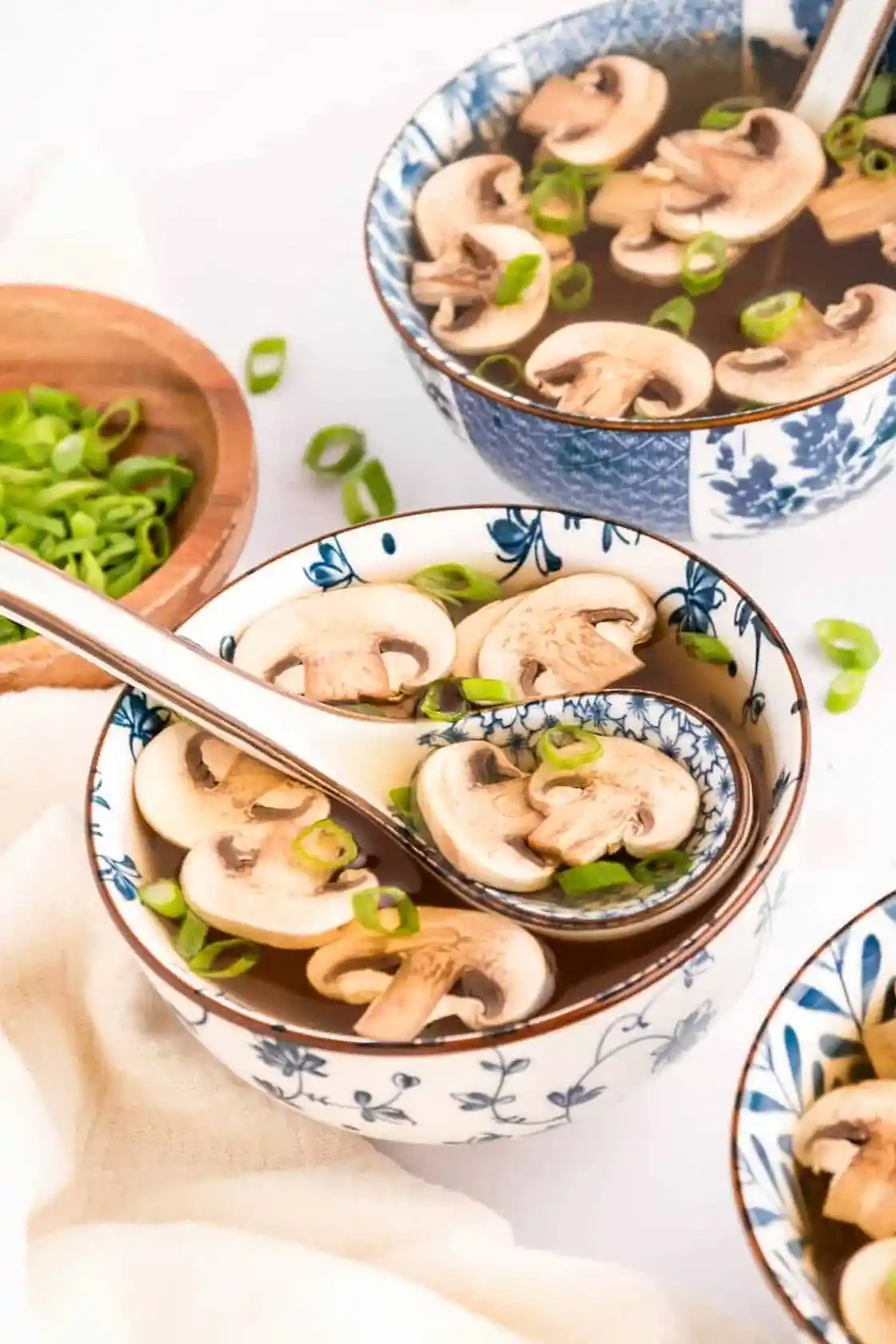
This Japanese-style clear onion soup is a light, aromatic starter that complements a variety of main courses. It utilizes a simple vegetable-based broth to create a savory, transparent base that mimics the traditional hibachi restaurant experience.
List of ingredients
- 6 cups vegetable broth – provides the savory liquid base.
- 2 cups onions, diced – adds natural sweetness and depth.
- 1 cup celery, diced – contributes an earthy aromatic quality.
- 1 cup carrots, peeled and diced – adds sweetness and complexity.
- 3 garlic cloves, minced – provides a pungent, savory note.
- 1 teaspoon fresh ginger, minced – adds a subtle, spicy warmth.
- 1 teaspoon sesame oil – introduces a toasted, nutty aroma.
- 1 cup button mushrooms, thinly sliced – used as a fresh garnish.
- ½ cup green onions, sliced – adds a bright, sharp finish.
- soy sauce (optional) – used for additional umami and saltiness.
- sriracha (optional) – used to add heat to the final dish.
step-by-step instructions
- Sauté Aromatics: Heat a small amount of oil in a large pot over medium heat. Add the diced onions and cook for approximately 10 minutes, stirring occasionally, until they are soft and slightly caramelized.
- Combine Base Ingredients: Stir in the diced carrots, celery, minced garlic, and minced ginger. Pour in the sesame oil and the vegetable broth, then season with salt and pepper to taste.
- Simmer Broth: Bring the liquid to a boil, then immediately reduce the heat to a low simmer. Let the soup cook uncovered for 30 minutes to ensure the vegetable flavors are fully extracted.
- Strain the Liquid: Use a fine-mesh strainer or a slotted spoon to remove all solid vegetables from the pot. This process leaves behind a clear, refined broth.
- Prepare Bowls: Place a handful of the thinly sliced raw button mushrooms and sliced green onions into the bottom of each serving bowl.
- Assemble Soup: Pour the hot, strained broth directly over the mushrooms and green onions. The heat of the broth will soften the mushrooms slightly while maintaining their texture.
- Final Seasoning: Stir in a small splash of soy sauce for extra depth or a drizzle of sriracha if a spicy flavor profile is preferred.
Optimization for Broth Clarity
Use a Fine-Mesh Sieve
To achieve the transparency characteristic of Japanese clear soups, use a fine-mesh sieve rather than just a slotted spoon. This removes small particles of ginger and garlic that can make the broth look cloudy. Gently press the vegetables with the back of a spoon to extract all remaining liquid before discarding.
Maintain a Gentle Simmer
Avoid allowing the broth to reach a rolling boil for an extended period. Rapid boiling can emulsify fats and break down vegetable fibers, which introduces cloudiness into the liquid. Keep the heat low enough that only a few bubbles break the surface occasionally.
Skim the Surface
As the soup simmers, a small amount of foam or impurities may rise to the top. Use a spoon to skim this foam off the surface. Removing these impurities prevents them from being reintegrated into the broth, resulting in a cleaner appearance and taste.
Ingredient Substitutions and Variations
Swap Button Mushrooms for Shiitake
For a more intense umami flavor, replace button mushrooms with thinly sliced shiitake mushrooms. Shiitakes have a meatier texture and a deeper, earthier taste that complements the ginger and sesame oil. Ensure they are sliced very thin so they soften quickly in the hot broth.
Use Tamari for Gluten-Free Requirements
Standard soy sauce contains wheat, which may not be suitable for all diets. Replace soy sauce with tamari or coconut aminos to make this recipe gluten-free. Tamari provides a similar saltiness and depth of flavor without the inclusion of wheat.
Alternative Aromatics
If leeks are available, they can be used in place of yellow onions for a milder, more refined sweetness. You can also increase the amount of fresh ginger to one tablespoon if you prefer a more pungent, warming quality to the broth.
Using Different Broth Bases
While vegetable broth is the standard for this version, high-quality chicken broth can be used for a richer flavor. Ensure the broth used is low-sodium to allow for better control over the final seasoning when adding soy sauce.
Practical Cooking Tips
Achieve Consistent Dicing
Cut the onions, carrots, and celery into uniform pieces. Consistent sizing ensures that the vegetables cook at the same rate and release their flavors evenly into the broth. This prevents some pieces from overcooking while others remain raw.
Control the Caramelization Process
When sautéing the onions, keep the heat at a steady medium. If the heat is too high, the onions will burn and turn bitter rather than caramelizing. Stirring every few minutes prevents sticking and ensures an even brown color.
Freshness of Garnishes
Always use fresh green onions and raw mushrooms for the bowl assembly. Adding these at the very end prevents them from becoming overcooked and mushy. The contrast between the hot broth and the crisp vegetables provides a better textural experience.
Serving and Pairing Ideas
Bowl Selection and Temperature
Serve the soup in pre-warmed bowls to keep the broth hot for longer. Because this is a light soup, it cools down quickly. Warming the bowls ensures the mushrooms and scallions reach the desired softness before the liquid becomes lukewarm.
Complementary Side Dishes
This soup pairs well with other light Asian-inspired dishes. Serve it alongside an Asian cucumber salad or vegetable spring rolls to create a balanced appetizer course. The acidity of a cucumber salad cuts through the richness of the sesame oil in the soup.
Adjusting the Heat Level
For those who prefer more heat, replace sriracha with a small amount of chili oil or red pepper flakes. Adding a drop of toasted sesame oil directly into the bowl before pouring the broth can also enhance the aromatic profile.
Storage and Reheating Guide
Refrigerating the Broth
Allow the strained broth to cool completely before transferring it to an airtight container. Store the broth separately from the mushrooms and green onions. The broth will stay fresh in the refrigerator for up to four days.
Freezing for Long-Term Use
The clear broth can be frozen in freezer-safe containers or ice cube trays for portioned servings. It remains high-quality for up to three months in the freezer. Do not freeze the mushroom and scallion garnishes, as they will lose their cellular structure and become watery upon thawing.
Proper Reheating Techniques
Reheat the broth on the stovetop over medium heat until it reaches a simmer. If using a microwave, heat in 30-second intervals and stir in between to avoid hot spots. Once the broth is hot, pour it over fresh mushrooms and green onions in a bowl.
Troubleshooting Common Issues
Dealing with Overly Salty Broth
If the vegetable broth is too salty, you can dilute it by adding a small amount of water or unsalted vegetable stock. Alternatively, adding a small amount of grated fresh ginger can help balance the saltiness with a sharp, fresh note.
Addressing a Lack of Flavor
If the broth tastes flat, increase the simmering time by another 10 to 15 minutes to extract more flavor from the vegetables. Adding a teaspoon of soy sauce or a pinch of sugar can also help enhance the existing umami notes.
Preventing Broth Separation
If you notice oil droplets floating on top, this is usually the sesame oil separating. You can stir the broth vigorously before pouring, or simply leave it as is, as the oil provides a traditional aromatic finish to the dish.
Frequently Asked Questions
What is Japanese clear onion soup made of?
This soup consists of a vegetable broth base simmered with onions, celery, carrots, garlic, and ginger. The solids are strained out to create a clear liquid, which is then poured over raw mushrooms and sliced green onions.
How do you make Japanese clear onion soup taste like the one at hibachi restaurants?
The restaurant taste comes from a combination of slow-simmering aromatics and the final straining process. Using sesame oil and finishing the dish with fresh, raw garnishes in the bowl replicates the signature steakhouse flavor.
Can I use vegetable broth instead of beef broth in Japanese clear onion soup?
Yes, vegetable broth is an excellent alternative that keeps the soup light and savory. While beef broth provides more richness, high-quality vegetable broth ensures a clean taste that highlights the ginger and garlic.
Why are the mushrooms added raw to the bowl?
Adding raw mushrooms to the bowl allows them to be gently poached by the hot broth. This preserves their snap and texture, preventing them from becoming rubbery, which often happens when they are boiled in the pot.
Can I add other vegetables to the broth?
You can add bok choy or spinach to the bowls along with the mushrooms. However, do not add them to the simmering pot if you intend to strain the broth, as they are meant to be part of the final presentation rather than the flavor base.
Print
Japanese Clear Onion Soup
- Total Time: 40 minutes
- Yield: 4 servings 1x
- Diet: Vegan, Gluten-Free
Description
Japanese Clear Onion Soup is a light, broth-forward soup made with simple aromatics, onions, celery, and carrots simmered until the flavors deepen.
Ingredients
- 6 cups vegetable broth
- 2 cups onions, diced
- 1 cup celery, diced
- 1 cup carrots, peeled and diced
- 3 garlic cloves, minced
- 1 teaspoon fresh ginger, minced
- 1 teaspoon sesame oil
- 1 cup button mushrooms, thinly sliced
- ½ cup green onions, sliced
- soy sauce (optional)
- sriracha (optional)
Instructions
- Step: Heat a little oil in a large pot over medium heat. Add the diced onions and cook for about 10 minutes, stirring occasionally, until they become soft and slightly caramelized.
- Step: Stir in the carrots, celery, garlic, and ginger. Pour in the sesame oil and vegetable broth. Season with salt and pepper to taste.
- Step: Bring the mixture to a boil, then reduce the heat to a simmer. Let it cook uncovered for 30 minutes to allow the flavors to develop.
- Step: Use a fine-mesh strainer or slotted spoon to remove the vegetables, leaving a clear broth. Discard the solids or save them for another use.
- Step: Place a handful of thinly sliced mushrooms and scallions into serving bowls.
- Step: Pour the hot broth over the mushrooms and scallions, allowing them to soften slightly in the heat.
- Step: Add a splash of soy sauce for extra depth or sriracha for a spicy kick.
Notes
Prevent Cloudy Broth: Simmer gently and avoid boiling too hard, as rapid boiling can break down vegetables and create murkiness. Clear Broth Tip: Strain the vegetables well using a fine-mesh strainer for a smooth, clean broth.
- Prep Time: 10 minutes
- Cook Time: 30 minutes
- Category: Soup
- Method: Simmering
- Cuisine: Japanese
Nutrition
- Serving Size: 1 serving
- Calories: 88 kcal
- Sugar: 9 g
- Sodium: 1459 mg
- Fat: 1 g
- Saturated Fat: 0.2 g
- Unsaturated Fat: 0.8 g
- Trans Fat: 0 g
- Carbohydrates: 18 g
- Fiber: 3 g
- Protein: 2 g
- Cholesterol: 0 mg