Brining is an essential technique for ensuring your chicken remains moist and tender regardless of the cooking method. This process infuses the meat with flavor while preventing it from drying out in the oven, grill, or fryer.
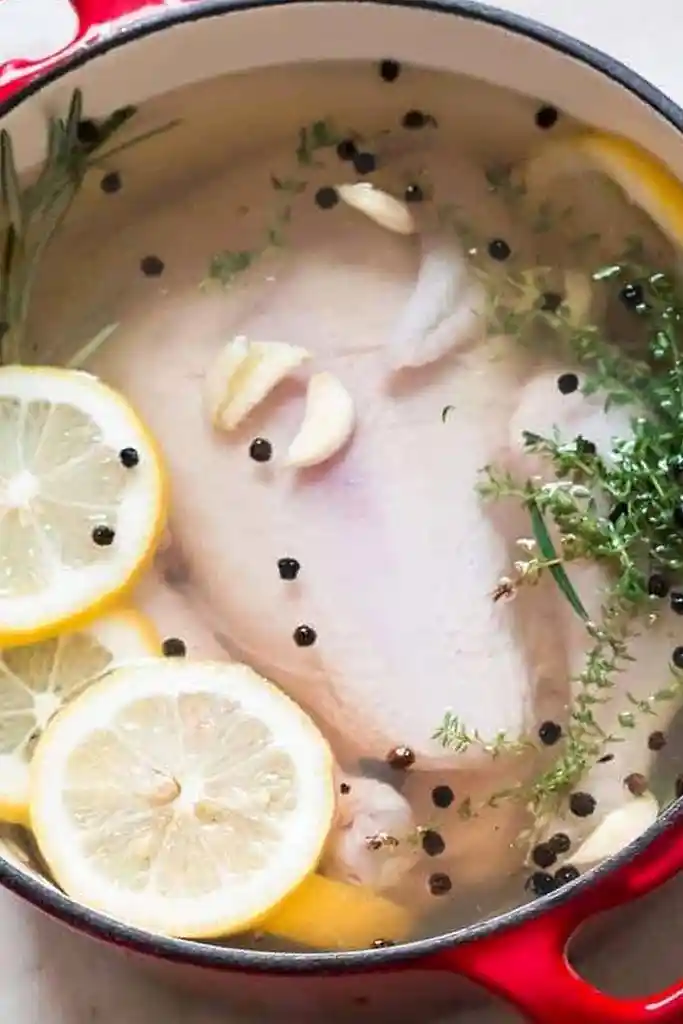
List of ingredients
- 3-4 lbs whole chicken – target size for standard pots
- 8 cups water – base for the brine
- 1/3 cup kosher salt – coarse grains for proper seasoning
- 1/4 cup honey – aids in skin browning and balances salt
- 3 dried bay leaves – adds a subtle earthy depth
- 5 cloves garlic – keep whole and smash lightly to release oils
- 1 tablespoon black peppercorns – provides a sharp, woody spice
- 10 sprigs fresh parsley – adds a bright, clean herbal note
- 3 sprigs rosemary – provides a strong, pine-like aroma
- 7 sprigs thyme – adds a classic savory flavor
- 2 lemons – sliced into rounds for acidity and tenderness
- 2 tablespoon unsalted butter – used for rubbing on the skin before roasting
- Generous pinch of crushed pepper – for final seasoning
step-by-step instructions
- Dissolve Salt: Use a pot large enough to hold the chicken. Simmer 8 cups of water and 1/3 cup kosher salt on low for about 2 minutes until dissolved.
- Add Aromatics: Stir in the smashed garlic, peppercorns, bay leaves, lemon slices, honey, and fresh herbs (rosemary, thyme, and parsley).
- Boil and Cool: Bring the mixture to a boil for one minute, then remove from heat. Allow the brine to cool completely before use to prevent bacterial growth.
- Quick Cooling Tip: To speed up the process, let the pot cool slightly on the counter and then place it in the refrigerator.
- Immerse Chicken: Place the whole chicken in the cooled brine. Ensure the bird is fully submerged; add 1-2 cups of room temperature water if necessary.
- Refrigerate: Cover the pot with a lid and store in the refrigerator for 8 to 24 hours. Do not exceed 24 hours to avoid over-salting the meat.
- Rinse and Prep: Remove the chicken and rinse it thoroughly under tap water to remove excess surface salt. Discard the used brine immediately to avoid contamination.
- Dry and Season: Pat the chicken dry with paper towels. Tie the legs with kitchen string and rub softened unsalted butter over the entire skin. Sprinkle with crushed pepper, omitting additional salt.
- Chill: Place the seasoned chicken on a rack over a baking tray or cast iron pan. Leave it uncovered in the fridge for 15 to 20 minutes.
- Initial Roast: Roast in a pre-heated oven at 400 degrees F for 30 minutes.
- Flip and Finish: Use tongs to flip the chicken breast side up. Continue roasting for 30 to 40 minutes.
- Baste: Brush the top of the chicken with butter 3 to 5 times during the roasting process to enhance browning. Rotate the pan halfway through if the bird is not browning evenly.
- Check Temperature: Insert a meat thermometer into the thickest part of the thigh. The chicken is done when it reaches an internal temperature of 165 degrees F.
- Rest: Remove from the oven and cover with aluminum foil. Let the chicken rest for 15 minutes before carving to allow juices to redistribute.
Brining Fundamentals and Science
The Process of Osmosis
Brining works through osmosis, where salt draws water and flavor into the muscle fibers of the meat. This increases the total moisture content of the chicken before it ever hits the heat. Consequently, the meat can withstand higher cooking temperatures without becoming dry.
Muscle Fiber Tenderization
The salt in the brine breaks down some of the tight protein structures in the chicken. This process makes the meat feel more tender when chewed. It is particularly effective for lean areas like the breast which typically dry out quickly.
The Role of Aromatics
Adding herbs, garlic, and lemon does more than just provide surface flavor. The brine carries these aromatic compounds deep into the meat during the soaking period. This creates a layered flavor profile that is present in every bite, not just the skin.
Crucial Brining Tips
Ensuring the Brine is Completely Cold
Never place raw chicken into warm or hot brine. Warm temperatures create an ideal environment for harmful bacteria to multiply rapidly, posing a serious health risk. Always verify the liquid is at room temperature or chilled before adding the meat.
Achieving Full Submersion
For the chicken to brine evenly, every part of the bird must be covered by the liquid. If the chicken floats, use a heavy plate or a specialized brine weight to keep it submerged. Parts exposed to air will not be seasoned or tenderized properly.
The Necessity of Rinsing
Rinsing the chicken under cold tap water after brining is a mandatory step. This removes the concentrated salt layer from the skin. Without rinsing, the exterior of the roasted chicken often tastes overly salty and can mask the flavor of the butter and herbs.
Avoiding Over-Brining
Limit the brining time to a maximum of 24 hours. If left in the salt solution too long, the meat can take on a cured, ham-like texture. Over-brined chicken also becomes excessively salty, which cannot be fixed during the roasting process.
Ingredient Substitutions and Variations
Replacing Honey with Granulated Sugar
If honey is unavailable, you can use white or brown sugar as a substitute. Sugar helps the skin caramelize and brown more effectively through the Maillard reaction. Use the same quantity as the honey listed in the recipe.
Using Table Salt Instead of Kosher Salt
Kosher salt has larger grains and is less dense than table salt. If using fine table salt, reduce the amount by approximately 2 tablespoons. Using a full 1/3 cup of table salt will make the brine far too concentrated.
Alternative Herb Combinations
While rosemary, thyme, and parsley are classic, you can swap them for oregano or sage. Sage is particularly effective for a more autumnal flavor profile. Always use fresh herbs for the best infusion of oils into the brine.
Adapting for Different Chicken Cuts
Brining Chicken Breasts
Boneless chicken breasts require significantly less time in the brine than a whole bird. Soak them for a minimum of 2 hours and no more than 6 hours. For breasts, you can scale the brine recipe down by half.
Brining Wings and Drumsticks
Bone-in cuts like wings and drumsticks benefit from a medium soak time. Aim for approximately 4 hours in the brine for these pieces. This ensures the salt penetrates the meat near the bone without over-seasoning the exterior.
Scaling for Larger Birds
If you are brining a turkey or a very large chicken, a pot may not be sufficient. Transfer the cooled brine and the meat into heavy-duty brining bags. This saves space in the refrigerator and ensures the meat stays submerged.
Perfecting the Roasting Process
The Importance of Unsalted Butter
Since the chicken has absorbed a significant amount of salt during the brining process, use unsalted butter for the exterior rub. This allows you to achieve a golden-brown crust without adding excess sodium to the skin.
Managing Oven Heat and Browning
Rotating the pan halfway through the roasting time prevents one side of the chicken from burning. If the wings or legs brown too quickly, cover them loosely with small pieces of foil to protect them while the breast finishes cooking.
Accurate Internal Temperature
Rely on a digital meat thermometer rather than timing alone. The thigh area is the safest place to check, as it usually takes the longest to cook. A reading of 165 degrees F ensures the meat is safe to eat and perfectly juicy.
Allowing the Meat to Rest
Resting the chicken for 15 minutes under foil is critical for juice retention. During the roast, juices migrate toward the center of the meat. Resting allows these juices to flow back toward the edges, ensuring the meat is moist from end to end.
Storage and Safety Guidelines
Discarding the Used Brine
Always pour the brine down the drain after removing the chicken. The liquid has been in contact with raw poultry and contains bacteria that can survive the brining process. Reusing the brine for other meats is dangerous and can lead to cross-contamination.
Avoiding Frozen Chicken
Do not place frozen chicken directly into a brine. The ice crystals prevent the salt and aromatics from penetrating the meat evenly. Thaw the chicken completely in the refrigerator before starting the brining process.
Separating Poultry from Other Meats
If brining multiple types of meat, such as beef and chicken, use separate containers or bags. Poultry can carry microbes that are harmful to other meat types. Never mix different species in the same brine solution.
Common Brining Questions
How long to brine chicken?
For a whole chicken, brine for 8 to 12 hours, though 24 hours is the maximum limit. Chicken breasts only need about 2 hours, while wings and thighs require around 4 hours.
Can I reuse brine liquid?
No, you must discard the liquid. Raw meat contamination makes the brine unsafe for any further use or for use as a sauce.
What is dry brining?
Dry brining involves rubbing a mixture of kosher salt and spices directly onto the skin and meat without water. The meat is then refrigerated uncovered for 12 to 24 hours, which draws moisture out and then re-absorbs it as a concentrated brine.
Can I use this for chicken breasts?
Yes, this recipe works well for breasts, but you should halve the ingredient quantities and reduce the soaking time to 2-6 hours.
Why shouldn’t I use the pan drippings?
The liquids left in the pan after roasting brined chicken are often extremely salty. Drizzling them over the meat can ruin the balance of flavors and make the dish taste over-salted.
Print
Ultimate Guide to Brining and Roasting Juicy Chicken
- Total Time: 75 minutes
- Yield: 8 servings 1x
- Diet: General
Description
The best chicken brine to make juicy tender chicken no matter how you cook it – roast it in oven, grill it or fry it.
Ingredients
- 3–4 lbs whole chicken
- 8 cups water
- 1/3 cup kosher salt
- 1/4 cup honey
- 3 dried bay leaves
- 5 cloves garlic, smashed lightly
- 1 tablespoon black peppercorns
- 10 sprigs fresh parsley
- 3 sprigs rosemary
- 7 sprigs thyme
- 2 lemons, sliced
- 2 tablespoon unsalted butter
- Pinch of crushed pepper
Instructions
- Step: Dissolve kosher salt in water in a pot on slow simmer for about 2 minutes.
- Step: Add crushed garlic, pepper corns, bay leaves, lemon slices, honey and fresh herbs (rosemary, thyme, and parsley) to the water.
- Step: Bring water to boil for about a minute and stir to dissolve salt.
- Step: Remove pan from stove and allow water to cool completely.
- Step: Place whole chicken in cooled brine, ensuring it is fully immersed.
- Step: Cover pot with lid and brine chicken inside refrigerator for 8 to 24 hours.
- Step: Remove chicken from brine and rinse under tap water.
- Step: Discard the brine.
- Step: Pat dry chicken with paper towel and tie the legs with a string.
- Step: Rub softened butter all over the chicken and sprinkle crushed pepper on top.
- Step: Place chicken over a rack in a baking tray and set aside in fridge uncovered for 15 to 20 minutes.
- Step: Roast chicken in pre-heated oven at 400 degree F for 30 minutes.
- Step: Flip chicken to breast side up and continue roasting for 30 to 40 minutes, brushing with butter periodically.
- Step: Remove chicken once the thermometer reads 165 degree F in the thighs.
- Step: Cover with aluminum foil and let rest for 15 minutes before carving.
Notes
Do not put chicken in the brine before it is completely cool. Always rinse brined chicken under tap water to remove excess surface salt. Discard the brine after use to avoid contamination.
- Prep Time: 15 minutes
- Cook Time: 60 minutes
- Category: Main Course
- Method: Brining and Roasting
- Cuisine: American
Nutrition
- Serving Size: 1 serving
- Calories: 424 kcal
- Sugar: 9 g
- Sodium: 4870 mg
- Fat: 28 g
- Saturated Fat: 9 g
- Unsaturated Fat: 19 g
- Trans Fat: 0 g
- Carbohydrates: 13 g
- Fiber: 1 g
- Protein: 31 g
- Cholesterol: 130 mg