This baked salmon recipe uses a simple five-ingredient maple mustard glaze to create a balanced sweet and savory flavor. It is an efficient weeknight meal that provides a high-protein dinner in just 30 minutes.
List of ingredients
- 2 pounds salmon – rinsed and patted dry with paper towels.
- 2 tablespoons coarse (country style) Dijon mustard – provides a pungent, tangy base.
- 2 tablespoons real maple syrup – creates a sweet, caramelized coating.
- 1 teaspoon olive oil – helps the seasonings adhere to the fish.
- 1 teaspoon kosher salt – enhances the natural flavor of the salmon.
- ½ teaspoon paprika – adds a mild smokiness and vibrant color.
- ½ teaspoon ground black pepper – provides a subtle spicy contrast.
step-by-step instructions
- Prepare the oven: Preheat your oven to 400ºF. Line a baking sheet with parchment paper to ensure easy cleanup and prevent sticking.
- Season the fish: Place the salmon on the baking sheet. In a small mixing bowl, whisk together the mustard, maple syrup, olive oil, salt, paprika, and pepper. Spoon half of this glaze over the salmon in an even layer.
- First bake: Place the salmon in the oven and bake for 15 minutes.
- Apply second glaze: Remove the salmon from the oven. Spoon the remaining maple mustard mixture over the top of the fish.
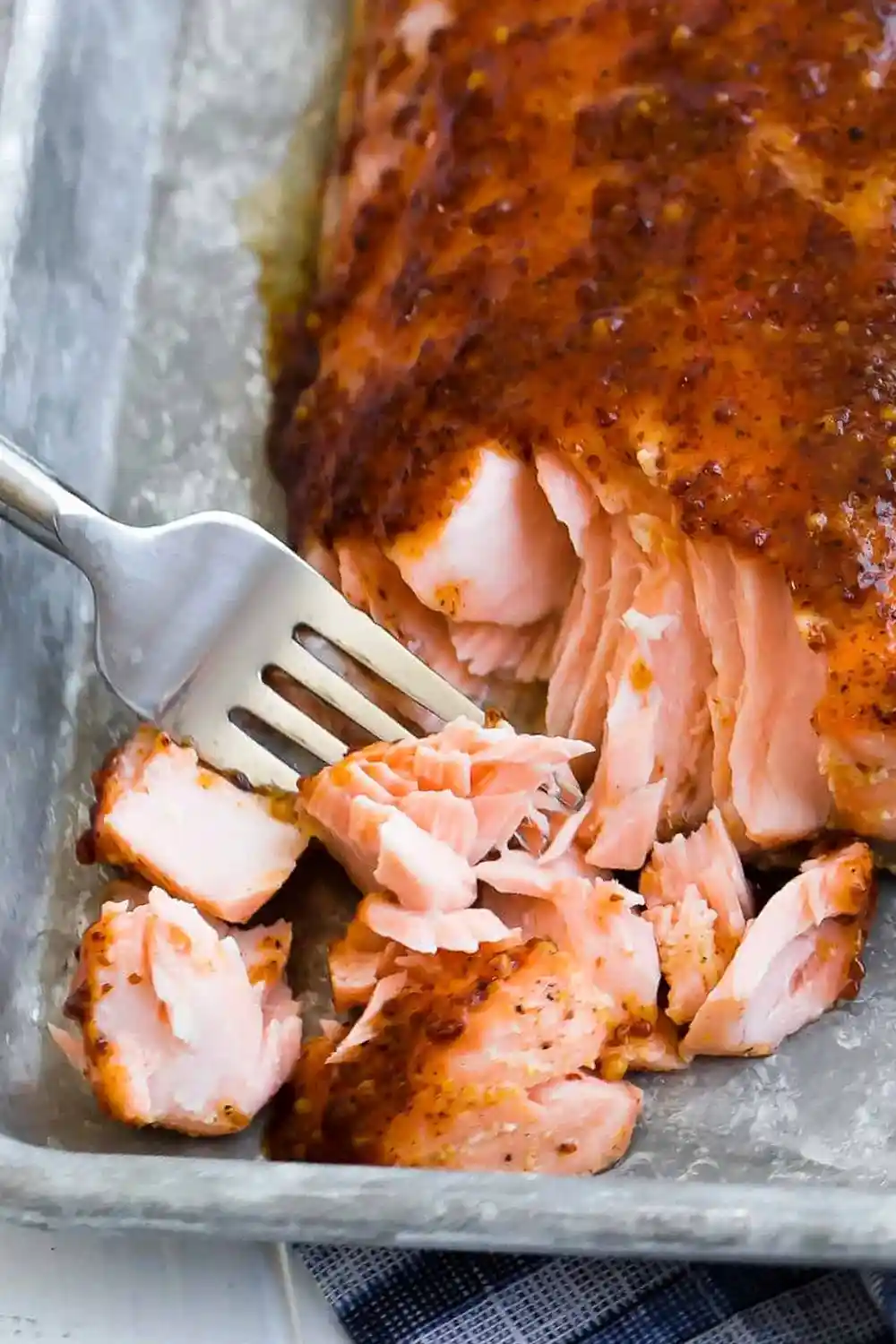
- Final bake: Return the salmon to the oven for another 5 to 10 minutes. Cook until an instant-read thermometer reads 145ºF or the meat flakes easily with a fork.
Guide to Selecting Quality Salmon
Fresh versus Frozen Fillets
Fresh salmon is ideal for immediate use and often has a more delicate texture. Frozen salmon is a practical option and is usually flash-frozen at sea to preserve quality. Always ensure frozen fillets are completely thawed in the refrigerator before cooking to ensure even heat distribution.
Wild Caught versus Farmed Salmon
Wild salmon generally has a stronger flavor and a deeper red color due to its natural diet. Farmed salmon tends to be milder in taste and has a higher fat content, which can make it more forgiving during the baking process. Both options work well with this maple mustard glaze.
Choosing Fillets or Steaks
Fillets are the most common choice for baking as they cook quickly and evenly. Salmon steaks, which include the bone, provide a richer flavor but may require a slightly longer cooking time. If using steaks, ensure the internal temperature still reaches the safe threshold.
Optimizing the Maple Mustard Glaze
The Importance of Real Maple Syrup
Using pure maple syrup is essential for the correct flavor profile and caramelization. Pancake syrups or corn syrup alternatives lack the distinct woody sweetness and can make the glaze taste overly artificial. Pure syrup reacts better with the oven heat to create a sticky, professional finish.
Using Coarse Dijon Mustard
Coarse or country-style Dijon mustard adds texture and a sharp tang that cuts through the richness of the salmon. While smooth Dijon is a viable substitute, the coarse variety provides small bursts of flavor throughout the glaze. This balance prevents the sweetness of the syrup from dominating the dish.
Adjusting the Sweetness and Tang
If you prefer a more savory profile, increase the mustard by one tablespoon. For those who enjoy a sweeter glaze, an extra teaspoon of maple syrup can be added. Taste the glaze before the first application to ensure it meets your personal preference.
Precision Cooking Techniques
Using a Digital Meat Thermometer
The only way to guarantee perfectly cooked salmon is by using an instant-read thermometer. Insert the probe into the thickest part of the fillet to avoid guessing. Aiming for 145ºF ensures the fish is safe to eat while remaining juicy.
The Benefits of Parchment Paper
Parchment paper prevents the sugary maple glaze from sticking to the baking sheet. This makes the cleanup process significantly faster and prevents the fish from tearing when you serve it. If parchment is unavailable, a silicone mat is a great alternative.
Adjusting for Fillet Thickness
Thinner fillets may cook faster and can easily become dry if left in the oven too long. Check thinner cuts at the 5-minute mark during the second baking phase. Conversely, very thick center-cut fillets may need the full 10 minutes of the second phase.
Customizing Flavor Profiles
Adding Heat with Cayenne or Chili
To introduce a spicy element, add a pinch of cayenne pepper or red chili flakes to the glaze mixture. This complements the sweetness of the maple syrup and the tang of the mustard. Start with a small amount to avoid overpowering the delicate fish.
Integrating Citrus Notes
A squeeze of fresh lemon juice added to the glaze provides a bright acidity that lifts the overall flavor. You can also place thin lemon slices on top of the salmon during the second bake. This adds a professional visual touch and a fresh aroma.
Creating a Nutty Crust
For added texture, press crushed almonds or pecans into the second layer of glaze before the final bake. The nuts toast in the oven, creating a crunchy contrast to the tender fish. This variation increases the caloric density but adds significant depth.
Strategic Pairing Ideas
Grain-Based Side Dishes
White or brown rice serves as a neutral base that absorbs the extra glaze from the salmon. Quinoa is another excellent option, providing additional protein and a nutty flavor. For a more indulgent side, consider a wild rice blend with sautéed mushrooms.
Roasted Vegetable Combinations
Asparagus and broccoli roast at similar temperatures to salmon, making them ideal partners. Toss them in olive oil and salt, then place them on the same baking sheet if space permits. Carrots and Brussels sprouts also pair well with the maple mustard flavor profile.
Fresh Salad Accompaniments
A crisp green salad with a light vinaigrette balances the richness of the glazed fish. Use baby spinach, arugula, or mixed greens with sliced cucumbers and radishes. A lemon-based dressing will complement the mustard notes in the salmon.
Safe Storage Protocols
Refrigerator Storage
Place leftover salmon in an airtight container and refrigerate it immediately after cooling. It will remain safe to eat for 3 to 4 days. Ensure the container is sealed tightly to prevent the fish from absorbing other odors in the fridge.
Freezing Leftover Salmon
Wrap individual portions of cooked salmon tightly in plastic wrap before placing them in a heavy-duty freezer bag. This prevents freezer burn and maintains the integrity of the glaze. Cooked salmon can be stored in the freezer for up to two months.
Identifying Spoiled Fish
Always check your salmon before reheating it. A strong, ammonia-like smell or a slimy texture indicates that the fish has spoiled. If the color has turned significantly dull or grayish, it is safer to discard the food.
Effective Reheating Methods
The Microwave Technique
Microwaving is the fastest method but can easily overcook the fish, making it rubbery. Heat the salmon on medium power in short 30-second bursts. Cover the dish with a damp paper towel to retain moisture.
The Oven Reheating Method
To maintain the best texture, reheat salmon in a 300ºF oven. Place the fish on a baking sheet and cover it loosely with foil to prevent the glaze from burning. Heat for 10 to 15 minutes until warmed through.
The Stovetop Approach
Place the salmon in a non-stick skillet over low heat with a teaspoon of water or butter. Cover the pan with a lid to create a steaming effect. This gently warms the fish without drying out the exterior.
Troubleshooting Common Issues
Preventing Dry Salmon
Overcooking is the most common mistake when preparing salmon. Remove the fish from the oven as soon as it reaches 145ºF, as carryover cooking will continue to raise the temperature slightly. Avoid using high heat for extended periods.
Correcting a Too-Sweet Glaze
If the final result is too sweet, balance the flavor with a dash of apple cider vinegar or fresh lemon juice. A sprinkle of flaky sea salt on top can also neutralize excessive sweetness. This restores the balance between the syrup and the mustard.
Handling Pin Bones
Even high-quality fillets may contain small pin bones. Run your finger along the center of the fillet before cooking to locate any bones. Use clean tweezers to pluck them out in the direction they are pointing.
Frequently Asked Questions
Can I use honey instead of maple syrup?
Yes, honey is a suitable substitute for maple syrup. It provides a similar sweetness and thickness, although the flavor will be more floral than woody. Use the same measurement of two tablespoons.
Is it necessary to rinse the salmon?
Rinsing helps remove any loose scales or surface impurities from the fish. The most important step is patting the salmon completely dry afterward. Moisture on the surface will prevent the glaze from adhering properly.
Can I cook this salmon in an air fryer?
Yes, you can use an air fryer at 380ºF. Cook for approximately 8 to 12 minutes depending on the thickness, applying the second layer of glaze halfway through. Check the internal temperature frequently as air fryers cook faster than ovens.
What is the best way to remove the skin?
Leave the skin on during the baking process to protect the meat from direct heat. Once the salmon is cooked and slightly cooled, use a spatula to lift the fillet away from the skin. The skin should slide off easily if the fish is cooked correctly.
Can I make this recipe with a different fish?
This glaze works well with other hearty fish like Arctic Char or Steelhead Trout. White fish like cod or halibut can also be used, but they may require less cooking time. Always use a thermometer to ensure they are not overcooked.
Print
Baked Salmon with Maple Mustard Glaze
- Total Time: 30 minutes
- Yield: 4 servings 1x
- Diet: Gluten-free, Paleo
Description
This the best baked salmon recipe, made with juicy salmon coated in a sweet and spicy homemade maple mustard glaze. It’s a healthy weeknight meal with only 5 ingredients!
Ingredients
- 2 pounds salmon
- 2 tablespoons coarse (country style) Dijon mustard
- 2 tablespoons real maple syrup
- 1 teaspoon olive oil
- 1 teaspoon kosher salt
- ½ teaspoon paprika
- ½ teaspoon ground black pepper
Instructions
- Step: Preheat oven to 400ºF. If desired, line a baking sheet with parchment paper for easy clean up.
- Step: Place salmon on prepared baking sheet. In a small bowl, combine mustard, maple syrup, olive oil, salt, paprika, and pepper. Spoon about half of this mixture over the salmon in an even layer.
- Step: Bake for 15 minutes. Remove from oven and spoon on the rest of the maple mustard mixture.
- Step: Return to oven and bake for an additional 5 to 10 minutes or until an instant read thermometer reads 145ºF and fish flakes easily with a fork.
Notes
This is a very generous serving of salmon (8 oz). You could easily stretch this recipe to serve 8 (4 oz. servings) if you had side dishes to go with it. This maple mustard glaze will be enough for up to 3 pounds of meat. If using frozen salmon, make sure to defrost completely and pat dry before starting.
- Prep Time: 5 minutes
- Cook Time: 25 minutes
- Category: Seafood
- Method: Baking
- Cuisine: American
Nutrition
- Serving Size: 8 oz
- Calories: 507 kcal
- Sugar: 6 g
- Sodium: 770 mg
- Fat: 29 g
- Saturated Fat: 6 g
- Unsaturated Fat: 23 g
- Trans Fat: 0 g
- Carbohydrates: 7 g
- Fiber: 0 g
- Protein: 50 g
- Cholesterol: 143 mg