This recipe recreates the popular Chinese takeout dish using a pan-frying method for a lighter result. It combines crispy chicken pieces with a tangy glaze and fresh, crunchy vegetables.
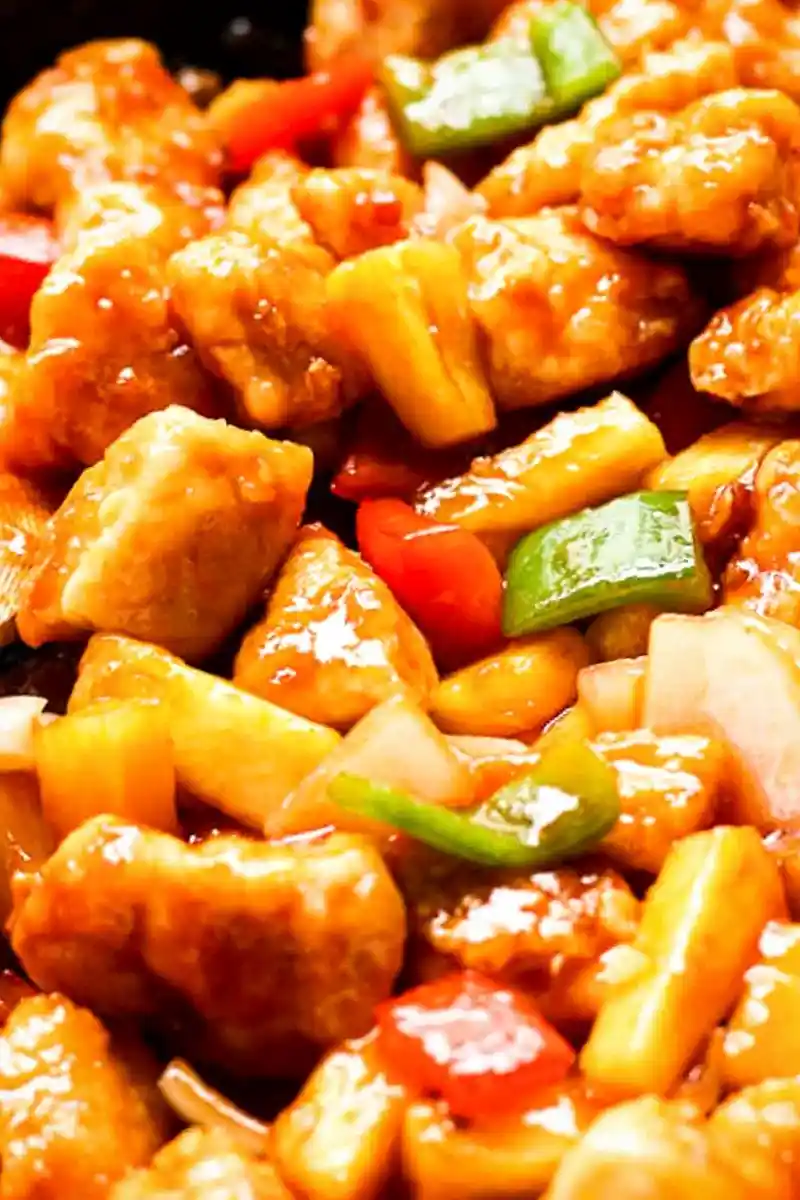
List of ingredients
- 1 lbs chicken breast (boneless, skinless) – cut into 1-inch pieces.
- 1/3 cup corn starch – for the coating.
- 1/3 cup flour – for the coating.
- 1/2 tsp salt – for seasoning the coating.
- 1 large egg – used as a binder.
- Vegetable oil – for pan-frying.
- 1 cup onions (sliced) – for texture and flavor.
- 1 cup bell peppers (sliced) – use red, green, or yellow.
- 1 cup pineapple pieces – adds sweetness and acidity.
- 1/4 cup ketchup – provides the tangy base.
- 1/4 cup rice vinegar – adds sourness.
- 1/2 cup sugar – balances the acidity.
- 2 tbsp soy sauce – for umami depth.
- 2-3 cloves garlic – minced for aroma.
- 1/2 tsp sesame oil (optional) – for a nutty finish.
step-by-step instructions
- Prep Chicken: Cut the chicken into approximately 1-inch pieces and pat them dry with paper towels.
- Prepare Coating: In a flat plate or bowl, combine the flour, corn starch, and salt. In a separate bowl, whisk the egg.
- Bread the Chicken: Dip chicken pieces into the egg mixture to coat well, then dredge each piece in the flour mixture.
- Heat Oil: Heat a large skillet with a thin layer of vegetable oil covering the entire surface.
- Fry Chicken: Add chicken pieces without overcrowding the pan, cooking in batches if necessary. Cook under medium heat, covering the pan if needed, and flip once the bottom is browned.
- Check Temperature: Ensure the chicken reaches an internal temperature of 165 degrees F. Remove the chicken from the skillet and set aside.
- Clean Pan: If there are burned flour pieces in the skillet, wipe them out with a paper towel before continuing.
- Stir Fry Vegetables: Add a small amount of oil to the skillet if needed. Stir fry the sliced bell peppers and onions for about 1 minute under medium heat until slightly softened, then remove them promptly.
- Cook Sauce: Add the ketchup, rice vinegar, sugar, soy sauce, garlic, and optional sesame oil to the skillet. Stir and bring to a boil, then lower the heat and simmer until the sauce thickens slightly.
- Combine: Return the cooked chicken, sautéed vegetables, and pineapple pieces to the skillet. Toss everything quickly to coat with sauce and remove from heat immediately.
- Serve: Plate the chicken and serve alongside steamed rice.
Practical Tips for Maximum Crispiness
Pat the Chicken Dry
Always use paper towels to remove excess moisture from the raw chicken before breading. Moisture creates steam during frying, which prevents the coating from becoming truly crispy.
Avoid Pan Overcrowding
Adding too many pieces of chicken at once lowers the oil temperature rapidly. This leads to the chicken absorbing more oil and becoming greasy rather than crisp.
Maintain Medium Heat
Keep the skillet at a consistent medium heat. If the oil is too hot, the outside burns before the inside reaches 165 degrees F; if too cold, the breading will not sear.
Use Tongs for Handling
Tongs provide a more secure grip than a spatula when flipping small cubes of chicken. This prevents the breading from peeling off the meat during the turning process.
Ingredient Substitutions and Alternatives
Replacing Rice Vinegar
If rice vinegar is unavailable, white distilled vinegar is a suitable alternative. However, white vinegar is slightly more pungent, so you may want to adjust the sugar slightly to balance the taste.
Using Chicken Thighs
Boneless, skinless chicken thighs can be used instead of breasts for a juicier result. Thighs are more forgiving and less likely to dry out during the pan-frying process.
Gluten-Free Coating Options
To make this recipe gluten-free, replace the all-purpose flour with an equal amount of cornstarch or potato starch. This will create a very light and crisp shell.
Alternative Sweeteners
Honey or maple syrup can be used instead of granulated sugar for a deeper flavor profile. Note that liquid sweeteners may change the simmering time required to thicken the sauce.
Recipe Variations for Different Tastes
Spicy Sweet and Sour
Add one tablespoon of sriracha or a pinch of red chili flakes to the sauce ingredients. This adds a heat element that cuts through the sweetness of the pineapple and sugar.
Expanded Vegetable Mix
Incorporate sliced carrots, snap peas, or water chestnuts into the stir-fry step. These vegetables add additional crunch and nutritional value to the final dish.
Different Fruit Combinations
While pineapple is traditional, mango chunks or mandarin orange slices work well. These fruits provide a different type of acidity and sweetness to the glaze.
Sesame Seed Garnish
Sprinkle toasted sesame seeds over the finished dish before serving. This adds a professional look and a subtle nutty flavor to the coating.
Serving Suggestions
Grain Pairings
Jasmine rice or brown rice are the best options for soaking up the extra sauce. For a more flavorful base, use coconut rice or vegetable fried rice.
Low-Carb Alternatives
Serve the chicken over cauliflower rice to reduce the carbohydrate count. Alternatively, use large butter lettuce leaves to create sweet and sour chicken wraps.
Complementary Side Dishes
Pair this meal with steamed broccoli or a side of sautéed bok choy. An egg drop soup is also a traditional starter that balances the intensity of the sweet and sour flavors.
Storage and Reheating Guidance
Refrigeration Method
Store leftover chicken and sauce in an airtight container in the refrigerator for up to three days. To maintain the best quality, store the sauce and chicken in separate containers if possible.
Maintaining Texture During Reheating
Avoid reheating the entire dish in the microwave, as this makes the breading soggy. Instead, reheat the chicken separately to restore some of its structure.
Toaster Oven Reheating
The best way to reheat the chicken is in a toaster oven or air fryer at 350 degrees F for a few minutes. Once the chicken is crisp, toss it back into the warmed sauce.
Freezing Instructions
This dish is not recommended for freezing due to the high sugar and vinegar content in the sauce. Freezing and thawing often results in a broken sauce and mushy chicken coating.
Make-Ahead Strategies
Prepping the Sauce
The sweet and sour sauce can be mixed and stored in a jar in the fridge for up to one week. Simply pour it into the skillet when you are ready to cook.
Vegetable Preparation
Slice the onions and bell peppers in advance and keep them in a sealed container. This reduces the active prep time significantly on the day of cooking.
Chicken Sizing
Cut the chicken into 1-inch pieces the night before and store them in the refrigerator. Ensure they are kept in a leak-proof container to prevent cross-contamination.
Common Troubleshooting
Sauce Is Too Thin
If the sauce does not thicken enough during simmering, you can add a small cornstarch slurry. Mix one teaspoon of cornstarch with a teaspoon of water and stir it into the boiling sauce.
Chicken Is Too Dry
Overcooking chicken breast leads to a spongy or dry texture. Use a meat thermometer to ensure you remove the chicken from the heat exactly when it reaches 165 degrees F.
Vegetables Are Too Mushy
Overcooking the onions and peppers removes their characteristic snap. Stir fry them quickly over medium-high heat and remove them from the pan the moment they soften.
Coating Is Peeling Off
Peeling usually occurs if the chicken was not patted dry or if the egg coating was too thick. Ensure a thin, even layer of egg is applied before dredging in the flour mixture.
Frequently Asked Questions
Can I bake the chicken instead of frying?
Yes, place the breaded chicken on a baking sheet sprayed with oil. Bake at 350 degrees F for 30 minutes, flipping the pieces halfway through the cooking time.
How do I keep the sauce glossy?
The gloss comes from the combination of sugar and the cornstarch residue from the chicken. Simmering the sauce just until it thickens ensures a smooth, reflective finish.
Can I use frozen pineapple?
Frozen pineapple is perfectly fine to use. Be sure to thaw it completely and pat it dry with paper towels so that excess water does not thin out the sauce.
Is it possible to use a different oil?
Any neutral oil with a high smoke point works well, such as canola or grapeseed oil. Avoid using extra virgin olive oil as it may smoke at the temperatures needed for frying.
Print
Homemade Sweet and Sour Chicken
- Total Time: 45 minutes
- Yield: 3 servings 1x
- Diet: General
Description
Make this classic Chinese takeout at home! Crispy, juicy perfectly seasoned chicken tossed in a sweet, sour and tangy sauce, combine with crunchy veggies. Serve with white or brown rice!
Ingredients
- 1 lbs chicken breast (boneless, skinless)
- 1/3 cup corn starch
- 1/3 cup flour
- 1/2 tsp salt
- 1 large egg
- vegetable oil
- 1 cup onions (sliced)
- 1 cup bell peppers (sliced)
- 1 cup pineapple pieces
- 1/4 cup ketchup
- 1/4 cup rice vinegar
- 1/2 cup sugar
- 2 tbsp soy sauce
- 2–3 cloves garlic
- 1/2 tsp sesame oil (optional)
Instructions
- Step 1: Cut chicken into ~1-inch pieces. Pat dry.
- Step 2: In a flat plate or bowl, combine flour, corn flour and salt. In a bowl, whisk egg.
- Step 3: Add chicken to egg mixture. Mix to coat well. Then coat each piece of chicken with flour mixture.
- Step 4: Heat up large skillet with vegetable oil. Make sure there is a thin layer of oil covering the entire surface of the skillet.
- Step 5: Once oil is heated up, add chicken pieces to skillet. Do not overlap or overcrowd skillet; cook in two (or three) batches if necessary. Cook under medium heat and cover if necessary.
- Step 6: Flip chicken over once one side is cooked. Cover again if necessary. Do not overcook chicken. Chicken is cooked once internal temperature reaches 165 degrees F. Remove chicken from skillet and set aside.
- Step 7: If skillet has a lot of burned flour pieces from cooking the chicken, use a paper towel to remove/wipe it off before proceeding.
- Step 8: Heat skillet and add more vegetable oil if necessary. Once oil is heated, add bell peppers and onions to skillet and stir fry for ~1 minute under medium heat. Do not overcook the vegetables. The goal is to slightly soften the vegetables so it is not completely raw. Remove promptly.
- Step 9: Add sauce ingredients to skillet, stir and let it come to a boil. Lower heat and let it simmer for a minute or so, or until sauce thickens slightly.
- Step 10: Bring cooked chicken, cooked bell peppers, cooked onions, and pineapple pieces back to skillet. Toss chicken and veggies with sauce. Remove from heat promptly.
- Step 11: Serve with rice. Enjoy!
Notes
Pan-frying the chicken instead of deep frying makes this version healthier while maintaining a great texture.
- Prep Time: 25 minutes
- Cook Time: 20 minutes
- Category: Main Course
- Method: Pan-frying
- Cuisine: Chinese
Nutrition
- Serving Size: 1 serving
- Calories: 534 kcal
- Sugar: 48 g
- Sodium: 1443 mg
- Fat: 6 g
- Saturated Fat: 1 g
- Unsaturated Fat: 3 g
- Trans Fat: 1 g
- Carbohydrates: 79 g
- Fiber: 3 g
- Protein: 38 g
- Cholesterol: 151 mg