This simple oven-baked chicken is coated in a rich, citrusy butter sauce for a bright and savory flavor. It is an efficient weeknight meal that delivers tender results using only a few kitchen staples.
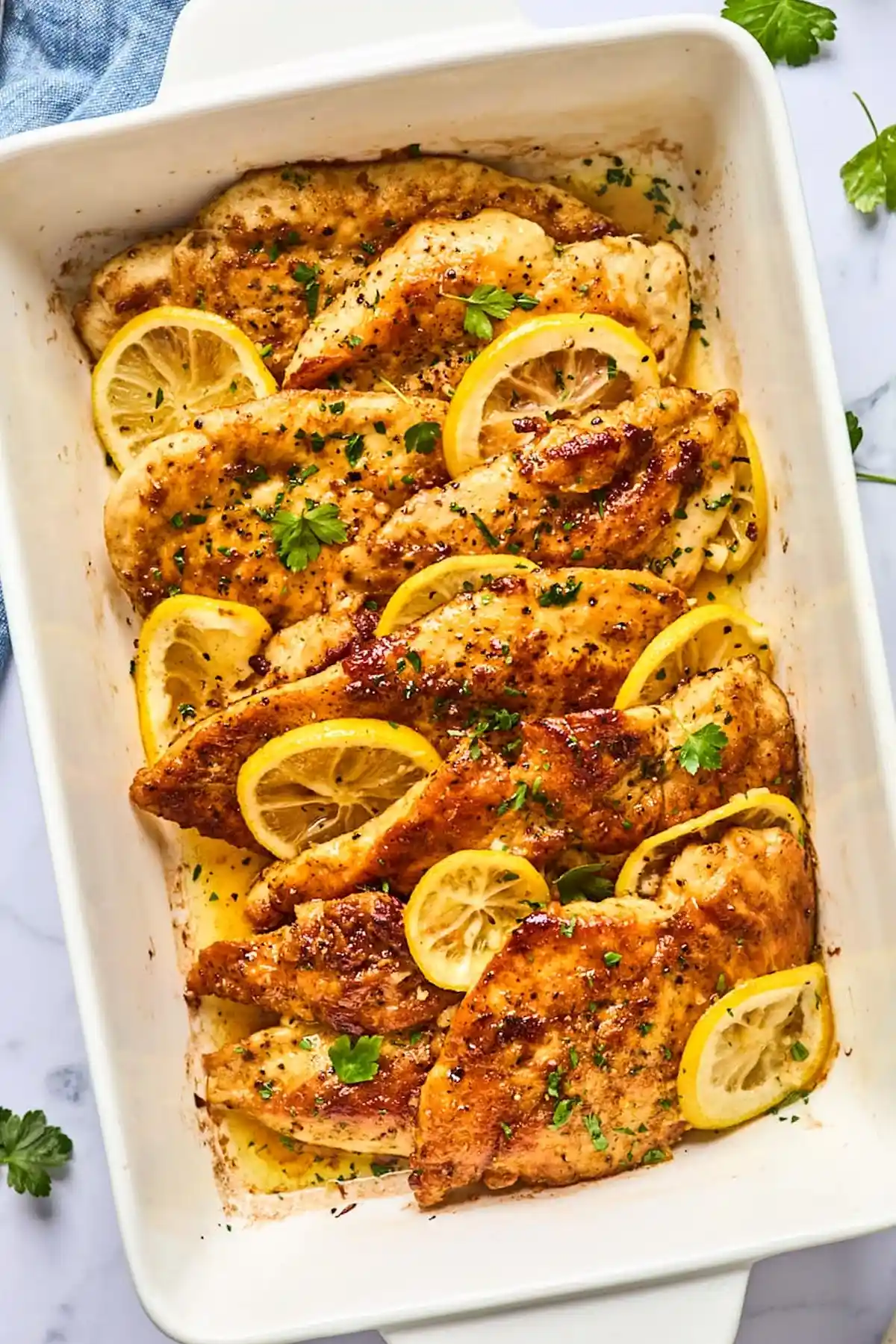
List of ingredients
- 4 boneless, skinless chicken breasts, sliced in half lengthwise – ensures even cooking and shorter cook times.
- Kosher salt and freshly cracked black pepper – for essential seasoning on both sides.
- 2 to 3 tablespoons extra-virgin olive oil – used for searing the chicken in the skillet.
- 3/4 cup all-purpose flour – creates a light coating for browning.
- 4 tablespoons unsalted butter – provides the rich base for the sauce.
- 2 garlic cloves, minced – adds depth and aromatic flavor.
- 1 lemon, thinly sliced – used for both infusion and presentation.
- 1/4 cup freshly squeezed lemon juice – provides the necessary acidity.
- Chopped fresh parsley – used as a fresh garnish before serving.
step-by-step instructions
- Prep the oven: Preheat your oven to 350 degrees F so it reaches temperature before the chicken is ready to bake.
- Prepare the meat: Pound the chicken breasts with a meat tenderizer until they are uniform in thickness; season both sides with 1 teaspoon each of salt and pepper.
- Heat the pan: Place a large skillet over medium heat and add 1 tablespoon of olive oil.
- Coat the chicken: Dredge each chicken breast through the flour, ensuring it is completely covered, then shake off any excess flour to avoid clumps.
- Sear the chicken: Place chicken in the pan and cook for 3 to 4 minutes per side in batches; transfer the seared pieces to a baking dish.
- Make the butter base: Keep the skillet over medium-low heat and melt the butter, then add the minced garlic and cook for 30 seconds.
- Simmer the sauce: Stir in the lemon slices and lemon juice, cooking for 2 to 3 minutes while flipping the lemons; add a pinch of salt and pepper.
- Combine: Pour the prepared lemon-butter mixture directly over the seared chicken in the baking dish.
- Bake and finish: Bake for 15 to 20 minutes or until the internal temperature reaches 165 degrees F; sprinkle with fresh parsley and serve immediately.
Advanced Searing Techniques
Pound Meat for Uniformity
Use a meat mallet or a heavy skillet to flatten the thickest part of the chicken breast. This prevents the edges from overcooking while the center remains raw. Aim for a consistent thickness of about half an inch across the entire piece.
Manage Pan Temperature
Ensure the olive oil is shimmering but not smoking before adding the flour-coated chicken. If the pan is too cold, the flour will absorb the oil and become greasy. If it is too hot, the flour will burn before the chicken sears.
Avoid Overcrowding the Skillet
Cook the chicken in separate batches rather than crowding all the pieces into one pan. Overcrowding lowers the pan temperature and releases moisture, which leads to steaming instead of browning. Leave about an inch of space between each piece of meat.
Remove Excess Coating
Shake each piece of chicken vigorously after dredging it in the flour. A thick layer of flour can burn in the pan or create a pasty texture in the final sauce. A light, thin dusting is all that is needed for a golden-brown crust.
Ingredient Substitutions and Alternatives
Gluten-Free Flour Options
Replace all-purpose flour with a high-quality 1:1 gluten-free flour blend. Almond flour can also be used, though it browns more quickly and may require a slightly lower heat. Ensure the blend contains a binder like xanthan gum for the best adhesion.
Using Different Fats for Searing
If you do not have extra-virgin olive oil, avocado oil or grapeseed oil are excellent substitutes due to their higher smoke points. Avoid using extra-virgin olive oil at very high temperatures to prevent the oil from breaking down. Unsalted butter can be used for searing, but it may burn more easily.
Replacing Fresh Lemons
If fresh lemons are unavailable, use bottled 100% lemon juice, though the flavor is less bright. For the slices, you can use frozen lemon slices or omit them and add a teaspoon of lemon zest for flavor. Always avoid using ‘lemon-flavored’ syrups or concentrates.
Garlic Substitutes
Substitute minced fresh garlic with 1/2 teaspoon of garlic powder if needed. While the flavor is less pungent, it still provides the necessary savory notes. Roast garlic can also be mashed into the butter for a mellower, sweeter taste.
Dairy-Free Butter Alternatives
Use a plant-based butter stick or a vegan butter substitute to make the recipe dairy-free. Ensure the substitute is formulated for cooking and can withstand medium-low heat. Coconut oil is another option, though it will add a slight coconut flavor to the sauce.
Flavor Variations and Enhancements
Add Capers for a Piccata Style
Stir in two tablespoons of drained capers when adding the lemon juice to the skillet. This adds a salty, briny element that complements the acidity of the lemon. This variation is a classic way to elevate the dish for guests.
Incorporate Fresh Herbs
While parsley is the traditional garnish, adding fresh thyme or oregano to the butter sauce provides an earthy contrast. Stir these herbs in during the last 30 seconds of sauce preparation. This prevents the delicate leaves from burning.
Add Cream for a Richer Sauce
Stir in 2 to 4 tablespoons of heavy cream or a dollop of mascarpone cheese into the lemon-butter mixture. This creates a creamier, more velvet-like texture that clings better to the chicken. Reduce the amount of butter slightly to balance the total fat content.
Introduce a Hint of Sweetness
Whisk in one teaspoon of honey or maple syrup to the sauce to create a sweet-and-sour profile. This balances the sharpness of the lemon juice and appeals to those who prefer less acidity. Add the sweetener at the very end of the sauce process.
Optimal Serving Suggestions
Starchy Side Pairings
Serve this chicken over a bed of garlic mashed potatoes or fluffy white rice to soak up the extra sauce. Orzo pasta tossed with a bit of butter and parmesan is another excellent choice. Roasted fingerling potatoes provide a nice textural contrast to the tender meat.
Vegetable Accompaniments
Steamed asparagus or sautéed spinach pairs naturally with the lemon butter flavors. Roasted carrots or honey-glazed parsnips add a subtle sweetness that balances the dish. Broccoli florets roasted with olive oil and salt also work well.
Light Salad Options
A simple arugula salad with a light vinaigrette cuts through the richness of the butter sauce. A classic Caesar salad provides a bold, salty contrast that complements the citrus. Fresh cucumber and tomato salads are ideal for a lighter, summer-inspired meal.
Bread for Sauce Dipping
Serve the dish with warm garlic bread or crusty sourdough slices. This allows you to utilize every drop of the lemon butter sauce left on the plate. Buttermilk biscuits are also a great option for a more comforting meal.
Storage and Reheating Advice
Refrigerator Storage Guidelines
Place leftover chicken and sauce in an airtight glass container and store it in the refrigerator. The dish will remain fresh and safe to eat for up to four days. Ensure the chicken is fully cooled before sealing the lid to prevent condensation.
Freezing Instructions
While the chicken can be frozen, the sauce may separate during the thawing process. Freeze the chicken and sauce together in a freezer-safe bag for up to two months. Thaw completely in the refrigerator overnight before reheating.
Oven Reheating Method
Place the chicken in a baking dish and add a tablespoon of water or chicken broth to maintain moisture. Cover with foil and heat at 325 degrees F for 10 to 15 minutes. This method preserves the texture of the meat better than the microwave.
Microwave Reheating Tips
Heat the chicken in short 30-second intervals, stirring the sauce between each session. Cover the dish with a damp paper towel to prevent the chicken from drying out. Be careful not to overheat, as the butter sauce can separate and become oily.
Make-Ahead Preparation Strategies
Preparing the Meat in Advance
Pound and season the chicken breasts a few hours before you plan to cook. Store them in a sealed container or plastic wrap in the refrigerator. This saves significant time during the actual cooking process.
Organizing the Mise en Place
Mince the garlic, slice the lemons, and measure out the flour and butter before turning on the heat. Having all ingredients ready prevents the garlic from burning while you are slicing lemons. This is especially helpful when working with fast-cooking sauces.
Pre-dredging the Chicken
You can coat the chicken in flour up to 30 minutes before searing. However, do not let them sit too long, as the flour can become damp and clumpy. If the flour looks wet, give them a quick shake before placing them in the pan.
Troubleshooting Common Issues
Preventing Dry Chicken
Always use a meat thermometer to check the internal temperature of the thickest part of the breast. Remove the chicken from the oven as soon as it hits 165 degrees F. Letting the meat rest for five minutes after baking allows the juices to redistribute.
Fixing a Broken Sauce
If the butter sauce separates and looks oily, whisk in a teaspoon of warm water or lemon juice. Do this over low heat while stirring constantly. This helps re-emulsify the fats and liquids into a smooth sauce.
Managing Flour Clumps
If you notice clumps of flour in your sauce, simply whisk them vigorously or strain the sauce through a fine-mesh sieve. This usually happens if the chicken wasn’t shaken well after dredging. Ensuring a thin coating prevents this issue from occurring.
Adjusting Sauce Acidity
If the sauce tastes too sharp or sour, whisk in a small pinch of sugar or an extra pat of butter. If the sauce lacks punch, add a squeeze of fresh lemon juice right before serving. Taste the sauce frequently during the simmering process.
Frequently Asked Questions
Can I use chicken thighs instead of breasts?
Yes, boneless skinless chicken thighs work well and are often more juicy. Adjust the baking time based on the thickness of the thighs, as they may require a few extra minutes in the oven.
How do I prevent the butter from burning?
Keep the heat at medium-low when adding the butter and garlic. If the butter begins to brown too quickly, remove the pan from the heat for a few seconds. The garlic should be fragrant but not dark brown.
Is it possible to make this in one pan?
You can use an oven-safe skillet instead of transferring the chicken to a baking dish. Simply sear the chicken, remove it to a plate, make the sauce in the same skillet, return the chicken to the pan, and place the whole skillet in the oven.
What is the best way to slice the lemons?
Cut the lemons into very thin rounds, about 1/8 inch thick. This ensures they soften quickly in the pan and release their flavor without becoming tough or bitter.
Print
Baked Lemon Butter Chicken
- Total Time: 35 minutes
- Yield: 4 servings 1x
- Diet: General
Description
Lemon Butter Chicken-this easy baked chicken recipe only requires 6 ingredients! The chicken is tender with a rich, buttery lemon sauce that is exquisite! This chicken dish is guaranteed to be a family favorite!
Ingredients
- 4 boneless, skinless chicken breasts, sliced in half lengthwise
- Kosher salt and freshly cracked black pepper
- 2 to 3 tablespoons extra-virgin olive oil
- 3/4 cup all-purpose flour
- 4 tablespoons unsalted butter
- 2 garlic cloves, minced
- 1 lemon, thinly sliced
- 1/4 cup freshly squeezed lemon juice
- Chopped fresh parsley, for serving
Instructions
- Preheat: Preheat the oven to 350 degrees F.
- Prepare: Pound the chicken breasts with a meat tenderizer until they are the same thickness. Season them on both sides with 1 teaspoon each of salt and pepper.
- Heat: Heat a large skillet over medium heat. Add 1 tablespoon of olive oil to the pan.
- Dredge: Take each chicken breast and dredge it through the flour, making sure it’s completely covered but shaking off any excess flour.
- Sear: Place it in the pan and repeat with the other chicken breasts, cooking for 3 to 4 minutes, then flip and cook them for 3 minutes more. This will have to be done in batches. Transfer the chicken to a baking dish and repeat with any remaining chicken, using the remaining olive oil as necessary.
- Sauce: Once the chicken is out of the pan, keep the skillet over medium low heat and add the butter. Add the garlic and cook for 30 seconds. Add the lemon slices and lemon juice. Cook for 2 to 3 minutes, flipping the lemons in the pan. Add a pinch of salt and pepper. Pour the lemon-butter mixture over the chicken in the baking dish.
- Bake: Bake for 15 to 20 minutes, or until the internal temperature of the chicken reaches 165 degrees F. Remove the chicken from the oven and sprinkle with fresh parsley. Serve immediately.
Notes
Recipe from Everyday Dinners by Jessica Merchant
- Prep Time: 5 minutes
- Cook Time: 30 minutes
- Category: Main Course
- Method: Baking
- Cuisine: American
Nutrition
- Serving Size: 1 serving
- Calories: 390 kcal
- Sugar: 1 g
- Sodium: 134 mg
- Fat: 20 g
- Saturated Fat: 8 g
- Unsaturated Fat: 11 g
- Trans Fat: 1 g
- Carbohydrates: 22 g
- Fiber: 1 g
- Protein: 27 g
- Cholesterol: 102 mg