This quick oven-baked salmon method ensures a flaky, tender result in under 20 minutes. It uses basic pantry staples and a single sheet pan for an efficient dinner.
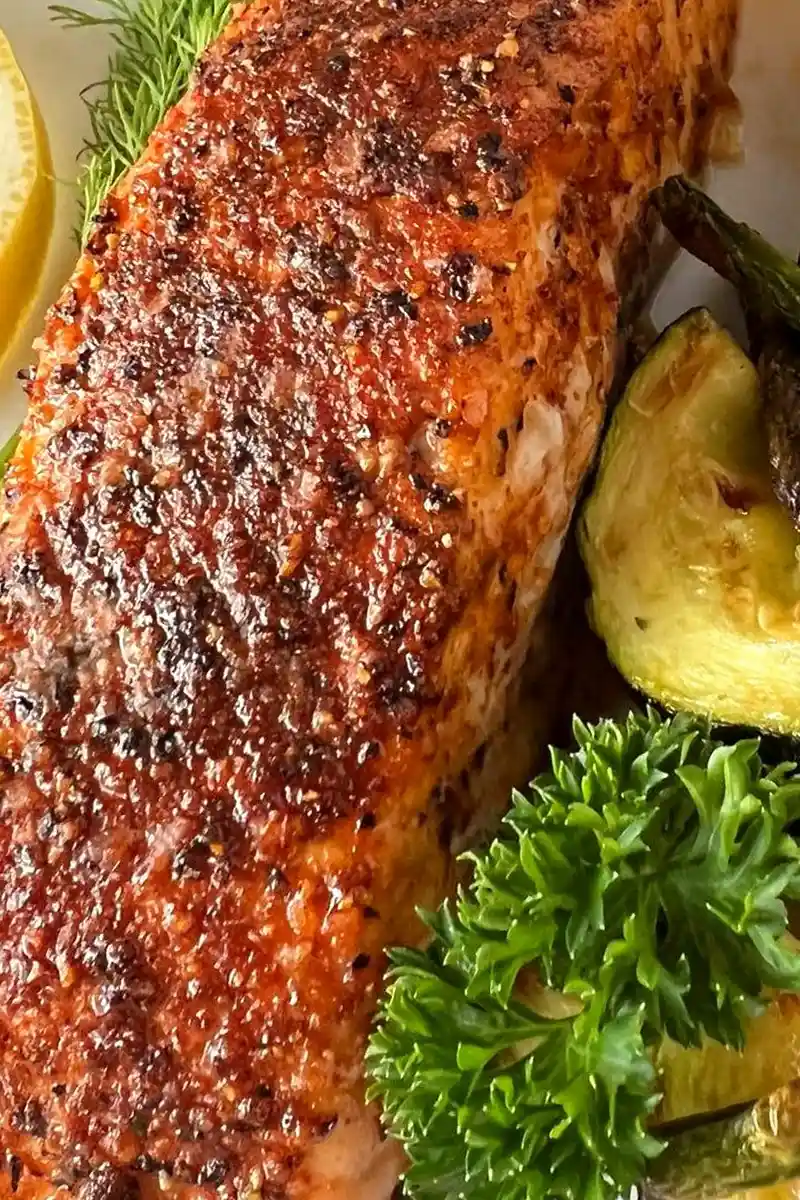
List of ingredients
- 2 salmon filets, 6oz each – fresh or thawed.
- 1 tbs melted butter – used as a base for the seasoning to stick.
- 1 tsp paprika – adds a vibrant color and mild sweetness.
- 1/2 tsp garlic powder – provides a savory aromatic punch.
- 1/2 tsp kosher salt – enhances the natural flavor of the fish.
- 1/2 tsp black pepper – adds a subtle, warm heat.
step-by-step instructions
- Prepare the Oven: Preheat oven to 450°(F). Line a baking sheet with aluminum foil and spray with cooking spray to prevent sticking.
- Prep the Salmon: Pat salmon filets dry with paper towels. Place them on the pan skin-side down and brush the tops with melted butter.
- Apply Seasoning: Mix paprika, garlic powder, salt, and pepper in a small bowl. Sprinkle the mixture generously over the tops of the filets.
- Bake the Fish: Bake at 450°F for 12 to 16 minutes. The salmon is ready when the internal temperature in the thickest part reads 140°F to 145°F on an instant read thermometer and the fish flakes easily with a fork.
- Rest and Garnish: Let the salmon rest for 2 to 3 minutes. Serve with fresh lemon slices and dill.
Essential Techniques for Perfect Texture
Pat the Fish Dry for Better Searing
Removing surface moisture with paper towels is a critical step. Wet salmon creates steam during the baking process, which prevents the seasoning from adhering and stops the surface from developing a nice color. Spend thirty seconds drying each filet for a superior finish.
Utilize High Heat to Lock in Moisture
Baking at 450°F allows the salmon to cook quickly, sealing in the natural juices before the interior dries out. Lower temperatures, such as 350°F or 400°F, require longer cooking times which often lead to a tougher, drier texture. High heat ensures a moist interior and a lightly browned top.
Remove from Heat at 140 Degrees
To avoid overcooking, pull the salmon out of the oven when the internal temperature hits 140°F. Carryover cooking will occur as the fish rests, naturally bringing the temperature up to the safe 145°F mark. If you wait until the thermometer reads 145°F in the oven, the final temperature will likely exceed the ideal range.
Allow for a Proper Resting Period
Letting the salmon rest for 2 to 3 minutes allows the internal juices to redistribute throughout the filet. This prevents the moisture from leaking out immediately upon slicing or serving. This brief pause ensures every bite remains tender and succulent.
Flavor Variations and Customizations
Create a Honey Garlic Glaze
For a sweeter profile, replace the butter and dry spices with a mixture of honey, minced garlic, and a splash of soy sauce. Brush this glaze on the salmon before baking. The sugars in the honey will caramelize under the high heat of the oven.
Use Cajun Spices for Bold Heat
Substitute the paprika and garlic powder with a pre-made Cajun seasoning blend. This adds a spicy, peppery kick that pairs well with the richness of the salmon. Be mindful of the salt content in store-bought blends and adjust the added kosher salt accordingly.
Apply a Teriyaki-Style Marinade
You can use a teriyaki marinade by soaking the filets for 30 minutes before baking. Wipe off excess marinade before adding the butter and seasonings to prevent the fish from steaming. This adds a savory, umami-rich depth to the dish.
Fresh Lemon and Dill Finishing
The classic combination of fresh lemon slices and dill provides a bright, citrusy contrast to the buttery fish. Squeeze the lemon juice over the salmon immediately after it comes out of the oven. This acidity cuts through the fat of the salmon for a balanced flavor.
Recommended Side Dish Pairings
Roasted Asparagus and Broccoli
Asparagus and broccoli are ideal because they roast at 450°F in roughly the same time as the salmon. Place them on the same sheet pan, tossed in olive oil and salt. This creates a complete meal with minimal cleanup.
Garlic Parmesan Potatoes
Roasted potatoes provide a hearty starch that complements the lightness of the fish. Use small diced potatoes to ensure they cook quickly, or use an Instant Pot for faster results. Toss them with garlic and parmesan cheese for extra flavor.
Fluffy Rice Pilaf
Rice pilaf serves as an excellent base for the salmon and any resting juices. Use a combination of chicken or vegetable broth instead of water to cook the rice for more depth. Stir in a bit of butter and parsley at the end.
Fresh Mango Salsa
For a tropical twist, top the baked salmon with a chunky mango salsa. The combination of sweet mango, red onion, and lime juice provides a refreshing contrast. This is especially effective during summer months.
Storage and Reheating Guidelines
Refrigerating Leftovers Safely
Store leftover salmon in an airtight container and place it in the refrigerator immediately after cooling. The fish will remain safe to eat for 3 to 4 days. Ensure the container is sealed tightly to prevent the salmon from absorbing other fridge odors.
Reheating in the Oven for Texture
The oven is the best method for reheating to maintain the flaky texture. Preheat the oven to 275°F and heat the salmon for about 15 minutes. Cover the fish loosely with aluminum foil to prevent it from drying out during the process.
Using an Air Fryer for Fast Reheating
An air fryer can reheat salmon quickly while keeping the edges crisp. Set the air fryer to 350°F and heat for 3 to 5 minutes. This is faster than the oven and more effective than a microwave.
Microwave Reheating Precautions
If using a microwave, heat the salmon in very short 30-second increments. Overheating in the microwave can make the fish rubbery and dry very quickly. Add a teaspoon of water or a pat of butter to the dish to maintain moisture.
Serving Cold Leftovers
Cold baked salmon is an excellent addition to salads or pasta dishes. Flake the cold fish with a fork and toss it with mixed greens, lemon vinaigrette, and avocado. It also works well on a toasted bagel with cream cheese.
Choosing and Preparing the Best Salmon
Atlantic versus Sockeye Salmon
Atlantic salmon typically has a milder flavor and higher fat content, making it very forgiving to bake. Sockeye salmon is leaner with a more intense, bold flavor and a deeper red color. Both work well with this method, though Sockeye may cook slightly faster due to its lean nature.
Identifying Freshness by Scent and Color
Fresh salmon should have a mild, clean scent and should not smell fishy. The flesh should be bright and consistent in color without any dull or brown spots. When pressed lightly, the meat should spring back quickly rather than leaving an indentation.
Evaluating Filet Thickness
Thickness determines the exact baking time. Filets around 3/4 inch thick will likely be done at the 12-minute mark. Thicker cuts, 1 1/4 inch or more, will require the full 16 minutes or slightly longer to reach the target internal temperature.
Wild-Caught versus Farmed Options
Wild-caught salmon is often leaner and has a more distinct taste. Farmed salmon generally has more marbling, which provides a richer taste and more moisture during high-heat baking. Either option is suitable for this recipe as long as the internal temperature is monitored.
One-Pan Vegetable Combinations
Roasting Asparagus alongside Salmon
Asparagus spears can be placed directly on the foil around the salmon filets. Toss them in a small amount of olive oil and salt. They typically take 10 to 12 minutes at 450°F, perfectly matching the salmon’s timing.
Preparing Broccoli for High-Heat Baking
Cut broccoli into small, uniform florets to ensure they cook evenly. Toss them with olive oil and a pinch of garlic powder before adding them to the pan. They will develop charred edges that complement the seasoned salmon.
Adding Zucchini Slices to the Sheet Pan
Slice zucchini into half-moons about 1/2 inch thick. Place them on the pan at the same time as the salmon. Zucchini cooks quickly and will be tender and browned by the time the fish is finished.
Managing Timing for Different Vegetables
If using root vegetables like carrots, add them to the pan 10 minutes before the salmon. Since root vegetables take longer to soften, this staggered approach ensures everything is finished at once. Green vegetables can always go in with the fish.
Cooking Troubleshooting and FAQ
How do I know when baked salmon is done?
The most reliable method is using an instant-read thermometer to check the thickest part of the filet for a reading of 140°F to 145°F. Additionally, the fish should flake easily when pressed with a fork, meaning the muscle fibers have separated.
Can I use frozen salmon filets?
Yes, frozen filets can be used, but for the best texture, defrost them completely in the refrigerator overnight. If baking from frozen, add 5 to 10 minutes to the total cooking time and check the internal temperature frequently.
Should I bake salmon with the skin on or skin off?
Both options work perfectly. Skin-on filets provide a protective barrier that prevents the bottom of the fish from overcooking and can be crisped up. Skinless filets are just as easy to cook and result in the same tender interior.
What is the best way to defrost salmon?
The safest and most effective way to defrost salmon is in the refrigerator for 12 to 24 hours. If you are short on time, place the vacuum-sealed fish in a bowl of cold water, changing the water every 30 minutes until thawed.
Print
Easy 15-Minute Oven Baked Salmon
- Total Time: 20 minutes
- Yield: 2 servings 1x
- Diet: General
Description
A simple, foolproof oven baked salmon with classic seasoning. Six pantry ingredients, one sheet pan, and a hot oven for tender, flaky salmon in about 20 minutes — the version I make on repeat when I want the fish itself to be the star.
Ingredients
- 2 salmon filets, 6oz each
- 1 tbs melted butter
- 1 tsp paprika
- 1/2 tsp garlic powder
- 1/2 tsp kosher salt
- 1/2 tsp black pepper
Instructions
- Step: Preheat oven to 450°(F). Line a baking sheet with aluminum foil and spray with cooking spray.
- Step: Pat salmon filets dry with paper towels. Place on the pan skin-side down and brush the tops with melted butter.
- Step: Mix paprika, garlic powder, salt, and pepper in a small bowl. Sprinkle generously over the tops of the filets.
- Step: Bake at 450°F for 12 to 16 minutes, until the internal temperature in the thickest part of the salmon reads 140°F to 145°F on an instant read thermometer and the fish flakes easily with a fork.
- Step: Let the salmon rest for 2 to 3 minutes. Serve with lemon slices and fresh dill.
Notes
Pull the salmon at 140°F; carryover cooking will bring it to 145°F while resting. Pat the salmon dry first to help seasoning stick. Skin-on or skinless filets both work. For frozen salmon, add 5 to 10 minutes to cook time or defrost first. Store in an airtight container for 3 to 4 days.
- Prep Time: 5 minutes
- Cook Time: 15 minutes
- Category: Dinner
- Method: Oven
- Cuisine: American
Nutrition
- Serving Size: 1 filet
- Calories: 410 kcal
- Sugar: 1 g
- Sodium: 620 mg
- Fat: 27 g
- Saturated Fat: 10 g
- Unsaturated Fat: 17 g
- Trans Fat: 0 g
- Carbohydrates: 3 g
- Fiber: 0 g
- Protein: 36 g
- Cholesterol: 85 mg