This refreshing pasta salad combines traditional Greek flavors with a light, zesty dressing. It is an ideal choice for a healthy side dish or a nutritious light lunch.
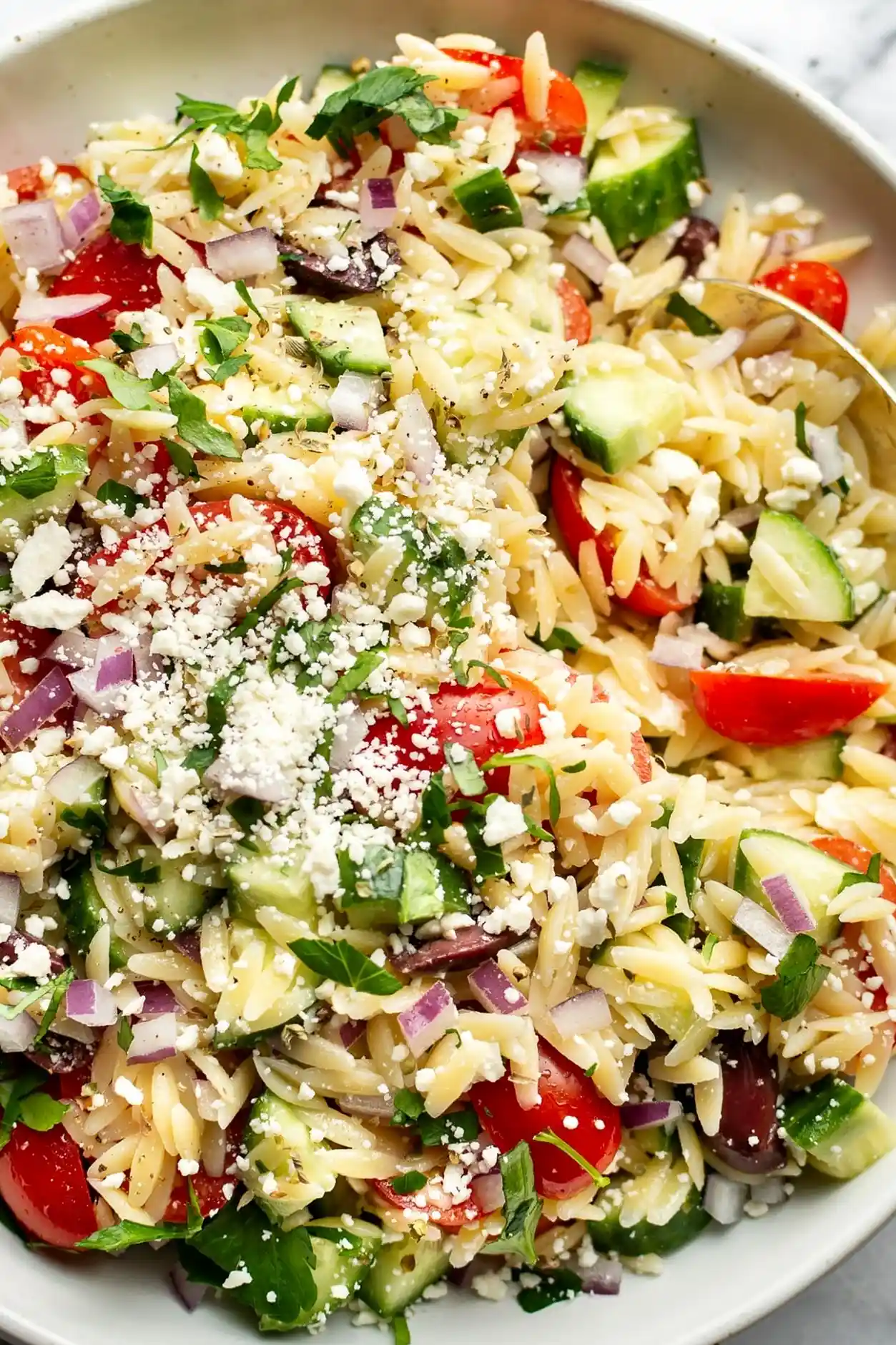
List of ingredients
- 1 cup uncooked orzo – rice-shaped pasta for a unique texture.
- 1 (10 ounce) package grape or cherry tomatoes – cut into halves for juiciness.
- 3-4 mini cucumbers or 1/2 English cucumber – chopped into bite-sized pieces.
- 1/2 cup crumbled feta – use microbial-rennet cheese for suitability.
- 1/4 cup Kalamata olives – pitted and cut into halves for a briny taste.
- 1-2 tablespoons red onion – finely chopped for a mild bite.
- 1/4 teaspoon dried oregano – adds an earthy, herbal aroma.
- 2 tablespoons olive oil – provides a smooth, rich base for the dressing.
- 1-2 tablespoons lemon juice – a fresh, acidic replacement for vinegar.
- Salt and pepper – added to taste to enhance all flavors.
- Fresh parsley – optional garnish for added brightness.
step-by-step instructions
- Cook the Pasta: Bring a large pot of salted water to a boil and cook the orzo until al dente according to the package directions. Drain the pasta and rinse it thoroughly with cold water to stop the cooking process.
- Prepare the Produce: While the pasta is cooking, wash and chop the tomatoes, cucumbers, red onion, and olives. Prepare the feta and parsley for mixing.
- Combine and Season: Place the cooled orzo in a large mixing bowl and add all the prepared vegetables, olives, and feta.
- Dress the Salad: Pour in the olive oil and start with 1 tablespoon of lemon juice. Toss the ingredients gently to combine, then add more lemon juice if a tangier flavor is preferred.
- Final Touch: Season the salad generously with salt and pepper. Garnish with fresh parsley if desired and serve.
Practical Preparation Tips
Mastering the Orzo Texture
Cook the orzo exactly to the al dente stage to prevent it from becoming mushy. Pasta that is slightly firm holds up better when tossed with vegetables and dressing. Avoid overcooking, as the grains may clump together.
The Importance of Rinsing
Rinsing the cooked orzo with cold water is a critical step for cold salads. This removes excess starch that would otherwise make the pasta sticky. It also cools the pasta instantly, ensuring the fresh vegetables do not wilt when mixed.
Choosing the Right Tomatoes
Grape or cherry tomatoes are preferred because they maintain their shape and provide concentrated bursts of flavor. If using larger tomatoes, remove the watery seeds to prevent the salad from becoming soggy. Ensure they are ripe but firm for the best consistency.
Selecting the Best Cucumber
Persian or English cucumbers are ideal because they have thinner skins and fewer seeds. This reduces the need for peeling and prevents excess water from leaching into the salad. Chop them into sizes that mirror the size of the orzo for a balanced bite.
Balancing the Dressing
Start with a small amount of lemon juice and taste as you go. The acidity level of lemons can vary, so adding the liquid incrementally prevents the salad from becoming too sour. Adjust the ratio of oil to acid based on your personal preference.
Optimal Seasoning Techniques
Be generous with the salt and pepper, as pasta tends to absorb these flavors. Seasoning the pasta water heavily also helps flavor the orzo from the inside out. Taste the final mixture right before serving to check if it needs a final pinch of salt.
Ingredient Substitutions
Alternative Grains and Pastas
If you prefer a different base, you can use quinoa or couscous for a similar texture. Farro is another great option that adds a nuttier flavor and more chew. Ensure you adjust the cooking time and rinsing process based on the grain used.
Non-Dairy Cheese Options
For a vegan version, replace the feta with a plant-based feta alternative made from coconut oil or almonds. Alternatively, omit the cheese entirely and add a teaspoon of nutritional yeast to the dressing for a savory, cheesy flavor. This keeps the salad light and dairy-free.
Swapping the Olives
While Kalamata olives provide the classic Greek taste, Manzanilla olives offer a milder, saltier profile. If you dislike olives, you can replace them with capers for a similar briny hit. You can also use diced pickled peppers for a bit of heat.
Acidic Alternatives to Lemon Juice
If you do not have lemons, apple cider vinegar is a suitable replacement that provides a fruity acidity. White wine vinegar is another option for a cleaner, sharper taste. Always start with a small amount to avoid overpowering the other ingredients.
Onion and Allium Replacements
If red onion is too pungent, try using chopped shallots for a sweeter, more delicate flavor. Green onions (scallions) are another excellent substitute that adds color and a mild taste. For those avoiding alliums, a pinch of asafoetida can provide a similar savory note.
Flavor Variations
Adding Fresh Greens
Fold in a handful of baby spinach or arugula just before serving for extra nutrients. Chopped kale also works well, though it should be massaged with a bit of the dressing first. This adds a peppery note and a vibrant green color to the dish.
Incorporating Roasted Vegetables
For a warmer twist, add roasted red peppers or grilled zucchini slices. Sun-dried tomatoes packed in oil provide a concentrated, sweet-tart flavor that complements the feta. These additions make the salad feel more substantial and complex.
Boosting the Herb Profile
While parsley is the standard garnish, adding fresh dill or mint can transform the flavor profile. Dill adds a classic Mediterranean freshness, while mint provides a cool contrast to the salty olives. A mix of these herbs creates a more gourmet taste.
Adding Protein for a Main Course
Transform this side dish into a full meal by adding grilled chicken breast or sautéed shrimp. Chickpeas or cannellini beans are excellent plant-based protein additions that fit the Mediterranean theme. Mix the protein in while warm or cold depending on your preference.
Creating a Spicy Twist
Add a pinch of red pepper flakes to the dressing for a subtle heat. Alternatively, finely diced jalapeños or chopped pepperoncini can provide a spicy kick. This contrasts beautifully with the creaminess of the feta cheese.
Serving and Pairing Ideas
Pairing with Mediterranean Proteins
This salad pairs perfectly with lemon-garlic grilled chicken or baked salmon fillets. It also complements grilled halloumi cheese for a vegetarian feast. The acidity of the salad cuts through the richness of grilled meats.
Creating a Mezze Platter
Serve the orzo salad as part of a larger platter alongside hummus, tzatziki, and warm pita bread. Add a few slices of fresh cucumber and carrot sticks to the board. This presentation is ideal for parties or family-style gatherings.
Best Bread Pairings
A slice of toasted sourdough or crusty ciabatta is a great accompaniment to this dish. Garlic bread or focaccia also works well to soak up the leftover dressing. The crunch of the bread balances the soft texture of the pasta.
Ideal Temperature for Serving
While this salad can be served at room temperature, it is best enjoyed chilled. Let it sit in the refrigerator for at least 30 minutes before serving. This allows the flavors to meld and the pasta to absorb the dressing.
Storage and Preservation
Refrigerator Lifespan
Store the salad in an airtight glass container in the refrigerator for 3 to 5 days. Glass is preferred over plastic to keep the flavors fresh and prevent odors. Keep the container sealed tightly to avoid the pasta drying out.
Preventing Pasta Clumping
Over time, orzo can clump together as it releases starch and absorbs moisture. To prevent this, ensure the pasta is completely cooled before mixing. If clumping occurs, gently stir the salad with a fork before serving.
Refreshing Old Salad
The pasta will naturally soak up the dressing after a day or two in the fridge. To refresh the salad, add a small splash of olive oil and a squeeze of fresh lemon juice. Toss gently to redistribute the moisture and wake up the flavors.
Proper Container Selection
Use a container that is slightly larger than the volume of the salad to allow for easy tossing. A shallow, wide container is better than a deep one, as it prevents the vegetables at the bottom from being crushed. This keeps the tomatoes and cucumbers intact.
Troubleshooting the Salad
Fixing Watery Vegetables
If you find the salad has become too watery, it is likely due to the cucumbers and tomatoes. To fix this, drain the excess liquid from the bottom of the bowl using a slotted spoon. Next time, seed your cucumbers or salt them lightly and rinse before adding.
Adjusting Overpowering Vinegar
If the lemon juice or vinegar is too strong, add a small amount of olive oil to balance the acidity. A tiny pinch of sugar or honey can also neutralize the sharpness without making the salad sweet. Stir well and taste again.
Correcting a Bland Taste
Blandness is usually a sign of insufficient salt or acid. Add a small amount of salt and another squeeze of lemon juice to brighten the flavors. Ensure the dried oregano is rubbed between your palms before adding to release its oils.
Handling Overcooked Pasta
If the orzo is overcooked and soft, avoid over-mixing the salad, as this can break the pasta grains. Increase the amount of crunchy vegetables, like extra cucumbers, to add texture. In the future, reduce the boiling time by one minute.
Frequently Asked Questions
Can I make this salad in advance?
Yes, this salad is excellent for make-ahead meal prep. It stores well for several days, though you may need to add a bit more dressing before serving to refresh it.
What is the best way to store leftovers?
Place leftovers in an airtight container and keep them chilled. Avoid freezing the salad, as the fresh vegetables will lose their texture and become mushy upon thawing.
Can I use different types of pasta?
You can use any small pasta shape, such as ditalini, acini di pepe, or small shells. The key is to use a shape that is small enough to be scooped up with the chopped vegetables.
How do I prevent the onions from being too strong?
After chopping the red onion, soak the pieces in cold water for 10 minutes and then drain. This removes the harsh sulfur compounds and leaves a milder, sweeter onion flavor.
Print
Fresh Mediterranean Orzo Salad
- Total Time: 20 minutes
- Yield: 4 servings 1x
- Diet: Vegetarian
Description
This Mediterranean orzo salad recipe is easy, fresh, healthy, and quick! It’s bursting with fabulous Greek flavors and makes a nutritious side dish or light meal.
Ingredients
- 1 cup uncooked orzo
- 1 (10 ounce) package little tomatoes (grape or cherry), cut into halves
- 3–4 mini cucumbers (or 1/2 English cucumber), chopped
- 1/2 cup crumbled feta (microbial-rennet)
- 1/4 cup Kalamata olives, pitted & cut into halves
- 1–2 tablespoons chopped red onion
- 1/4 teaspoon dried oregano
- 2 tablespoons olive oil
- 1–2 tablespoons red wine vinegar
- Salt and pepper to taste
- Fresh parsley (optional), to taste
Instructions
- Step 1: Boil a large salted pot of water and cook the orzo al dente according to package directions. Drain and rinse with cold water.
- Step 2: While the pasta is cooking, prep the vegetables and other ingredients.
- Step 3: Once the orzo has cooled, add all ingredients to a large bowl. Start with 1 tablespoon red wine vinegar, toss the salad, then add more if needed.
- Step 4: Season with salt and pepper as needed and garnish with fresh parsley if using.
Notes
Serves 2-4 depending on appetite. You can replace the red wine vinegar with fresh lemon juice if preferred. Feta cubes packed in olive oil and herbs also work well.
- Prep Time: 10 minutes
- Cook Time: 10 minutes
- Category: Salad
- Method: Boiling
- Cuisine: Mediterranean
Nutrition
- Serving Size: 1 serving
- Calories: 284 kcal
- Sugar: 4 g
- Sodium: 352 mg
- Fat: 13 g
- Saturated Fat: 4 g
- Unsaturated Fat: 9 g
- Trans Fat: 0 g
- Carbohydrates: 34 g
- Fiber: 2 g
- Protein: 9 g
- Cholesterol: 17 mg