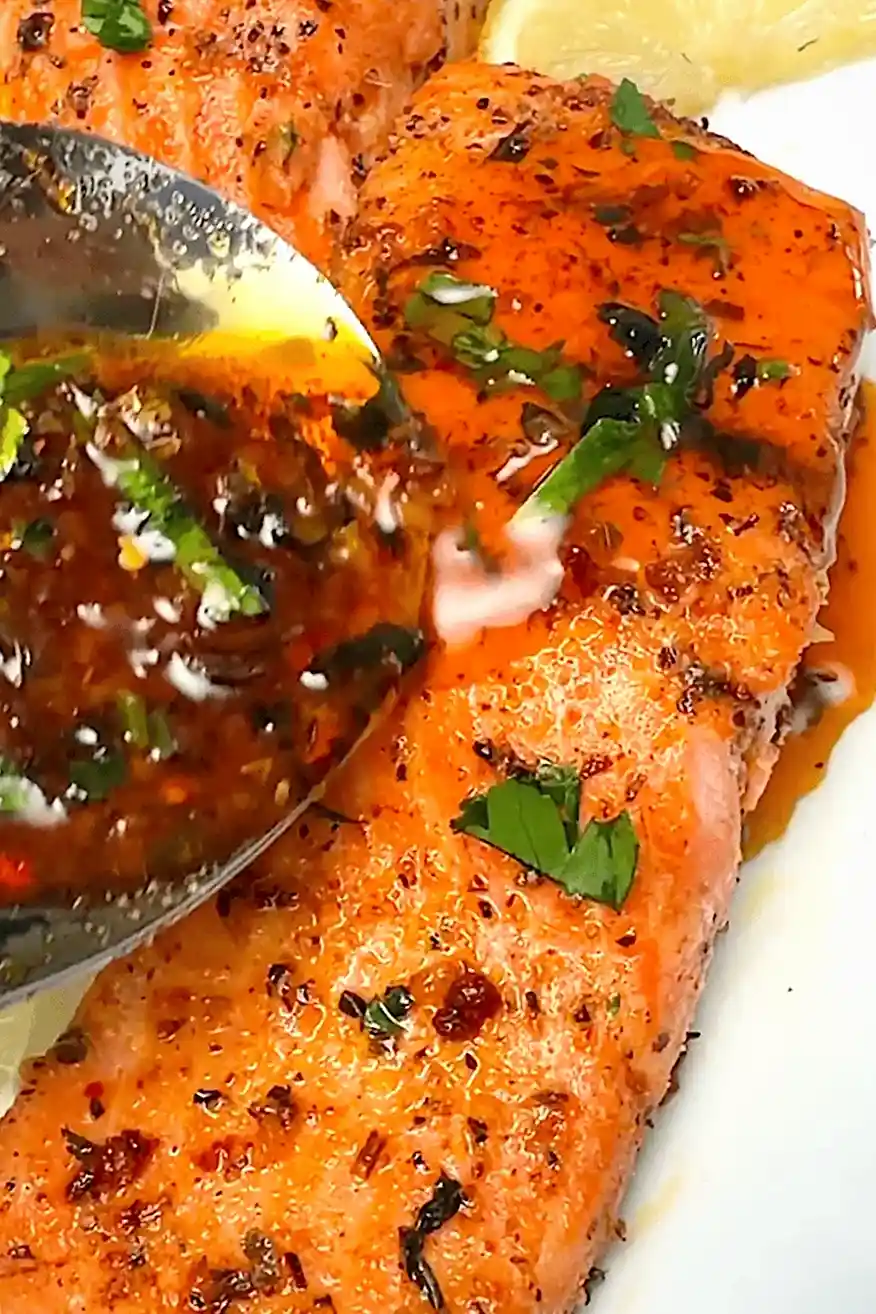
This oven-baked salmon is seasoned with a zesty garlic and lemon butter sauce for a moist, flaky finish. It is an efficient recipe suitable for quick weeknight meals or formal dinner gatherings.
List of ingredients
- 2 pounds (900g) salmon fillets – fresh or thawed
- 3-4 tablespoons (42-56g) unsalted butter – for the sauce base
- 2-3 teaspoons (6-8g) minced garlic – adds aromatic depth
- 1 tablespoon (7g) onion powder – provides savory balance
- 1 tablespoon (7g) paprika – for color and mild flavor
- ½-1 teaspoon (1-2g) cayenne pepper (optional) – for a spicy kick
- 2-3 tablespoons (7-10g) fresh parsley or basil (minced) – for herbal freshness
- salt and pepper to taste – essential for basic seasoning
- 1 tablespoon (15ml) or more lemon juice – adds a bright, acidic finish
step-by-step instructions
- Prepare the Oven: Position a rack in the center of the oven and preheat it to 400ºF (205℃). Line a baking sheet with foil or baking paper and lightly coat it with cooking spray or oil to prevent sticking.
- Prep the Fish: Use a sharp knife to make 4-5 small slits in each salmon fillet. Pat both sides of the salmon dry with paper towels, then season generously with salt and pepper.
- Create the Butter Sauce: Heat a small pan over medium-low heat and melt the butter. Stir in the minced garlic, paprika, onion powder, cayenne pepper, and minced parsley or basil for 30 to 60 seconds.
- Infuse Flavors: Remove the pan from the heat and let the spice mixture sit for approximately 5 minutes to allow the flavors to meld. Once rested, stir in the lemon juice.
- Coat the Salmon: Use a pastry brush to apply the butter mixture to the salmon fillets, ensuring every inch of the fish is thoroughly covered.
- Bake: Place the fillets on the prepared baking sheet and bake for 10-15 minutes. The exact time depends on the thickness of your fillets and your preferred level of doneness.
- Check for Doneness: The salmon is ready when the thickest part of the fillet flakes easily with a fork.
- Final Touch: Garnish the cooked fillets immediately with fresh lemon slices and serve.
Professional Baking Tips
Pat the Salmon Dry for Better Texture
Using paper towels to remove surface moisture from the fish is a critical step. Excess water on the surface creates steam, which can prevent the sauce from adhering and hinder the development of a nice crust.
Understand Internal Temperature Targets
While the FDA recommends an internal temperature of 145°F (62℃), many chefs prefer a range of 125-130°F (50-55℃) for a moister result. Higher temperatures often lead to a drier, firmer texture in the meat.
Allow the Fish to Rest
Let the fillets rest for 5 minutes after removing them from the oven. The residual heat continues the cooking process slightly, and resting allows the juices to reabsorb into the muscle fibers.
Timing the Salt Application
Season the salmon with salt immediately before putting it in the oven. Salting too early can draw moisture out of the fish, which may result in a drier final product.
Flavor Modifications and Variations
Creating an Asian-Inspired Glaze
Swap the butter and lemon for a mixture of soy sauce, grated ginger, minced garlic, and a small amount of honey. This combination provides a savory and sweet profile that complements the richness of the salmon.
Developing an Italian-Style Crust
Spread a thin layer of basil pesto over the top of the fillets before baking. Sprinkle with a small amount of grated microbial-rennet Parmesan cheese to add a salty, nutty finish.
Adjusting the Heat Levels
The cayenne pepper is optional and can be adjusted based on your spice tolerance. For a milder flavor, omit it entirely or replace it with a pinch of smoked paprika for a deeper, woody aroma.
Substituting Fresh Herbs
While parsley and basil are recommended, fresh dill or cilantro also work well. Dill is a classic pairing for salmon and adds a bright, citrusy note to the butter sauce.
Selecting High-Quality Salmon
Identifying Freshness by Scent
Fresh salmon should smell like the clean ocean or have a very mild scent. Avoid any fillets that have a strong, pungent, or overly ‘fishy’ odor, as this indicates spoilage.
Checking for Physical Bruising
Inspect the flesh for any gaps, bruising, or discoloration. The meat should be firm to the touch and spring back when pressed lightly with your finger.
Evaluating Frozen Fillets
When purchasing frozen salmon, check the ingredient list on the packaging. Avoid products that list ‘color added’ or other artificial additives and preservatives.
Using Skin-On Fillets
Baking salmon with the skin on and placing it skin-side down on the tray creates a natural barrier. This helps hold in the juices and prevents the bottom of the fillet from drying out.
Optimal Serving Suggestions
Pairing with Hearty Starches
Serve this salmon alongside garlic mashed potatoes or a creamy orzo pasta. These rich sides complement the acidity of the lemon butter sauce perfectly.
Combining with Fresh Green Vegetables
Sautéed green beans or roasted asparagus are excellent low-carb options. Use a touch of olive oil and lemon zest to mirror the flavors of the main dish.
Serving Salmon Cold over Salads
For a lighter meal, serve the cooked salmon chilled over a spinach salad with fresh strawberries. Top the dish with a mango salsa for a tropical contrast in flavor.
Storage and Preservation
Proper Refrigeration Techniques
Store leftover salmon in an airtight container in the refrigerator for 3 to 5 days. Ensure the container is sealed tightly to prevent the fish from absorbing other odors in the fridge.
Long-Term Freezer Storage
Cooked salmon can be kept in the freezer for up to 3 months. Wrap the fillets tightly in freezer-safe foil or plastic wrap before placing them in a heavy-duty freezer bag.
Thawing Frozen Salmon Safely
Always thaw frozen salmon fillets overnight in the refrigerator. Avoid thawing at room temperature to prevent the growth of harmful bacteria.
Reheating Best Practices
Low-Temperature Oven Reheating
Set your oven to 325°F (160℃) and heat the salmon for about 10 minutes. This gentle method prevents the fish from overcooking and becoming rubbery.
Quick Reheating with an Air Fryer
Place the salmon in an air fryer at 350°F (175℃) for 3 to 5 minutes. This is the fastest way to restore a slight crispness to the edges of the fillet.
Microwave Reheating Precautions
If using a microwave, use a low-power setting and heat in short 30-second intervals. Overheating in the microwave can cause the fish to toughen very quickly.
Troubleshooting Common Issues
Preventing Salmon from Sticking
If your salmon sticks to the pan, ensure you are using a high-quality non-stick spray or parchment paper. Avoid placing the fish directly on a bare metal tray without a lubricant.
Fixing Overcooked Dry Fillets
If the salmon becomes too dry, try reducing the oven time by 2 minutes next time. You can also serve overcooked salmon flaked into a salad or mixed with a creamy sauce to add moisture.
Handling Varying Fillet Thicknesses
Thinner fillets will cook much faster than thick center-cut pieces. If baking fillets of different sizes, remove the smaller ones from the oven earlier to avoid overcooking them.
Frequently Asked Questions
How do I know when the salmon is perfectly done?
The most reliable method is the flaking test. Gently press a fork into the thickest part of the fillet; if the meat separates easily along the natural lines, it is ready.
Can I use a different type of fish for this recipe?
Yes, this method works well with other fatty fish like trout or Arctic Char. Adjust the cooking time slightly based on the thickness of the alternative fillet.
Should I remove the skin before I start baking?
It is generally better to keep the skin on during the baking process to preserve moisture. You can easily slide the skin off with a spatula after the fish has cooked.
How do I prevent the lemon juice from making the fish too sour?
Stick to the recommended 1 tablespoon of lemon juice and adjust only after tasting. Balance the acidity by ensuring you use the full amount of butter specified in the recipe.
Print
Zesty Oven Baked Salmon
- Total Time: 25 minutes
- Yield: 6 servings 1x
- Diet: Gluten Free
Description
These moist and flaky salmon filets are generously seasoned with a spicy kick and a lemony flourish. It’s one of those easy, never-fail-you recipes that packs a real flavor punch.
Ingredients
- 2 pounds (900g) salmon fillets
- 3–4 tablespoons (42-56g) unsalted butter
- 2–3 teaspoons (6-8g) minced garlic
- 1 tablespoon (7g) onion powder
- 1 tablespoon (7g) paprika
- ½–1 teaspoon (1-2g) cayenne pepper
- 2–3 tablespoons (7-10g) fresh parsley or basil (minced)
- salt and pepper to taste
- 1 tablespoon (15ml) or more lemon juice
Instructions
- Prepare Oven: Position a rack in the center of the oven and preheat the oven to 400ºF (205℃). Line a baking sheet with foil or baking paper, spray with cooking spray or lightly oil. Set aside.
- Prepare Salmon: Make 4-5 slits in each salmon fillet with a sharp knife. Dab both sides of the salmon dry with paper towels, and season both sides with salt and pepper.
- Prepare Sauce: Heat a small pan over medium-low heat. Melt the butter, then add minced garlic, paprika, onion powder, cayenne pepper, and parsley or basil. Stir for 30 seconds to a minute. Let this mixture sit for a little bit, about 5 minutes. Stir in the lemon juice.
- Coat Salmon: Brush the salmon fillets with the mixture, covering every inch.
- Bake: Bake until cooked through, 10-15 minutes, depending on the salmon’s thickness and your preferred doneness.
- Garnish: Garnish immediately with lemon slices and serve.
Notes
Season the fish just before cooking to prevent moisture loss. For a more tender result, aim for an internal temperature of 125-130°F (50-55℃) and let the fillets rest for 5 minutes after baking.
- Prep Time: 10 minutes
- Cook Time: 15 minutes
- Category: Main
- Method: Baking
- Cuisine: American
Nutrition
- Serving Size: 1 slice
- Calories: 289 kcal
- Sugar: 1 g
- Sodium: 462 mg
- Fat: 16 g
- Saturated Fat: 5 g
- Unsaturated Fat: 9 g
- Trans Fat: 0.2 g
- Carbohydrates: 5 g
- Fiber: 2 g
- Protein: 31 g
- Cholesterol: 99 mg