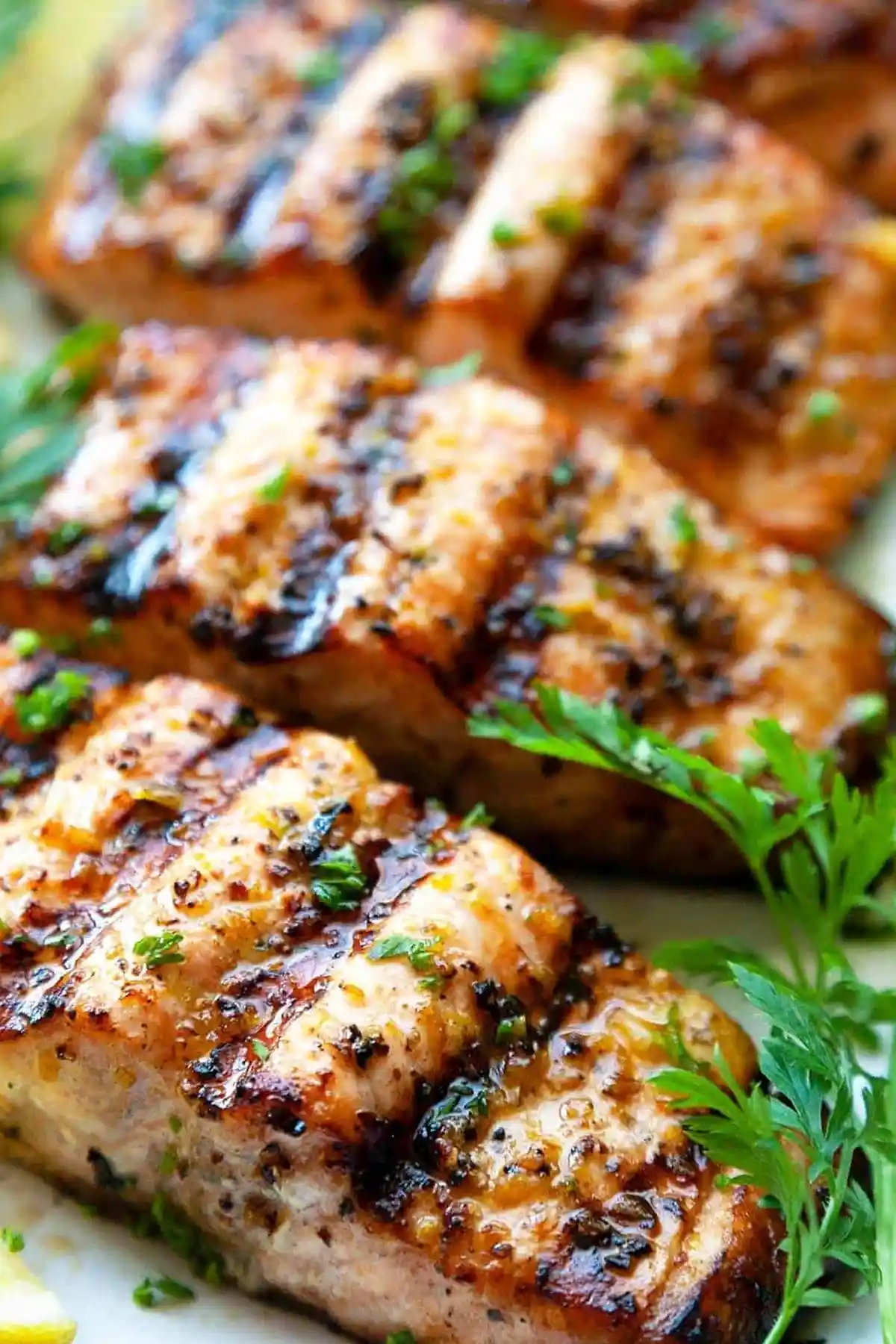
This recipe delivers a perfectly seared salmon fillet with a bright, citrusy glaze. It is an ideal choice for a fast, nutrient-dense dinner that utilizes high-heat grilling to lock in moisture.
List of ingredients
- 3 tablespoons olive oil – used for both the marinade and oiling the grill grates.
- 3 tablespoons lemon juice – provides the necessary acidity to balance the richness of the fish.
- 3 tablespoons lemon pepper seasoning – the primary flavor agent; adjust based on salt content.
- Salt to taste – add only if your specific seasoning blend does not contain salt.
- 4 skin-on salmon fillets (6-8 ounces each, about 1-inch thick) – skin-on fillets help prevent drying and sticking.
step-by-step instructions
- Prepare the grill: Heat the grill to high heat, targeting 450-500°F. Fold a paper towel, coat it with oil, and using tongs, wipe the grates 5 to 10 times until they appear black and glossy.
- Mix the glaze: In a small mixing bowl, combine the olive oil, lemon juice, lemon pepper seasoning, and salt if required.
- Initial sear: Brush half of the lemon pepper sauce onto the salmon fillets. Place the fillets skin side up on the hot grill and sear until the surface is firm and distinct grill marks form; do not move the fish during this stage.
- Flip and baste: When the fish is approximately 70% cooked (about 6 minutes), use a thin fish spatula to gently release the fillets and flip them. Baste the skin side with the remaining lemon pepper sauce.
- Finish cooking: Cook until the fish reaches your preferred internal temperature or the flesh flakes easily when tested with a fork.
Advanced Grilling Techniques
The High-Heat Searing Method
Heating the grill to 450-500°F is critical for creating an immediate sear. This process creates a charred crust that naturally releases from the metal grates. If the grill is too cool, the proteins in the fish will bond to the metal, causing the fillet to tear upon flipping.
Creating a Polymer Barrier
Wiping the grates with oiled paper towels multiple times creates a thin, glossy barrier. This layer prevents the delicate flesh of the salmon from adhering to the grill. Applying oil 5 to 10 times ensures full coverage across all surfaces of the cooking area.
The Benefit of Skin-Side Up Searing
Starting with the flesh side down allows for the creation of beautiful grill marks while the fish is at its hottest. The skin then acts as a protective layer during the second half of the cooking process. This method often results in less sticking than starting skin-side down.
Utilizing a Fish Spatula
A thin, flexible fish spatula is the best tool for this recipe. It can slide between the grill grate and the fish without lifting the entire fillet too early. This precision minimizes the risk of breaking the fillet during the flip.
Salmon Selection and Preparation
Wild-Caught vs Farm-Raised Salmon
Wild-caught salmon generally offers a more intense flavor and a leaner profile. Farm-raised salmon contains more fat, which results in a milder taste and a more forgiving cooking process. Both are suitable for this recipe, though wild salmon cooks slightly faster due to lower fat content.
Why Skin-On Fillets are Preferred
Keeping the skin on serves two primary purposes: it holds the fillet together and protects the meat from direct heat. This prevents the fish from drying out and provides a physical buffer against the grill. The skin can be easily removed after cooking or left on for added nutrition.
Achieving Uniform Thickness
Using fillets that are approximately 1-inch thick ensures that all pieces cook at the same rate. If you have a large fillet, cut it into 1.5 to 2-inch wide portions. Uniformity prevents smaller pieces from overcooking while thicker pieces remain raw in the center.
Managing Surface Moisture
If you choose to marinate the salmon for 30 minutes, use a paper towel to dab off excess moisture before grilling. Excess liquid on the surface creates steam instead of a sear. Brushing with a fresh layer of oil after patting dry ensures a better crust.
Precision Cooking and Temperature
Using a Digital Meat Thermometer
The most accurate way to determine doneness is by using an instant-read thermometer. Insert the probe into the thickest part of the fillet. Remove the fish when it hits your target temperature, as carry-over cooking will increase the heat by a few degrees while resting.
Internal Temperature Targets
For a medium-rare to medium result, aim for an internal temperature between 125°F and 135°F. The USDA recommends 145°F for full doneness, though many prefer it slightly lower to maintain juiciness. Remove the fish at 140°F and let it rest for 5 minutes to reach the USDA target.
The Fork Flake Test
If a thermometer is unavailable, use a fork to gently press the top of the fillet. The fish is done when the flesh separates easily along the white lines of fat. The center should be opaque for fully cooked fish or slightly translucent for medium-rare.
Identifying Albumin Seepage
Albumin is the white, protein-rich liquid that sometimes oozes from salmon as it cooks. When this white substance begins to appear on the surface, the fish is reaching its final stage of doneness. Excessive albumin can be a sign that the fish is starting to overcook.
Ingredient Customizations and Substitutions
Adjusting Salt Content
Commercial lemon pepper seasonings vary widely in sodium levels. Always taste your seasoning blend before adding extra salt to the marinade. If the seasoning is salt-free, a pinch of kosher salt will enhance the overall flavor profile.
Adding Fresh Aromatics
For added depth, you can stir finely chopped fresh parsley or dill into the lemon pepper sauce. These herbs complement the citrus notes and add a fresh visual contrast to the grilled fish. Add the herbs after the initial mix to keep them from burning during the first sear.
Substituting Lemon Juice
If fresh lemons are unavailable, bottled organic lemon juice is a functional substitute. For a different citrus profile, lime juice can be used, though it will shift the flavor toward a more tropical profile. Maintain the 3-tablespoon ratio to ensure the sauce consistency remains correct.
Alternative Oil Choices
Olive oil is recommended for flavor, but avocado oil is an excellent alternative due to its higher smoke point. This is particularly useful if your grill runs extremely hot. Avoid using butter for the initial sear as it can burn and create bitter flavors at high temperatures.
Serving and Pairing Ideas
Grilled Vegetable Combinations
Since the grill is already hot, cook vegetables alongside the salmon. Asparagus, zucchini, sliced eggplant, and mushrooms work well. Brush them with olive oil and salt, grilling them for 3-5 minutes per side until tender.
Refreshing Cold Side Dishes
Pair the rich salmon with a cold pasta salad to balance the meal. A Greek orzo salad or a Caprese-style pasta salad provides a refreshing contrast. The acidity in these salads complements the lemon pepper glaze.
Warm Pasta Pairings
For a heartier meal, serve the salmon over creamy pasta. Options like a ricotta pesto or a spinach artichoke pasta provide a luxurious base. The acidity of the lemon pepper salmon cuts through the richness of creamy sauces.
Grain-Based Accompaniments
Quinoa or wild rice are healthy options that absorb the extra glaze from the salmon. Adding a squeeze of fresh lemon and some chopped chives to the grains can tie the whole plate together nutritionally and flavor-wise.
Storage and Reheating Guidelines
Refrigerating Leftovers
Store leftover grilled salmon in an airtight container in the refrigerator for up to 3 days. To prevent the fish from picking up other odors, ensure the container is fully sealed. Let the fish cool slightly before sealing to avoid excessive condensation.
Optimal Reheating Methods
To avoid overcooking the fish during reheating, use a low-heat oven or a toaster oven. Place the fillet on a baking sheet and warm at 275°F until just heated through. Avoid using a microwave on high power, as this often makes the salmon rubbery.
Freezing Grilled Salmon
Grilled salmon can be frozen for up to two months. Wrap the fillets tightly in foil and then place them in a freezer-safe bag. Thaw the fish in the refrigerator overnight before gently reheating in the oven.
Frequently Asked Questions
Can I marinate the salmon longer than 30 minutes?
It is not recommended to marinate salmon for several hours. The citric acid in the lemon juice can begin to break down the proteins, effectively ‘cooking’ the fish and resulting in a mushy texture.
What if I don’t have a grill?
You can use a cast-iron grill pan on a stovetop over medium-high heat. Follow the same oiling and searing steps, ensuring the pan is very hot before adding the fish.
How do I remove the skin after cooking?
Once the fish has rested for 5 minutes, slide a thin spatula between the skin and the flesh. The skin should release easily from the meat if the fish was seared correctly.
Can I use frozen salmon fillets?
Yes, but they must be completely thawed and patted dry before grilling. Grilling frozen fillets will lead to uneven cooking and will likely cause the fish to stick to the grates.
Why is my salmon sticking to the grill?
Sticking usually happens if the grill is not hot enough or if the grates weren’t sufficiently oiled. Ensure the grates are glossy and the fish is not flipped until a proper crust has formed.
Print
Zesty Grilled Lemon Pepper Salmon
- Total Time: 15 minutes
- Yield: 4 servings 1x
- Diet: General
Description
Lemon Pepper Salmon recipe – A quick and easy recipe for the BEST Grilled Salmon. A family favorite for a healthy summertime dinner.
Ingredients
- 3 tablespoons olive oil
- 3 tablespoons lemon juice
- 3 tablespoons lemon pepper seasoning
- Salt to taste
- 4 6-8 ounce skin-on salmon fillets about 1-inch thick
Instructions
- Step: Heat the grill to high heat (450-500°F), brushing and wiping the grates with oiled paper towels until black and glossy.
- Step: Combine olive oil with lemon juice, lemon pepper seasoning, and salt if using.
- Step: Brush the salmon with half of the lemon pepper sauce and place it skin side up on the hot grill; sear until surface is firm and grill marks have formed without moving the fish.
- Step: When the fish is about 70% done (about 6 minutes), use a thin spatula to gently release and flip the fillets, then baste with the remaining lemon pepper sauce.
- Step: Cook until the fish reaches the desired temperature or until it flakes with a fork.
Notes
Optional: Marinate the salmon with half of the sauce for up to 30 minutes. For added protection against sticking, brush fillets only with olive oil before grilling and apply the lemon pepper sauce after flipping. Cook to an internal temperature of 140-145°F or until the flesh flakes easily.
- Prep Time: 5 minutes
- Cook Time: 10 minutes
- Category: Main Course
- Method: Grilling
- Cuisine: American
Nutrition
- Serving Size: 1 fillet
- Calories: 348 kcal
- Sugar: 0.3 g
- Sodium: 76 mg
- Fat: 21 g
- Saturated Fat: 3 g
- Unsaturated Fat: 16 g
- Trans Fat: 0 g
- Carbohydrates: 4 g
- Fiber: 1 g
- Protein: 34 g
- Cholesterol: 94 mg