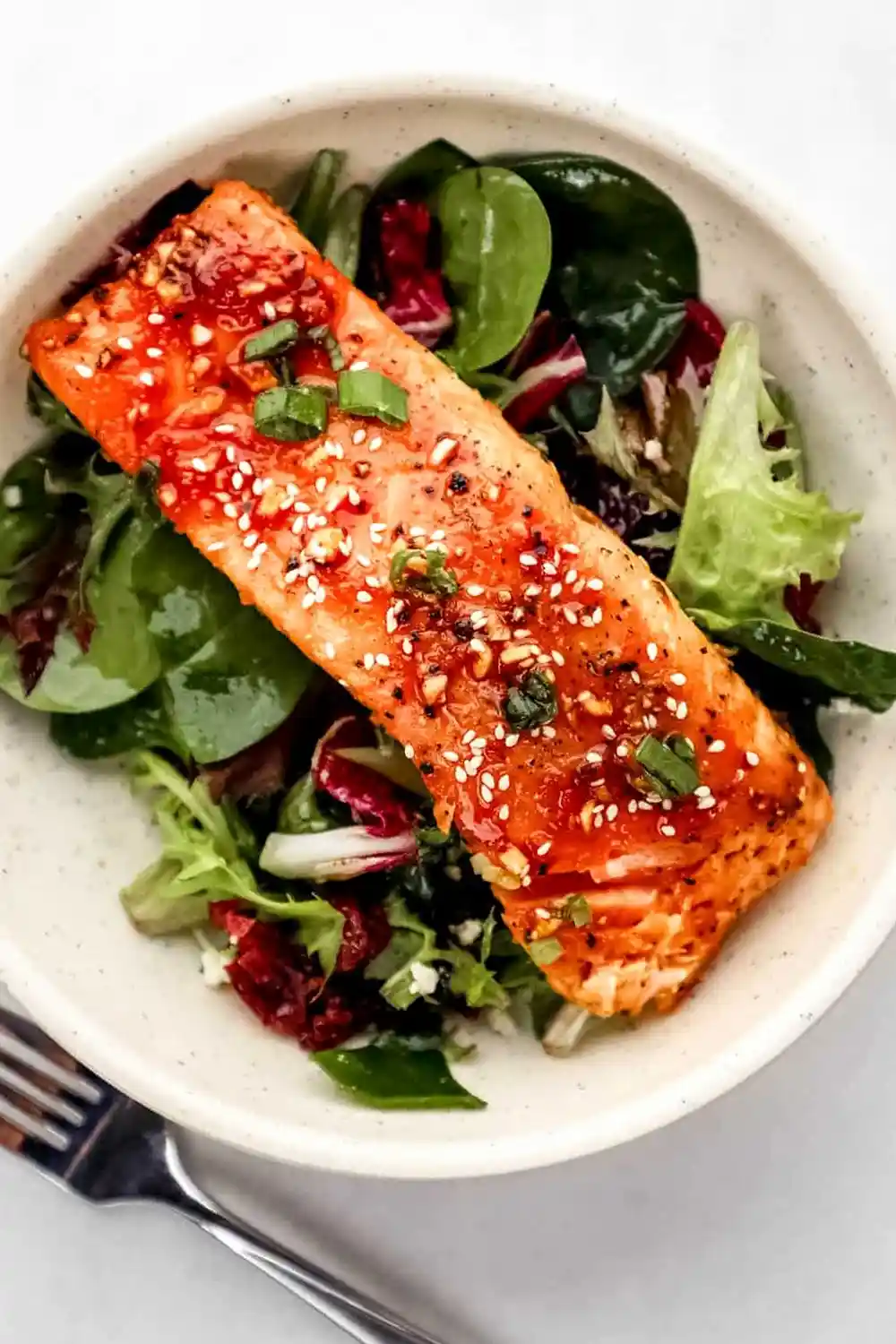
This baked salmon recipe delivers a balance of spicy and sweet flavors in under 30 minutes. It is a practical choice for healthy weeknight dinners that require minimal cleanup.
List of ingredients
- 4 salmon fillets – high quality and firm.
- 1/2 teaspoon salt – for basic seasoning.
- 1/2 teaspoon ground black pepper – for basic seasoning.
- 2 tablespoons sriracha – provides the spicy heat.
- 2 tablespoons honey – adds sweetness and stickiness.
- 1 tablespoon soy sauce – adds savory umami depth.
- 1 tablespoon rice vinegar – provides a tangy brightness.
- 2 cloves garlic, minced – for aromatic savory flavor.
- 1 tablespoon fresh ginger, grated – adds a zesty aromatic punch.
- sesame seeds – optional garnish for texture.
- green onions, chopped – optional garnish for freshness.
step-by-step instructions
- Prepare Oven: Preheat your oven to 400°F. Line a baking sheet with parchment paper to prevent sticking.
- Season Fish: Place 4 salmon fillets skin-side down on the sheet. Season each with 1/2 teaspoon salt and 1/2 teaspoon ground black pepper.
- Create Glaze: In a small bowl, whisk together 2 tablespoons sriracha, 2 tablespoons honey, 1 tablespoon soy sauce, 1 tablespoon rice vinegar, 2 cloves minced garlic, and 1 tablespoon grated fresh ginger.
- Apply Glaze: Brush the glaze generously over each piece of salmon. Set aside any remaining glaze for later.
- Bake: Bake for 8–10 minutes. The salmon is done when it flakes easily with a fork, though time may vary by fillet thickness.
- Final Touch: Brush the reserved glaze over the fillets, then sprinkle with sesame seeds and green onions. Serve immediately.
Optimizing Your Baking Process
Bring Salmon to Room Temperature
Remove the fillets from the refrigerator about 15 to 20 minutes before cooking. This ensures the fish cooks evenly throughout without the center remaining cold while the edges overcook.
Dry the Salmon Surface
Use paper towels to pat the salmon fillets completely dry before seasoning. Removing surface moisture helps the glaze adhere better and prevents the fish from steaming.
Ensure Proper Pan Spacing
Leave at least an inch of space between each fillet on the baking sheet. This allows hot air to circulate around the fish, ensuring a consistent bake across all pieces.
Benefits of Parchment Paper
Using parchment paper instead of foil prevents the sticky honey glaze from bonding to the pan. It makes the cleanup process significantly faster and prevents the fish from tearing during removal.
Utilize a Meat Thermometer
For precise results, use an instant-read thermometer to check the thickest part of the fillet. The salmon is safely cooked and moist when it reaches an internal temperature of 145°F.
Glaze Ingredient Alternatives
Substituting Honey for Maple Syrup
You can replace the honey with pure maple syrup for a slightly different sweetness profile. Maple syrup provides a deeper, more woody flavor that pairs well with the spicy sriracha.
Adjusting the Sriracha Heat
If sriracha is too spicy, replace it with a sweet chili sauce or reduce the quantity by half. You can also add a pinch of sugar to further mellow the heat.
Rice Vinegar Replacements
If rice vinegar is unavailable, use apple cider vinegar or white wine vinegar. These alternatives provide the necessary acidity to balance the sweetness of the honey.
Soy-Free Sauce Options
Use coconut aminos as a direct substitute for soy sauce. Coconut aminos are naturally soy-free and gluten-free while maintaining a similar salty and savory flavor.
Preparing Fresh Ginger Efficiently
Use the edge of a spoon to scrape the skin off the fresh ginger root before grating. This method is faster than using a peeler and preserves more of the aromatic flesh.
Perfecting the Salmon Texture
Preventing Overcooking
Salmon can turn dry very quickly if left in the oven too long. Start checking for doneness at the 8-minute mark to ensure the fish remains tender and flaky.
Achieving a Sticky Finish
Brushing the reserved glaze on the fish immediately after it leaves the oven creates a glossy, sticky coating. This enhances the visual appeal and intensifies the flavor.
Handling Different Fillet Thicknesses
If your fillets vary in size, place the thicker pieces toward the back of the oven where heat is often more intense. Adjust individual cook times if necessary.
Skin-On versus Skinless Fillets
Skin-on fillets are generally easier to cook as the skin protects the flesh from the heat. If using skinless fillets, be extra vigilant about cook times to avoid drying them out.
Managing Carry-Over Cooking
Remove the salmon from the oven just before it reaches the ideal temperature. The internal heat will continue to cook the fish for a few minutes while it rests.
Serving and Pairing Ideas
Rice and Grain Accompaniments
Serve this salmon over a bed of jasmine, basmati, or brown rice to soak up the extra glaze. Quinoa or farro are also excellent options for added nutrition and texture.
Roasted Vegetable Pairings
Pair the fish with roasted broccoli, asparagus, or Brussels sprouts. These vegetables can often be roasted on the same sheet pan if you add them 10 to 15 minutes before the salmon.
Fresh Salad Combinations
A light arugula or spinach salad with a lemon-olive oil vinaigrette provides a fresh contrast. The acidity of the salad helps cut through the richness of the honey glaze.
Creating a Salmon Bowl
Place the cooked salmon over a bowl of rice and add sliced cucumbers, shredded carrots, and avocado. Drizzle additional glaze over the top for a complete meal.
Adding a Creamy Element
Serve the salmon alongside a dollop of Greek yogurt or a side of smashed avocado. The creaminess balances the heat from the sriracha and the tang of the vinegar.
Storage and Reheating Advice
Safe Refrigeration Practices
Allow leftover salmon to cool completely before placing it in an airtight glass container. Store it in the refrigerator for up to three days to maintain quality.
Gentle Oven Reheating
Reheat the salmon in a 300°F oven until just warmed through to avoid drying it out. Covering the fish with foil can help retain moisture during this process.
Using an Air Fryer for Reheating
Place the salmon in the air fryer at 350°F for 3 to 5 minutes. This method quickly restores the texture of the glaze without overcooking the center.
Freezing Cooked Salmon
Wrap cooked fillets tightly in plastic wrap and then in aluminum foil before freezing. Cooked salmon can be stored in the freezer for up to two months.
Proper Thawing Methods
Thaw frozen salmon slowly in the refrigerator overnight. Avoid thawing at room temperature to prevent bacterial growth and maintain the integrity of the fish.
Common Cooking Challenges
Fixing a Runny Glaze
If the glaze seems too thin, simmer the reserved portion in a small saucepan over medium heat. Boil it for a few minutes until it reduces into a thicker syrup.
Managing High Oven Heat
If the honey in the glaze begins to burn before the fish is cooked, lower the oven temperature to 375°F. You may need to increase the baking time by a few minutes.
Reducing Strong Fishy Odors
Rinse the salmon under cold water and pat dry before seasoning to remove excess surface slime. Using fresh, high-quality salmon significantly reduces strong smells.
Correcting Uneven Cooking
Ensure your oven is fully preheated before sliding the tray inside. If one side of the tray cooks faster, rotate the pan halfway through the baking process.
Handling Sticking Issues
If the salmon sticks to the parchment, use a thin metal spatula to gently lift it. Ensure the parchment is high-quality and rated for 400°F temperatures.
Frequently Asked Questions
Can I grill this salmon?
Yes, you can grill the fillets over medium heat for 6 to 8 minutes per side. Baste the salmon with the glaze frequently during the grilling process.
What is a good substitute for rice vinegar?
Apple cider vinegar or white wine vinegar are the best substitutes. They provide a similar acidic profile that balances the honey and sriracha.
Can I use frozen salmon fillets?
Yes, but you must thaw them completely in the refrigerator first. Cooking frozen fillets directly can result in uneven texture and excess water on the pan.
How do I know when the salmon is perfectly done?
The salmon should be opaque in the center and flake easily when pressed with a fork. An internal temperature of 145°F is the gold standard.
Can I make the glaze ahead of time?
Yes, the glaze can be whisked together and stored in a jar in the refrigerator for up to one week. Stir it well before using if the honey has settled.
Print
Easy Baked Honey Sriracha Salmon
- Total Time: 20 minutes
- Yield: 4 servings 1x
- Diet: General
Description
This Honey Sriracha Salmon is sweet, spicy, and packed with flavor. A quick and easy baked salmon recipe ready in just 30 minutes.
Ingredients
- 4 salmon fillets
- 1/2 teaspoon salt
- 1/2 teaspoon ground black pepper
- 2 tablespoons sriracha
- 2 tablespoons honey
- 1 tablespoon soy sauce
- 1 tablespoon rice vinegar
- 2 cloves garlic, minced
- 1 tablespoon fresh ginger, grated
- sesame seeds
- green onions, chopped
Instructions
- Preheat and Prep: Preheat your oven to 400°F. Line a baking sheet with parchment paper.
- Season the Salmon: Place 4 salmon fillets skin-side down on the sheet. Season with 1/2 teaspoon salt and 1/2 teaspoon ground black pepper.
- Make the Glaze: In a small bowl, whisk together 2 tablespoons sriracha, 2 tablespoons honey, 1 tablespoon soy sauce, 1 tablespoon rice vinegar, 2 cloves minced garlic, and 1 tablespoon grated fresh ginger.
- Glaze the Salmon: Brush the glaze generously over each piece of salmon. Reserve any extra glaze.
- Bake: Bake for 8–10 minutes, or until the salmon flakes easily with a fork.
- Finish and Serve: Brush with reserved glaze, sprinkle with sesame seeds and green onions. Serve immediately.
Notes
Choose high-quality salmon that’s firm, moist, and brightly colored for the best flavor. Line your sheet pan with parchment paper to prevent sticking and make cleanup easy. Bake just until the salmon flakes with a fork; overbaking will dry it out.
- Prep Time: 10 minutes
- Cook Time: 10 minutes
- Category: Main Course
- Method: Baking
- Cuisine: American
Nutrition
- Serving Size: 1 fillet
- Calories: 282 kcal
- Sugar: 9 g
- Sodium: 790 mg
- Fat: 11 g
- Saturated Fat: 2 g
- Unsaturated Fat: 8 g
- Trans Fat: 0 g
- Carbohydrates: 10 g
- Fiber: 0.2 g
- Protein: 34 g
- Cholesterol: 94 mg