These garlic and lemon salmon kabobs offer a fresh, zesty flavor profile perfect for summer grilling or quick oven broiling. The accompanying creamy yogurt sauce adds a cool contrast to the charred seafood.
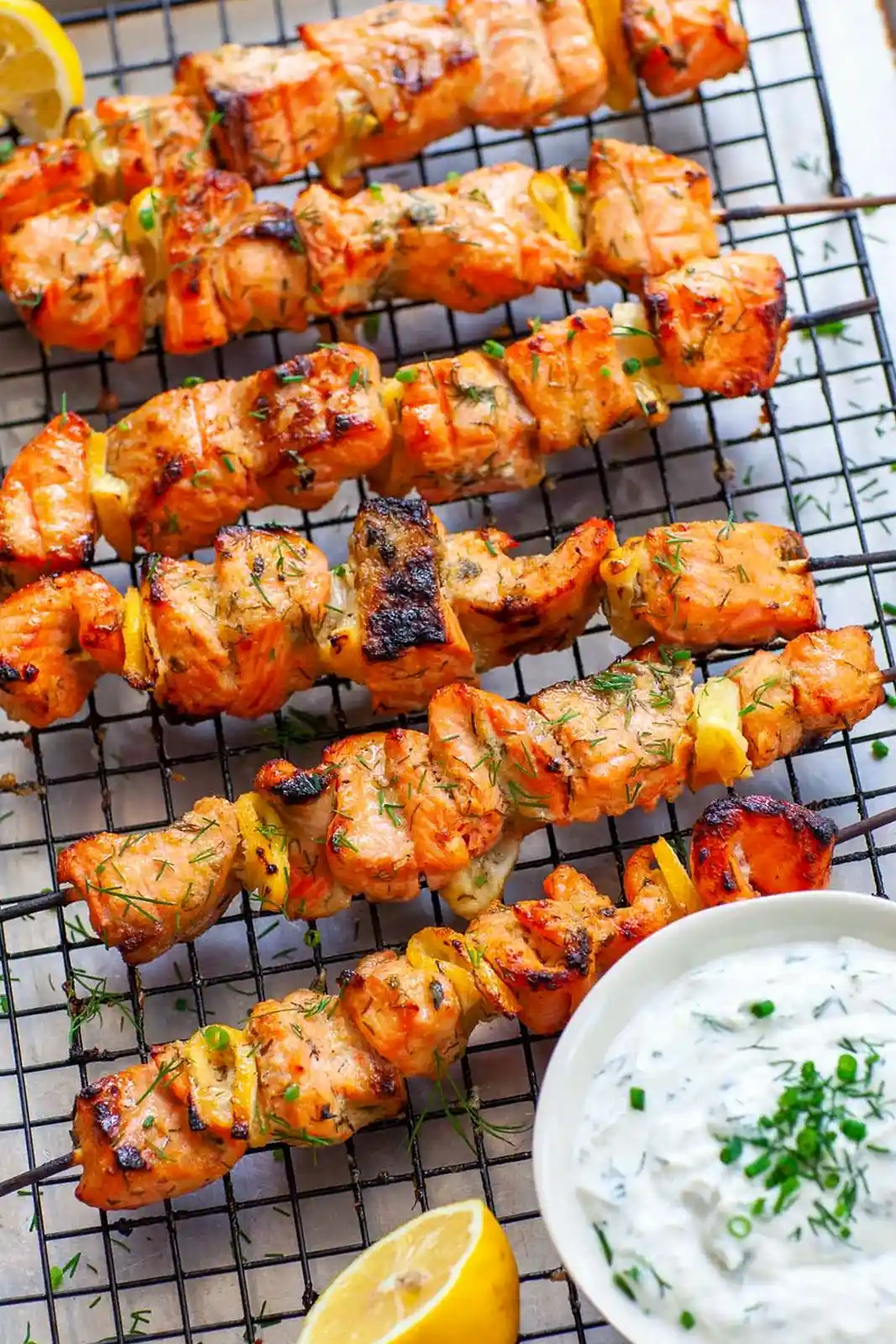
List of ingredients
- 2 lb wild salmon fillet or steelhead trout – cut into 1-inch chunks.
- Zest from 2 large lemons – adds concentrated citrus aroma.
- 1/4 cup freshly squeezed lemon juice – provides the necessary acidity.
- 1/4 cup olive oil or avocado oil – keeps the fish moist during cooking.
- 1 1/2 tbsp Dijon mustard – adds a tangy depth and helps emulsify the marinade.
- 1 1/2 tbsp maple syrup or honey – balances the acid with subtle sweetness.
- 6 garlic cloves, pressed or grated – for a bold, savory punch.
- 1 tbsp fresh thyme – adds an earthy, herbal note.
- 2 tbsp freshly chopped dill – provides a classic seafood pairing.
- 2 tsp sea salt – enhances all existing flavors.
- Ground black pepper – adds a mild spicy warmth.
- 1 cup plain yogurt – the base for the cool dipping sauce.
- Zest from 1 lemon – for brightness in the yogurt sauce.
- 3 garlic cloves – pressed into the sauce for sharpness.
- 1 tbsp freshly chopped dill – for fresh herby notes in the dip.
- 1 tbsp freshly chopped chives – adds a mild onion flavor.
- 1/2 tsp sea salt – to season the yogurt base.
- Ground black pepper – to taste.
- 1 to 2 tbsp olive oil – for a smooth finish in the sauce.
- Bamboo skewers – for assembling the kabobs.
- 2 large lemons, thinly sliced – used as dividers between salmon chunks.
step-by-step instructions
- Prepare the Marinade: In a large mixing bowl, combine the zest of two lemons, 1/4 cup lemon juice, and 1/4 cup olive oil. Stir in the pressed garlic, Dijon mustard, fresh dill, fresh thyme, salt, and black pepper. Whisk thoroughly until the ingredients are well blended.
- Prep and Marinate the Salmon: Cut the salmon fillet into 1-inch cubes, removing the skin if desired for a cleaner presentation. Toss the salmon chunks into the marinade bowl and mix gently with a spatula or your hands to ensure every piece is coated. Cover the bowl with plastic wrap and refrigerate for 30 minutes to 1 hour, or up to overnight for deeper flavor.
- Prepare the Skewers and Lemons: Soak bamboo skewers in water for at least 30 minutes to prevent them from burning on the heat. Thinly slice two lemons and cut those slices into wedges.
- Assemble the Kabobs: Carefully slide the marinated salmon chunks onto the soaked bamboo skewers. Alternate each piece of salmon with a lemon wedge to infuse the fish with extra citrus during cooking.
- Oven Broiling Method: Preheat your oven to 425F with the rack in the middle position, then switch the setting to broil on high. Place the kabobs on a wire rack set over a foil-lined baking sheet. Broil for 5 to 7 minutes per side until golden and charred, reaching an internal temperature of 135F to 140F.
- Outdoor Grilling Method: Preheat the grill to 525F for 10 minutes and oil the grates well to avoid sticking. Grill the kabobs over medium flames for 3 to 4 minutes per side. Remove them once they reach an internal temperature of 135F to 140F.
- Create the Yogurt Sauce: In a small bowl, combine plain yogurt, the zest of one lemon, pressed garlic, salt, pepper, fresh dill, and fresh chives. Drizzle in 1 to 2 tablespoons of olive oil and stir until creamy.
Mastering the Salmon Selection
Choosing Wild-Caught Salmon for Intensity
Wild-caught salmon typically offers a deeper, more robust flavor and a firmer texture than farmed varieties. This firmness is especially beneficial for kabobs, as it prevents the fish from breaking apart on the skewer. Look for fillets with a deep red or orange hue.
Using Steelhead Trout as an Alternative
Steelhead trout is an excellent substitute for salmon due to its similar fat content and flakey texture. It absorbs the garlic and lemon marinade effectively while remaining juicy. The taste is slightly milder, making it a great option for those who prefer a lighter seafood flavor.
Identifying Fresh Salmon Quality
Fresh salmon should have a bright, clean scent and a moist, glossy appearance without any slime. Avoid fillets that have gaps or ‘gaping’ in the flesh, as this indicates the fish is older. The meat should spring back when lightly pressed with your finger.
Optimizing the Marinade Process
Balancing Sweetness with Maple Syrup
The addition of maple syrup or honey is crucial for achieving a caramelized exterior during broiling or grilling. The natural sugars react with the heat to create a golden-brown crust. This sweetness also cuts through the sharpness of the lemon juice and garlic.
The Role of Dijon Mustard in Texture
Dijon mustard acts as an emulsifier, binding the oil and lemon juice into a thick sauce that clings to the salmon. Without it, the marinade would be too thin and would slide off the fish. It also adds a sophisticated tang that complements the fresh herbs.
Proper Marination Times for Firmness
Marinating for 30 minutes to an hour is sufficient for the flavors to penetrate the surface of the fish. Avoid marinating for more than 24 hours, as the citric acid in the lemon juice can begin to ‘cook’ the proteins. This can result in a mushy texture once the salmon is actually heated.
Precision Cooking Techniques
Preventing Salmon from Sticking to Grates
To avoid tearing the salmon, ensure your grill grates are extremely hot before adding the kabobs. Coat the grates with a high-smoke point oil, such as avocado oil, using a paper towel. Do not attempt to flip the fish too early; it will naturally release from the grate once a sear has formed.
Using an Instant-Read Thermometer
The only way to guarantee perfect medium doneness is to use a digital meat thermometer. Aim for an internal temperature of 135F to 140F, as the temperature will rise slightly while the fish rests. This prevents the salmon from becoming dry or chalky.
Managing Broiler Heat in the Oven
When using the broiler, keep a close eye on the kabobs since the intense top-down heat can burn the lemon slices quickly. Using a wire rack is essential because it allows hot air to circulate under the fish. This ensures the bottom cooks evenly with the top.
Avoiding Overcooked Salmon
Salmon continues to cook for a few minutes after being removed from the heat. Take the kabobs off the grill or out of the oven just before they reach your target temperature. This carry-over cooking ensures the center remains moist and tender.
Enhancing the Yogurt Dipping Sauce
Selecting the Right Plain Yogurt
A full-fat Greek yogurt is recommended for the dipping sauce to provide a rich, creamy consistency. The thickness of Greek yogurt helps it cling to the salmon chunks. If using regular plain yogurt, you can strain it through a cheesecloth for an hour to remove excess whey.
Preparing Garlic for Maximum Flavor
For the sauce, pressing or grating the garlic into a paste releases more oils than slicing. This ensures the garlic flavor is evenly distributed throughout the yogurt without leaving large, pungent chunks. Freshly grated garlic provides a sharper, more vibrant taste.
Adjusting the Sauce Consistency
If the yogurt sauce feels too thick, stir in a teaspoon of lemon juice or water until it reaches your desired consistency. Adding more olive oil will increase the richness and create a glossier appearance. Always taste and adjust the salt and pepper at the very end.
Recommended Side Dish Pairings
Fresh Vegetable Salads with Citrus
A light salad featuring arugula, fennel, and cucumbers pairs perfectly with the richness of the salmon. Use a simple vinaigrette of lemon and olive oil to mirror the flavors of the kabobs. Adding sliced avocado provides a creamy contrast to the zesty fish.
Hearty Grain and Rice Options
Serving these kabobs over a bed of mushroom rice or quinoa adds substance to the meal. The grains soak up any extra marinade or yogurt sauce that drips from the skewers. Basmati or jasmine rice are excellent choices for a light, aromatic base.
Roasted Root Vegetables for Balance
Parmesan and herb roasted baby potatoes provide a salty, earthy accompaniment. The crispiness of the potatoes complements the tender texture of the broiled salmon. Toss the potatoes in garlic and rosemary to align with the herbal notes of the fish.
Storage and Food Safety
Refrigerating Cooked Salmon Kabobs
Store leftover salmon in an airtight container in the refrigerator for up to two to three days. Keep the yogurt sauce in a separate container to maintain its freshness and texture. Ensure the fish is completely cooled before sealing the lid to prevent condensation.
Best Methods for Reheating Seafood
Avoid using a microwave, as it often overcooks salmon and makes it rubbery. Instead, reheat the kabobs in an oven at 275F for about 10 minutes until warmed through. Alternatively, a quick sear in a pan over medium-low heat can restore some of the original texture.
Freezing Options for Leftovers
While cooked salmon can be frozen, the texture may change slightly upon thawing. Wrap the salmon tightly in foil and place it in a freezer-safe bag for up to one month. Thaw slowly in the refrigerator overnight before reheating in the oven.
Common Troubleshooting Solutions
Fixing Salmon That Falls Off the Skewer
If the salmon pieces are falling off, ensure you are cutting them into larger, uniform 1-inch cubes. Smaller pieces are more prone to breaking under their own weight. Pressing the salmon firmly against the lemon slices can also help lock the pieces in place.
Preventing Burnt Lemon Slices
Lemon slices can char quickly due to their high sugar content. To prevent this, ensure the slices are not too thin and are tucked tightly against the salmon. If they brown too fast, move the kabobs to a slightly lower rack in the oven.
Correcting a Too-Salty Marinade
If you accidentally add too much salt to the marinade, add a small amount of extra maple syrup or lemon juice to balance it. The sweetness and acidity will neutralize the saltiness. You can also increase the amount of olive oil to dilute the concentration.
Frequently Asked Questions
Can I use frozen salmon?
Yes, but ensure the salmon is completely thawed and patted dry with paper towels before marinating. Excess moisture from frozen fish can dilute the marinade and prevent the fish from searing properly.
How long do these kabobs stay fresh?
Cooked salmon kabobs are best enjoyed immediately but can be kept in the fridge for up to three days. The yogurt sauce also lasts about three days when stored in an airtight container.
Can I make the marinade ahead of time?
The marinade can be prepared up to 24 hours in advance and stored in the refrigerator. This allows the garlic and herbs to infuse the oil, creating a more complex flavor profile before it hits the fish.
What is the best substitute for fresh dill?
If fresh dill is unavailable, you can use dried dill, though you should use only one-third of the amount. Fresh parsley or cilantro can also work, although they will significantly change the flavor profile of the dish.
Do I have to remove the skin?
Removing the skin is optional but recommended for kabobs to ensure a uniform cook and easier eating. If you leave the skin on, make sure it is facing the heat source to get it crispy.
Print
Zesty Garlic Lemon Salmon Kabobs with Creamy Yogurt Dip
- Total Time: 45 minutes
- Yield: 7 kabobs 1x
- Diet: General
Description
The best garlic, herb, and lemon salmon kabobs recipe, great grilled or broiled. Made with a homemade marinade and creamy yogurt dipping sauce!
Ingredients
- 2 lb wild salmon fillet (or steelhead trout)
- zest from 2 large lemons
- 1/4 cup freshly squeezed lemon juice
- 1/4 cup olive oil (or avocado oil)
- 1 1/2 tbsp Dijon mustard
- 1 1/2 tbsp maple syrup (or honey)
- 6 garlic cloves, pressed or grated
- 1 tbsp fresh thyme
- 2 tbsp freshly chopped dill
- 2 tsp sea salt
- ground black pepper
- 1 cup plain yogurt
- zest from 1 lemon
- 3 garlic cloves
- 1 tbsp freshly chopped dill
- 1 tbsp freshly chopped chives
- 1/2 tsp sea salt
- 1 to 2 tbsp olive oil
- bamboo skewers
- 2 large lemons, thinly sliced
Instructions
- Making the Marinade: Zest the lemons and add the zest to a large mixing bowl. Squeeze out the juices into the same bowl, add the olive oil, pressed garlic, Dijon mustard, fresh dill, fresh thyme, salt, and pepper; whisk together and set aside.
- Marinating the Salmon: Portion the salmon into 1-inch chunks. Place salmon chunks into the marinade bowl, gently toss until well coated, cover with plastic wrap, and refrigerate for at least 30 minutes to 1 hour, or overnight.
- Removing the Skin (Optional): Lay salmon flat on a cutting board, cut through the flesh at the tail end down to the skin to create a notch, and slide a sharp knife firmly between the skin and the flesh to remove the skin in one piece.
- Making Salmon Kabobs: Soak bamboo skewers in water. Slide marinated salmon chunks onto the skewers, adding sliced lemon wedges between every piece or every other piece of salmon.
- Oven Broiler Instructions: Preheat oven to 425F, then switch to ‘broil’ on high. Place kabobs on a wire rack over a foil-lined baking sheet and broil for 5 to 7 minutes per side until the internal temperature reaches 135F-140F.
- Grilling Instructions: Preheat outdoor grill to 525F for 10 minutes and oil the grates. Grill kabobs over medium flames for 3 to 4 minutes per side until they reach an internal temperature of 135F-140F.
- Easy Yogurt Sauce for Serving: In a small mixing bowl, mix together yogurt, zest of 1 lemon, pressed garlic, salt, pepper, fresh dill, fresh chives, and a drizzle of olive oil.
Notes
Nutritional facts estimated for 1 kabob with about 6 pieces of salmon. Add additional 20 calories per tablespoon of yogurt sauce.
- Prep Time: 30 minutes
- Cook Time: 15 minutes
- Category: Dinner
- Method: Grilling or Broiling
- Cuisine: American
Nutrition
- Serving Size: 1 kabob
- Calories: 273 kcal
- Sugar: 3 g
- Sodium: 758 mg
- Fat: 16 g
- Saturated Fat: 2 g
- Unsaturated Fat: 12 g
- Trans Fat: 0 g
- Carbohydrates: 5 g
- Fiber: 0.4 g
- Protein: 26 g
- Cholesterol: 71 mg