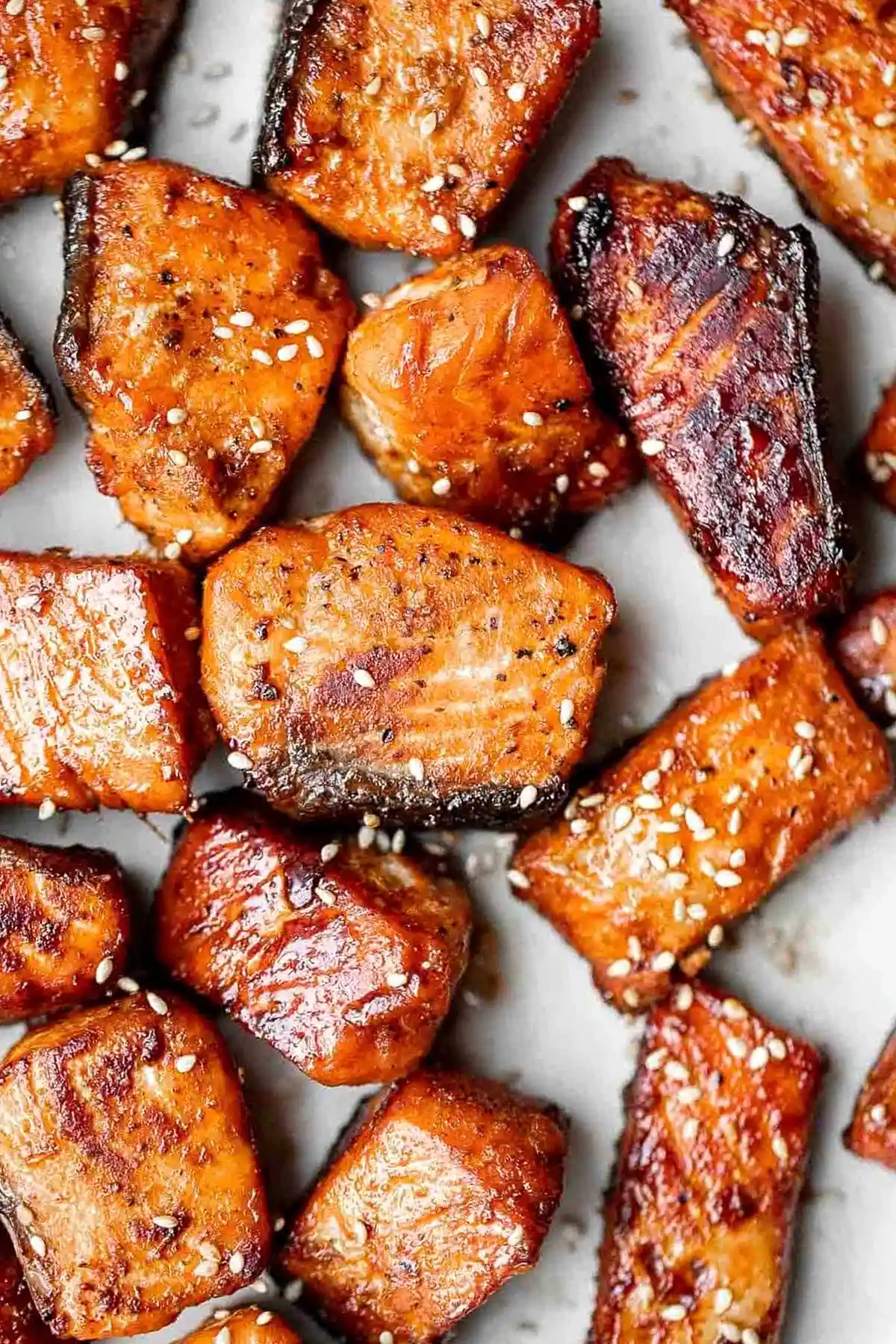
These savory salmon bites are an efficient way to prepare a protein-rich meal in under 30 minutes. They feature a crispy exterior and a sticky, sweet glaze that appeals to both children and adults.
List of ingredients
- 1 large salmon fillet (about 1 1/2 pounds), cut into 1 inch cubes – ensure pieces are uniform for even cooking.
- 2 tablespoons + 1 teaspoon vegetable oil, divided – used for seasoning the fish and searing in the pan.
- 1/4 teaspoon paprika – adds a mild earthy flavor and a rich red color.
- 1/4 teaspoon garlic powder – provides a consistent savory base to every bite.
- 1/4 teaspoon salt – enhances the natural flavors of the salmon.
- 1/4 teaspoon ground black pepper – adds a subtle, warm spice.
- 1 tablespoon soy sauce – creates the salty umami foundation for the glaze.
- 1 tablespoon honey – adds sweetness and helps the sauce thicken into a glaze.
- 1/2 teaspoon sesame oil – contributes a toasted, nutty aroma.
- 1 teaspoon lemon juice – provides essential acidity to balance the sweetness.
step-by-step instructions
- Season the fish: In a medium mixing bowl, add chopped salmon, 1 teaspoon oil, paprika, garlic powder, salt, and pepper. Toss well to coat and set aside for 10 minutes.
- Prep the skillet: Heat remaining oil in a large skillet over medium-high heat until the hot oil sizzles, about 1-2 minutes.
- Sear the salmon: Sear the salmon pieces (skin side down first) until golden browned and fully cooked, about 5-6 minutes per side. Do not move the salmon around during cooking. When salmon is cooked, the flesh will turn opaque, and it will flake easily when you insert a fork.
- Prepare the glaze: In a small mixing bowl, whisk together soy sauce, honey, sesame oil, and lemon juice until smooth.
- Coat and thicken: Pour the sauce over the salmon. Toss well to coat the salmon bites in the sauce and cook for another 1-2 minutes until browned.
- Plate and serve: Use tongs to remove the salmon bites and place on a serving plate. Garnish with white sesame seeds and serve immediately.
Ingredient Substitutions and Alternatives
Using Coconut Aminos Instead of Soy Sauce
For a soy-free alternative, coconut aminos offer a similar salty and savory profile. They are naturally sweeter than soy sauce, so you may wish to slightly reduce the honey. This substitute also significantly lowers the overall sodium content.
Honey Replacements for the Glaze
Maple syrup is an excellent alternative to honey, providing a deeper, more autumnal sweetness. Brown sugar also works well and helps the sauce thicken and caramelize quickly. Ensure the sugar is fully dissolved into the glaze during the final cooking stage.
Selecting the Best Cooking Oil
While vegetable oil is standard, avocado oil or coconut oil are great options due to their high smoke points. Olive oil can be used, but ensure it is a refined version to avoid burning at medium-high heat. The goal is a clean sear without a smoky kitchen.
Paprika and Spice Variations
If you prefer more heat, replace the paprika with cayenne pepper or a mild chili powder. Smoked paprika can be used to add a subtle wood-fired flavor to the bites. Adjust the quantity based on your personal heat tolerance.
Fresh Garlic vs Garlic Powder
Freshly minced garlic can replace garlic powder for a sharper, more pungent flavor. Use one small clove of finely minced garlic for the best results. Toss the fresh garlic in with the oil and salmon during the initial seasoning step.
Lemon Juice Alternatives
Freshly squeezed lemon juice is ideal, but bottled concentrate is a practical backup. Rice vinegar or lime juice can also provide the necessary acidity to cut through the richness of the salmon. Use a 1:1 ratio for these substitutions.
Recommended Serving Pairings
Steamed Rice Options
Serving these bites over jasmine or basmati rice allows the extra glaze to soak into the grains. Brown rice is a great choice for added fiber and a nuttier flavor. For a more aromatic option, try coconut rice to complement the Asian-inspired glaze.
Roasted Vegetable Combinations
Toss broccoli florets or asparagus in olive oil and roast them at 400F until tender. These green vegetables provide a fresh, crunchy contrast to the sticky glaze. Carrots or snap peas also pair exceptionally well with the honey-soy flavor profile.
Fresh Salad Pairings
A kale Caesar salad or a simple mixed greens salad adds a refreshing element to the meal. Use a light vinaigrette to avoid overwhelming the taste of the salmon. Sliced cucumbers and shredded carrots can also be served on the side.
Nutrient-Dense Grain Alternatives
Quinoa is an excellent protein-packed alternative to white rice. Farro or wild rice provide a chewy texture that pairs well with the tender fish. These grains make the appetizer feel more like a substantial, healthy dinner.
Dipping Sauce Pairings
For those serving these as appetizers, a side of spicy mayo is highly recommended. Mix mayonnaise with a dash of sriracha and lime juice for a creamy, spicy dip. A creamy sesame sauce or a simple ranch dip also works well.
Flavor Profiles and Recipe Variations
Greek-Style Seasoning
Skip the Asian glaze and season the salmon with dried oregano and garlic powder. After searing, drizzle the bites with fresh lemon juice and a sprinkle of dried dill. Serve these with a side of tzatziki for a Mediterranean twist.
Italian Herb Influence
Toss the cooked salmon in a mixture of extra virgin olive oil, lemon juice, and dried basil. Adding a pinch of oregano and some grated parmesan cheese provides a classic Italian flavor. This version pairs perfectly with a side of sautéed spinach.
Cajun Spice Blend
Before searing, coat the salmon in a mix of Cajun seasoning, paprika, and cayenne pepper. This creates a bold, spicy crust that does not require a sweet glaze. Serve these with a lemon wedge to brighten the heavy spices.
Sweet and Spicy Glaze
Add a teaspoon of sriracha or chili garlic sauce to the honey-soy mixture. This introduces a slow heat that balances the sweetness of the honey. It is a great way to add complexity to the flavor profile for adult palates.
Ginger and Garlic Twist
Stir in one teaspoon of freshly grated ginger to the sauce before pouring it over the salmon. Ginger adds a zesty, aromatic quality that enhances the sesame oil. This variation makes the dish taste more like a traditional teriyaki preparation.
Alternative Cooking Methods
Using an Air Fryer
Place the seasoned salmon cubes in a single layer in the air fryer basket. Cook at 400F for 7-10 minutes, shaking halfway through, until golden. Toss them in the glaze immediately after removing them from the air fryer.
Broiling in the Oven
Arrange the seasoned salmon on a foil-lined baking sheet. Set the oven to broil and cook for 4-6 minutes per side until charred. Pour the glaze over the fish during the last 2 minutes of broiling to caramelize the sugars.
Grilling on High Heat
Use a grill basket or skewers to prevent the small cubes from falling through the grates. Grill over high heat for 3-4 minutes per side until a crust forms. Brush the glaze onto the salmon during the final minute of grilling.
Proper Storage and Preservation
Refrigeration Guidelines
Place leftover salmon bites in an airtight glass or plastic container. Store them in the main part of the refrigerator for up to two days. Ensure they are completely cooled before sealing to prevent excess moisture from forming.
Long-Term Freezing
Wrap the cooled salmon tightly in plastic wrap or place them in a vacuum-sealed freezer bag. They can be stored in the freezer for up to three months without losing quality. Label the bag with the date to track freshness.
Safe Thawing Process
Transfer the frozen salmon from the freezer to the refrigerator 24 hours before you plan to eat it. Avoid thawing at room temperature to prevent bacterial growth. This slow thaw preserves the texture of the fish better than rapid methods.
Optimal Reheating Techniques
Oven Reheating for Texture
Preheat your oven to 300F and place the bites on a baking sheet. Heat for 5-8 minutes until warmed through to maintain the crispy edges. This is the best method for preserving the original texture of the sear.
Air Fryer Reheating
Place the bites in the air fryer at 300F for 3-5 minutes. This quickly restores the exterior crispness without overcooking the center. It is the fastest way to get the salmon back to its original state.
Stovetop Reheating Method
Warm a skillet over medium-low heat with a tiny drop of oil. Add the salmon and heat gently for 2-3 minutes, tossing occasionally. Be careful not to use high heat, as the honey in the glaze can burn quickly.
Microwave Reheating Precautions
Heat the salmon in short 30-second bursts at medium power. Stir gently between intervals to ensure even heating. Be cautious, as microwaves can easily make salmon rubbery or dry if overheated.
Troubleshooting Common Issues
Preventing Salmon from Sticking
Ensure the skillet is fully preheated before adding the oil and the fish. When the oil sizzles, it creates a barrier that helps the fish release naturally. Avoid using non-stick pans if you want a truly deep, golden-brown crust.
Achieving the Perfect Sear
The most important rule is to not move the salmon pieces once they hit the pan. Constant moving prevents the Maillard reaction, which is responsible for the golden crust. Leave the fish undisturbed for at least 5 minutes per side.
Avoiding Overcooked Salmon
Use a meat thermometer to check the internal temperature of the largest cube. Salmon is perfectly cooked when it reaches an internal temperature of 145F. If the fish begins to leak white albumin, it is a sign it may be overcooking.
Fixing a Runny Glaze
If the sauce is too thin after adding it to the pan, simmer it for an extra 60 seconds. The honey will continue to reduce and thicken as the water evaporates. Toss the salmon constantly to ensure the sauce coats every piece evenly.
Ensuring Uniform Cube Sizes
Cut the salmon into consistent 1-inch cubes using a sharp knife. If some pieces are significantly larger than others, the smaller ones will overcook while the larger ones remain raw. Use a ruler if necessary for the first few cuts.
Frequently Asked Questions
Can I use frozen salmon fillets?
Yes, you can use frozen fillets, but they must be completely thawed and patted dry first. Excess water on the surface of the fish will cause it to steam rather than sear. Patting the fish dry with paper towels ensures a better crust.
How do I tell when salmon is perfectly cooked?
The flesh should change from translucent pink to an opaque light pink. It should flake easily when pressed with a fork. A meat thermometer reading 145F is the most accurate method.
Can the glaze be prepared in advance?
Yes, the glaze can be whisked together and stored in the refrigerator for up to one week. Bring it to room temperature before adding it to the hot pan for a smoother emulsion. Shake the container well before using as the honey may settle.
Should I leave the skin on the cubes?
Leaving the skin on adds extra flavor and helps hold the cube together during the searing process. If you prefer a cleaner look, you can remove the skin before cubing. Searing skin-side down first typically results in the best texture.
Which salmon fillet cut is best for this?
Center-cut fillets are ideal because they provide the most uniform thickness for cubing. This ensures that every piece cooks at the same rate. Avoid the tail end of the fillet as those pieces are too thin and overcook quickly.
Print
Sticky Glazed Salmon Bites
- Total Time: 25 minutes
- Yield: 4–6 servings 1x
- Diet: Gluten Free
Description
Salmon Bites are a flavorful and delicious meal that is quick and easy to make with a handful of simple ingredients. Bite-sized portions of salmon are cooked until tender with crispy, golden edges and coated with a homemade, sweet and sticky Asian glaze.
Ingredients
- 1 large salmon fillet (about 1 1/2 pounds), cut into 1 inch cubes
- 2 tablespoons + 1 teaspoon vegetable oil, divided
- 1/4 teaspoon paprika
- 1/4 teaspoon garlic powder
- 1/4 teaspoon salt
- 1/4 teaspoon ground black pepper
- 1 tablespoon soy sauce
- 1 tablespoon honey
- 1/2 teaspoon sesame oil
- 1 teaspoon lemon juice
Instructions
- Step: In a medium mixing bowl, add chopped salmon, 1 teaspoon oil, paprika, garlic powder, salt, and pepper. Toss well to coat and set aside for 10 minutes.
- Step: Heat remaining oil in a large skillet over medium-high heat until the hot oil sizzles, about 1-2 minutes.
- Step: Sear the salmon pieces (skin side down first) until golden browned and fully cooked, about 5-6 minutes per side. Do not move the salmon around during cooking. When salmon is cooked, the flesh will turn opaque, and it will flake easily when you insert a fork.
- Step: In a small mixing bowl, whisk together soy sauce, honey, sesame oil, and lemon juice until smooth.
- Step: Pour the sauce over the salmon. Toss well to coat the salmon bites in the sauce and cook for another 1-2 minutes until browned.
- Step: Use tongs to remove the salmon bites and place on a serving plate. Garnish with white sesame seeds and serve immediately.
Notes
Storage: Transfer leftover salmon bites to an airtight container and store in the refrigerator for up to 2 days. Reheating: Reheat in a 300F preheated oven, air fryer, stove over medium-low heat, or in the microwave until warmed through. Freezing: Wrap cooled salmon tightly in plastic cling wrap or place in a sealed freezer bag and freeze for up to 3 months; thaw overnight in the fridge.
- Prep Time: 10 minutes
- Cook Time: 15 minutes
- Category: Appetizer
- Method: Stovetop
- Cuisine: Asian
Nutrition
- Serving Size: 1 serving
- Calories: 310 kcal
- Sugar: 5 g
- Sodium: 380 mg
- Fat: 16 g
- Saturated Fat: 3 g
- Unsaturated Fat: 13 g
- Trans Fat: 0 g
- Carbohydrates: 7 g
- Fiber: 0 g
- Protein: 32 g
- Cholesterol: 65 mg