This carrot and ginger soup offers a perfect balance of earthy sweetness and zesty warmth, making it an ideal choice for cooling days. By combining fiber-rich carrots with fresh aromatic ginger, this recipe creates a velvety bowl that feels both comforting and deeply nourishing for the body. The preparation is straightforward, relying on simple sautéing and blending techniques to achieve a professional-grade consistency at home.
List of ingredients
- 2 tbsp avocado oil
- 1 medium onion, diced
- 3 cloves garlic, minced
- 3 tablespoons ginger, minced or finely diced
- 2 pounds carrots, peeled and chopped
- 4 cups vegetable broth
- 1 bay leaf
- 1 teaspoon cinnamon
- 1 teaspoon salt
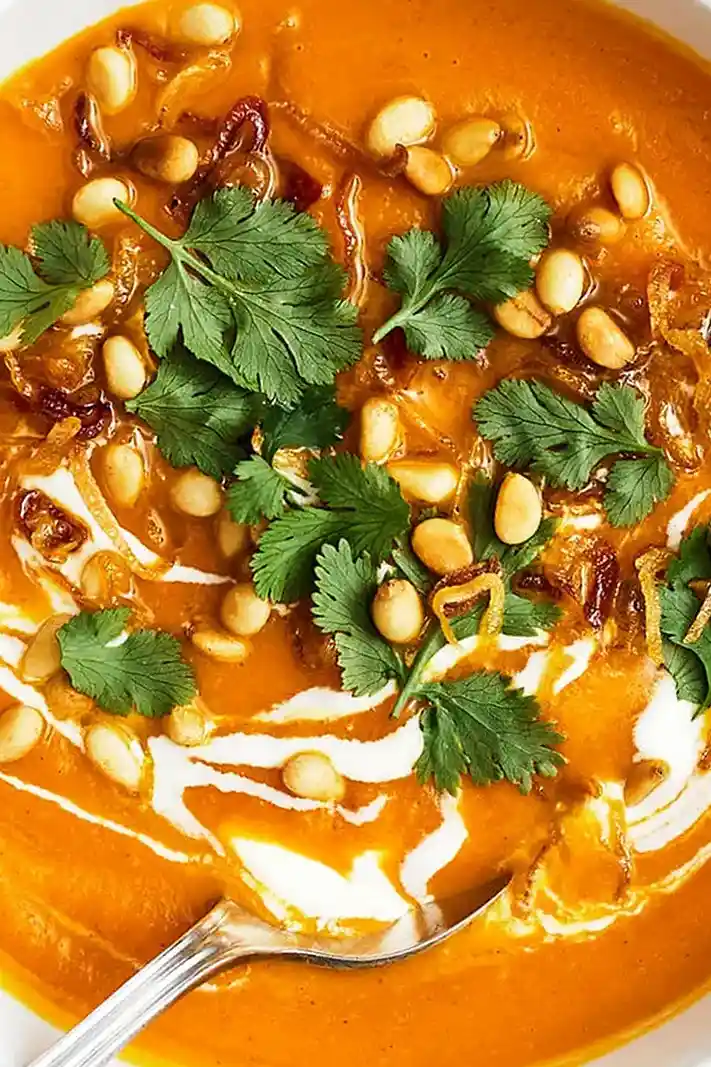
- Optional toppings: coconut cream, crispy shallots, toasted pine nuts and cilantro
step-by-step instructions
- Step: Heat the oil over medium-high heat in a large pot. Add the onions and cook for 1 to 2 minutes or until translucent.
- Step: Add the ginger and garlic to the pot and stir for another minute.
- Step: Place the chopped carrots in the pot and stir to combine. Cook for 10 minutes, stirring often.
- Step: Add the broth, bay leaf, cinnamon and salt to the pot. Bring to a boil, then cover and turn the heat to low for a gentle simmer. Cook for 20-30 minutes or until the carrots are soft when pierced with a fork.
- Step: Turn off the heat and remove the bay leaf. Blend the soup with an immersion blender or transfer the soup to a high-powered blender. Blend the soup until it’s pureed and smooth.
- Step: Divide each portion of soup into a bowl. If you’d like, swirl one tablespoon of coconut cream on top and garnish with crispy shallots, toasted pine nuts, and cilantro.
Practical Preparation Tips
Ensuring Consistent Carrot Texture
When preparing the carrots, consistency in size is the secret to even cooking. If some pieces are large while others are small, you will end up with overcooked mush in some areas and undercooked, crunchy chunks in others. Aim to chop all your carrots into roughly one-inch rounds or uniform chunks to ensure they become tender at the exact same rate during the simmer.
Selecting High-Quality Ginger
The intensity of this soup is highly dependent on the quality of your fresh ginger. Look for roots that are firm, smooth, and heavy for their size; wrinkled or shriveled skin is a sign that the ginger is old and likely lacks the necessary punch. To prep the ginger efficiently, use the back of a spoon to scrape away the thin, papery skin before mincing it as finely as possible to avoid woody fibers in the blended soup.
Achieving the Perfect Creamy Consistency
The texture of a pureed soup can be elevated by the speed of your blending. An immersion blender is convenient, but you may need to blend for longer than expected to achieve a true restaurant-style velvety finish. If you want an ultra-smooth, silk-like texture, pushing the blended soup through a fine-mesh sieve into a secondary clean pot will remove any residual fibrous carrot threads, though this is purely optional.
Substitutions and Variations
Adjusting the Liquid Base
While vegetable broth provides a clean and balanced flavor, you can swap it for water mixed with a tablespoon of concentrated vegetable bouillon if you are in a pinch. If you prefer a richer, more savory undertone, a high-quality mushroom-based vegetable broth can add an almost umami-like depth that works remarkably well with the sweetness of the carrots. Always check the salt content of your chosen broth before adding additional salt to the recipe.
Adding Extra Nutritional Density
You can boost the protein content of this meal by adding a cup of red lentils alongside the carrots during the boiling stage. The lentils will soften and disintegrate when blended, thickening the soup naturally while adding plant-based protein without drastically altering the flavor. If you choose this route, be prepared to add an extra half-cup of water or broth, as the lentils will absorb a significant amount of liquid during the simmer.
Incorporating Warmth Without Cinnamon
If cinnamon isn’t to your taste, there are several other warm spices that pair beautifully with carrots. Nutmeg, ground cumin, or even a pinch of ground coriander can provide a different kind of warmth. Cumin, in particular, will shift the flavor profile toward a more earth-toned, Middle Eastern-inspired dish, which pairs exceptionally well with the addition of fresh lemon zest at the end of the cooking process.
Storage and Reheating Methods
Managing Leftovers Effectively
Carrot soup is an excellent candidate for meal prep because the flavors actually improve as they sit in the refrigerator. Store the soup in an airtight glass or BPA-free plastic container, leaving a small amount of headspace to allow for expansion if you decide to freeze it. In the refrigerator, this soup remains fresh and flavorful for up to five days when stored at a consistent, cold temperature.
Proper Freezing Techniques
For long-term storage, freezing is highly recommended. Ladle the cooled soup into individual serving-sized freezer bags or containers, which helps you thaw only what you need for a quick lunch or dinner. When stored properly in a deep freezer, the soup will maintain its quality for up to three months. Always label your containers with the date so you can track how long the soup has been stored.
Reviving Texture After Reheating
When reheating from frozen, allow the soup to thaw in the refrigerator overnight before warming it on the stovetop over low heat. If the soup appears slightly separated or thickened after thawing, simply whisk in a splash of warm water or broth and use an immersion blender for a quick few pulses. This will restore the original silky consistency perfectly. Avoid high-heat microwave settings, as these can cause the soup to splatter and lead to uneven, scorched spots.
Frequent Culinary Questions
Can I use dried ginger instead of fresh?
While fresh ginger is highly recommended for its bright, zesty profile, you can use ground dried ginger if fresh is unavailable. Start with only one teaspoon of ground ginger, as dried spices are more potent and can quickly become overpowering. It is best to add the ground ginger during the last few minutes of simmering to allow it to hydrate without becoming bitter.
What is the purpose of the bay leaf?
The bay leaf acts as a subtle background flavor that rounds out the sweetness of the carrots and the heat of the ginger. It provides a faint herbal, woody note that balances the overall intensity of the soup. Always remember to remove the leaf before blending, as it does not break down and can leave large, unpleasant pieces in your smooth soup.
Is coconut cream necessary for the final result?
Coconut cream is entirely optional but recommended for those seeking a richer, more luxurious mouthfeel. It provides a creamy, tropical contrast to the savory ginger that balances the acidity. If you have a nut allergy or dislike the taste of coconut, a tablespoon of heavy cream or even a dollop of thick Greek-style yogurt can offer a similar creamy finish and satisfying richness to each serving bowl.
How do I fix soup that is too thick?
If you find your soup has become too thick after blending, the fix is very simple. Add small amounts of boiling vegetable broth or water until you reach your desired consistency. It is always better to start with less liquid during the boiling process and thin the soup out at the end, as you can add more liquid, but you cannot easily thicken a soup that has become too watery without adding starches.
Does the type of carrot matter?
Standard orange carrots are ideal for this recipe because they provide the classic sweet flavor and vibrant color we associate with this dish. If you choose to use heirloom carrots, such as purple or yellow varieties, be aware that the final color of your soup will change accordingly. Purple carrots, for example, will result in a deep brownish-red soup, which still tastes delicious but looks quite different from the traditional bright orange bowl.
Print
Vibrant Carrot and Ginger Soup
- Total Time: PT60M
- Yield: 4 servings 1x
- Diet: Vegan
Description
This is the best carrot ginger soup! It’s easy, healthy and a delicious mesh of warm winter flavors that boasts many nutritional benefits!
Ingredients
- 2 tbsp avocado oil
- 1 medium onion, diced
- 3 cloves garlic, minced
- 3 tablespoons ginger, minced or finely diced
- 2 pounds carrots, peeled and chopped
- 4 cups vegetable broth
- 1 bay leaf
- 1 teaspoon cinnamon
- 1 teaspoon salt
- Optional toppings: coconut cream, crispy shallots, toasted pine nuts and cilantro
Instructions
- Step: Heat the oil over medium-high heat in a large pot. Add the onions and cook for 1 to 2 minutes or until translucent.
- Step: Add the ginger and garlic to the pot and stir for another minute.
- Step: Place the chopped carrots in the pot and stir to combine. Cook for 10 minutes, stirring often.
- Step: Add the broth, bay leaf, cinnamon and salt to the pot. Bring to a boil, then cover and turn the heat to low for a gentle simmer. Cook for 20-30 minutes or until the carrots are soft when pierced with a fork.
- Step: Turn off the heat and remove the bay leaf. Blend the soup with an immersion blender or transfer the soup to a high-powered blender. Blend the soup until it’s pureed and smooth.
- Step: Divide each portion of soup into a bowl. If you’d like, swirl one tablespoon of coconut cream on top and garnish with crispy shallots, toasted pine nuts, and cilantro.
Notes
Store in an airtight container in the fridge for up to 4 to 5 days. For long-term storage, freeze in freezer-safe containers for up to 3 months.
- Prep Time: PT30M
- Cook Time: PT30M
- Category: Soup
- Method: Stovetop
- Cuisine: American
Nutrition
- Serving Size: 1 bowl
- Calories: 186 kcal
- Sugar: 14 g
- Sodium: 1680 mg
- Fat: 8 g
- Saturated Fat: 1 g
- Unsaturated Fat: 6 g
- Trans Fat: 0 g
- Carbohydrates: 29 g
- Fiber: 7 g
- Protein: 3 g
- Cholesterol: 0 mg