This simple one-pan meal brings together tender, honey-glazed salmon bites and perfectly roasted root vegetables for a balanced and nourishing dinner. By roasting the potatoes and carrots first to ensure they are fork-tender, you create a beautiful base for the salmon, which cooks quickly to retain its moisture. Drizzled with a creamy, zesty homemade honey mustard sauce, this dish is a convenient and flavorful solution for busy evenings that requires minimal cleanup.
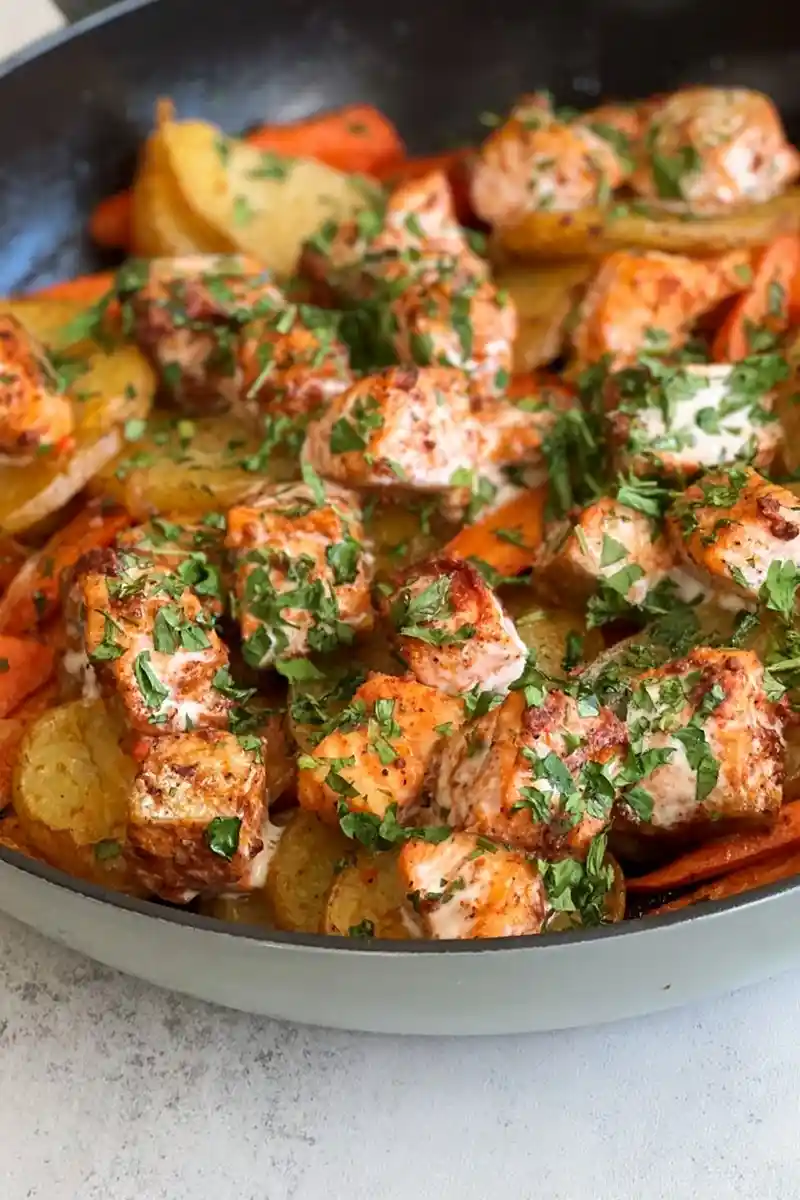
List of ingredients
- 1 1/2 lbs skinless salmon, cubed
- 1 tbsp olive oil
- 1 tsp paprika
- 1/2 tsp black pepper
- 1/2 tsp garlic powder
- 1/4 tsp salt
- 1 tsp dijon mustard
- 1 tsp honey
- 2 yellow potatoes
- 4-5 carrots, peeled and sliced
- 3 shallots, sliced into rounds
- 1/4 cup olive oil
- 1 tsp paprika
- 1/2 tsp salt
- 1/2 tsp black pepper
- 1/4 cup parsley, chopped
- 2 tbsp mayonnaise
- 2 tbsp dijon mustard
- 1 tbsp honey
- 1/4 tsp apple cider vinegar
- 1/8 tsp paprika
- Salt and pepper to taste
step-by-step instructions
- Preheat: Set your oven to 400 F.
- Prepare Veggies: Slice potatoes into 1/2 inch rounds and carrots into 2-inch sticks. Place in a baking dish with shallots, 1/4 cup olive oil, 1 tsp paprika, and 1/2 tsp each of salt and pepper. Toss well.
- Bake Veggies: Bake for 30 minutes, flip, and bake for an additional 10 minutes until potatoes are fork-tender.
- Marinate Salmon: Cut salmon into 1-inch cubes and toss with 1 tbsp olive oil, 1 tsp paprika, 1/2 tsp black pepper, 1/2 tsp garlic powder, 1/4 tsp salt, 1 tsp dijon mustard, and 1 tsp honey.
- Combine: Add salmon cubes and parsley to the baking dish with the veggies.
- Final Bake: Bake for 10-12 minutes, using the broiler for the last 2 minutes if desired.
- Sauce and Serve: Whisk together sauce ingredients until smooth, drizzle over the finished dish, and garnish with lemon juice and extra parsley.
Practical Roasting Advice
Achieving Even Vegetable Browning
To ensure your potatoes and carrots brown uniformly, avoid overcrowding the pan. If the pieces are piled on top of each other, they will steam rather than roast, preventing the development of a crispy, golden-brown edge that adds texture. Spread the vegetables in a single layer to allow the hot air of the oven to circulate properly around every piece.
Determining Potato Readiness
Potatoes vary in density depending on their variety and thickness of the slice. Since salmon cooks much faster than root vegetables, testing the potatoes with a fork is essential. If the fork meets resistance, allow the vegetables to roast for another five minutes before adding the salmon to the pan.
Customizing Your Marinade
Enhancing the Salmon Flavor Profile
The marinade acts as a protective barrier that keeps the salmon moist during the high-heat cooking process. If you prefer a stronger garlic note, you can add half a teaspoon of fresh minced garlic to the salmon bowl instead of relying solely on the powder. Ensure the cubes are well-coated to prevent the edges from drying out when the broiler is applied.
Adjusting Mustard Intensity
The type of mustard you use significantly impacts the final taste of the dish. Grainy mustard offers a rustic texture and a slightly more complex flavor profile, while smooth dijon provides a consistent, sharp heat that cuts through the richness of the salmon. You can use either, or even a mix, to achieve the specific consistency and bite you enjoy.
Serving and Storage Recommendations
Effective Storage Practices
If you have leftovers, place the salmon and vegetables in an airtight glass container to maintain freshness. This dish remains safe and flavorful in the refrigerator for up to two days. Because salmon is a delicate protein, avoid keeping it longer than this to maintain the best quality and texture.
Reheating Methods for Best Texture
When reheating, it is best to use a low oven or toaster oven set to 300 F rather than the microwave. Microwaving often causes salmon to become rubbery and can result in uneven heating. Placing the leftovers on a shallow tray and warming them slowly until just heated through helps restore the original tender texture of the fish.
Troubleshooting Common Issues
Managing Excessive Sauce Moisture
If you find that the vegetable juices are mixing with the honey mustard sauce and creating a thin liquid at the bottom of the pan, you can reduce the amount of oil used on the vegetables during the initial roasting phase. Alternatively, you can plate the vegetables with a slotted spoon to leave behind any excess liquid before drizzling the sauce over the final dish.
Correcting Salmon Dryness
Salmon is sensitive to overcooking due to its fat content and delicate muscle fibers. Always monitor the oven during the final 10-12 minutes; if the salmon flakes easily when pressed with a fork, it is fully cooked. If you are worried about the broiler drying out the tops, simply keep the pan on a lower rack during the final stage of cooking.
Frequently Asked Questions
Can I use different types of vegetables?
Yes, you can substitute the potatoes and carrots with other root vegetables like parsnips, sweet potatoes, or cubed butternut squash. These varieties roast at similar rates and hold up well to the honey mustard flavor profile.
Should I remove the skin before cooking?
Removing the skin before cubing the salmon is highly recommended for this recipe. It ensures that every bite is consistent and easy to eat, and it prevents the skin from becoming soggy beneath the vegetables.
Can I assemble the dish ahead of time?
You can slice the vegetables and prepare the salmon marinade in advance to save time. However, it is best to wait to coat the salmon until you are ready to put it in the oven to ensure the best texture, and the sauce is best whisked together just before serving.
How can I make the sauce thinner?
If your honey mustard sauce is too thick for your preference, add a half teaspoon of warm water or an extra splash of apple cider vinegar. Whisking it vigorously will help incorporate the liquid and achieve a pourable consistency for drizzling over the pan.
What is the purpose of the vinegar?
The apple cider vinegar serves as a necessary acidic contrast to the honey and mayonnaise. It prevents the sauce from feeling too heavy or overly sweet on the palate, which is vital when pairing it with the rich, fatty nature of the salmon.
Print
Honey Mustard Salmon Bites and Roasted Vegetables
- Total Time: 65 minutes
- Yield: 4 servings 1x
- Diet: Pescatarian
Description
A nutritious and flavorful one-pan meal featuring tender salmon bites, roasted potatoes, carrots, and shallots, all drizzled with a creamy homemade honey mustard sauce.
Ingredients
- 1 1/2 lbs skinless salmon, cubed
- 1 tbsp olive oil
- 1 tsp paprika
- 1/2 tsp black pepper
- 1/2 tsp garlic powder
- 1/4 tsp salt
- 1 tsp dijon mustard
- 1 tsp honey
- 2 yellow potatoes
- 4–5 carrots, peeled and sliced
- 3 shallots, sliced into rounds
- 1/4 cup olive oil
- 1 tsp paprika
- 1/2 tsp salt
- 1/2 tsp black pepper
- 1/4 cup parsley, chopped
- 2 tbsp mayonnaise
- 2 tbsp dijon mustard
- 1 tbsp honey
- 1/4 tsp apple cider vinegar
- 1/8 tsp paprika
- Salt and pepper to taste
Instructions
- Preheat: Set your oven to 400 F.
- Prepare Veggies: Slice potatoes into 1/2 inch rounds and carrots into 2-inch sticks. Place in a baking dish with shallots, 1/4 cup olive oil, 1 tsp paprika, and 1/2 tsp each of salt and pepper. Toss well.
- Bake Veggies: Bake for 30 minutes, flip, and bake for an additional 10 minutes until potatoes are fork-tender.
- Marinate Salmon: Cut salmon into 1-inch cubes and toss with 1 tbsp olive oil, 1 tsp paprika, 1/2 tsp black pepper, 1/2 tsp garlic powder, 1/4 tsp salt, 1 tsp dijon mustard, and 1 tsp honey.
- Combine: Add salmon cubes and parsley to the baking dish with the veggies.
- Final Bake: Bake for 10-12 minutes, using the broiler for the last 2 minutes if desired.
- Sauce and Serve: Whisk together sauce ingredients until smooth, drizzle over the finished dish, and garnish with lemon juice and extra parsley.
Notes
I added the sauce after baking, but it can also be poured into the dish when adding the salmon bites to add even more flavor.
- Prep Time: 15 minutes
- Cook Time: 50 minutes
- Category: Main
- Method: Baking
- Cuisine: American
Nutrition
- Serving Size: 1 serving
- Calories: 480 kcal
- Sugar: 9 g
- Sodium: 580 mg
- Fat: 22 g
- Saturated Fat: 3.5 g
- Unsaturated Fat: 18 g
- Trans Fat: 0 g
- Carbohydrates: 32 g
- Fiber: 5 g
- Protein: 38 g
- Cholesterol: 95 mg