This salmon rice bowl combines savory soy-glazed fish with tangy pickled vegetables for a balanced, nutrient-dense meal. It is a fast-cooking recipe that is ideal for weeknight dinners or efficient meal prep.
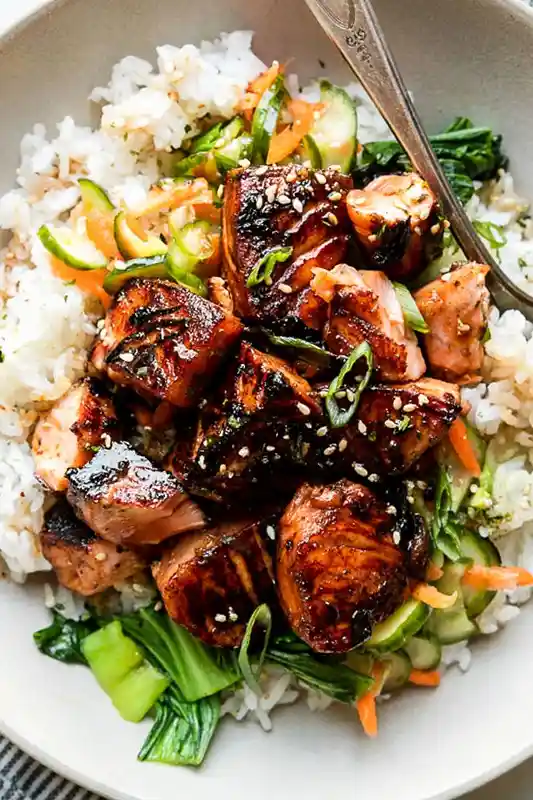
List of ingredients
- 2 cups cooked short grain white or brown rice – serves as the hearty base.
- 1 pound fresh wild-caught salmon – skin removed and diced into 1-inch cubes.
- 2 green onions – ends trimmed and thinly sliced.
- 1/4 cup firmly packed brown sugar – for the sweet glaze.
- 1/4 cup soy sauce – can be substituted with tamari for a gluten-free version.
- 1 tablespoon honey-water mixture (equal parts honey and warm water) – used as a non-alcoholic substitute for mirin.
- 1 teaspoon grapeseed oil – or any other high smoke point vegetable oil.
- Kosher salt and white pepper – for seasoning the salmon.
- Furikake, toasted sesame seeds, and thinly sliced green onions – for optional garnish.
- 1/2 English cucumber – sliced in half lengthwise and cut into thin half-moons.
- 1 small carrot – peeled and grated.
- 3 tablespoons granulated sugar – for the pickling liquid.
- 3 tablespoons rice vinegar – provides the necessary acidity for namasu.
- Kosher salt – used for both seasoning and drawing moisture from vegetables.
step-by-step instructions
- Prepare the pickled vegetables: Place the sliced cucumber and grated carrot in a medium bowl. Season with 2 teaspoons kosher salt and stir to combine well. Let the mixture stand for 15-20 minutes to draw out excess moisture. Rinse the vegetables thoroughly under cold water, drain well, and pat completely dry with paper towels.
- Create the pickling liquid: In a small bowl or jar, combine the granulated sugar, rice vinegar, and 1/4 teaspoon kosher salt. Microwave the mixture for 30 seconds until the sugar is fully dissolved. Pour this warm liquid over the dried cucumber and carrot, mix gently, and cover. Chill in the refrigerator until serving or store in an airtight container for up to 5 days.
- Marinate the salmon: In a medium bowl, whisk together the brown sugar, soy sauce, and honey-water mixture. Transfer half of this marinade to a separate small bowl and reserve it for drizzling later. Add the cubed salmon and sliced green onions to the remaining marinade, stir to coat evenly, and let marinate for 20-30 minutes.
- Sear the salmon: Heat the grapeseed oil in a medium skillet over medium-high heat until shimmering. Shake off any excess marinade from the salmon cubes and add them to the hot pan. Cook for 2 minutes without moving them, then flip and cook for another 90 seconds to 2 minutes until the desired doneness is achieved. Work in batches if necessary to avoid overcrowding the skillet.
- Assemble the bowls: Scoop the cooked rice into large, shallow bowls. Top the rice with a portion of the chilled namasu pickled vegetables and the seared salmon cubes. Drizzle the reserved soy marinade over the top and finish with furikake, toasted sesame seeds, and additional sliced green onions.
Salmon Selection and Preparation
Choosing High Quality Wild-Caught Salmon
Opt for wild-caught salmon with a firm texture and a vibrant pink or deep red color. Look for fish with consistent marbling, as the healthy fats help the salmon stay moist during the high-heat searing process. Ensure the flesh feels springy to the touch and does not leave an indentation when pressed.
Precision Cubing for Even Cooking
Cutting the salmon into uniform 1-inch cubes is essential for consistent results. This ensures that every piece cooks at the same rate, preventing some cubes from overcooking while others remain raw. Use a sharp chef’s knife to make clean cuts without tearing the delicate fish proteins.
Removing the Salmon Skin
If your salmon fillet still has skin, use a long fillet knife to slide between the skin and the flesh. Hold the skin firmly with a paper towel for better grip while gliding the knife forward. If you are uncomfortable doing this, most seafood counters can remove the skin for you upon request.
Technical Guide to Namasu
The Science of Salting Vegetables
Tossing the cucumbers and carrots in salt uses osmosis to draw out internal water. This process prevents the vegetables from releasing water into the pickling liquid, which would otherwise dilute the flavor. It also ensures the vegetables maintain a crisp, crunchy texture rather than becoming mushy.
Achieving Consistent Half-Moon Slices
To get thin, uniform half-moons, slice the English cucumber in half lengthwise first. Use a mandoline or a very sharp knife to create thin slices across the width. Uniform thickness allows the rice vinegar and sugar to penetrate the vegetable evenly for a consistent taste.
Efficient Dissolving of Pickling Agents
Using a microwave to heat the vinegar and sugar mixture is a fast way to create a clear syrup. The heat breaks down the sugar crystals quickly without requiring a saucepan. Ensure the liquid is warm but not boiling to avoid cooking the raw vegetables when poured over.
Searing and Glazing Techniques
Selecting the Right Cooking Oil
Use oils with a high smoke point, such as grapeseed, avocado, or canola oil, to prevent the oil from breaking down at medium-high temperatures. Extra virgin olive oil is not recommended here as it can smoke and impart a bitter taste. A high smoke point is necessary to achieve a professional golden-brown crust.
Preventing Pan Overcrowding
If too many salmon cubes are placed in the pan at once, the temperature of the skillet drops rapidly. This causes the fish to steam in its own juices rather than sear, resulting in a pale color and soft texture. Cook in two or three batches to maintain the heat required for a proper crust.
Developing a Sticky Glaze
The sugars in the soy marinade caramelize quickly when they hit the hot pan. To get a glossy finish, allow the salmon to sit undisturbed for the first two minutes. This creates a concentrated layer of caramelized sugar and soy that clings to the fish.
Customizing the Marinade
Tamari for Gluten-Free Requirements
For those avoiding gluten, tamari is an excellent one-to-one replacement for soy sauce. Tamari is brewed without wheat and typically has a slightly richer, more savory profile. It maintains the saltiness and color necessary for the soy-glazed effect.
Adjusting the Sweetness Balance
If the glaze is too sweet, increase the amount of soy sauce by one tablespoon or add a pinch of white pepper. To increase the sweetness, add an extra teaspoon of brown sugar. The balance between the salt of the soy and the sweetness of the sugar is what defines the teriyaki-style flavor.
Adding Fresh Aromatic Elements
While green onions are standard, you can incorporate freshly grated ginger or minced garlic into the marinade. These aromatics add a pungent depth that complements the richness of the salmon. Stir them in just before adding the fish to the bowl.
Base and Grain Alternatives
Nutritional Benefits of Brown Rice
Switching from white short-grain rice to brown short-grain rice adds significant fiber and nutrients to the bowl. Brown rice has a nuttier flavor and a chewier texture that pairs well with the acidity of the namasu. Ensure the brown rice is fully cooked and fluffy before assembling.
Using Quinoa for a Protein Boost
Quinoa can be used as a substitute for rice to increase the protein content and provide a gluten-free base. Rinse the quinoa thoroughly before cooking to remove the bitter saponins. Its slightly grainy texture provides a different but satisfying mouthfeel compared to sticky rice.
Low-Carb Cauliflower Rice Option
For a lower-calorie or keto-friendly version, replace the grain with steamed or sautéed cauliflower rice. Pulse cauliflower florets in a food processor until they reach a rice-like consistency. Sauté them briefly with a touch of oil and salt to remove excess moisture before adding the toppings.
Adding Volume with Extra Vegetables
Sautéing Baby Bok Choy
Baby bok choy adds a fresh, peppery crunch to the bowl. Slice the stalks lengthwise and sauté them in the same pan used for the salmon for 2-3 minutes. The residual soy glaze in the pan will season the greens perfectly.
Incorporating Roasted Broccoli
Roasted broccoli florets provide an earthy contrast to the sweet salmon. Toss broccoli with oil and salt, then roast at 400 degrees Fahrenheit for 15-20 minutes. Place the roasted florets alongside the namasu for added texture and color.
Using Fresh Baby Kale or Spinach
A handful of fresh baby kale or spinach can be placed at the bottom of the bowl before adding the rice. The heat from the rice and salmon will slightly wilt the greens. This adds a dose of iron and vitamins without requiring extra cooking time.
Storage and Freshness
Refrigerating the Pickled Namasu
Store the namasu in a glass airtight container to keep the flavors crisp. The vinegar acts as a natural preservative, allowing the vegetables to stay fresh for up to 5 days. In fact, the flavor often improves after 24 hours as the vegetables fully absorb the pickling liquid.
Managing Cooked Salmon Storage
Leftover seared salmon should be stored in an airtight container and consumed within 2 days. Because salmon is a delicate protein, it can develop a strong fishy odor if kept too long. Keep it separate from the rice and namasu until ready to eat.
Keeping Cooked Rice Fluffy
Store cooked rice in a sealed container in the fridge for up to 4 days. To prevent it from drying out, add a teaspoon of water before reheating. This creates steam that restores the original soft texture of the short-grain rice.
Reheating Instructions
Optimal Microwave Reheating
Place the salmon and rice in a microwave-safe dish and cover with a damp paper towel. Heat on medium power in 30-second intervals to avoid overcooking the fish. The damp towel traps steam, which keeps the rice from becoming hard and the salmon from drying out.
Pan-Searing Leftover Salmon
For a better texture, reheat leftover salmon in a skillet over medium heat with a tiny drop of oil. This refreshes the exterior crust without overcooking the interior. Heat only until warmed through, usually about 1-2 minutes per side.
Refreshing the Rice Texture
If the rice has become clumpy in the fridge, sprinkle it with a little water or a splash of rice vinegar. Steam it in the microwave or on the stovetop for a few minutes. This restores the fluffy, sticky consistency essential for a rice bowl.
Troubleshooting Common Issues
Preventing Mushy Salmon
Mushy salmon usually occurs due to over-marinating or overcooking. Never marinate the fish for longer than 30 minutes, as the acids and salts can break down the protein structure. Additionally, use a meat thermometer to ensure the internal temperature reaches 145 degrees Fahrenheit.
Correcting Overly Salty Namasu
If the namasu tastes too salty, it is likely that too much salt remained after the rinsing process. You can fix this by adding another tablespoon of rice vinegar and a pinch of sugar. This balances the sodium with additional acidity and sweetness.
Avoiding a Burned Glaze
Because of the high sugar content, the glaze can burn if the pan is too hot or if the fish is left too long. If you notice the glaze turning dark brown or black too quickly, reduce the heat to medium. Shake off as much excess marinade as possible before adding the salmon to the pan.
Frequently Asked Questions
Can I use a different fish instead of salmon?
Yes, this marinade works well with other firm fish like mahi-mahi or halibut. You can also use shrimp or thinly sliced chicken breast. Just adjust the cooking time based on the protein’s thickness to ensure it is cooked through but still juicy.
How long does the namasu last in the fridge?
The pickled cucumber and carrot mixture stays fresh and crunchy for up to 5 days when kept in an airtight container. It is a great component for meal prepping throughout the work week.
Is the reserved marinade safe to use as a sauce?
Since the reserved marinade did not touch raw fish, it is safe to drizzle over the finished bowl. However, if you prefer a cooked sauce, you can simmer the reserved liquid in a small pan for 2-3 minutes until it thickens into a syrupy glaze.
Print
Soy-Glazed Seared Salmon Rice Bowls with Namasu
- Total Time: 45 minutes
- Yield: 4 servings 1x
- Diet: General
Description
A quick and easy Japanese-inspired Salmon Rice Bowl featuring perfectly flaky salmon in a sweet soy glaze, topped with fresh namasu (Japanese-style quick pickled vegetables).
Ingredients
- 2 cups cooked short grain white or brown rice
- 1 pound fresh wild-caught salmon, skin removed and diced into 1-inch cubes
- 2 green onions, ends trimmed and thinly sliced
- ¼ cup firmly packed brown sugar
- ¼ cup soy sauce
- 1 tablespoon alcohol-free mirin substitute
- 1 teaspoon grapeseed oil or high smoke point vegetable oil
- Kosher salt and white pepper, to season
- ½ English cucumber, sliced in half lengthwise and cut into thin half-moons
- 1 small carrot, peeled and grated
- 3 tablespoons granulated sugar
- 3 tablespoons rice vinegar
- Furikake, toasted sesame seeds, and thinly sliced green onions (for serving)
Instructions
- Step: Place the sliced cucumber and grated carrot in a medium bowl, season with 2 teaspoons kosher salt, let stand for 15-20 minutes, then rinse well and pat dry with paper towels.
- Step: Combine granulated sugar, rice vinegar, and ¼ teaspoon kosher salt in a small bowl, microwave for 30 seconds to dissolve the sugar, then pour the liquid over the vegetables, mix gently, and chill.
- Step: Combine brown sugar, soy sauce, and alcohol-free mirin substitute in a bowl; reserve half for serving, then add the cubed salmon and sliced green onion to the remainder and marinate for 20-30 minutes.
- Step: Heat oil in a medium skillet over medium-high heat, add the salmon (shaking off excess marinade), cook for 2 minutes, flip and cook for another 90 seconds to 2 minutes until golden.
- Step: Place rice in bowls, top with namasu pickled vegetables and seared salmon, drizzle with reserved marinade, and garnish with furikake, toasted sesame seeds, and sliced green onions.
Notes
Store leftover soy-glazed salmon, namasu, and rice in individual airtight containers in the refrigerator. The namasu and rice are best within 4-5 days, while the salmon is best within 2 days.
- Prep Time: 20 minutes
- Cook Time: 5 minutes
- Category: Entree Salads & Bowls
- Method: Stovetop, Seared
- Cuisine: Asian-Inspired
Nutrition
- Serving Size: 1 bowl
- Calories: 480 kcal
- Sugar: 22 g
- Sodium: 920 mg
- Fat: 16 g
- Saturated Fat: 3 g
- Unsaturated Fat: 13 g
- Trans Fat: 0 g
- Carbohydrates: 45 g
- Fiber: 4 g
- Protein: 34 g
- Cholesterol: 70 mg