This quick creamy spinach salmon dinner is perfect for busy weeknights. It delivers a rich, restaurant-style flavor in just 26 minutes of total time.
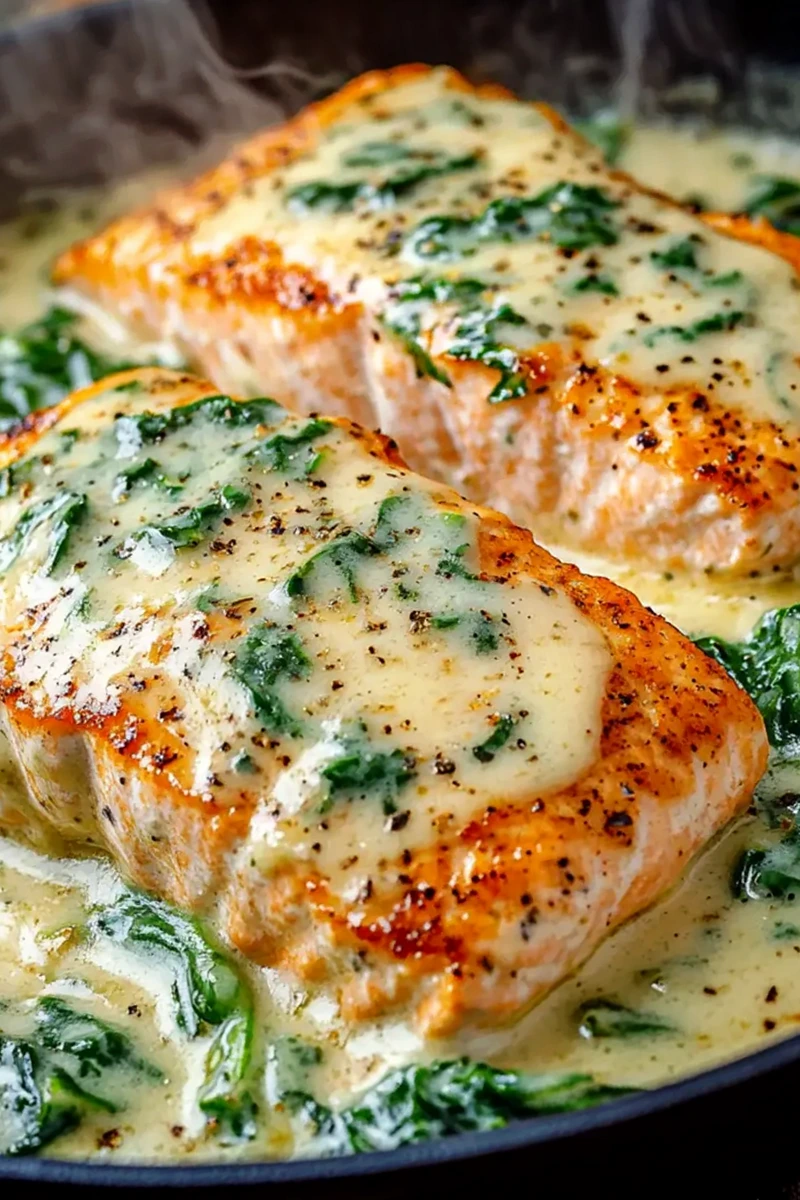
List of ingredients
- 12 oz salmon fillets – choose fresh, skin-on for added flavor and texture.
- 1 tbsp olive oil – used for frying the salmon until crispy and golden brown.
- 1 tsp garlic, minced – adds aromatic depth to the dish.
- 1 cup fresh spinach, chopped – opt for organic if possible for a bright, fresh taste.
- 0.5 cup heavy cream – creates a rich, velvety sauce; substitute with half-and-half for a lighter version.
- 0.25 cup grated Parmesan cheese – enhances the creaminess with its nutty flavor.
- 0.5 tsp salt – essential for balancing flavors in the dish.
- 0.25 tsp black pepper – freshly ground for the best flavor.
- 0.25 tsp red pepper flakes – optional, sprinkle in for a touch of heat.
- 1 tbsp lemon juice – adds a bright, zesty finish to the dish.
step-by-step instructions
- Prepare the ingredients: Rinse the fresh spinach under cold water, then chop it into bite-sized pieces. Mince the garlic and season the salmon fillets with salt and freshly ground black pepper for flavorful depth.
- Sear the salmon: Heat the olive oil in a skillet over medium heat. Cook the salmon fillets, skin-side down, for 4-5 minutes until the skin is crispy and golden, then flip and cook for another 3-4 minutes until fully cooked.
- Sauté the aromatics: In the same skillet, add the minced garlic and sauté for about 30 seconds until fragrant. Toss in the chopped spinach and cook for 2 minutes until wilted and vibrant green.
- Simmer the sauce: Pour in the heavy cream and bring it to a gentle simmer. Stir in the grated Parmesan cheese, salt, black pepper, and optional red pepper flakes. Cook for 2-3 minutes until the sauce thickens and coats the back of a spoon.
- Combine and finish: Gently return the salmon to the skillet, spoon the creamy sauce over it, and drizzle with fresh lemon juice. Cook for an additional minute to heat everything through and meld the flavors.
Choosing the Best Salmon
Selecting Fresh vs Frozen Fillets
Fresh salmon is ideal for immediate use and typically offers a more tender texture. However, flash-frozen fillets are often just as nutritious and convenient for meal planning. Ensure frozen fish is thawed completely in the refrigerator before cooking to ensure even searing.
Benefits of Skin-On Salmon
Keeping the skin on during the cooking process protects the delicate flesh from direct heat. This results in a more moist fillet and provides a satisfying textural contrast. The skin also helps the fish stay intact when flipping in the pan.
Identifying High-Quality Cuts
Look for fillets with a vibrant, consistent color and no gaping or brown spots. The flesh should spring back when lightly pressed with your finger. Avoid fish with a strong fishy odor, as it should smell mild and clean.
Advanced Searing Techniques
Importance of Drying the Fish
Excess moisture on the surface of the salmon creates steam instead of a sear. Use a paper towel to pat the fillets completely dry on all sides before seasoning. This ensures the skin becomes crispy and golden brown rather than soft.
Managing Pan Temperature
Heat the olive oil until it shimmers but does not smoke before adding the fish. Using medium heat prevents the outside from burning before the center is cooked. If the oil is too cold, the skin will stick to the pan.
Knowing When to Flip
Do not try to flip the salmon too early, as it will stick to the skillet. The fish will naturally release from the pan once a proper crust has formed. Use a flexible spatula to gently lift and turn the fillets.
Customizing Your Cream Sauce
Adjusting the Sauce Thickness
If the sauce is too thick, stir in a tablespoon of water or vegetable broth to loosen it. For a thicker consistency, allow the sauce to simmer for an extra minute without stirring. The Parmesan cheese will continue to thicken the sauce as it cools slightly.
Adding Additional Herbs
Fresh dill or parsley added at the very end provides a bright, herbal contrast to the rich cream. Basil can also be stirred in for a more Mediterranean flavor profile. Always add fresh herbs after the heat is turned off to preserve their color.
Managing the Lemon Acidity
The lemon juice is crucial for cutting through the fat of the cream and salmon. Start with a small amount and taste the sauce before adding more. Too much acidity can cause the cream to separate if added too early.
Dietary Substitutions
Dairy-Free Cream Alternatives
For a dairy-free version, substitute heavy cream with full-fat coconut milk or cashew cream. These options provide a similar richness and thickness. Use nutritional yeast or a plant-based Parmesan alternative to maintain the salty, nutty flavor.
Substituting Other Leafy Greens
While spinach is traditional, baby kale or Swiss chard work well as substitutes. These greens may require an extra minute of sautéing to soften. Ensure you chop them finely so they blend well with the sauce.
Cheese Alternatives for Different Tastes
Pecorino Romano can be used instead of Parmesan for a saltier, sharper flavor. Gruyere provides a nuttier and more melted texture. Always grate the cheese fresh to avoid clumps in the sauce.
Perfect Side Dish Pairings
Grains for Sauce Absorption
Basmati or Jasmine rice are excellent for absorbing the extra creamy sauce. Quinoa is a great high-protein alternative that adds a slight nuttiness. To make the grains more flavorful, cook them in a light vegetable broth.
Complementary Green Vegetables
Roasted asparagus or steamed broccoli pairs beautifully with the richness of this dish. The slight bitterness of these vegetables balances the cream. Toss them in lemon and olive oil to match the salmon seasoning.
Best Bread Accompaniments
A toasted baguette or warm sourdough bread is perfect for mopping up the remaining sauce. Garlic bread adds an extra layer of savory flavor. Brush the bread with melted butter and herbs before toasting.
Storage and Food Safety
Refrigeration Guidelines
Store leftovers in an airtight container in the refrigerator for up to two days. Ensure the fish and sauce are cooled slightly before sealing the lid. This prevents excessive condensation from making the fish soggy.
Avoiding Freezer Burn
While the salmon can be frozen, the cream sauce often separates during the freezing and thawing process. It is recommended to freeze the seared salmon alone and make a fresh sauce. Wrap the fish tightly in foil and plastic wrap to prevent air exposure.
Safe Container Selection
Use glass containers for storing this dish as they do not absorb odors or stains from the sauce. Ensure the container is completely sealed to prevent the salmon from picking up other fridge smells. Glass also makes reheating in the oven safer.
Effective Reheating Methods
The Stovetop Simmer Method
Place the salmon and sauce in a small skillet over low heat. Add a teaspoon of water or cream to loosen the sauce as it warms. This method best preserves the texture of the fish and the smoothness of the sauce.
Oven Reheating Tips
Place the dish in an oven-safe skillet and cover it with foil to trap moisture. Heat at 300 degrees Fahrenheit until warmed through. This prevents the salmon from drying out compared to high-heat methods.
Why to Avoid the Microwave
Microwaving fish often leads to rubbery textures and uneven heating. The high heat can also cause the cream sauce to break, leaving a layer of oil on top. If you must use a microwave, use the lowest power setting and heat in short bursts.
Troubleshooting Common Issues
Preventing Overcooked Salmon
Salmon is done when it flakes easily with a fork but remains moist in the center. Avoid cooking it until it is completely opaque throughout, as this leads to dryness. Remove the fish from the heat just before it reaches your desired doneness.
Stopping Garlic from Burning
Garlic burns quickly at high temperatures, creating a bitter taste. Add the garlic only after the salmon has been removed from the pan and the heat is lowered. Sauté it just until it becomes fragrant, which usually takes 30 seconds.
Fixing a Broken Sauce
If the sauce separates into oil and solids, whisk in a small amount of cold heavy cream. Keep the heat low and stir constantly until the emulsion returns. Avoid boiling the sauce vigorously, as this is the primary cause of separation.
Frequently Asked Questions
Can I use frozen salmon?
Yes, you can use frozen salmon as long as it is completely thawed. Pat it dry thoroughly before seasoning to ensure it sears properly in the pan.
Is this recipe keto-friendly?
Yes, this recipe is naturally low in carbohydrates and high in healthy fats. To keep it strictly keto, serve it with steamed cauliflower or sautéed zucchini instead of rice.
Can I use a different type of fish?
You can substitute salmon with trout or halibut for a similar result. Adjust the cooking time based on the thickness of the fillet to avoid overcooking.
How do I stop the spinach from getting too mushy?
Sauté the spinach quickly over medium heat and remove it from the pan if it wilts too fast. Stir it back into the sauce at the very end to maintain a vibrant green color.
Print
26-Minute Creamy Spinach Salmon
- Total Time: 26 minutes
- Yield: 2 servings 1x
- Diet: Pescatarian
Description
Creamy Spinach Salmon is a delicious and healthy dish that transforms a simple weeknight dinner into an indulgent experience.
Ingredients
- 12 oz salmon fillets
- 1 tbsp olive oil
- 1 tsp garlic, minced
- 1 cup fresh spinach, chopped
- 0.5 cup heavy cream
- 0.25 cup grated Parmesan cheese
- 0.5 tsp salt
- 0.25 tsp black pepper
- 0.25 tsp red pepper flakes
- 1 tbsp lemon juice
Instructions
- Prep: Rinse the fresh spinach under cold water, then chop it into bite-sized pieces. Mince the garlic and season the salmon fillets with salt and freshly ground black pepper.
- Sear: Heat the olive oil in a skillet over medium heat. Cook the salmon fillets, skin-side down, for 4-5 minutes until the skin is crispy and golden, then flip and cook for another 3-4 minutes until fully cooked.
- Sauté: In the same skillet, add the minced garlic and sauté for about 30 seconds until fragrant. Toss in the chopped spinach and cook for 2 minutes until wilted and vibrant green.
- Simmer: Pour in the heavy cream and bring it to a gentle simmer. Stir in the grated Parmesan cheese, salt, black pepper, and optional red pepper flakes. Cook for 2-3 minutes until the sauce thickens and coats the back of a spoon.
- Combine: Gently return the salmon to the skillet, spoon the creamy sauce over it, and drizzle with fresh lemon juice. Cook for an additional minute to heat everything through and meld the flavors.
Notes
For an extra layer of flavor, let the sauce sit for a minute before serving to deepen the richness and creaminess.
- Prep Time: 10 minutes
- Cook Time: 16 minutes
- Category: Dinner
- Method: Pan-searing
- Cuisine: American
Nutrition
- Serving Size: 1 serving
- Calories: 450 kcal
- Sugar: 1 g
- Sodium: 650 mg
- Fat: 37 g
- Saturated Fat: 20 g
- Unsaturated Fat: 17 g
- Trans Fat: 0 g
- Carbohydrates: 6 g
- Fiber: 2 g
- Protein: 28 g
- Cholesterol: 80 mg