This hearty vegetarian lasagna is slow-cooked to create rich, cheesy layers without the need for an oven. It is an ideal meal for feeding a crowd or preparing a convenient dinner that cooks while you are away.
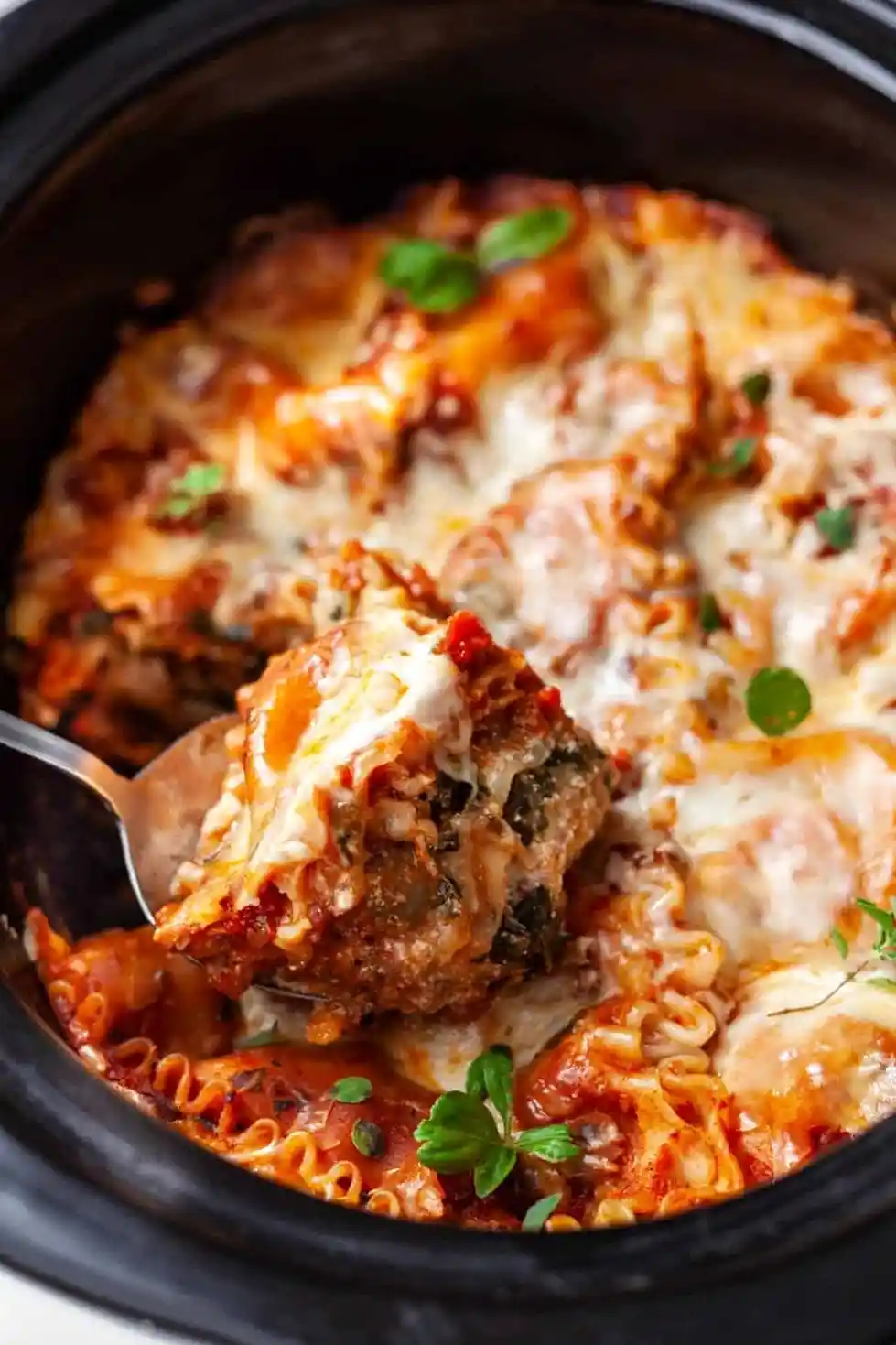
List of ingredients
- 8 ounces mushrooms, sliced – provides a savory, meaty texture.
- 2 cups frozen chopped spinach or kale – adds nutrients and color.
- 1/4 cup olive oil – used for sautéing and greasing the pot.
- 12 to 16 uncooked lasagna noodles – use regular noodles with frilled edges, not oven-ready.
- 4 cups pasta/marinara sauce – approximately two 24-ounce jars.
- 1 15-to-16 ounce container whole milk ricotta – part-skim is also acceptable.
- 4 to 8 ounces creme fraiche – adds richness and thickness to the cheese layer.
- 16 ounces part-skim mozzarella cheese, grated – for the cheesy pull and topping.
- 1 cup grated parmesan cheese – provides a salty, sharp finish.
- Fresh basil (optional) – recommended for a bright, herbal flavor.
step-by-step instructions
- Pre-cook Vegetables: Place sliced mushrooms and frozen spinach or kale in a microwave-safe bowl. Mix in the olive oil and a pinch of salt, then microwave for 4 minutes, stirring once, until mushrooms are soft and liquid is released.
- Drain Moisture: Transfer the mixture into a colander over the sink. Shake and press the vegetables with a spoon to remove as much liquid as possible to prevent a watery lasagna.
- Prepare Ricotta Mixture: In a bowl, combine the ricotta cheese and creme fraiche. Stir in chopped fresh basil if using.
- Combine Shredded Cheeses: In a separate bowl, mix the grated mozzarella and parmesan together.
- Prepare the Pot: Brush the bottom and sides of a 6-quart crockpot insert with olive oil or use cooking spray. Spread 1/2 cup of marinara sauce across the bottom.
- Build First Layer: Place 3 to 4 lasagna noodles on top of the sauce, breaking them to fit the shape of the pot. Spread 1 cup of the ricotta mixture, then 1/2 cup of the drained mushroom and spinach mixture. Top with 1 cup of marinara sauce and 1 cup of the mozzarella/parmesan blend.
- Repeat Layers: Repeat the layering process two more times to create a total of three complete layers of noodles, ricotta, vegetables, sauce, and cheese.
- Final Topping: Finish the dish with a final layer of noodles, 1/2 cup of marinara sauce, and 1 cup of the mozzarella/parmesan cheese.
- Slow Cook: Cover the crockpot and cook on low heat for approximately 3 hours. The lasagna is done when noodles are tender and the cheese is melted and slightly browned at the edges.
- Rest and Serve: Turn off the heat and let the lasagna sit undisturbed for 30 minutes. This allows the layers to set before slicing.
Optimizing Slow Cooker Performance
Adjusting for Pot Heat Variance
Different slow cooker brands produce varying levels of heat on the low setting. If your noodles are still firm after 3 hours, extend the cooking time to 4 hours. Always check the center of the dish with a fork to ensure the pasta is tender.
Selecting the Right Pot Size
A 6-quart slow cooker is the ideal size for this recipe to ensure thick, distinct layers. Using a pot that is too large may result in thinner layers that dry out more quickly. A pot that is too small will cause the ingredients to overflow and cook unevenly.
Understanding Low vs High Settings
It is recommended to use the low setting for this lasagna to prevent the edges from scorching. High heat can cook the outer edges too quickly while leaving the center cold. Low heat allows the uncooked noodles to absorb the sauce steadily.
Secrets to Firm Lasagna Layers
Eliminating Excess Vegetable Moisture
Mushrooms and spinach release significant amounts of water during the cooking process. Pre-cooking them in the microwave and draining them in a colander is essential. This step prevents the sauce from becoming diluted and keeps the layers stable.
Using Regular vs No-Boil Noodles
Regular lasagna noodles with frilled edges hold their structure better than oven-ready varieties in a slow cooker. The frilled edges help trap sauce and cheese, contributing to better cohesion. Do not pre-boil these noodles, as they will cook in the sauce.
The Importance of the Resting Period
Allowing the lasagna to rest for 30 minutes after cooking is a critical step. This time allows the starches in the pasta to set and the cheese to firm up. Slicing too early will cause the layers to slide apart on the plate.
Incorporating Creme Fraiche for Stability
Mixing creme fraiche into the ricotta increases the fat content and thickness of the cheese layer. This prevents the ricotta from becoming grainy or watery during the long cook time. It creates a smoother, more luxurious mouthfeel compared to ricotta alone.
Flavor and Ingredient Modifications
Swapping Spinach for Other Greens
If you prefer a different flavor, you can substitute the spinach with chopped kale or Swiss chard. Ensure these greens are also pre-cooked and thoroughly drained. Kale provides a heartier texture that stands up well to the slow cooker.
Alternatives to Mushrooms
For those who dislike mushrooms, diced zucchini or chopped eggplant are excellent substitutes. Sauté these vegetables first to remove moisture before adding them to the layers. This ensures the lasagna remains thick and sliceable.
Adjusting the Sauce Consistency
If your marinara sauce is very thin, you can simmer it on the stove for 10 minutes to reduce the water content before layering. A thicker sauce helps hold the noodles in place. Conversely, if the sauce is too thick, add a tablespoon of water to help the noodles cook.
Using Different Cheese Blends
While mozzarella and parmesan are traditional, you can add a small amount of provolone for a sharper taste. Ensure any cheese used is a low-moisture variety to avoid adding extra liquid to the pot. Avoid fresh mozzarella balls, as they release too much water.
Serving and Storage Management
Best Practices for Slicing
Use a sharp knife and a wide spatula to lift the slices. Cut the lasagna into squares rather than wedges to maintain the integrity of the layers. If the lasagna is very tall, you can use a bench scraper to help lift the piece.
Proper Refrigeration Storage
Store leftover lasagna in an airtight container in the refrigerator for up to 4 days. Ensure the dish is cooled slightly before sealing it to prevent condensation. Condensation can make the top layer of cheese soggy.
Optimal Reheating Methods
To reheat, place a slice in an oven-safe dish and cover it with foil to retain moisture. Heat at 350 degrees F until warmed through. Avoid microwaving for long periods, as this can make the noodles rubbery.
Freezing and Thawing the Lasagna
You can freeze slices of cooked lasagna by wrapping them individually in foil and placing them in a freezer bag. Thaw the slices in the refrigerator overnight before reheating. This preserves the texture and prevents freezer burn.
Advanced Preparation Strategies
Assembling the Day Before
You can complete all the layering steps a day in advance and keep the crockpot insert in the refrigerator. When ready to cook, place the insert in the slow cooker and start the timer. Note that you may need to add 30 to 60 minutes to the cook time if the dish starts cold.
Pre-measuring Ingredients for Efficiency
Prepare the three separate bowls for the vegetable mix, ricotta mix, and cheese blend before starting the assembly. Having all components ready prevents the noodles from sitting in sauce too long before the heat is applied. This ensures a more consistent cook.
Solving Common Issues
Dealing with Watery Lasagna
If you find your lasagna is too liquid, it is usually due to under-drained vegetables or a thin sauce. To fix this in future batches, increase the pressing time in the colander. For current leftovers, reheating in the oven can help evaporate excess moisture.
Fixing Undercooked Noodles
If the noodles are still hard after the recommended time, add a small amount of warm water or extra sauce to the top. Cover the pot tightly and cook on high for another 30 minutes. Ensure the lid is not lifted frequently, as this lets out essential heat.
Preventing Burnt Edges
If the edges of your lasagna burn before the center is done, you can line the sides of the crockpot with parchment paper. This creates a barrier between the ceramic wall and the cheese. Additionally, ensure you have used enough olive oil to grease the sides.
Common Questions
Can I use oven-ready noodles?
Yes, you can use oven-ready noodles, but they may result in a softer texture. Regular noodles are preferred because they maintain their structure and create more distinct, sliceable layers in the slow cooker environment.
How do I store leftovers safely?
Cool the lasagna to room temperature within two hours of cooking. Place it in a shallow, airtight container to ensure it cools evenly in the refrigerator. This prevents bacterial growth and keeps the cheese fresh.
What if I don’t have creme fraiche?
You can substitute creme fraiche with full-fat sour cream or a thick Greek yogurt. While the flavor will be slightly more tangy, it will still provide the necessary thickness to the ricotta layer. Avoid using low-fat versions as they may separate.
Print
Slow Cooker Vegetarian Lasagna with Spinach and Mushrooms
- Total Time: 3 hours 30 minutes
- Yield: 8 servings 1x
- Diet: Vegetarian
Description
Spinach and mushrooms are layered into this rich and cheesy vegetarian crockpot lasagna that slowly cooks into perfectly sliceable layers.
Ingredients
- 8 ounces mushrooms, sliced
- 2 cups frozen chopped spinach or kale
- 1/4 cup olive oil
- 12 to 16 uncooked lasagna noodles
- 4 cups pasta/marinara sauce
- 1 15-to-16 ounce container whole milk ricotta
- 4 to 8 ounces creme fraiche
- 16 ounces part-skim mozzarella cheese, grated
- 1 cup grated parmesan cheese
- Fresh basil (optional)
Instructions
- Step: Microwave mushrooms, spinach/kale, olive oil, and a pinch of salt for 4 minutes, stirring once, until soft.
- Step: Drain mushrooms and spinach in a colander and press with a spoon to remove excess liquid.
- Step: In a bowl, mix together the ricotta cheese and creme fraiche, adding fresh basil if desired.
- Step: In a separate bowl, combine the mozzarella and parmesan cheeses.
- Step: Brush a thin layer of olive oil over the bottom and sides of the crockpot insert.
- Step: Spread 1/2 cup of marinara sauce over the bottom of the crockpot.
- Step: Create 3 complete layers in this order: 3 to 4 lasagna noodles, 1 cup ricotta mixture, 1/2 cup mushrooms and spinach, 1 cup marinara sauce, and 1 cup mozzarella/parmesan.
- Step: Finish with a final layer of noodles, 1/2 cup red sauce, and 1 cup mozzarella/parmesan cheese.
- Step: Cover and cook on low heat for about 3 hours until noodles are tender and cheese is melted.
- Step: Turn off the heat and let lasagna sit for 30 minutes before slicing and serving.
Notes
Use a 6-quart slow cooker for best results. Regular lasagna noodles are recommended over oven-ready noodles for better texture and distinct layers. Let the lasagna rest for 30 minutes before slicing to ensure layers stay intact.
- Prep Time: 30 minutes
- Cook Time: 3 hours
- Category: Pasta
- Method: Crockpot
- Cuisine: Italian
Nutrition
- Serving Size: 1 slice
- Calories: 480 kcal
- Sugar: 9 g
- Sodium: 820 mg
- Fat: 24 g
- Saturated Fat: 13 g
- Unsaturated Fat: 11 g
- Trans Fat: 0 g
- Carbohydrates: 36 g
- Fiber: 5 g
- Protein: 26 g
- Cholesterol: 85 mg