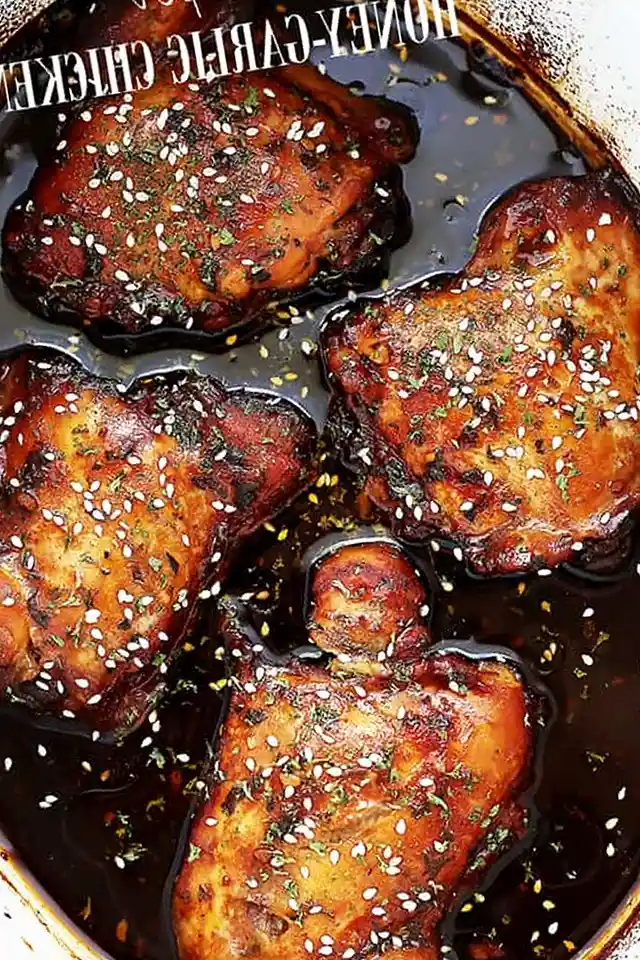
This simple slow cooker recipe creates tender chicken thighs glazed in a sticky honey garlic sauce. It is an efficient way to prepare a flavor-packed dinner with minimal active kitchen time.
List of ingredients
- 6 boneless, skinless chicken thighs – provide a juicy base for the sauce.
- 4 garlic cloves, minced – add a sharp, savory depth.
- 1/3 cup honey – creates sweetness and a sticky glaze.
- 1/2 cup low sodium ketchup – adds tanginess and body to the sauce.
- 1/2 cup low sodium soy sauce – provides saltiness and umami flavor.
- 1/2 teaspoon dried oregano – adds a subtle herbal note.
- 2 tablespoons fresh parsley – used for brightness and garnish.
- 1/2 tablespoon toasted sesame seeds – adds a nutty crunch to the finish.
step-by-step instructions
- Arrange the meat: Place the boneless, skinless chicken thighs in a single layer on the bottom of your slow cooker.
- Whisk the sauce: In a separate mixing bowl, combine the minced garlic, honey, low sodium ketchup, low sodium soy sauce, dried oregano, and fresh parsley. Whisk until the mixture is smooth and thoroughly combined.
- Combine and cook: Pour the prepared honey garlic sauce evenly over the chicken thighs. Cover the slow cooker with its lid and cook on LOW for 4 to 5 hours, or on HIGH for 3 to 4 hours.
- Plate the chicken: Carefully remove the lid and transfer the cooked chicken thighs to a serving platter.
- Garnish and serve: Spoon the remaining sauce from the slow cooker over the chicken and sprinkle the toasted sesame seeds on top before serving.
Methods for Refining the Sauce Texture
Creating a Cornstarch Slurry for a Thicker Glaze
If you prefer a thicker, more syrupy glaze, you can implement a cornstarch slurry. Mix one tablespoon of cornstarch with one tablespoon of cold water until a smooth paste forms. Whisk this mixture into the slow cooker sauce about 30 minutes before the cooking time ends, then cover and continue cooking.
Reducing the Sauce on the Stovetop
For an even more concentrated flavor, transfer the sauce to a small saucepan after the chicken is done. Simmer the liquid over medium-high heat for 5 to 10 minutes, stirring constantly to prevent burning. This process evaporates excess moisture and results in a dense, sticky coating that clings to the meat.
Adjusting Honey Levels for Stickiness
The viscosity of the sauce depends largely on the honey content. If the sauce feels too thin, you can add an extra tablespoon of honey during the final hour of cooking. This increases the sugar concentration, which helps the sauce thicken naturally as it reduces in the slow cooker.
Choosing the Right Protein
Benefits of Using Boneless Skinless Chicken Thighs
Chicken thighs are the ideal choice for slow cooking because their higher fat content prevents them from drying out over several hours. They remain juicy and tender even on the high heat setting. The connective tissue in thighs breaks down slowly, contributing to a more succulent texture.
Substituting with Boneless Skinless Chicken Breasts
You can use chicken breasts if you prefer a leaner protein, but be mindful of the cooking time. Breasts cook faster than thighs and can become rubbery if left in the slow cooker too long. Reduce the cooking time by about 30 to 60 minutes to ensure they stay moist.
Using Bone-In Chicken Options
Bone-in thighs or drumsticks add more flavor to the sauce due to the marrow and collagen. However, these require a longer cooking time to ensure the meat is fully cooked near the bone. Increase the cooking time by one hour and use a meat thermometer to verify doneness.
Cooking Time and Temperature Guidelines
Managing the Low Heat Setting
Cooking on the low setting for 4 to 5 hours allows the flavors to penetrate the meat more deeply. This slower process is better for maintaining a tender texture in the chicken. It is the best option for those who want to prep the meal in the morning for a late afternoon dinner.
Utilizing the High Heat Setting
The high setting is useful for those with a tighter schedule, completing the dish in 3 to 4 hours. While faster, keep a close eye on the chicken to ensure the sauce does not reduce too quickly. Always check the internal temperature as you approach the 3-hour mark.
Verifying Internal Temperature for Safety
To ensure the chicken is safe to eat, use a digital meat thermometer. The internal temperature must reach 165 degrees Fahrenheit (74 degrees Celsius) at the thickest part of the meat. This applies to both white and dark meat to prevent foodborne illness.
Recommended Side Dish Pairings
Pairing with Fluffy Jasmine Rice
Jasmine rice is a perfect accompaniment because its light, floral aroma complements the honey garlic glaze. The grains act as a sponge, absorbing the excess sauce from the plate. For the best results, rinse the rice until the water runs clear before steaming.
Serving with Steamed Garlic Broccoli
Steamed broccoli provides a fresh, slightly bitter contrast to the sweet and salty notes of the chicken. Toss the florets with a bit of minced garlic and salt after steaming. The bright green color also makes the final platter visually appealing.
Preparing Garlic Butter Noodles
For a heartier meal, serve the chicken over wide egg noodles tossed in melted butter and garlic. The richness of the butter balances the tanginess of the ketchup and soy sauce. This option is particularly satisfying during colder winter months.
Adding Sautéed Sesame Snap Peas
Snap peas add a necessary crunch and a pop of sweetness to the meal. Quickly sauté them in a pan with a teaspoon of sesame oil and a pinch of salt. Their crisp texture breaks up the softness of the slow-cooked chicken.
Storage and Preservation Methods
Refrigeration Guidelines for Leftovers
Store any remaining chicken and sauce in airtight glass or plastic containers. Keep them in the refrigerator for up to four days. Ensure the chicken is fully submerged in the sauce to prevent the meat from drying out during storage.
Freezing Instructions for Long-Term Storage
This dish freezes well if the sauce is stored together with the meat. Place the cooled chicken and sauce in a heavy-duty freezer bag, removing as much air as possible. Label the bag with the date and use the contents within three months for the best quality.
Safe Reheating Techniques
To reheat, transfer the chicken and sauce to a skillet over medium heat. Add a splash of water or chicken broth if the sauce has become too thick in the fridge. Heat until the internal temperature reaches 165 degrees Fahrenheit to ensure safety.
Common Recipe Questions
Can I use maple syrup instead of honey?
Yes, pure maple syrup is an excellent substitute for honey. It provides a similar sweetness and stickiness, though it adds a distinct woody flavor to the sauce. Use the same measurement as the honey listed in the recipe.
How do I prevent the chicken from overcooking?
The best way to prevent overcooking is to use a meat thermometer frequently during the last hour of cooking. If you are using chicken breasts, check them earlier than you would for thighs. Once the meat reaches 165 degrees Fahrenheit, remove it from the heat immediately.
What is a good substitute for soy sauce?
Tamari is a great gluten-free alternative that offers a similar salty and umami profile. Coconut aminos can also be used for a soy-free option, although they are slightly sweeter and less salty. You may need to add a pinch of extra salt if using coconut aminos.
Can I add vegetables directly to the crockpot?
You can add hearty vegetables like carrots or baby potatoes to the slow cooker at the beginning of the process. However, avoid adding soft vegetables like broccoli or peas, as they will become mushy. Add these quick-cooking vegetables during the last 30 minutes of cooking.
Flavor Variations and Customizations
Adding a Spicy Element
To introduce heat, whisk in a tablespoon of Sriracha or red chili flakes into the sauce. This creates a sweet-and-spicy profile that cuts through the richness of the honey. Adjust the amount based on your heat preference.
Increasing the Garlic Intensity
For a more pungent flavor, increase the garlic to 6 or 8 cloves. You can also use roasted garlic instead of raw minced garlic for a mellower, sweeter taste. This adds a gourmet layer to the overall sauce profile.
Adding Fresh Ginger for Depth
Adding one tablespoon of freshly grated ginger to the sauce mixture adds a zesty, aromatic quality. Ginger pairs naturally with honey and soy, providing a traditional Asian-inspired flavor profile. It also helps balance the sweetness of the ketchup.
Print
Slow Cooker Honey Garlic Chicken Thighs
- Total Time: 5 hours 5 minutes
- Yield: 6 servings 1x
- Diet: General
Description
You’ll love this easy crock pot recipe for chicken thighs cooked in honey garlic sauce. Only 5 ingredients + a couple seasonings. Super easy chicken recipe!
Ingredients
- 6 boneless, skinless chicken thighs
- 4 garlic cloves, minced
- 1/3 cup honey
- 1/2 cup low sodium ketchup
- 1/2 cup low sodium soy sauce
- 1/2 teaspoon dried oregano
- 2 tablespoons fresh parsley
- 1/2 tablespoon toasted sesame seeds
Instructions
- Step 1: Arrange chicken thighs on the bottom of your slow cooker; set aside.
- Step 2: In a mixing bowl, combine garlic, honey, ketchup, soy sauce, oregano and parsley; whisk until thoroughly combined.
- Step 3: Pour the sauce over the chicken thighs. Close with a lid and cook for 4 to 5 hours on LOW, or 3 to 4 hours on HIGH.
- Step 4: Remove lid and transfer chicken to a serving plate.
- Step 5: Spoon the sauce over the chicken and sprinkle with toasted sesame seeds. Serve.
Notes
Ensure chicken reaches a safe internal temperature of 165 degrees Fahrenheit. To thicken the sauce, whisk a cornstarch slurry (1 tablespoon cornstarch mixed with 1 tablespoon cold water) into the sauce 30 minutes before the end of the cooking time.
- Prep Time: 5 minutes
- Cook Time: 5 hours
- Category: Dinner
- Method: Slow Cooking
- Cuisine: Asian
Nutrition
- Serving Size: 1 serving
- Calories: 227 kcal
- Sugar: 20 g
- Sodium: 1022 mg
- Fat: 3 g
- Saturated Fat: 0 g
- Unsaturated Fat: 3 g
- Trans Fat: 0 g
- Carbohydrates: 23 g
- Fiber: 0 g
- Protein: 25 g
- Cholesterol: 72 mg