This recipe delivers tender, restaurant-quality salmon using a simple sheet pan method that minimizes cleanup. The combination of melted butter, fresh garlic, and bright lemon creates a rich glaze that keeps the fish moist.
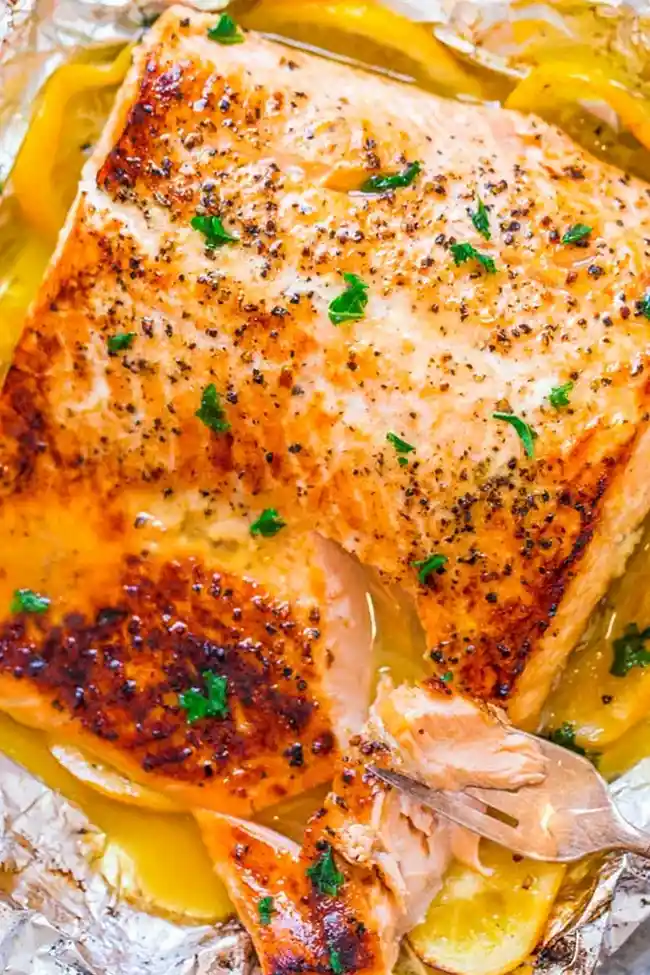
List of ingredients
- 1.5 to 1.75 pounds skin-on salmon fillet – provides a robust base and protects the fish during baking.
- 1 lemon, sliced into thin rounds – adds aromatic flavor and prevents sticking.
- 1/2 cup unsalted butter, melted – the primary fat source for the rich sauce.
- 3 tablespoons lemon juice (from about 1 lemon) – adds necessary acidity to balance the butter.
- 2 to 3 tablespoons honey – introduces a hint of sweetness and helps with caramelization.
- 5 cloves garlic, finely pressed or minced – provides a pungent, savory depth.
- 1 teaspoon kosher salt – enhances all other flavors.
- 1/2 teaspoon freshly ground black pepper – adds a mild spicy kick.
- 2 teaspoons finely chopped fresh parsley (optional) – used for a fresh, colorful garnish.
step-by-step instructions
- Prepare the oven and pan: Preheat your oven to 375F. Line a baking sheet with foil, placing the longer side of the foil parallel to the pan, and fold the edges up about 2 inches to create a tray that contains the sauce.
- Position the salmon: Place the salmon fillet on the foil with the skin-side down. Nestle the lemon slices evenly underneath the fish to create a flavor base and a physical barrier from the pan.
- Create the garlic butter mixture: Melt the unsalted butter in a microwave-safe glass bowl or measuring cup on high power for about 1 minute. Stir in the lemon juice, honey, and minced garlic until well combined.
- Glaze and season: Pour approximately three-quarters of the butter mixture over the salmon, reserving the remaining quarter for later. Season the top of the fillet evenly with kosher salt and black pepper.
- Seal and marinate: Cover the salmon with a second piece of foil and pinch the edges together tightly to create an airtight packet. For enhanced flavor, let the salmon marinate in the packet for 10 to 15 minutes.
- Bake the fish: Place the foil pack on the baking sheet and bake in the preheated oven for 17 minutes.
- Prepare for broiling: Remove the pan from the oven and carefully open the foil packet or remove the top sheet so the salmon is exposed. Ensure the side edges remain raised to hold the butter sauce.
- Apply final glaze: Set the oven to the high broil setting. If the salmon isn’t already swimming in juice, spoon some of the reserved butter mixture over the top of the fillet.
- Broil to finish: Place the salmon under the broiler for 5 to 10 minutes. Cook until the top is golden brown and achieves the desired level of crispiness.
- Garnish and serve: Remove from the oven, garnish with fresh chopped parsley if desired, and serve immediately.
Selecting and Preparing the Salmon
Choosing the Right Cut of Salmon
Opt for a center-cut fillet to ensure uniform thickness, which allows the fish to cook evenly across the entire piece. Skin-on fillets are highly recommended for this recipe because the skin acts as a protective layer, preventing the flesh from overcooking.
The Importance of Room Temperature Meat
Allow the salmon to sit at room temperature for about 15 to 20 minutes before baking. This reduces the temperature gradient between the exterior and interior, resulting in a more consistent cook and preventing the outside from drying out.
Patting the Salmon Dry
Use paper towels to gently pat the surface of the salmon dry before adding the butter glaze. Removing excess surface moisture helps the sauce adhere better to the fish and improves the eventual browning during the broiling stage.
Checking for Freshness
Ensure the salmon has a mild, fresh scent and a firm texture that springs back when touched. Avoid any fillets that have a strong fishy odor or a slimy surface coating, as these are signs of age.
Flavor Modifications and Substitutions
Using Salted Butter instead of Unsalted
If you only have salted butter, you can still use it for this recipe. However, you should reduce the added kosher salt by half to ensure the final dish does not become overly salty.
Replacing Honey with Alternative Sweeteners
Maple syrup is an excellent one-to-one substitute for honey, providing a deeper, woodsy sweetness. For a lower-sugar option, a small amount of brown sugar can be used, though it may not emulsify as smoothly into the butter.
Adjusting Garlic Intensity
If you prefer a milder garlic flavor, use sliced garlic cloves instead of minced or pressed garlic. Conversely, for a more pungent taste, increase the garlic to 6 or 7 cloves depending on your preference.
Adding Fresh Herbs to the Glaze
While parsley is used for garnish, adding a teaspoon of dried thyme or oregano directly into the melted butter adds an earthy dimension. Fresh dill is also a classic pairing that complements the lemon and butter perfectly.
Advanced Oven and Broiling Techniques
Managing the Broiler Rack Position
Using the second rack from the top instead of the highest rack provides a safer broiling experience. This allows the heat to penetrate the salmon without burning the honey-butter glaze too quickly.
Identifying the Perfect Internal Temperature
Use a meat thermometer to check the thickest part of the fillet. Salmon is perfectly cooked when it reaches an internal temperature of 135F to 145F, depending on your preference for medium-rare or well-done.
Preventing the Honey Glaze from Burning
Because honey contains natural sugars, it can char quickly under high heat. Keep a close eye on the fish during the last 3 minutes of broiling to ensure the edges turn golden rather than black.
Handling Carry-Over Cooking
Remove the salmon from the oven slightly before it reaches your target temperature. The residual heat inside the fillet will continue to cook the fish for several minutes after it has been removed from the heat.
Recommended Side Dish Pairings
Starchy Accompaniments for Balance
Creamy mashed potatoes or herb-roasted fingerling potatoes provide a hearty contrast to the acidity of the lemon. Wild rice or quinoa also work well to soak up the extra garlic butter sauce from the pan.
Fresh and Roasted Vegetable Options
Roasted asparagus or broccolini can be cooked on a separate sheet pan at the same temperature. A crisp garden salad with a light vinaigrette helps cut through the richness of the butter glaze.
Adding a Citrus-Based Slaw
A vinegar-based cabbage slaw with shredded carrots and apple slices adds a crunchy texture. The acidity of the slaw complements the buttery nature of the salmon and refreshes the palate.
Pairing with Grains
Steamed jasmine rice or basmati rice is a neutral base that lets the lemon garlic flavors shine. For added nutrition, try brown rice or farro for a nuttier taste and more fiber.
Storing and Reheating Instructions
Refrigeration Guidelines
Store leftover salmon in an airtight glass container in the refrigerator for up to 3 days. Ensure the fish is completely cooled before sealing the lid to prevent excess moisture buildup.
Maintaining Moisture During Reheating
Avoid using a microwave on high power, as this can make the salmon rubbery. Instead, place the salmon in a baking dish with a splash of water or extra butter and heat at 275F until warmed through.
Freezing Leftover Salmon
While fresh is best, you can freeze cooked salmon for up to two months. Wrap the fillets tightly in plastic wrap and then place them in a heavy-duty freezer bag to prevent freezer burn.
Using Leftovers in Other Dishes
Chilled lemon garlic salmon makes an excellent addition to a pasta salad or a fresh spinach salad. Flake the cold fish over a bed of greens and add extra lemon juice for a quick lunch.
Make-Ahead Strategies
Pre-Preparing the Butter Sauce
You can whisk together the melted butter, honey, lemon juice, and garlic up to 24 hours in advance. Store the mixture in a sealed jar in the refrigerator and bring it back to room temperature before pouring it over the fish.
Slicing and Prepping Produce
Slice the lemons and mince the garlic the night before to save time during dinner preparation. Keep the sliced lemons in a damp paper towel inside a container to maintain their freshness.
Marinating the Salmon Fillet
Applying the glaze and sealing the foil packet 15 to 30 minutes before baking allows the flavors to penetrate deeper into the meat. Do not marinate for more than two hours, as the lemon juice can begin to break down the protein structure too much.
Troubleshooting Common Issues
Dealing with White Albumin Spots
The white substance that sometimes appears on salmon is called albumin, which is simply a protein. It is completely safe to eat and usually occurs when the fish is cooked quickly or at very high temperatures.
Fixing a Separated Butter Sauce
If the butter and lemon juice separate, simply whisk the mixture vigorously or heat it slightly to re-emulsify the fats. Ensuring the butter is fully melted before adding the honey helps prevent this.
Correcting Overcooked Salmon
If the salmon becomes too dry, serve it with an extra spoonful of the reserved garlic butter mixture. Adding a side of avocado or a creamy sauce can also help compensate for the loss of moisture.
Preventing Foil Leaks
If your foil packet leaks, ensure you are using heavy-duty aluminum foil. Double-lining the pan or folding the edges more securely will keep the butter sauce contained during the baking process.
Frequently Asked Questions
Can I use frozen salmon for this recipe?
Yes, but you must thaw the salmon completely in the refrigerator before cooking. Cooking from frozen will lead to uneven results and an excessively watery sauce.
Do I need to remove the skin before cooking?
No, the skin should remain on during the cooking process to protect the fish. You can easily slide the skin off with a spatula after the salmon is cooked if you prefer not to eat it.
What if I do not have aluminum foil?
You can use parchment paper, but you will not be able to seal it into an airtight packet as effectively. In this case, cover the baking dish with a tight lid or another piece of parchment.
Can this recipe be adapted for a grill?
Yes, you can place the salmon and butter mixture inside a grill foil packet. Grill over medium heat for about 12 to 15 minutes, turning the packet carefully if necessary.
Print
Sheet Pan Lemon Garlic Butter Salmon
- Total Time: 30 minutes
- Yield: 4 servings 1x
- Diet: General
Description
Juicy salmon at home in 30 minutes that’s EASY and tastes BETTER than from a restaurant!! The butter is infused with lemon and garlic and adds so much FLAVOR!
Ingredients
- 1.5 to 1.75 pounds skin-on salmon fillet
- 1 lemon (sliced into thin rounds)
- 1/2 cup unsalted butter (melted)
- 3 tablespoons lemon juice
- 2 to 3 tablespoons honey
- 5 cloves garlic (finely pressed or minced)
- 1 teaspoon kosher salt
- 1/2 teaspoon freshly ground black pepper
- 2 teaspoons finely chopped fresh parsley (optional)
Instructions
- Step: Preheat oven to 375F. Place salmon on a sheet of foil with the skin-side down and raise the edges of the foil up about 2 inches.
- Step: Nestle lemon slices underneath the salmon, spaced evenly around the fillet.
- Step: Heat the butter in a microwave-safe glass measuring cup or bowl on high power to melt, about 1 minute.
- Step: Stir in the lemon juice, honey, and garlic. Pour about three-quarters of the mixture over the salmon; reserve remainder.
- Step: Evenly season salmon with salt and pepper.
- Step: Seal up the foil, crimping the top and bottom pieces together. Optionally marinate for 10 to 15 minutes.
- Step: Place foil pack on a baking sheet and bake for about 17 minutes.
- Step: Remove from oven and open the foil packet so salmon is exposed but edges remain raised.
- Step: Set oven to Hi broil.
- Step: Spoon the reserved buttery mixture over the salmon, if desired.
- Step: Broil salmon for about 5 to 10 minutes, or until golden.
- Step: Optionally garnish salmon with parsley and serve immediately.
Notes
Tip: You don’t have to broil on the top rack; you can use the second rack to reduce the risk of burning. Storage: Keep airtight in the fridge for up to 3 days.
- Prep Time: 10 minutes
- Cook Time: 20 minutes
- Category: Fish
- Method: Baking
- Cuisine: American
Nutrition
- Serving Size: 1 serving
- Calories: 675 kcal
- Sugar: 14 g
- Sodium: 444 mg
- Fat: 48 g
- Saturated Fat: 19 g
- Unsaturated Fat: 29 g
- Trans Fat: 0 g
- Carbohydrates: 17 g
- Fiber: 1 g
- Protein: 45 g
- Cholesterol: 186 mg