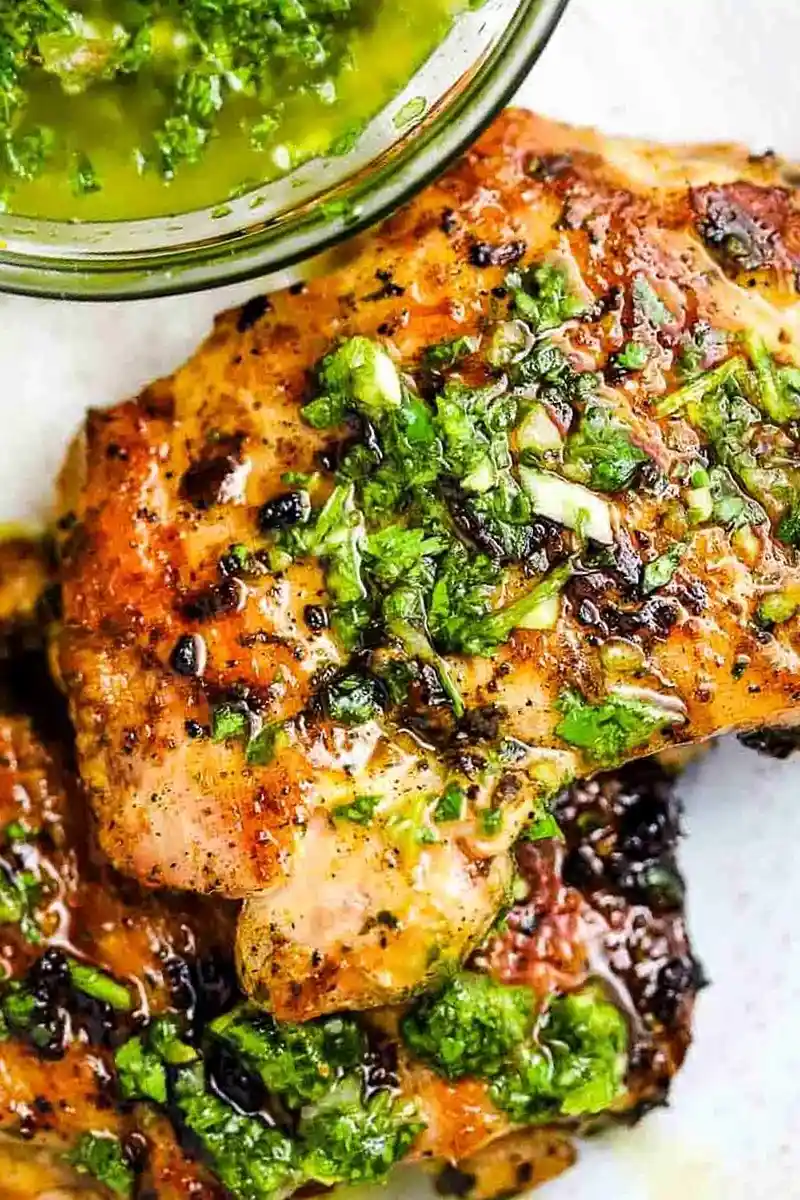
These grilled chicken thighs are marinated in a vibrant, herby chimichurri sauce for maximum flavor. The result is a juicy, tender protein that works perfectly as a main course for summer gatherings.
List of ingredients
- 1/2 cup fresh cilantro – fresh leaves and tender stems.
- 1/2 cup fresh Italian parsley – finely chopped and fresh.
- 1 tablespoon fresh oregano – or substitute with 1 teaspoon dried oregano.
- 1 small shallot – peeled and roughly chopped.
- 2 cloves garlic – peeled.
- 1/2 jalapeno pepper – seeded to control heat.
- 1 tablespoon fresh lemon juice – freshly squeezed for acidity.
- 1 tablespoon apple cider vinegar – used as a bright acid substitute.
- 1/2 cup olive oil – extra virgin for best flavor.
- 1 teaspoon kosher salt – for seasoning.
- fresh ground pepper – to taste.
- 2 lbs boneless skinless chicken thighs – trimmed of excess fat.
step-by-step instructions
- Blend Herbs and Aromatics: In a food processor, combine the cilantro, parsley, oregano, shallot, garlic, and jalapeño.
- Finish the Sauce: Add the lemon juice, apple cider vinegar, olive oil, salt, and pepper. Pulse the mixture until it is well combined and finely chopped, but avoid over-processing into a smooth paste.
- Marinate the Chicken: Place the chicken thighs in a baking dish and season them with salt and pepper. Pour 1/4 cup of the prepared chimichurri over the meat, turning the pieces to coat them completely. Let the chicken marinate in the refrigerator for a minimum of 20 minutes or up to 24 hours.
- Prepare for Grilling: Remove the chicken from the refrigerator to take the chill off while you preheat the grill to medium-high heat.
- Grill the Meat: Place the chicken on the hot grill. Cook for approximately 5-6 minutes per side, or until the juices run clear and the internal temperature reaches 165F.
- Final Serving: Serve the grilled thighs immediately with the remaining fresh chimichurri drizzled over the top or on the side.
Alternative Meat Options
Using Boneless Skinless Chicken Breasts
If you prefer chicken breasts, you must adjust the preparation to avoid drying out the leaner meat. Cut large breasts in half horizontally or butterfly them to ensure a uniform thickness of about half an inch. Grill these for a shorter time, approximately 4 minutes per side, checking frequently with a thermometer.
Preparing Bone-In Chicken Thighs
Bone-in thighs provide more flavor but require a longer cooking time to ensure the meat near the bone is safe. Use a combination of direct heat for searing and indirect heat to finish cooking through. Increase the grilling time by several minutes per side until the internal temperature reaches 165F.
Cooking Chicken Drumsticks
Drumsticks are a budget-friendly alternative that stand up well to the chimichurri marinade. Because of their shape, you will need to rotate them more frequently on the grill to prevent burning. Allow for additional cooking time compared to boneless thighs to ensure the thickest part is fully cooked.
Alternative Cooking Methods
Searing in a Cast Iron Skillet
For those without a grill, a cast iron skillet is the best choice for achieving a deep sear. Preheat the skillet over medium-high heat with a small amount of oil until it begins to shimmer. Sear the thighs for 5-6 minutes per side, using a meat press or heavy spatula to ensure maximum contact with the pan.
Using a Stovetop Grill Pan
A grill pan with raised ridges can mimic the look and taste of an outdoor grill. Heat the pan on medium-high and place the marinated chicken directly on the ridges. This method creates charred lines while allowing excess fat to drain away from the meat during the cooking process.
Baking in the Oven
To cook these indoors without a pan, preheat your oven to 400F and place the chicken on a wire rack over a baking sheet. Bake for 20-25 minutes, then turn on the broiler for the last 2-3 minutes to brown the edges. This ensures the chicken stays juicy while developing a slightly charred exterior.
Chimichurri Sauce Variations
Traditional Parsley-Based Version
While this recipe uses cilantro for a bright, citrusy note, a more traditional Argentinian version relies heavily on parsley. Simply replace the 1/2 cup of cilantro with an additional 1/2 cup of fresh Italian parsley. This creates a more earthy, peppery sauce that pairs exceptionally well with red meats.
Adjusting the Heat Level
To make the sauce milder, remove all seeds and white membranes from the jalapeno before blending. For a spicier version, leave the seeds in or add a pinch of red pepper flakes to the mixture. You can also substitute the jalapeno with a serrano pepper for a sharper, more intense heat.
Using Dried Herbs Instead of Fresh
If fresh herbs are unavailable, you can use dried oregano and parsley, though the flavor will be less vibrant. Use 1 teaspoon of dried oregano and 2 tablespoons of dried parsley. To rehydrate them, stir the dried herbs into the vinegar and lemon juice for 10 minutes before adding the oil and other aromatics.
Ideal Side Dish Pairings
Grilled Corn with Herb Butter
Grilled corn is a natural partner for chimichurri chicken. Brush corn on the cob with melted butter, grill until charred, and سپس drizzle some of the leftover chimichurri over the top. The sweetness of the corn balances the acidity of the green sauce perfectly.
Coconut Lime Rice
For a tropical twist, serve the chicken over a bed of coconut lime rice. Simmer jasmine rice in a mixture of coconut milk and water, then fold in fresh lime zest and a squeeze of lime juice after cooking. This adds a creamy, aromatic element to the meal.
Fresh Summer Salads
A light salad can cut through the richness of the grilled chicken thighs. Try a watermelon and feta salad with fresh mint and a drizzle of balsamic glaze. Alternatively, a simple cucumber and tomato salad with red onion and lemon vinaigrette complements the herb profile of the chimichurri.
Storage and Preservation Guidelines
Storing Leftover Cooked Chicken
Place cooked chicken thighs in an airtight container and refrigerate them for up to 3-4 days. To keep the meat from drying out, store the chicken with a small amount of the chimichurri sauce. This helps maintain moisture during the storage process.
Freezing the Chimichurri Sauce
Leftover sauce can be frozen for 3-6 months to preserve its flavor. Pour the sauce into an ice cube tray and freeze until solid before transferring the cubes to a freezer-safe bag. This allows you to thaw only the amount you need for future meals.
Maximum Refrigeration Life for Sauce
Fresh chimichurri lasts about 1-2 weeks in the refrigerator, although the flavor is most potent in the first few days. The oil may solidify or separate in the cold, which is normal. Simply let it sit at room temperature for a few minutes and stir well before using.
Effective Reheating Techniques
Reheating in the Oven
To preserve the texture of the chicken, reheat it in the oven at 325F. Place the thighs in a baking dish, add a tablespoon of water or extra sauce, and cover with foil to trap steam. Heat for 10-15 minutes until the meat is warmed through without becoming tough.
Using the Microwave
If you are short on time, use the microwave on a medium power setting. Place the chicken on a microwave-safe plate and cover it with a damp paper towel to prevent the meat from drying out. Heat in 30-second bursts, flipping the chicken between intervals.
Stovetop Reheating
Reheat the chicken in a skillet over medium-low heat with a teaspoon of olive oil. Add a spoonful of fresh chimichurri to the pan and toss the chicken to coat it as it warms. This refreshes the flavors and adds a light sear back to the exterior of the meat.
Marination and Temperature Tips
Optimal Marinating Durations
A quick 20-30 minute marinade provides a light flavor boost, which is sufficient for a fast weeknight meal. For deeper flavor penetration, marinate the chicken for 4 to 24 hours. Avoid marinating beyond 24 hours, as the acid in the vinegar can begin to break down the meat fibers too much, resulting in a mushy texture.
The Importance of Tempering Meat
Taking the chicken out of the refrigerator 10-15 minutes before grilling is crucial for even cooking. Cold meat can cause the exterior to overcook or burn before the interior reaches the safe temperature of 165F. Tempering ensures the heat penetrates the center of the thigh more efficiently.
Safe Marinating Practices
Always marinate your chicken in a sealed container or baking dish inside the refrigerator. Never leave meat to marinate on the kitchen counter, as this enters the temperature danger zone where bacteria grow rapidly. Use a separate dish for marinating to avoid cross-contamination with other foods.
Common Troubleshooting Solutions
Preventing Overcooked Chicken
The most reliable way to avoid dry chicken is to use a digital meat thermometer. Remove the thighs from the grill when they reach 160F, as carry-over cooking will bring them up to the safe 165F while they rest. Let the meat rest for 5 minutes before serving to allow juices to redistribute.
Fixing Sauce Separation
Because chimichurri is an oil-based sauce, the ingredients may separate over time. To fix this, simply shake the jar vigorously or whisk the sauce with a fork for a few seconds. If the sauce feels too oily, you can whisk in a teaspoon of fresh lemon juice to help emulsify the mixture.
Managing Too Much Acidity
If the sauce tastes too sharp or acidic, you can balance it by adding a small amount of extra olive oil. A tiny pinch of sugar or honey can also neutralize the sharpness of the vinegar without making the sauce sweet. Always taste the sauce before applying it to the meat to make adjustments.
Frequently Asked Questions
Can I make this recipe dairy-free?
Yes, this recipe is naturally dairy-free as it uses olive oil as the primary fat source in the sauce. No substitutions are necessary for those following a dairy-free diet.
Is the sauce too spicy for children?
The heat comes primarily from the jalapeno pepper. To make the recipe child-friendly, remove the seeds and ribs of the pepper entirely, or replace the jalapeno with a mild green bell pepper for a similar look without the heat.
What is the best oil for chimichurri?
Extra virgin olive oil is recommended for its rich, fruity flavor and health benefits. However, if you prefer a more neutral taste, you can use avocado oil, which also has a high smoke point suitable for grilling.
Print
Grilled Chicken Thighs with Chimichurri
- Total Time: 40 minutes
- Yield: 4 servings 1x
- Diet: General
Description
Juicy, tender, grilled boneless skinless chicken thighs are served with a flavor-packed chimichurri sauce that is used as both a marinade and topping.
Ingredients
- 1/2 cup fresh cilantro
- 1/2 cup fresh Italian parsley, chopped
- 1 tablespoon fresh oregano (or 1 teaspoon dried)
- 1 small shallot, peeled
- 2 cloves garlic, peeled
- 1/2 jalapeno pepper, seeded
- 1 tablespoon fresh lemon juice
- 1 tablespoon red wine vinegar
- 1/2 cup olive oil
- 1 teaspoon kosher salt
- fresh ground pepper
- 2 lbs boneless skinless chicken thighs
Instructions
- Step: In a food processor, combine the cilantro, parsley, oregano, shallot, garlic, and jalapeño.
- Step: Add the lemon juice, red wine vinegar, olive oil, salt, and pepper and pulse until well combined and finely chopped.
- Step: Place the chicken in a baking dish, season with salt and pepper, and cover with a 1/4 cup of the chimichurri. Turn to coat the chicken completely. Marinate for 20 minutes to 24 hours in the refrigerator.
- Step: Take the chicken out of the fridge to warm up slightly while heating the grill to medium high.
- Step: Cook the chicken about 5-6 minutes per side, until juices run clear.
- Step: Serve with extra chimichurri on the side.
Notes
Chicken breasts, drumsticks, or bone-in thighs may be used instead. Bone-in cuts will cook more slowly. Chimichurri sauce tastes best when used within 1-2 days.
- Prep Time: 10 minutes
- Cook Time: 10 minutes
- Category: Main Dish
- Method: Grilling
- Cuisine: Argentinian
Nutrition
- Serving Size: 1 serving
- Calories: 444 kcal
- Sugar: 1 g
- Sodium: 790 mg
- Fat: 27 g
- Saturated Fat: 5 g
- Unsaturated Fat: 22 g
- Trans Fat: 0 g
- Carbohydrates: 3 g
- Fiber: 1 g
- Protein: 44 g
- Cholesterol: 215 mg