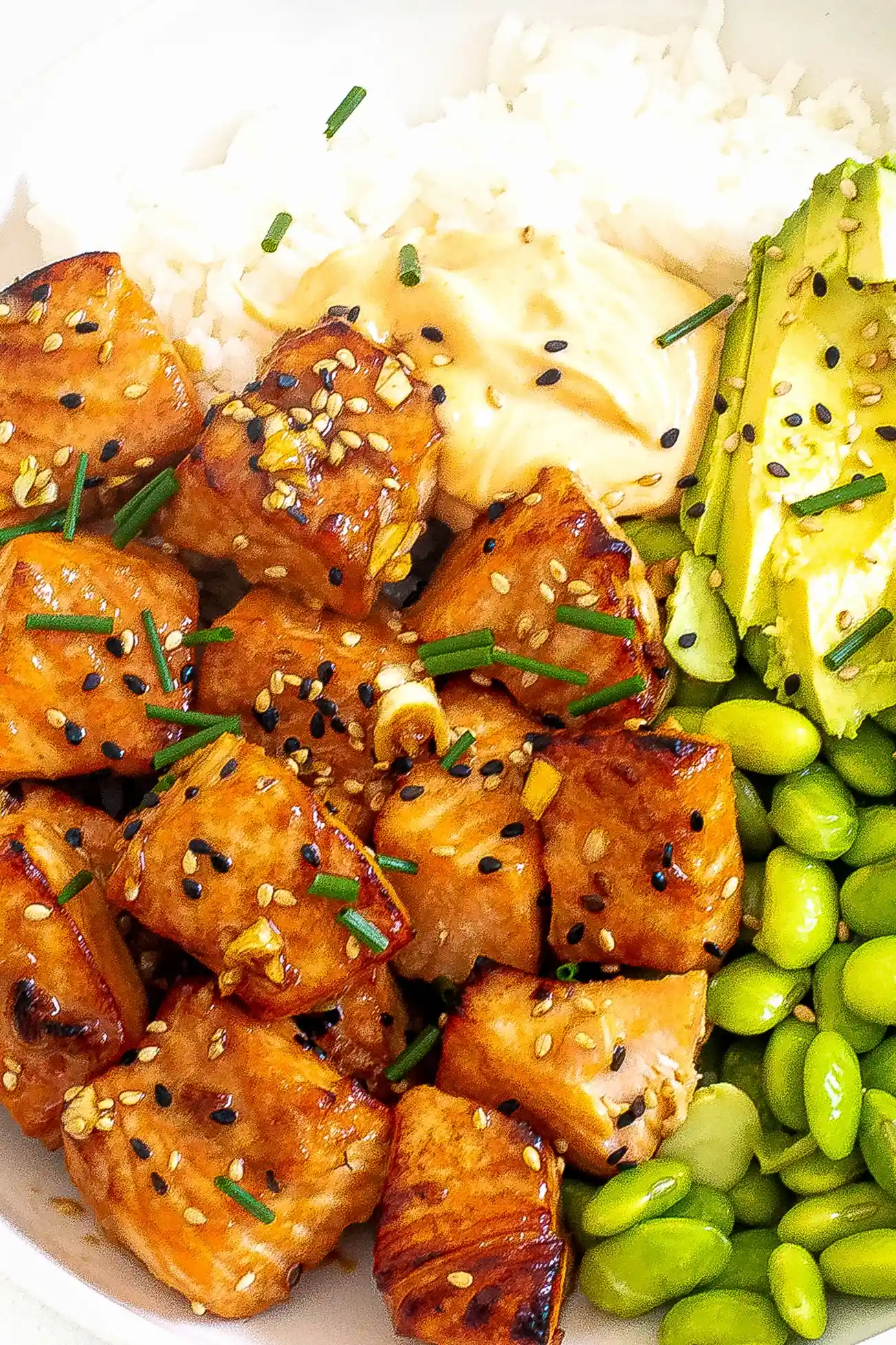
These nutrient-dense bowls combine glazed salmon bites with fluffy rice and fresh vegetables for a balanced meal. This recipe is designed for efficiency, taking less than 30 minutes from start to finish.
List of ingredients
- 1 lb salmon, cut into 1-inch cubes – use skin-on or skinless based on preference.
- 3 tbsp low sodium soy sauce – provides the salty base for the glaze.
- 1 tbsp sesame oil – adds a distinct nutty aroma.
- 1 tbsp honey – creates sweetness and helps with caramelization.
- 4 cloves garlic, minced – adds depth and pungent savory notes.
- 1 tsp sriracha – provides a mild spicy kick.
- 2 cups cooked white rice – serves as the hearty base for the bowl.
- 1 1/2 cups edamame – adds plant-based protein and color.
- 2 avocados, sliced – provides creamy texture and healthy fats.
- sesame seeds – used for final garnish.
- green onions, sliced – used for a fresh, sharp garnish.
step-by-step instructions
- Prepare the Glaze: Combine the soy sauce, sesame oil, honey, minced garlic, and sriracha in a large mixing bowl. Whisk the ingredients thoroughly until the honey is fully incorporated. Reserve 2 tablespoons of this mixture and set it aside for final drizzling.
- Marinate the Fish: Place the cubed salmon into the large bowl with the remaining sauce. Toss the pieces gently to ensure every cube is evenly coated.
- Cook the Salmon (Air Fryer Method): Preheat the air fryer to 400 degrees Fahrenheit. Lightly grease the basket insert with nonstick cooking spray to prevent sticking. Add the salmon cubes in a single layer and cook for 8 minutes without flipping.
- Cook the Salmon (Skillet Method): Heat 1 tablespoon of oil in a large skillet over medium-high heat. Carefully add the salmon bites to the hot pan. Sear for 3-4 minutes per side until the edges are caramelized and the fish is cooked through.
- Assemble the Bowls: Distribute the cooked white rice evenly among four bowls. Arrange the edamame, sliced avocado, and cooked salmon bites on top of the rice.
- Final Touch: Spoon the reserved teriyaki sauce over the salmon pieces. Sprinkle with sesame seeds and sliced green onions before serving immediately.
Optimization for Cooking Methods
Air Fryer Temperature Control
Ensure your air fryer is fully preheated to 400 degrees before adding the fish. This creates an immediate sear on the outside of the cubes, locking in moisture. Avoid overcrowding the basket to allow hot air to circulate freely around each piece.
Skillet Searing Techniques
Use a heavy-bottomed skillet or cast iron pan for the best heat distribution. Wait until the oil is shimmering before adding the salmon to prevent the fish from sticking. Do not move the salmon too frequently; let it sit for 3-4 minutes to develop a deep brown crust.
Managing the Glaze Consistency
Because honey is a sugar, it can burn quickly at very high temperatures. If using a skillet, keep the heat at a steady medium-high rather than maximum. This allows the sauce to thicken into a glaze without scorching the garlic.
Ingredient Substitutions and Swaps
Using Coconut Aminos for Soy Sauce
If you require a soy-free alternative, coconut aminos are an excellent replacement. They offer a similar salty and sweet profile but with lower sodium levels. You may need to add a pinch of salt to maintain the original flavor balance.
Alternative Protein Options
While salmon is the star, this glaze works well with other proteins. Firm tofu cubes or peeled shrimp are great alternatives that cook quickly. Chicken breast cubes can also be used, though they will require a longer cooking time than salmon.
Grain Alternatives for the Base
Brown rice offers more fiber and a nuttier flavor than white rice. Quinoa is another healthy substitute that increases the protein content of the bowl. For a lower-calorie option, use cauliflower rice or a bed of fresh baby spinach.
Vegetable Swaps for Edamame
If you do not have edamame, diced cucumbers provide a refreshing, crunchy contrast. Steamed broccoli or sautéed snap peas also pair well with the teriyaki flavors. Shredded carrots add a nice sweetness and vibrant color to the presentation.
Preparing the Components
Selecting and Cutting the Salmon
Choose a fresh salmon fillet with a vibrant orange color and firm texture. Cut the fish into uniform 1-inch cubes to ensure they all cook at the same rate. Use a sharp knife to slice through the flesh without tearing the delicate fibers.
Perfecting the Rice Base
Rinse your white rice under cold water until the water runs clear to remove excess starch. This prevents the rice from becoming overly sticky or gummy. Use a ratio of 1 part rice to 2 parts water for a fluffy consistency.
Preparing the Edamame
If using frozen shelled edamame, blanch them in boiling water for 2-3 minutes. Drain them well and pat them dry with a paper towel before adding them to the bowl. This prevents excess water from diluting the teriyaki sauce.
Slicing the Avocado
Select an avocado that yields slightly to gentle pressure but is not mushy. Slice it lengthwise and remove the pit before cutting thin wedges. To prevent browning, squeeze a small amount of lime juice over the slices before assembling.
Serving and Presentation Ideas
Balancing the Bowl Layout
Arrange the components in separate sections on top of the rice rather than mixing them together. This creates a visually appealing contrast between the green avocado, yellow-orange salmon, and green edamame. It also allows the eater to control the ratio of ingredients in every bite.
Adding Extra Garnish for Texture
Beyond sesame seeds, consider adding thinly sliced red radishes for a peppery crunch. A drizzle of spicy mayo (mayonnaise mixed with sriracha) can add a rich, creamy element. Fresh cilantro leaves also provide a bright, herbal note that cuts through the richness.
Serving for a Crowd
For larger groups, set up a DIY bowl station with all ingredients in separate bowls. Place the cooked rice in a large pot and the salmon on a warming platter. This allows guests to customize their bowls based on their dietary preferences.
Storage and Reheating Advice
Refrigeration Guidelines
Store the salmon, rice, and vegetables in separate airtight containers in the refrigerator. This prevents the rice from absorbing too much moisture from the vegetables. The cooked salmon will remain fresh for up to 3 days.
Avoid Refrigerating Avocado
Keep the avocado separate and only slice it immediately before serving. If you must store sliced avocado, coat it in lemon juice and wrap it tightly in plastic wrap. This slows down oxidation and keeps the fruit green.
Microwave Reheating Method
Reheat the rice and salmon separately using a medium power setting. Add a teaspoon of water to the rice to steam it back to life. Heat the salmon in short 30-second bursts to avoid overcooking it, which can make the fish rubbery.
Air Fryer Reheating for Crispness
To restore the caramelized exterior of the salmon, place the cubes back in the air fryer at 350 degrees. Heat for 2-3 minutes until warmed through. This method is superior to the microwave as it maintains the texture of the glaze.
Troubleshooting Common Issues
Preventing Salmon from Sticking
Ensure your pan or air fryer basket is properly greased before adding the fish. If using a skillet, wait until the oil is hot enough to create an immediate sear. If the fish sticks, avoid forcing it; let it cook for another minute until it naturally releases from the surface.
Correcting a Burnt Glaze
If the honey in the sauce burns, it will taste bitter. Lower the heat and add a small splash of water or additional soy sauce to the pan. In the future, ensure the garlic is minced finely so it doesn’t burn before the fish is done.
Fixing Dry Salmon
Overcooking salmon leads to a dry, chalky texture. Use a meat thermometer to ensure the internal temperature reaches 145 degrees Fahrenheit. If the fish is too dry, increase the amount of reserved sauce drizzled on top to add moisture.
Frequently Asked Questions
Can you eat salmon skin?
Yes, salmon skin is edible and contains healthy omega-3 fatty acids. If you keep the skin on, ensure you cook it until it is crispy for the best flavor and texture. In a skillet, sear the skin-side down first to achieve maximum crispiness.
Can I use frozen salmon?
Yes, but it must be fully thawed before dicing and marinating. Thaw the fillet in the refrigerator overnight for the best quality. If you are in a rush, place the vacuum-sealed fish in a bowl of cold water, changing the water every 30 minutes.
How do I store leftovers without them getting soggy?
The key is to store the sauce and fresh vegetables separately from the cooked grains and protein. Only combine the components and add the final sauce drizzle right before eating. This preserves the distinct textures of each ingredient.
Can I make this recipe vegan?
You can adapt this by replacing the salmon with extra-firm tofu and using coconut aminos instead of soy sauce if preferred. Use the same marinade and cooking methods, though tofu may require a bit more time in the skillet to brown.
How do I know when the salmon is perfectly cooked?
The salmon should be opaque and flake easily with a fork. The center should still be slightly moist, avoiding a pale, matte appearance which indicates overcooking. A digital thermometer is the most reliable way to check for doneness.
Print
Savory Teriyaki Salmon Bowls
- Total Time: 25 minutes
- Yield: 4 servings 1x
- Diet: General
Description
Teriyaki Salmon Bowls combine savory sweet salmon bites with fluffy rice and vibrant vegetables to create a well-balanced and wholesome meal!
Ingredients
- 1 lb salmon, cut into 1-inch cubes
- 3 tbsp low sodium soy sauce
- 1 tbsp sesame oil
- 1 tbsp honey
- 4 cloves garlic, minced
- 1 tsp sriracha
- 2 cups cooked white rice
- 1 1/2 cups edamame
- 2 avocados, sliced
- sesame seeds, for garnish
- green onions, for garnish
Instructions
- Make Teriyaki Sauce: Add soy sauce, sesame oil, honey, garlic and sriracha to a large bowl. Whisk to combine. Reserve 2 tbsp of the sauce and set aside.
- Marinate Salmon: Add the salmon to the large bowl and toss to coat in the sauce.
- Cook Salmon: For air fryer, preheat to 400 degrees, grease the insert, and cook for 8 minutes. For skillet, heat 1 tbsp oil over medium high heat and cook for 3-4 minutes on each side.
- Assemble Bowls: Divide the rice, edamame, salmon bites and avocado between the bowls. Spoon the reserved sauce on the salmon bites and sprinkle with sesame seeds and green onions for garnish!
Notes
You can substitute salmon with chicken or tofu, and use brown rice, quinoa, or couscous as an alternative base. For additional vegetables, try steamed broccoli or diced cucumbers.
- Prep Time: 15 minutes
- Cook Time: 10 minutes
- Category: Dinner
- Method: Air Fryer or Skillet
- Cuisine: Asian
Nutrition
- Serving Size: 1 bowl
- Calories: 393 kcal
- Sugar: 6 g
- Sodium: 513 mg
- Fat: 14 g
- Saturated Fat: 2 g
- Unsaturated Fat: 11 g
- Trans Fat: 0.01 g
- Carbohydrates: 34 g
- Fiber: 3 g
- Protein: 32 g
- Cholesterol: 62 mg