This garlic and herb marinated salmon is a highly versatile dish suitable for both grilling and oven-baking. The marinade uses a balance of sweet honey and savory soy sauce to enhance the natural flavor of the fish.
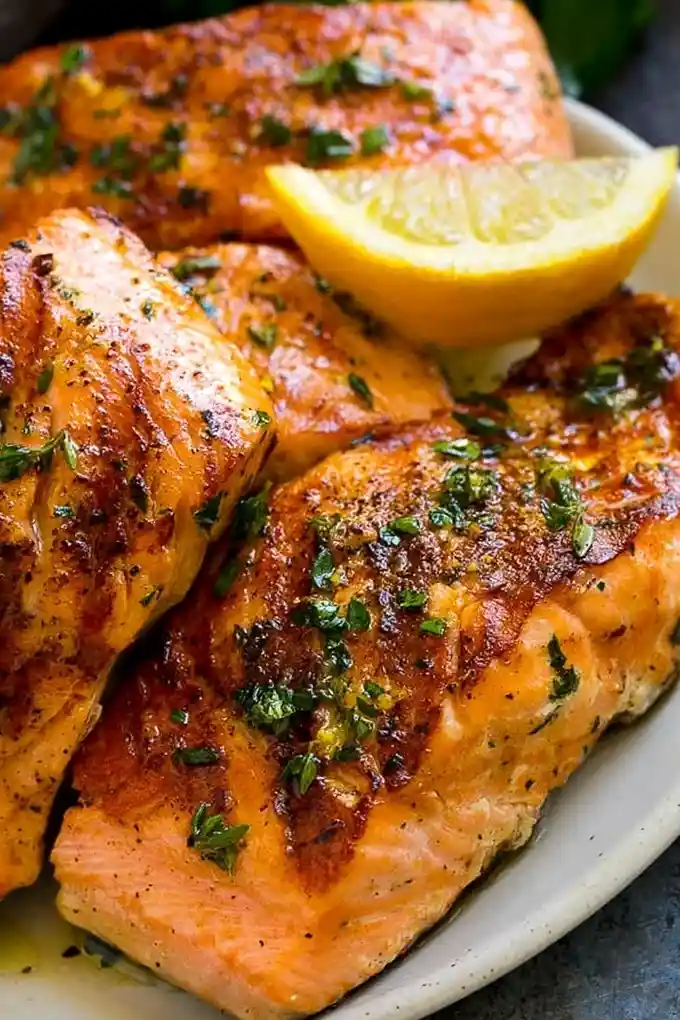
List of ingredients
- 4 salmon fillets (4-6 ounces each) – use center-cut fillets for even cooking.
- 4 tablespoons olive oil – provides a base for the marinade and prevents sticking.
- 1 1/2 tablespoons honey – adds sweetness and aids in caramelization.
- 1 1/2 tablespoons soy sauce – provides salt and a deep umami flavor.
- 1 teaspoon lemon zest – offers bright citrus notes without adding acid.
- 2 teaspoons chopped fresh parsley – adds a fresh, peppery finish.
- 2 teaspoons fresh thyme leaves – provides a subtle, earthy aroma.
- 1/2 teaspoon salt – enhances all the other flavors.
- 1/4 teaspoon pepper – adds a mild heat.
- 1/2 teaspoon minced garlic – provides a pungent, savory depth.
- lemon wedges – used for serving to provide a fresh acidic contrast.
step-by-step instructions
- Prepare the marinade: Place the olive oil, honey, soy sauce, lemon zest, parsley, thyme, salt, and pepper in a bowl. Whisk these ingredients together until the honey is fully incorporated.
- Divide the mixture: Reserve 1 tablespoon of the marinade in a separate small container for later use as a glaze. Add the minced garlic to the remaining mixture in the bowl.
- Coat the fish: Place the salmon fillets and the garlic-infused marinade into a resealable freezer bag. Seal the bag tightly and shake it gently to ensure every fillet is thoroughly coated.
- Marinate: Place the bag in the refrigerator. Allow the salmon to marinate for at least 30 minutes, but do not exceed 6 hours.
- Prepare for cooking: Remove the salmon from the bag. Carefully scrape off any large bits of garlic or herbs to prevent them from burning on the grill.
- Grill the salmon: Preheat an outdoor grill or indoor grill pan over medium-high heat. Cook the fillets for 5-6 minutes per side until the fish is opaque throughout.
- Bake the salmon: Preheat the oven to 425 degrees. Place the fillets on a sheet pan lined with cooking spray and bake for 15 minutes until cooked through.
- Final touch: Brush the reserved tablespoon of marinade over the cooked fillets. Serve immediately with lemon wedges on the side.
Salmon Selection Guide
Wild-Caught vs. Farmed Salmon
Wild-caught salmon typically has a deeper red color and a more robust, intense flavor. Farmed salmon is often milder and contains more fat, which can make the fillets more moist when grilled. Both options work well for this marinade, though wild salmon offers more omega-3 fatty acids.
Choosing Between Fillets and Steaks
Fillets are the most common choice for this recipe because they cook quickly and evenly. Salmon steaks, which include the center bone, are more durable for high-heat grilling and are less likely to break. If using steaks, you may need to increase the cooking time by 2-3 minutes per side.
Identifying Fresh Salmon
Fresh salmon should have a vibrant color and a firm texture that springs back when pressed. Avoid fillets with any brown or grey discoloration along the edges. The scent should be clean and reminiscent of the ocean rather than having a strong fishy odor.
Marinade Customization
Using Alternative Fresh Herbs
While parsley and thyme are excellent, dill is a classic pairing that adds a bright, lemony quality to the fish. Chives can be used for a mild onion flavor, and fresh oregano provides a more Mediterranean profile. Use the same quantities as the original herbs when substituting.
Converting to Dried Herbs
If fresh herbs are unavailable, you can use dried versions, but reduce the quantity by two-thirds. For example, use 1 teaspoon of dried thyme instead of 2 teaspoons of fresh. A general Italian seasoning blend also works well as a convenient shortcut.
Adjusting Sweetness and Saltiness
For a different flavor profile, replace the honey with maple syrup or brown rice syrup. If you prefer a less salty dish, reduce the soy sauce by half and add a small pinch of extra salt. This allows you to control the sodium level without losing the color provided by the soy sauce.
Cooking Technique Details
Maintaining Proper Grill Temperature
Medium-high heat is critical to ensure the salmon sears without burning the sugars in the honey. Use a grill thermometer to aim for a surface temperature of approximately 400°F. If the grill is too hot, the marinade will char before the center of the fish is cooked.
Preventing Salmon from Sticking
Apply a thin layer of high-smoke point oil to the grill grates immediately before adding the fish. Avoid moving the fillets too early; the salmon will naturally release from the metal once a proper crust has formed. Using a flexible fish spatula helps lift the fillets without tearing the flesh.
Oven Baking Best Practices
Ensure the oven is fully preheated to 425°F to achieve a slight roast on the exterior. Using parchment paper on your baking sheet prevents sticking and makes cleanup much easier than using oil alone. Do not overcrowd the pan, as this can lead to steaming rather than roasting.
The Importance of Skin-On Fillets
Keeping the skin on the salmon acts as a protective barrier against direct heat. This prevents the delicate flesh from drying out and helps the fillet maintain its structural integrity on the grill. The skin also provides a surface for a crispier texture if seared properly.
Serving and Pairing Ideas
Recommended Grain Pairings
Basmati or jasmine rice are excellent choices as they absorb the extra glaze and lemon juice. Quinoa or farro provide a nuttier taste and higher protein content for a more filling meal. For a lower-carb option, cauliflower rice seasoned with lime and cilantro pairs well.
Complementary Vegetable Sides
Asparagus and zucchini can be grilled at the same time as the salmon for maximum efficiency. Sautéed spinach or steamed broccolini provide a nutritional balance and a color contrast on the plate. Roasted carrots with a hint of cumin also complement the sweetness of the honey glaze.
Plating for Professional Presentation
Place the salmon fillet atop a neat bed of grains to give the dish height. Drizzle the reserved marinade in a thin line across the fish and garnish with extra fresh parsley. Place two fresh lemon wedges on the side for a bright, professional look.
Storage and Food Safety
Optimal Refrigeration Techniques
Store cooked salmon in an airtight glass container to preserve the moisture and flavor. Allow the fish to cool slightly before sealing the lid to prevent excessive condensation from forming. Refrigerated salmon will remain safe and tasty for up to three days.
Guidelines for Freezing Cooked Salmon
Wrap cooked fillets tightly in aluminum foil and place them inside a heavy-duty freezer bag. Squeeze out as much air as possible to prevent freezer burn. Cooked salmon can be stored in the freezer for up to two months, though quality is best when eaten sooner.
Safe Marinating Timeframes
Do not marinate the salmon for longer than six hours. Because the marinade contains salt and soy sauce, extended soaking can begin to break down the protein fibers, resulting in a mushy texture. A window of 30 minutes to two hours is usually the sweet spot for flavor.
Reheating Instructions
Gentle Oven Reheating
Preheat your oven to 275°F and place the salmon on a baking sheet. Heat for 10-15 minutes until the fish is warmed through. This low-temperature method prevents the salmon from overcooking and becoming rubbery.
Using the Microwave Safely
Use a medium power setting and heat the salmon in 30-second intervals. Cover the fillet with a damp paper towel to create a steam environment, which helps the fish retain its moisture. Avoid using the high power setting, as it often dries out the edges quickly.
Air Fryer Reheating Method
Set the air fryer to 350°F and heat the fillets for 3-5 minutes. This is the fastest way to restore a slight crispness to the exterior while warming the interior. Check the fish frequently to ensure the honey glaze does not burn.
Troubleshooting Common Issues
What to Do if the Salmon Sticks
If the fillet does not release, avoid pulling it forcefully, as this will tear the meat. Gently slide a thin metal spatula underneath the skin to loosen the bond with the grill. If it still sticks, wait another 60 seconds for the sear to complete.
Preventing Overcooked Salmon
Use a digital meat thermometer to monitor the internal temperature. Pull the salmon off the heat when it reaches 135°F to 140°F. Carry-over cooking will bring the temperature up to the recommended 145°F while the fish rests.
Fixing a Too-Salty Marinade
If the soy sauce makes the marinade too salty, add a teaspoon of extra honey or a splash of water. You can also add a small amount of unsalted butter to the final glaze to mellow out the saltiness. Adding an extra squeeze of fresh lemon juice at the end also helps balance the salt.
Frequently Asked Questions
Can I use frozen salmon fillets?
Yes, but you must thaw them completely in the refrigerator before marinating. Pat the fillets dry with paper towels after thawing to ensure the marinade adheres to the surface and the fish sears properly.
Why is lemon juice excluded from the marinade?
Lemon juice contains citric acid, which can begin to “cook” the salmon through denaturation. If left too long, this changes the texture of the fish, making it firm or mealy. Lemon zest provides the citrus flavor without this risk.
Can I substitute olive oil with another oil?
Avocado oil or grapeseed oil are excellent substitutes because they have higher smoke points than olive oil. This makes them even safer for high-heat grilling. Avoid using butter in the marinade as it will burn at high temperatures.
How can I tell when the salmon is perfectly done?
The salmon should be opaque throughout and flake easily when pressed with a fork. The internal temperature should reach 145°F. Avoid cooking until the fish is completely matte, as it will be overdone.
Print
Garlic and Herb Marinated Salmon
- Total Time: 20 minutes
- Yield: 4 servings 1x
- Diet: General
Description
This marinated salmon is fresh salmon fillets flavored with olive oil, garlic and herbs, then grilled or baked to perfection.
Ingredients
- 4 salmon fillets (4–6 ounces each)
- 4 tablespoons olive oil
- 1 1/2 tablespoons honey
- 1 1/2 tablespoons soy sauce
- 1 teaspoon lemon zest
- 2 teaspoons chopped fresh parsley
- 2 teaspoons fresh thyme leaves
- 1/2 teaspoon salt
- 1/4 teaspoon pepper
- 1/2 teaspoon minced garlic
- lemon wedges for serving
Instructions
- Whisk: Place the olive oil, honey, soy sauce, lemon zest, parsley, thyme, salt and pepper in a bowl. Whisk to combine.
- Prepare: Reserve 1 tablespoon of the marinade for later use. Add the garlic to the bowl.
- Coat: Add the salmon and marinade to a resealable freezer bag and seal. Shake to coat the salmon with the marinade.
- Marinate: Marinate in the refrigerator for at least 30 minutes, or up to 6 hours.
- Clean: Remove the salmon from the marinade and scrape off any excess bits of herbs or garlic (otherwise they could burn on the grill!).
- Grill: Preheat an outdoor grill or indoor grill pan over medium high heat. Add the salmon fillets and cook for 5-6 minutes on each side or until salmon is opaque throughout.
- Bake: Preheat the oven to 425 degrees. Place the salmon fillets on a sheet pan lined with cooking spray. Bake for 15 minutes or until salmon is cooked through.
- Finish: Brush the reserved marinade over the salmon fillets, then serve with lemon wedges if desired.
Notes
Lemon zest is used instead of juice to prevent the acid from ‘cooking’ the salmon during marination. Keep the skin on the salmon during grilling to prevent the fillets from falling apart.
- Prep Time: 10 minutes
- Cook Time: 10 minutes
- Category: Main
- Method: Grilling or Baking
- Cuisine: American
Nutrition
- Serving Size: 1 fillet
- Calories: 274 kcal
- Sugar: 4 g
- Sodium: 592 mg
- Fat: 17 g
- Saturated Fat: 2 g
- Unsaturated Fat: 15 g
- Trans Fat: 0 g
- Carbohydrates: 4 g
- Fiber: 0 g
- Protein: 23 g
- Cholesterol: 62 mg