These nutritious bowls combine the fresh flavors of a classic salmon roll in a convenient, easy-to-eat format. They feature tender roasted salmon paired with crisp vegetables and two bold, homemade sauces.
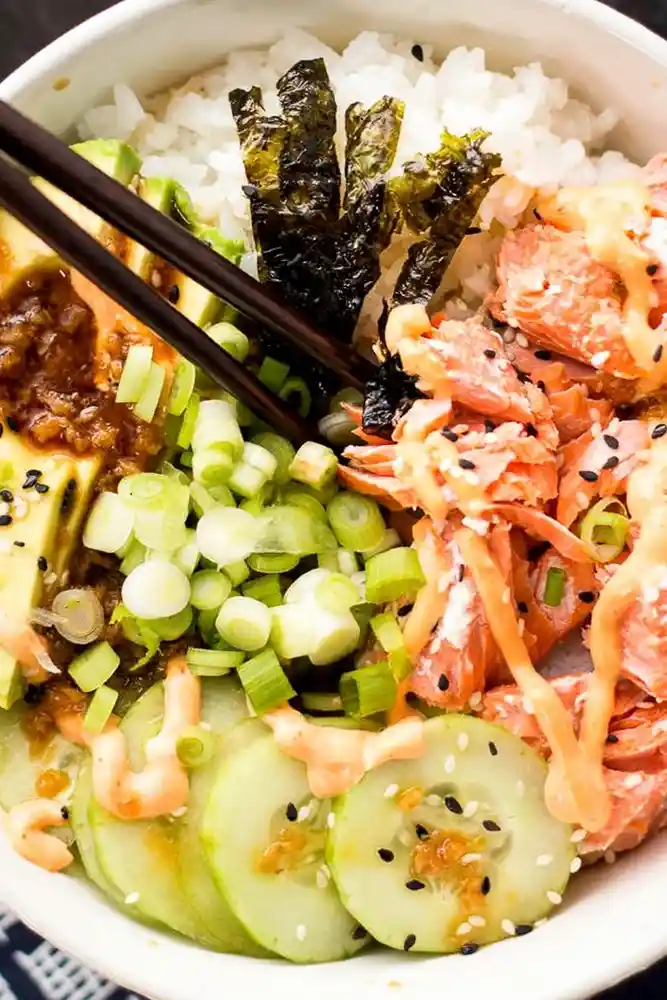
List of ingredients
- 1 ½ pounds wild caught salmon (seasoned with lemon slices, cilantro and butter) – main protein source
- 1 avocado (sliced) – for creamy texture
- 1 cucumber (peeled and sliced) – for fresh crunch
- 3 green onion (sliced) – for a mild onion bite
- 4 sheets nori (cut into strips) – roasted seaweed for authentic flavor
- Sesame seeds – optional garnish for texture
- 2 cups short grain white sushi rice (such as Cal-Rose) – the starchy base
- 3 cups water – for simmering the rice
- 2 tablespoons rice vinegar – for the rice seasoning
- 1 tablespoon sugar – for the rice seasoning
- 1/2 tablespoon salt – for the rice seasoning
- 1/2 cup low sodium soy sauce – base for the ginger dressing
- 1/4 cup rice vinegar – for the ginger dressing
- 2 teaspoons sugar – for the ginger dressing
- 1 teaspoon sesame oil – for a nutty aroma in the dressing
- 1-2 tablespoons fresh grated ginger root – for a zesty kick
- 3 garlic cloves (minced) – for savory depth in the dressing
- 1/2 cup high quality mayonnaise – base for the spicy aioli
- 1-2 tablespoons sriracha – adjust based on heat preference
step-by-step instructions
- Bake the Salmon: Roast the salmon on a baking sheet at 425°F for 20-30 minutes, or follow the specific package instructions until the fish is cooked through.
- Cook the Sushi Rice: Rinse the rice thoroughly until the water runs clear. Add rice and water to a medium pan, bring to a boil, then cover and reduce heat to low for 20 minutes until the water has evaporated.
- Season the Rice: Combine rice vinegar, sugar, and salt in a small bowl. Heat in the microwave for 30 seconds, stir until dissolved, and fold the mixture into the slightly cooled rice.
- Prepare the Sriracha Aioli: Stir together the mayonnaise and sriracha in a small bowl until smooth. Set this aside for assembly.
- Make the Soy Ginger Dressing: Whisk together the soy sauce, rice vinegar, sugar, sesame oil, ginger, and garlic. Stir until the sugar is completely dissolved.
- Assemble the Bowls: Place a portion of sushi rice in each bowl. Arrange the roasted salmon, sliced avocado, cucumber, green onion, and nori strips on top.
- Finish and Garnish: Drizzle the bowls generously with both the sriracha aioli and the soy ginger dressing. Sprinkle with sesame seeds if desired.
Optimizing Your Rice Preparation
Importance of Rinsing the Grains
Rinsing the short-grain rice removes excess surface starch that can make the finished product gummy. Use a fine-mesh strainer and run cold water over the grains until the water is clear. This ensures the grains stay distinct and fluffy.
Managing Water Ratios
The 3:2 water-to-rice ratio is critical for achieving the correct sushi consistency. Using too much water will lead to mushy rice, while too little will leave the center hard. Always measure both components precisely with a measuring cup.
Seasoning the Rice While Warm
Folding the vinegar mixture into the rice while it is still warm allows the grains to absorb the flavors efficiently. Use a folding motion with a rice paddle or spatula to avoid smashing the grains. This creates the signature tangy taste of sushi rice.
Letting the Rice Rest
Allow the rice to sit undisturbed for a few minutes after the heat is turned off. This resting period lets the remaining steam distribute evenly. It prevents the rice from sticking too aggressively to the bottom of the pan.
Salmon Cooking Techniques
Controlling the Oven Temperature
Maintaining a consistent 425°F ensures the salmon roasts quickly without drying out. If your oven has hot spots, rotate the baking sheet halfway through the cooking time. This ensures an even cook across the entire fillet.
Testing for Doneness
The salmon is done when it reaches an internal temperature of 145°F or when it flakes easily with a fork. Avoid overcooking, as this can make the fish tough and dry. Gently press the thickest part to check for firmness.
Handling Wild Salmon Bones
Wild caught salmon may occasionally contain small pin bones. Carefully feel along the center of the fillet after cooking to locate any remaining bones. Remove them with tweezers or a fork before flaking the fish into the bowls.
Flaking the Fish for Assembly
Use two forks to gently break the roasted salmon into bite-sized chunks. This makes the fish easier to eat and allows the sauces to coat more surface area. Avoid mashing the fish into a paste to maintain visual appeal.
Customizing the Sauces
Adjusting the Sriracha Heat
The amount of sriracha in the aioli can be scaled based on your tolerance. Start with one tablespoon and taste before adding more. For those who prefer a milder sauce, substitute some sriracha with a touch of honey.
Balancing the Soy Ginger Dressing
If the dressing tastes too salty, add a small amount of extra sugar or a teaspoon of water. If it lacks zest, increase the amount of fresh grated ginger. Whisking thoroughly ensures the sugar does not settle at the bottom.
Choosing the Right Mayonnaise
A high-quality, full-fat mayonnaise provides the best creaminess and mouthfeel for the aioli. Avoid light or fat-free versions, as they may separate or lack the necessary richness. Japanese Kewpie mayonnaise is a great alternative for more authenticity.
Using Fresh Ginger Root
Freshly grated ginger provides a sharp, aromatic heat that powdered ginger cannot replicate. Use a microplane or a fine grater for the smoothest texture. Store leftover ginger root in the freezer to maintain its freshness longer.
Vegetable Prep and Pairings
Selecting the Perfect Avocado
Choose an avocado that gives slightly when pressed but is not mushy. This ensures a creamy texture that holds its shape when sliced. Slicing the avocado just before serving prevents it from oxidizing and turning brown.
Cucumber Slicing Methods
Peeling the cucumber removes the bitter skin and creates a cleaner look. Slice the cucumber into thin rounds or matchsticks to mirror the look of traditional sushi rolls. Removing the watery seeds can prevent the bowl from becoming too liquid.
Incorporating Extra Proteins
Adding steamed edamame or a soft-boiled egg can increase the protein content of the bowl. These additions complement the salmon and the ginger dressing well. Ensure they are cooked and cooled before adding them to the rice.
Adding Color with Carrots
Shredded carrots add a bright orange hue and a sweet crunch to the dish. Use a julienne peeler for thin, professional-looking strips. They provide a nice textural contrast to the soft avocado and salmon.
Storage and Food Safety
Chilling the Components
Store the cooked salmon and cooked rice in separate airtight containers in the refrigerator. Keep the sliced vegetables in a separate container to maintain their crispness. This prevents the rice from absorbing the smells of the fish.
Preserving Sliced Avocado
To keep sliced avocado from browning, toss the pieces in a small amount of lemon or lime juice. The acidity slows down the oxidation process. Store them in a container with a tight lid and minimal air space.
Shelf Life of the Dressings
Both the sriracha aioli and the soy ginger dressing can be stored in the fridge for up to one week. Shake the ginger dressing before using it, as the ginger and garlic may settle. Keep them in glass jars for the best flavor preservation.
Reheating and Serving
Warming the Sushi Rice
To reheat the rice, sprinkle a teaspoon of water over the grains and cover them with a damp paper towel. Microwave in short bursts of 30 seconds. This creates steam that restores the moisture to the grains.
Reheating the Salmon
Warm the roasted salmon gently in the oven at 300°F or in the microwave on medium power. Overheating the fish can make it rubbery and dry. Heat only until it is lukewarm to preserve the texture.
Assembling for Guests
For a professional presentation, arrange the toppings in distinct sections over the rice. Drizzle the sauces in a zigzag pattern across the top. Garnish with a sprinkle of sesame seeds and a few fresh cilantro leaves.
Common Troubleshooting
Fixing Mushy Rice
If the rice becomes too soft, you may have used too much water or stirred it too often during simmering. Next time, ensure the lid stays closed throughout the cooking process. For the current batch, let it air dry for a few minutes before adding seasoning.
Correcting Bland Dressing
If the dressing feels flat, add a splash more rice vinegar or a pinch of salt. The acidity of the vinegar is what brightens the other flavors. Taste and adjust in small increments to avoid over-seasoning.
Dealing with Fishy Aromas
If the salmon has a very strong fishy scent, ensure you are using fresh, high-quality wild-caught fillets. Adding an extra squeeze of fresh lemon juice during the roasting process helps neutralize these aromas. Always pat the fish dry before seasoning.
Frequently Asked Questions
Can I use brown rice instead of sushi rice?
Yes, you can use brown rice, but the texture will be nuttier and less sticky. You will need to increase the cooking time and the amount of water. The rice vinegar seasoning still works well with brown rice.
Is this recipe gluten-free?
This recipe is not gluten-free because it uses soy sauce. To make it gluten-free, replace the low-sodium soy sauce with tamari or coconut aminos. All other ingredients are naturally gluten-free.
Can I use raw salmon instead of roasted?
You can use sushi-grade raw salmon if you prefer a traditional sushi taste. Ensure the salmon is certified as sushi-grade to avoid foodborne illness. Simply cube the raw fish and toss it in a bit of the soy ginger dressing.
How do I find nori sheets?
Nori is available in the Asian food section of most grocery stores. You can buy large sheets and cut them yourself or purchase pre-cut roasted seaweed snacks. Seaweed snacks are a convenient, salty alternative.
Print
Roasted Salmon Sushi Bowls with Ginger Soy Dressing
- Total Time: 50 minutes
- Yield: 4 servings 1x
- Diet: General
Description
These Salmon Sushi Bowls have all the delicious flavors of your favorite salmon roll in a delicious bowl! Topped with a spicy sriracha mayo and ginger soy dressing, it’s a flavor explosion!
Ingredients
- 1 ½ pounds wild caught salmon
- 1 avocado, sliced
- 1 cucumber, peeled and sliced
- 3 green onions, sliced
- 4 sheets nori, cut into strips
- Sesame seeds for garnish
- 2 cups short grain white sushi rice
- 3 cups water
- 2 tablespoons rice vinegar
- 1 tablespoon sugar
- 1/2 tablespoon salt
- 1/2 cup low sodium soy sauce
- 1/4 cup rice vinegar
- 2 teaspoons sugar
- 1 teaspoon sesame oil
- 1–2 tablespoons fresh grated ginger root
- 3 garlic cloves, minced
- 1/2 cup mayonnaise
- 1–2 tablespoons sriracha
Instructions
- Bake: Bake salmon according to package instructions, or roast on a baking sheet at 425°F for 20-30 minutes, or until cooked through.
- Cook Rice: Rinse the rice until water runs clear. Add to water in a medium pan, stir until boiling, cover and reduce heat to low. Cook for about 20 minutes, or until water has evaporated. Allow rice to cool slightly.
- Season Rice: In a small bowl, mix rice vinegar, sugar and salt. Heat in the microwave for about 30 seconds, stir until dissolved, and pour over the rice.
- Make Aioli: Stir together the mayonnaise and sriracha, set aside.
- Make Dressing: Stir together the soy sauce, rice vinegar, sugar, sesame oil, ginger and garlic. Whisk until sugar is dissolved.
- Assemble: Add sushi rice to the bowl. Top with salmon, avocado, cucumber slices, green onion slices, and nori. Drizzle with sriracha aioli and soy ginger dressing. Garnish with sesame seeds.
Notes
If buying wild salmon, be sure to watch out for small bones and remove them before serving if possible.
- Prep Time: 10 minutes
- Cook Time: 40 minutes
- Category: Dinners
- Method: Baking
- Cuisine: Japanese
Nutrition
- Serving Size: 1 bowl
- Calories: 620 kcal
- Sugar: 9 g
- Sodium: 980 mg
- Fat: 26 g
- Saturated Fat: 6 g
- Unsaturated Fat: 17 g
- Trans Fat: 0 g
- Carbohydrates: 48 g
- Fiber: 6 g
- Protein: 36 g
- Cholesterol: 80 mg