This efficient wonton soup combines a light, savory broth with tender dumplings and fresh greens. It is an ideal choice for a nutritious weeknight dinner that feels like a restaurant meal but takes only 30 minutes to prepare.
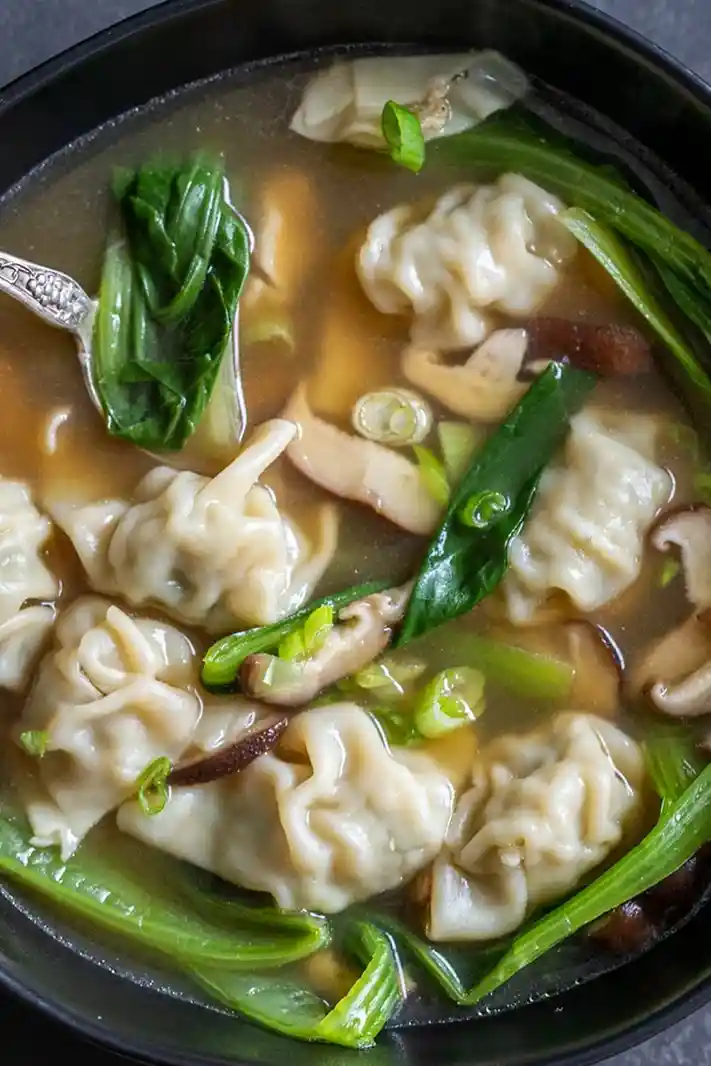
List of ingredients
- 32 oz low-sodium chicken broth – serves as the savory liquid base.
- 2 cups water – helps balance the saltiness and adjust the consistency.
- 2 cloves of garlic – freshly pressed to provide a strong aromatic foundation.
- 20 wontons – use frozen chicken or vegetable dumplings for speed.
- 8 oz shiitake mushrooms – sliced thin to add earthy depth and texture.
- 4 baby bok choy – chopped into bite-sized pieces for a fresh crunch.
- 1 tbsp sesame oil – added at the end for a distinct nutty aroma.
- 2 tbsp low-sodium soy sauce – used for seasoning and adding umami flavor.
- 3 stalks green onion – thinly sliced to use as a fresh garnish.
step-by-step instructions
- Prepare the base: Combine the water, low-sodium chicken broth, and fresh pressed garlic in a large pot. Bring the mixture to a rolling boil over high heat.
- Add dumplings: Carefully drop the frozen wontons into the boiling broth.
- Incorporate greens: Toss in the chopped baby bok choy pieces.
- Simmer with mushrooms: Add the sliced shiitake mushrooms to the pot. Turn the heat down to medium-high and let the soup simmer for approximately 15 minutes, or until the wontons float to the surface.
- Season and finish: Stir in the soy sauce and sesame oil. Remove the pot from the heat immediately to keep the sesame oil flavor vibrant.
- Serve: Garnish each bowl with sliced green onions and serve immediately while hot.
Enhancing Your Soup Base
Using Vegetable Broth for a Meat-Free Option
You can easily replace the chicken broth with a high-quality vegetable broth. Ensure the vegetable broth is low-sodium to maintain control over the overall salt levels. This version works perfectly if you are using vegetable-filled wontons.
Adding Fresh Ginger for More Depth
To add a zingy, warm flavor, grate a teaspoon of fresh ginger into the broth along with the garlic. Ginger helps cut through the richness of the dumplings and adds a traditional aromatic layer. Boil the ginger for 2-3 minutes before adding the wontons.
Controlling the Salt Content
Since soy sauce is added at the end, always start with low-sodium broth. If you find the soup is still too salty, add an extra half-cup of water. This ensures the flavors remain balanced without overpowering the delicate taste of the bok choy.
Creating a Clearer Broth
Avoid boiling the soup too vigorously once the vegetables are added. A gentle simmer prevents the wonton wrappers from breaking and releasing too much starch. This keeps the broth clear and light rather than cloudy or thick.
Vegetable Alternatives and Customizations
Replacing Bok Choy with Fresh Spinach
If you cannot find baby bok choy, fresh spinach is a great alternative. Add the spinach during the last 2 minutes of cooking, as it wilts much faster than bok choy. Overcooking spinach can make it slimy and dull in color.
Trying Different Mushroom Varieties
While shiitakes offer a deep, woody flavor, oyster mushrooms or cremini mushrooms also work well. Oyster mushrooms provide a softer texture, while creminis offer a milder taste. Slice them uniformly to ensure they cook evenly in the simmer.
Adding Carrots for Color and Sweetness
Thinly sliced carrots add a bright orange color and a subtle sweetness to the soup. Add them at the same time as the garlic to ensure they are tender by the time the wontons are done. Use a julienne cut for a more professional appearance.
Incorporating Shredded Cabbage
Napa cabbage is another excellent substitute for bok choy. Shred it thinly and add it during the simmering phase. It provides a softer texture and a mild sweetness that complements the soy-based broth.
Tips for Working with Dumplings
Selecting the Best Frozen Wontons
Choose wontons that are specifically designed for soup rather than frying. Chicken, shrimp, or vegetable fillings are the most common and compatible options. Check the ingredients list to ensure there are no unwanted additives or thickeners.
Preventing Wontons from Sticking Together
Add the frozen wontons to the boiling broth one by one rather than dumping them in a clump. Stir gently for the first minute of cooking to ensure they remain separate. This prevents the wrappers from fusing together into a large mass.
Timing the Cook for Perfect Texture
The most reliable indicator that wontons are finished is when they float to the surface. Do not let them boil for several minutes after they float, as this can lead to overcooked, mushy wrappers. Remove the soup from the heat as soon as they rise.
Using Homemade Wontons
If you make your own wontons, do not boil them directly in the soup if the wrappers are very thin. Instead, poach them in a separate pot of water and add them to the broth just before serving. This prevents the broth from becoming overly starchy.
Serving Suggestions and Pairings
Adding a Spicy Kick with Chili Oil
For those who enjoy heat, a drizzle of chili oil on top of each bowl is highly recommended. The spicy, toasted flavor of the oil complements the nutty sesame oil. Add this at the table so each person can control their spice level.
Topping with Toasted Sesame Seeds
A sprinkle of toasted white or black sesame seeds adds a subtle crunch and visual appeal. Toast the seeds in a dry pan for 1-2 minutes until fragrant before sprinkling. This enhances the sesame oil notes already present in the broth.
Pairing with Side Dishes
Serve this soup alongside a side of steamed edamame or a crisp cucumber salad. A simple side of steamed white or brown rice can also make the meal more filling. The freshness of a cold salad balances the warmth of the savory soup.
Presenting in Traditional Bowls
Using deep, ceramic bowls helps retain the heat of the soup for longer. Place the wontons and vegetables carefully to ensure a balanced distribution in every serving. Finish with a precise garnish of green onions for a restaurant-style look.
Preserving and Reheating Leftovers
Refrigerating Your Soup Properly
Store leftover soup in an airtight container in the refrigerator for up to five days. Keep the broth and the wontons together, as the dumplings will absorb some of the flavor. Ensure the soup has cooled slightly before sealing the lid to avoid condensation.
The Best Way to Reheat
Reheat the soup in a saucepan over medium heat rather than using a microwave. Stir gently to avoid breaking the wontons. Heat until the broth is simmering, but do not let it reach a rolling boil, which could overcook the dumplings.
Why Freezing is Not Recommended
It is best not to freeze wonton soup once it has been cooked. The freezing and thawing process breaks down the structure of the wonton wrappers, making them mushy. If you must freeze, freeze the uncooked wontons separately and add them to a fresh batch of broth.
Refreshing the Broth Before Serving
When reheating, the broth may have thickened slightly. Add a tablespoon of water or a splash of low-sodium chicken broth to restore the original consistency. This keeps the soup feeling light and fresh rather than heavy.
Troubleshooting Common Cooking Issues
Fixing a Broth That is Too Salty
If the broth tastes too salty, add a small amount of water or a pinch of sugar to balance the flavor. Alternatively, adding more vegetables like bok choy can help absorb some of the excess salt. Always taste the broth before adding the final soy sauce.
Handling Overcooked Vegetables
If the bok choy becomes too soft, reduce the simmering time in your next batch. To fix overcooked greens in the current pot, remove them with a slotted spoon and replace them with a handful of fresh, raw greens right before serving.
Solving Cloudy Broth Issues
Cloudy broth usually happens when the wontons break or the soup is boiled too aggressively. To clear it up, you can carefully skim the foam from the top of the liquid using a spoon. In the future, maintain a gentle simmer rather than a hard boil.
Addressing Bland Flavor
If the soup lacks depth, increase the amount of pressed garlic or add a drop of fish sauce. A small amount of white pepper can also add a subtle, professional heat. Ensure you are using a low-sodium broth that still has a decent flavor profile.
Frequently Asked Questions
Is wonton soup healthy?
Yes, wonton soup is generally quite healthy as it is light on calories and rich in vegetables. The bok choy and mushrooms provide essential vitamins and minerals, while the broth keeps you hydrated. Using low-sodium ingredients helps keep the heart-healthy benefits intact.
What is usually inside a wonton?
Wonton fillings vary widely but typically include a mix of ground chicken, shrimp, or tofu. These are often seasoned with ginger, scallions, and soy sauce for flavor. Some versions also include finely chopped vegetables or rice noodles for added texture.
What is the difference between wontons and dumplings?
Dumplings is a broad category that includes many types of dough-wrapped fillings from various cultures. Wontons are a specific type of Chinese dumpling characterized by their thinner wrappers and specific folding style. Essentially, all wontons are dumplings, but not all dumplings are wontons.
Can wonton soup be reheated?
Yes, it can be reheated on a stove or in a microwave. The stove method is preferred to prevent the wontons from bursting or becoming unevenly heated. Heat gently until the broth reaches a simmering point, then serve immediately.
Print
Quick and Savory Homemade Wonton Soup
- Total Time: 30 minutes
- Yield: 6 servings 1x
- Diet: General
Description
This wonton soup is the perfect, quick weeknight dinner. Even though it comes together in just 30 minutes, it tastes out of this world and is so satisfying.
Ingredients
- 32 oz low-sodium chicken broth
- 2 cups water
- 2 cloves of garlic
- 20 chicken or vegetable wontons
- 8 oz shiitake mushrooms
- 4 baby bok choy
- 1 tbsp sesame oil
- 2 tbsp low-sodium soy sauce
- 3 stalks green onion
Instructions
- Step: Combine the water and chicken broth with fresh pressed garlic. Bring it to a boil.
- Step: Add in the frozen wontons.
- Step: Toss in the bok choy.
- Step: Add in sliced shiitake mushrooms. Turn the heat to medium-high and let the soup simmer for about 15 minutes or until the wontons float to the top.
- Step: Add in the soy sauce and sesame oil. Remove from heat.
- Step: Garnish with green onions and serve right away. Enjoy!
Notes
Use low-sodium broth to balance the salt from the soy sauce. Wash bok choy thoroughly to remove dirt. Avoid overcooking the wontons to prevent them from becoming mushy.
- Prep Time: 10 minutes
- Cook Time: 20 minutes
- Category: Soup
- Method: Simmering
- Cuisine: Asian
Nutrition
- Serving Size: 1 serving
- Calories: 147 kcal
- Sugar: 2 g
- Sodium: 438 mg
- Fat: 4 g
- Saturated Fat: 1 g
- Unsaturated Fat: 2 g
- Trans Fat: 0 g
- Carbohydrates: 21 g
- Fiber: 2 g
- Protein: 8 g
- Cholesterol: 2 mg