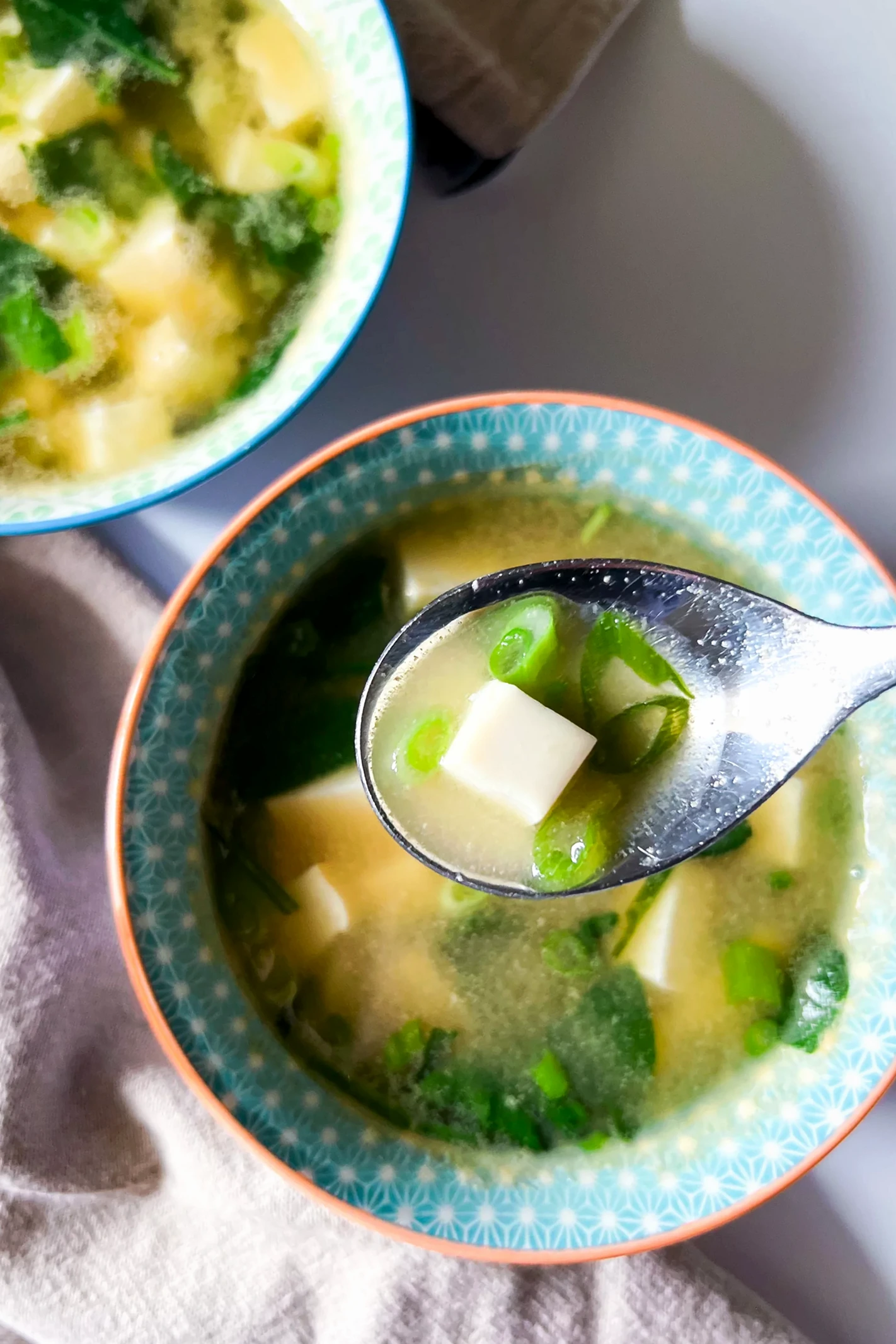
This vibrant vegan miso soup delivers a complex, savory umami profile in just ten minutes of active kitchen time. By utilizing silken tofu and fresh greens, you can transform simple pantry staples into a restorative and healthful meal suitable for any time of the day. This recipe relies on a straightforward preparation method that ensures your miso remains potent and flavorful, providing a clean foundation for your favorite light lunches or dinner starters.
List of ingredients
- 4 cups vegetable broth
- 4 green onions, thinly diced
- 1 tbsp soy sauce (or tamari for GF)
- 3 tbsp finely chopped dry seaweed sheets
- ½ block silken tofu, cut into tiny cubes
- 1 cup chopped greens (spinach, kale or chard)
- ¼ cup white miso paste
- ¼ cup boiling water
step-by-step instructions
- Step: In a medium pot, add vegetable broth and bring to a simmer.
- Step: In a bowl add ¼ cup of boiling water with ¼ cup of white miso paste. Whisk to combine, then add the water miso paste directly into the pot with broth.
- Step: Next, add in your greens, onions, soy sauce, seaweed and silken tofu cubes. Add the tofu cubes in very gently and carefully as they can break easily.
- Step: Allow all the ingredients to simmer for about 5 mins, then serve and enjoy!
Practical Preparation Techniques
Understanding Miso Variety Impacts
The flavor profile of your soup changes significantly based on the color and fermentation length of the miso you choose. White miso, also known as shiro miso, is fermented for a shorter period, resulting in a sweeter, milder flavor that is perfect for light broths. If you prefer a more intense, darker flavor profile, you might eventually try moving toward awase or red miso, though these are much saltier and require using slightly less paste to avoid overpowering the delicate tofu and greens.
Achieving the Perfect Tofu Consistency
Silken tofu is the gold standard for miso soup because of its unique, custard-like texture, but it is notoriously fragile. To achieve the best results, slice your tofu directly on a dry paper towel-lined cutting board to wick away excess surface moisture before cubing. When transferring these cubes into your soup pot, use a flat spatula or even your fingers rather than a pair of tongs, which can easily puncture and destroy the soft squares.
Optimizing the Broth Flavor
While standard vegetable broth works well, you can elevate the base further by simmering a small piece of dried kombu in your vegetable stock for ten minutes before removing it. This adds an extra layer of natural glutamates that amplify the umami qualities of the miso itself. Always ensure your broth is seasoned lightly at first, as the miso paste and soy sauce add a significant amount of sodium, making further salting unnecessary in most cases.
Customization and Adaptations
Exploring Alternative Greens
While spinach and kale are classic choices, you can use many other vegetables to diversify your soup experience. Baby bok choy is excellent when sliced thin, providing a crunchier stem and delicate leaves that cook in the same timeframe as the spinach. If you choose heartier greens like collard greens or mustard greens, make sure to chiffonade them into very thin strips so they become tender within the five-minute simmer window.
Introducing Texture and Protein Boosts
For those who desire a more substantial meal, consider adding rehydrated wood ear mushrooms or thinly sliced shiitake mushrooms to the broth as it simmers. These mushrooms add an earthy chewiness that complements the softness of the silken tofu. You can also sprinkle a tablespoon of toasted sesame seeds or a dash of chili oil over the top of the individual bowls right before serving for added texture and a mild heat profile.
Managing Storage and Reheating
Proper Refrigeration Methods
Miso soup is best consumed immediately after preparation because the texture of the tofu and the vibrancy of the greens can degrade when stored for extended periods. If you must store leftovers, place the soup in an airtight glass container once it has cooled to room temperature. It will keep in the refrigerator for up to 48 hours, though the seaweed will continue to soften and may eventually become mushy.
Reheating Without Compromising Texture
When you are ready to enjoy the refrigerated soup, reheat it slowly over low heat on the stovetop rather than using a microwave. Microwaving often creates hot spots that can cause the tofu to burst or the broth to boil too aggressively. Aim for a gentle warming until the broth reaches a comfortable eating temperature, but avoid bringing it back to a vigorous boil, as this can degrade the probiotic properties of the miso and alter its delicate flavor balance.
Common Queries Addressed
Why does the miso become grainy in the soup?
If you add raw, cold miso paste directly into hot broth, the paste will not dissolve properly and will form stubborn clumps. Always whisk your miso paste with a small amount of warm water in a separate bowl first to create a thin, smooth liquid before incorporating it into your soup pot. This simple tempering step is the secret to a professional-looking, consistent broth.
Can I add noodles to this soup?
You can certainly transform this recipe into a more filling noodle soup by adding cooked udon, soba, or rice noodles directly to the bowls before ladling the hot miso broth over them. If using dry noodles, cook them separately according to package instructions to prevent them from soaking up all the broth and becoming bloated in the pot. By keeping the noodles separate, you maintain the clear, clean nature of the soup broth.
Does the type of seaweed matter?
The type of seaweed you use dictates the flavor of the final dish. Wakame is the traditional choice for miso soup because it has a delicate, slightly sweet flavor and a soft texture that integrates perfectly with the soup. Nori sheets, while common, have a much stronger roasted flavor and tend to dissolve more completely into the broth; use wakame if you want the classic experience or toasted nori if you prefer a bolder, smokier flavor.
Is this recipe suitable for batch cooking?
While the recipe scales easily, we recommend preparing the broth, vegetables, and miso base separately if you plan on eating this over several days. Keep the broth and tofu base together, but consider adding fresh greens and seaweed only at the point of service to ensure they retain their color and crunch. This method mimics the fresh preparation style of Japanese kitchens and keeps the soup tasting bright and alive even on the second or third serving.
Print
Quick 10-Minute Vegan Miso Soup
- Total Time: PT10M
- Yield: 4 smaller bowls 1x
- Diet: Vegan, Plant-based
Description
Indulge in the rich flavors of Vegan Miso Soup – a quick, plant-based dish featuring a harmonious blend of miso, tofu, and fresh greens. Perfect for a cozy, nutritious meal!
Ingredients
- 4 cups vegetable broth
- 4 green onions, thinly diced
- 1 tbsp soy sauce (or tamari for GF)
- 3 tbsp finely chopped dry seaweed sheets
- ½ block silken tofu, cut into tiny cubes
- 1 cup chopped greens (spinach, kale or chard)
- ¼ cup white miso paste
- ¼ cup boiling water
Instructions
- Step: In a medium pot, add vegetable broth and bring to a simmer.
- Step: In a bowl add ¼ cup of boiling water with ¼ cup of white miso paste. Whisk to combine, then add the water miso paste directly into the pot with broth.
- Step: Next, add in your greens, onions, soy sauce, seaweed and silken tofu cubes. Add the tofu cubes in very gently and carefully as they can break easily.
- Step: Allow all the ingredients to simmer for about 5 mins, then serve and enjoy!
Notes
Nutritional information is approximate values and can vary significantly depending on the specific brands of ingredients used. This information is for general guidance only and should not be considered professional nutritional advice.
- Prep Time: PT5M
- Cook Time: PT5M
- Category: Appetizer, Lunch, Soup, Soups
- Method: Stovetop
- Cuisine: Japanese
Nutrition
- Serving Size: 250 ml
- Calories: 60 kcal
- Sugar: 2 g
- Sodium: 500 mg
- Fat: 1.5 g
- Saturated Fat: 0.75 g
- Unsaturated Fat: 0.75 g
- Trans Fat: 0 g
- Carbohydrates: 8.5 g
- Fiber: 1.5 g
- Protein: 5 g
- Cholesterol: 0 mg