This vibrant salmon pasta offers a sophisticated dining experience without the need for heavy cream. By combining perfectly roasted salmon and juicy cherry tomatoes with a zesty, butter-based garlic sauce, you create a meal that feels indulgent yet light. It is an ideal solution for busy weeknights when you want restaurant-quality flavors in under thirty-five minutes.
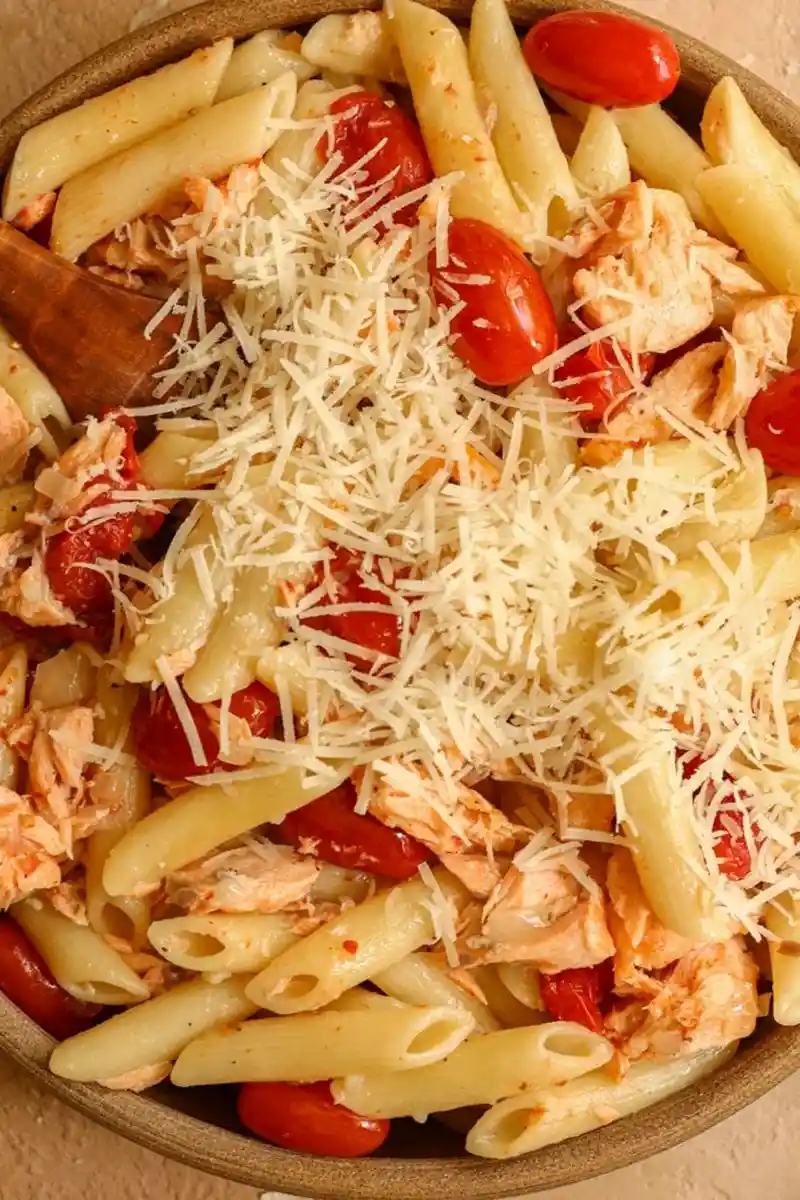
List of ingredients
- 12 ounces dry penne pasta
- 16 ounces frozen salmon filets
- 2 pints cherry tomatoes
- 2 tablespoons extra virgin olive oil
- 6 tablespoons salted butter
- 1/2 cup yellow onion (diced)
- 3 large garlic cloves (minced)
- 2 tablespoons vegetable broth
- 1 teaspoon Dijon mustard
- 1/4 cup reserved pasta water
- 1/4 teaspoon black pepper
- 2 tablespoons lemon juice (freshly squeezed)
- Kosher salt and extra black pepper (to taste)
- Fresh parsley, fresh basil, freshly grated parmesan cheese (optional)
step-by-step instructions
- Step: Preheat your oven to 450°F.
- Step: Bring a large pot of water to a boil and cook the penne pasta according to package instructions. Reserve 1/4 cup of the starchy pasta water before draining the pasta.
- Step: Place the frozen salmon and cherry tomatoes on a large, rimmed baking sheet. Drizzle with 2 tablespoons of extra virgin olive oil and season with kosher salt and black pepper.
- Step: Roast at 450°F for 20-25 minutes. Remove tomatoes if they finish before the salmon. Continue roasting the salmon until it flakes easily with a fork and reaches 145°F.
- Step: While roasting, melt butter in a large skillet over medium heat. Sauté the diced onion and minced garlic for about 3 minutes.
- Step: Add the vegetable broth to the skillet and continue cooking at a strong simmer for 1 minute.
- Step: Add the Dijon mustard, reserved pasta water, and 1/4 teaspoon black pepper. Stir and cook for another minute.
- Step: Stir in the fresh lemon juice and remove the sauce from the heat.
- Step: Flake the cooked salmon into bite-sized pieces and stir it into the butter-garlic sauce to coat.
- Step: Pour the salmon-sauce mixture over the cooked pasta and toss to combine. Fold in the roasted cherry tomatoes.
- Step: Garnish with grated Parmesan cheese, fresh parsley, or basil and serve immediately.
Practical Cooking Tips
Managing Pasta Water Starch Content
The starchy water leftover from boiling your pasta is the secret to a professional-quality sauce. The starch acts as an emulsifier, allowing the butter and lemon juice to merge into a smooth, glossy coating rather than separating into oily pockets. Always remember to dip your measuring cup into the pot before you pour the contents into a colander.
Ensuring Even Cooking for Frozen Salmon
Because salmon thickness can vary, it is important to monitor your fillets closely once you pass the 20-minute mark. If you have particularly thin fillets, they might reach 145°F faster than standard-sized portions. If the salmon is still frozen in the center, leave it in the oven for an additional few minutes while checking the internal temperature with a digital probe thermometer.
Preventing Discoloration of Garlic
Sometimes, fresh garlic can develop an unappealing blue or green hue when exposed to acidic ingredients like lemon juice. To avoid this, always ensure the garlic is fully softened and browned by the sautéing process before introducing any liquid. By waiting until the very final step to stir in the lemon juice, you minimize the chemical reaction that causes this color shift.
Substitutions and Adjustments
Alternative Protein Options
If you prefer a milder fish, white fish such as cod, halibut, or haddock can be substituted for the salmon in this recipe. Adjust your roasting time accordingly, as white fish typically cooks faster than salmon. Ensure the fish is opaque throughout before adding it to the butter sauce.
Boosting Vegetable Content
To add more color and nutrition to your plate, consider wilting two large handfuls of fresh spinach or arugula directly into the pasta along with the sauce. The residual heat from the pasta and the butter sauce will wilt the greens perfectly within sixty seconds. These additions provide a lovely peppery contrast to the rich, buttery sauce.
Serving Ideas
Pairing with Fresh Aromatics
This dish relies heavily on its bright citrus notes, which are elevated significantly by fresh herbs. If you have access to fresh Italian flat-leaf parsley or basil, tear the leaves by hand right before garnishing. This releases the essential oils and provides a much more aromatic experience than using dried herbs.
Choosing the Right Cheese Finish
A high-quality, aged parmesan cheese adds a salty, umami kick that rounds out the lemon acidity. Use a fine microplane to create delicate shreds that melt instantly when they touch the hot pasta. For those looking for a different profile, a sprinkle of toasted pine nuts or crushed red pepper flakes can add a layer of texture and subtle warmth respectively.
Storage and Reheating Guidelines
Managing Leftover Pasta
If you have leftovers, allow the dish to cool to room temperature before transferring it to an airtight container. Refrigerate promptly and consume within two days. Because this sauce is butter-based rather than cream-based, it tends to stay emulsified better than dairy-heavy sauces when stored properly.
Proper Reheating Technique
Avoid using high heat in the microwave, as this can cause the butter to separate and the salmon to become dry. Instead, place the pasta in a skillet with a tiny splash of water or broth. Cover and heat over low flame, stirring occasionally until the dish is warmed through. This gentle approach helps restore the creamy consistency of the sauce without overcooking the fish.
Addressing Common Concerns
How do I know if the tomatoes are overcooked?
Cherry tomatoes are intended to burst slightly during roasting, which creates a natural, flavorful sauce. If they are completely collapsing or becoming mushy, they have been in the oven too long. Remove them from the sheet pan as soon as they show signs of splitting their skins to maintain some texture.
Can I swap the vegetable broth?
If you do not have vegetable broth, you can use a small amount of extra pasta water or even a splash of lemon-infused water. The goal of the liquid is to provide enough volume to coat the pasta evenly without making the dish overly greasy. Adjust the salt content if you use a savory broth base, as some are quite salty.
Why use salted butter?
Salted butter provides a baseline flavor that complements the richness of the salmon. However, since individual brands vary in their salt content, always taste your sauce before adding any additional salt. This prevents the dish from becoming overly seasoned, especially since the pasta water also contributes a degree of salinity to the final meal.
Print
Lemon Garlic Salmon Pasta (without Cream)
- Total Time: PT35M
- Yield: 5 1x
- Diet: Pescatarian
Description
This recipe for salmon pasta is a quick and vibrant dinner featuring flaked salmon, roasted cherry tomatoes, and penne tossed in a bright lemon-garlic butter sauce. It is a perfect weeknight meal that comes together in about 30 minutes without needing any heavy cream.
Ingredients
- 12 ounces dry penne pasta
- 16 ounces frozen salmon filets
- 2 pints cherry tomatoes
- 2 tablespoons extra virgin olive oil
- 6 tablespoons salted butter
- 1/2 cup yellow onion (diced)
- 3 large garlic cloves (minced)
- 2 tablespoons vegetable broth
- 1 teaspoon Dijon mustard
- 1/4 cup reserved pasta water
- 1/4 teaspoon black pepper
- 2 tablespoons lemon juice (freshly squeezed)
- Kosher salt and extra black pepper (to taste)
- Fresh parsley, fresh basil, freshly grated parmesan cheese (optional)
Instructions
- Step: Preheat your oven to 450°F.
- Step: Bring a large pot of water to a boil and cook the penne pasta according to package instructions. Reserve 1/4 cup of the starchy pasta water before draining the pasta.
- Step: Place the frozen salmon and cherry tomatoes on a large, rimmed baking sheet. Drizzle with 2 tablespoons of extra virgin olive oil and season with kosher salt and black pepper.
- Step: Roast at 450°F for 20-25 minutes. Remove tomatoes if they finish before the salmon. Continue roasting the salmon until it flakes easily with a fork and reaches 145°F.
- Step: While roasting, melt butter in a large skillet over medium heat. Sauté the diced onion and minced garlic for about 3 minutes.
- Step: Add the vegetable broth to the skillet and continue cooking at a strong simmer for 1 minute.
- Step: Add the Dijon mustard, reserved pasta water, and 1/4 teaspoon black pepper. Stir and cook for another minute.
- Step: Stir in the fresh lemon juice and remove the sauce from the heat.
- Step: Flake the cooked salmon into bite-sized pieces and stir it into the butter-garlic sauce to coat.
- Step: Pour the salmon-sauce mixture over the cooked pasta and toss to combine. Fold in the roasted cherry tomatoes.
- Step: Garnish with grated Parmesan cheese, fresh parsley, or basil and serve immediately.
Notes
Salt your pasta water to infuse flavor into the noodles. If garlic begins to turn blue during cooking, simply ensure it is fully cooked before adding lemon juice, or wait to add the juice until the final step. Thicker salmon filets may require additional roasting time.
- Prep Time: PT5M
- Cook Time: PT30M
- Category: Dinner
- Method: Roasting
- Cuisine: American
Nutrition
- Serving Size: 1 serving
- Calories: 600 kcal
- Sugar: 7 g
- Sodium: 186 mg
- Fat: 26 g
- Saturated Fat: 11 g
- Unsaturated Fat: 10 g
- Trans Fat: 1 g
- Carbohydrates: 61 g
- Fiber: 4 g
- Protein: 29 g
- Cholesterol: 86 mg