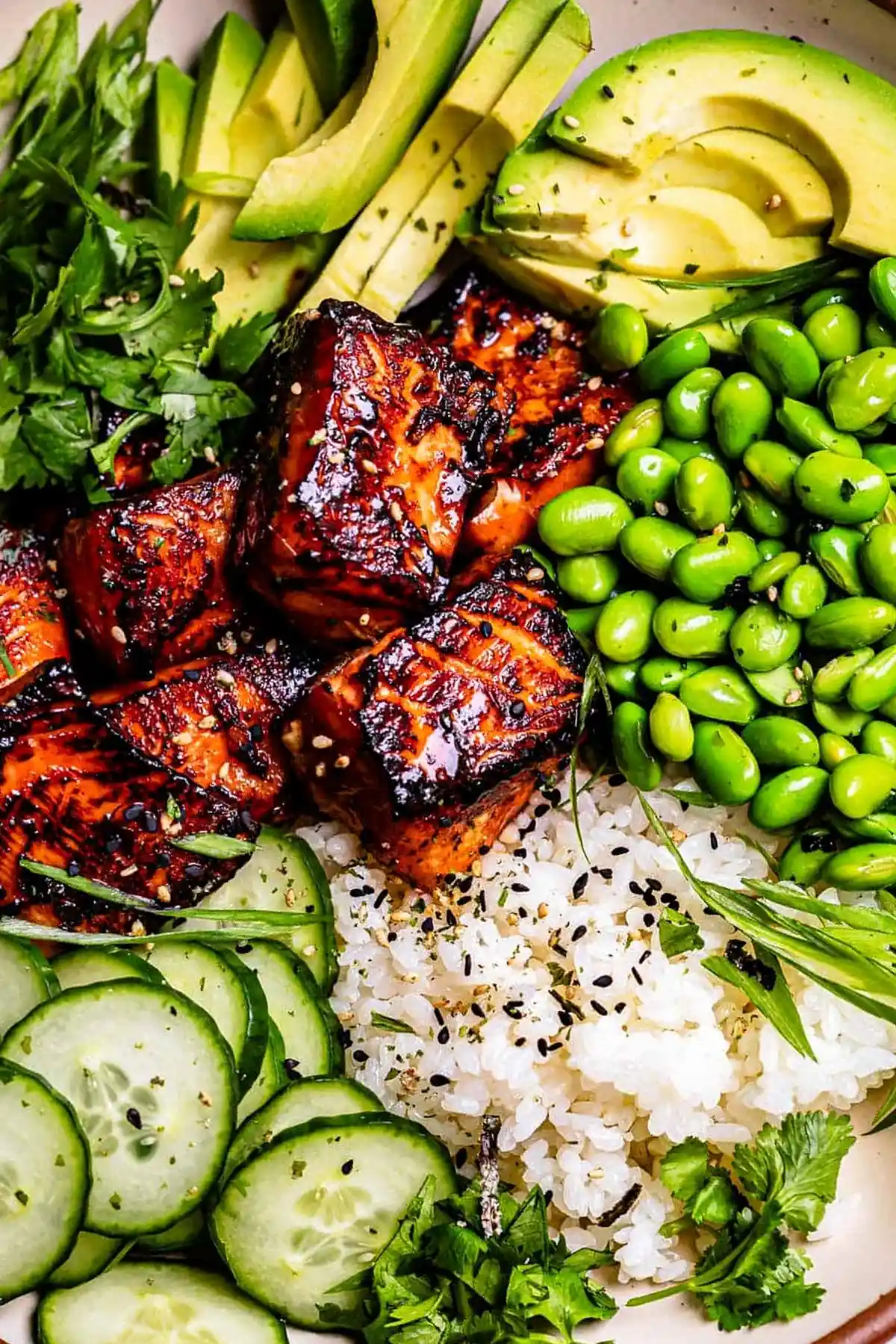
This balanced meal combines sweet and spicy seared salmon with fresh vegetables and seasoned sushi rice. It is an efficient weeknight dinner that provides a professional presentation with minimal effort.
List of ingredients
- 1 tablespoon cornstarch – helps thicken the marinade for a better crust.
- 1 & 1/2 teaspoons baking soda – reacts with heat to create a crispy exterior.
- 1/3 cup soy sauce – provides a savory base.
- 2 teaspoons sriracha (or your favorite hot sauce) – adds a spicy kick.
- 1/4 cup honey – adds sweetness and helps with caramelization.
- 2 tablespoons sesame oil – for the marinade flavor.
- 1 tablespoon garlic (smashed and minced, about 3 cloves) – for aromatic depth.
- 1 tablespoon fresh ginger (minced) – adds a zesty, fresh note.
- 2 pounds salmon filets (about 6 filets) – the primary protein.
- 1 tablespoon sesame oil (for searing or use vegetable oil) – prevents sticking and adds flavor.
- 1 and 1/2 cups sushi rice – the starchy base.
- 1 and 1/2 cups water – for cooking the rice.
- 1 teaspoon kosher salt – enhances the rice flavor.
- 2 tablespoons granulated sugar – for the rice seasoning.
- 1/3 cup rice vinegar – provides acidity to the rice.
- 3/4 cup mayonnaise – base for the spicy sauce.
- 1 tablespoon sriracha (or your favorite hot sauce) – for the spicy mayo.
- 2 teaspoons rice vinegar (or more to taste) – balances the mayo.
- 2 English cucumbers – adds a crisp, fresh element.
- 10 ounces edamame (two 5-ounce frozen packs) – for added protein and color.
- 2 large avocados – adds creaminess to the bowl.
- 1/2 cup green onions (sliced thin) – for a mild onion garnish.
- 1/2 cup cilantro (chopped) – adds a fresh, herbal finish.
- 2 tablespoons black sesame seeds – for visual contrast and nuttiness.
- 2 tablespoons rice seasoning – adds a final layer of umami.
step-by-step instructions
- Marinate the salmon: Combine 1 tablespoon cornstarch, 1 and 1/2 teaspoons baking soda, 1/3 cup soy sauce, 2 teaspoons sriracha, 1/4 cup honey, 2 tablespoons sesame oil, 1 tablespoon minced garlic, and 1 tablespoon minced ginger in a medium bowl. Chop salmon filets into 3-4 pieces each, roughly 3 inches in size. Add salmon to the marinade and let it sit at room temperature; do not refrigerate the fish before searing.
- Cook the sushi rice: Rinse 1 and 1/2 cups sushi rice through a strainer. In a medium pot, combine the rice, 1 and 1/2 cups water, and 1 teaspoon kosher salt. Cover and bring to a boil over high heat, then immediately reduce heat to low and cook covered for 10 minutes. Turn off the heat and let the rice steam with the lid on for another 10-20 minutes.
- Season the rice: Mix 2 tablespoons sugar and 1/3 cup rice vinegar until the sugar is fully dissolved. If sugar remains, microwave the mixture for 10-20 seconds. Fluff the cooked rice with a spatula and fold in the vinegar mixture, keeping the lid on to maintain warmth.
- Prepare sriracha mayo: Stir together 3/4 cup mayonnaise, 1 tablespoon sriracha, and 2 teaspoons rice vinegar in a small bowl. Set aside for later use.
- Prepare toppings: Slice the English cucumbers. Steam the frozen edamame in the microwave according to the package instructions (usually 2-3 minutes). Slice the avocados and chop the green onions and cilantro.
- Sear the salmon: Preheat a large skillet over medium-high heat for 1-2 minutes without oil. Add 1 tablespoon sesame or vegetable oil and swirl to coat. Add salmon pieces without crowding, leaving 2 inches of space between them. Sear for 1-2 minutes until blackened and crispy.
- Finish cooking salmon: Flip the salmon pieces and sear the second side for 30-60 seconds. Reduce heat to medium-low and cook for another 1-3 minutes until the fish is flaky and cooked through. Remove to a plate or wire rack to maintain crispness. Repeat with remaining salmon in batches.
- Assemble the bowls: Fill bowls with seasoned sushi rice and top with seared salmon, sliced cucumbers, edamame, and avocado. Garnish with sliced green onions, chopped cilantro, black sesame seeds, and rice seasoning. Serve immediately.
Professional Searing Techniques
Avoiding Pan Crowding for a Better Crust
Ensure that each piece of salmon has at least two inches of space around it in the skillet. If the pan is too crowded, the fish will release steam rather than searing. This results in a soft texture instead of the desired blackened, crispy exterior.
Managing Heat and Oil Smoke Points
Preheat the pan while dry before adding the oil to ensure a consistent temperature. Using sesame oil adds flavor, but vegetable oil is a great alternative if you prefer a more neutral taste. Medium-high heat is necessary to activate the baking soda and cornstarch for the best reaction.
Determining Salmon Doneness
The salmon is ready when it is opaque throughout and flakes easily with a fork. Overcooking can lead to a dry texture, so rely on a meat thermometer to reach an internal temperature of 145 degrees Fahrenheit. Searing on multiple sides can help ensure the fish is cooked evenly.
Utilizing a Wire Rack for Crispy Bottoms
Place the seared salmon on a wire cooling rack rather than a flat plate immediately after cooking. A plate can trap steam, which softens the crispy bottom of the fish. A rack allows air to circulate, preserving the texture of the crust.
Perfecting the Sushi Rice
The Importance of Rinsing
Rinsing the sushi rice under cold water removes excess surface starch. This prevents the rice from becoming overly gummy or sticky during the cooking process. For the cleanest texture, rinse until the water runs mostly clear.
Proper Steaming Duration
Allowing the rice to steam for 10-20 minutes after the heat is turned off is critical. This final stage ensures that the moisture is evenly distributed through every grain. Removing the lid too early can cause the rice to cook unevenly.
Achieving a Smooth Vinegar Glaze
Ensure the sugar is completely dissolved in the rice vinegar before adding it to the rice. Grainy sugar can leave unpleasant pockets of sweetness in the final dish. Warming the mixture in the microwave is the fastest way to ensure a smooth consistency.
Folding Technique for Even Seasoning
Use a spatula to fold the vinegar mixture into the rice gently. Avoid stirring vigorously, as this can mash the grains and ruin the fluffy texture. Folding ensures the seasoning is distributed without damaging the rice.
Alternative Ingredient Options
Low-Carb Base Substitutes
Replace the sushi rice with riced cauliflower for a lower-calorie, grain-free option. Sauté the cauliflower rice briefly with a pinch of salt and a splash of rice vinegar to mimic the flavor. This keeps the bowl fresh while reducing carbohydrates.
Different Protein Choices
While salmon is the star, this marinade works well with shrimp or firm tofu. Shrimp cooks much faster, so reduce the searing time to about 1-2 minutes per side. Tofu should be pressed dry before marinating to better absorb the flavors.
Swapping the Spicy Element
If sriracha is unavailable, use Tabasco or a pinch of cayenne pepper for heat. Gochujang is another excellent alternative that adds a deeper, fermented flavor. Adjust the quantity based on the potency of the substitute sauce.
Vegetable Topping Variations
If cucumbers are not in season, shredded carrots or thinly sliced red cabbage provide a similar crunch. Sliced radishes or shredded green lettuce can also replace the avocado for a lighter feel. Customize the bowl based on available fresh produce.
Storage and Preservation Guidelines
Separate Component Storage
Store the salmon, rice, and fresh vegetables in separate airtight containers in the refrigerator. Mixing them together before storage will lead to soggy vegetables and mushy rice. This method preserves the integrity of each ingredient for 2-3 days.
Maintaining Avocado Freshness
Keep avocado slices in a separate container with a squeeze of lime or lemon juice to prevent oxidation. Alternatively, slice the avocado fresh right before serving the meal. This ensures the avocado remains bright green and creamy.
Effective Reheating Methods
Reheat the rice and salmon separately in the microwave or by quickly pan-searing the salmon again. Adding a teaspoon of water to the rice before microwaving helps restore its moisture. Always add the fresh toppings and sriracha mayo after reheating.
Freezing Rice and Fish
Cooked sushi rice freezes well in airtight freezer bags for up to three months. Salmon can also be frozen, but the texture may change slightly over time. Thaw both in the refrigerator overnight before reheating for the best quality.
Solving Common Cooking Issues
Fixing Gummy Rice
If the rice turns out too gummy, check your water-to-rice ratio and ensure you are not over-stirring during the steaming phase. Too much water or excessive agitation breaks the grains. Using a high-quality short-grain sushi rice is essential for the correct stickiness.
Preventing Salmon from Sticking
Ensure the pan is sufficiently preheated before adding the oil and the fish. If the salmon sticks, it usually means the pan wasn’t hot enough or the oil hadn’t reached the proper temperature. Avoid moving the fish until a natural sear has formed.
Managing Over-Marinated Fish
Do not marinate the salmon for more than one hour. The acidity in the soy sauce and vinegar can begin to break down the delicate proteins in the fish, leading to a mushy texture. Room temperature marination is faster and more effective for searing.
Adjusting Mayo Consistency
If the sriracha mayo is too thick, add an extra teaspoon of rice vinegar or a drop of water. If it is too thin, simply stir in another tablespoon of mayonnaise. The balance should be creamy with a distinct tang and heat.
Frequently Asked Questions
Where is the best place to buy salmon?
High-quality salmon can be found at reputable grocery store meat departments or specialty seafood markets. Frozen salmon is often a cost-effective and high-quality option if it is vacuum-sealed. Always check for a fresh smell and a firm texture.
What sides pair well with salmon bowls?
Since these bowls are complete meals, additional sides are optional. However, a side of marinated cucumber salad or sautéed zucchini and squash complements the flavors well. A light kale salad with lemon dressing also provides a refreshing contrast.
What is the most common way to cook salmon?
Pan-searing is the most popular method for achieving a contrast between a crispy exterior and a moist center. While baking is easier for large quantities, it does not provide the same blackened crust. High-heat searing is the best choice for these bowls.
How can I reduce the calorie count?
To lower the calories, swap the sushi rice for cauliflower rice and use Greek yogurt instead of mayonnaise for the sauce. Increase the proportion of cucumbers and edamame to fill the bowl. You can also reduce the amount of honey in the marinade.
Print
Honey Sriracha Salmon Rice Bowls
- Total Time: 60 minutes
- Yield: 6 servings 1x
- Diet: General
Description
These Honey Sriracha Salmon Bowls are a vibrant, quick weeknight dinner featuring crispy seared salmon, seasoned sushi rice, spicy sriracha mayo, and fresh toppings like cucumber, edamame, and avocado.
Ingredients
- 1 tablespoon cornstarch
- 1 1/2 teaspoons baking soda
- 1/3 cup soy sauce
- 2 teaspoons sriracha
- 1/4 cup honey
- 2 tablespoons sesame oil
- 1 tablespoon garlic, minced
- 1 tablespoon fresh ginger, minced
- 2 pounds salmon filets, chopped into 3–4 pieces each
- 1 tablespoon sesame oil (for searing)
- 1 1/2 cups sushi rice
- 1 1/2 cups water
- 1 teaspoon kosher salt
- 2 tablespoons granulated sugar
- 1/3 cup rice vinegar
- 3/4 cup mayonnaise
- 1 tablespoon sriracha
- 2 teaspoons rice vinegar
- 2 English cucumbers, sliced
- 10 ounces edamame, steamed
- 2 large avocados, sliced
- 1/2 cup green onions, sliced
- 1/2 cup cilantro, chopped
- 2 tablespoons black sesame seeds
- 2 tablespoons rice seasoning
Instructions
- Marinate: Combine cornstarch, baking soda, soy sauce, sriracha, honey, sesame oil, garlic, and ginger in a bowl, then add salmon pieces and let sit at room temperature.
- Cook Rice: Combine sushi rice, water, and salt in a pot, bring to a boil, simmer on low for 10 minutes, then let steam for 10-20 minutes.
- Season Rice: Dissolve sugar into rice vinegar and fold the mixture into the cooked rice.
- Make Mayo: Stir together mayonnaise, sriracha, and rice vinegar in a small bowl.
- Prep Toppings: Slice cucumbers and avocado, steam edamame, and chop green onions and cilantro.
- Sear Salmon: Heat oil in a skillet over medium-high; sear salmon for 1-2 minutes per side, then reduce heat to medium-low and cook until flaky.
- Assemble: Divide rice into bowls, top with salmon, cucumbers, edamame, avocado, green onion, and cilantro; garnish with black sesame seeds and rice seasoning.
Notes
For extra-saucy bowls, add the leftover marinade to the hot pan after searing the salmon and cook for 1-2 minutes until thickened, then drizzle over the fish.
- Prep Time: 20 minutes
- Cook Time: 40 minutes
- Category: Main Course
- Method: Searing
- Cuisine: Asian
Nutrition
- Serving Size: 1 bowl
- Calories: 700 kcal
- Sugar: 13 g
- Sodium: 1250 mg
- Fat: 37 g
- Saturated Fat: 5 g
- Unsaturated Fat: 27 g
- Trans Fat: 0.03 g
- Carbohydrates: 53 g
- Fiber: 8 g
- Protein: 40 g
- Cholesterol: 89 mg