This salmon salad is a fast and nutritious option for a light lunch or a healthy dinner. It combines protein-rich salmon with a creamy dressing to create a satisfying and flavorful meal.
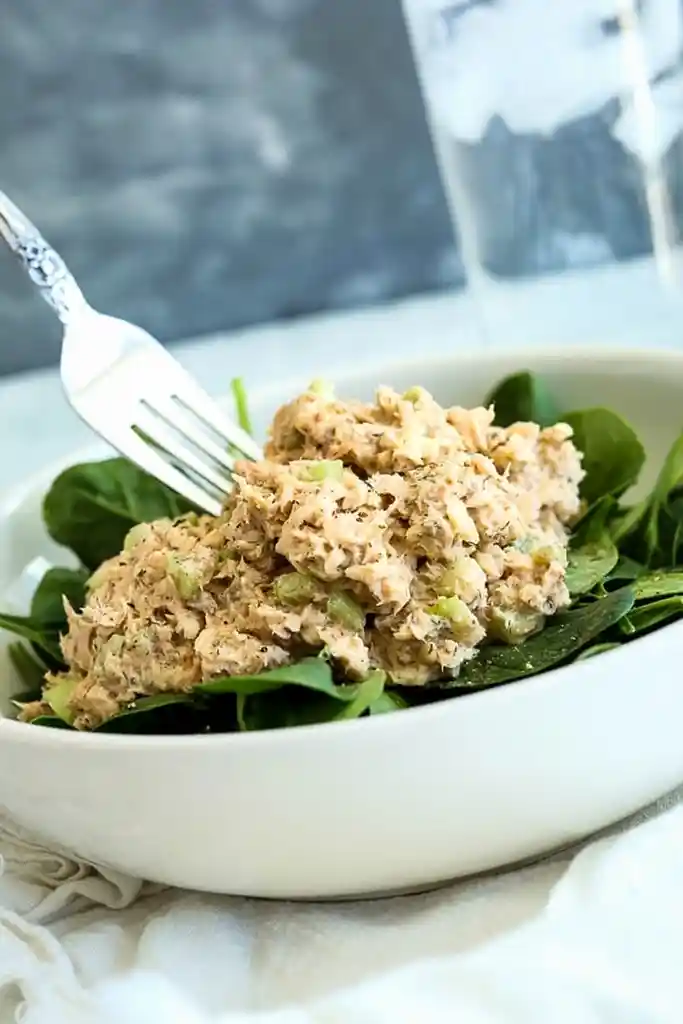
List of ingredients
- 12 ounces cooked salmon – use 2 six-ounce cans or leftover fresh salmon.
- 2 tablespoons nonfat plain Greek yogurt – adds protein and a creamy texture.
- 2 tablespoons mayonnaise – provides richness and smooth consistency.
- 2 tablespoons fresh lemon juice – adds bright acidity and vitamin C.
- 2 large celery stalks – diced small to provide a fresh crunch.
- 1 teaspoon dried dill weed – gives a traditional herbal flavor.
- 1/2 teaspoon salt – enhances the overall taste of the ingredients.
- 1/4 teaspoon black pepper – adds a subtle, mild heat.
- 1/4 teaspoon smoked paprika – introduces a light smoky depth to the salad.
step-by-step instructions
- Combine Ingredients: Place the cooked salmon, Greek yogurt, mayonnaise, diced celery, lemon juice, and all seasonings into a medium-sized mixing bowl.
- Mix Thoroughly: Stir all the ingredients together using a spoon or spatula until the salmon is well-coated and the mixture is evenly combined.
- Serve: Scoop the salmon salad onto slices of bread for a sandwich or place it on a bed of fresh lettuce leaves.
Customizing Your Salmon Salad
Adding Red Onions
Finely diced red onion adds a sharp, pungent bite that cuts through the richness of the mayonnaise. It also introduces a vibrant purple color to the salad. Use about two tablespoons of minced onion for the best balance.
Integrating Spicy Mustard
Adding one to two teaspoons of spicy brown mustard or Dijon mustard creates a tangy flavor profile. This addition complements the smokiness of the paprika and the brightness of the lemon juice. Adjust the amount based on your preference for tanginess.
Using Fresh Herbs
While dried dill is used in the base recipe, fresh parsley, basil, or chives can be added for a more vibrant taste. Chop the herbs finely and fold them in during the final mixing step. Fresh herbs provide a cleaner, more garden-fresh aroma.
Adding Dill Pickles
Chopped dill pickles increase the acidity and provide an extra layer of crunch. This is an excellent choice for those who enjoy a salty, vinegary contrast to the creamy dressing. Ensure the pickles are well-drained before adding them to prevent the salad from becoming watery.
Incorporating Avocado
Adding half of a diced avocado makes the salad exceptionally velvety. Avocado introduces healthy monounsaturated fats and a buttery texture. Fold the avocado in gently at the end to avoid mashing it into a paste.
Mixing in Fresh Tomatoes
Cherry, grape, or sun-dried tomatoes add a juicy burst of flavor. For the freshest taste, halve the cherry tomatoes or dice them into quarters. Sun-dried tomatoes provide a more concentrated, savory flavor and a chewier texture.
Serving Suggestions
Classic Sandwich Styles
Serve the salmon salad between two slices of toasted whole-grain bread for a hearty meal. Adding a leaf of romaine lettuce and a slice of tomato inside the sandwich improves the texture. Toasted bread prevents the bread from becoming soggy from the dressing.
Low-Carb Lettuce Wraps
Use large butter lettuce or romaine leaves as natural wraps for a low-carbohydrate alternative. This method keeps the meal light and highlights the freshness of the salmon. It is an ideal option for those following a ketogenic or paleo diet.
Seeded Cracker Platters
Arrange the salmon salad in a small bowl surrounded by multi-grain or gluten-free crackers. This serves as an excellent appetizer or a light snack for guests. The crunch of the crackers contrasts well with the creamy salmon mixture.
Vegetable-Based Boats
Hollow out a large tomato or a halved avocado to create a natural bowl for the salad. This increases the vegetable intake and provides a visually appealing presentation. It also adds additional flavors from the raw vegetable shell.
Pairing with Fresh Fruit
Serve the salad alongside sliced apples, grapes, or fresh berries. The natural sweetness of the fruit balances the salty and savory notes of the salmon and dill. This creates a complete and balanced meal with a variety of nutrients.
Storage and Freshness
Refrigerator Storage Life
Store the prepared salmon salad in an airtight container in the refrigerator. It will remain fresh and safe to eat for up to three days. After the third day, check the scent and texture before consuming to ensure it has not spoiled.
Air-Tight Container Tips
Use a glass container with a locking lid to prevent the salad from absorbing other odors in the fridge. Glass is non-reactive and helps maintain the brightness of the lemon juice. Ensure the lid is sealed tightly to avoid oxidation of the salmon.
Signs of Spoilage
Discard the salad if you notice a strong, sour ammonia-like smell or a change in color. Sliminess on the surface of the salmon is also a sign that the salad is no longer safe. When in doubt, it is safer to discard the leftovers.
Dietary Adjustments
Removing Mayonnaise
If you prefer to avoid mayonnaise, you can replace it with an equal amount of Greek yogurt for a higher protein content. Mashed avocado or a small amount of mustard are also viable alternatives. Note that removing mayonnaise will result in a slightly tangier and less rich flavor.
Vegan Alternatives
While salmon is the primary ingredient, the dressing can be made vegan by using a plant-based mayonnaise and a dairy-free yogurt alternative. Ensure the plant-based yogurt is unsweetened and plain to avoid altering the savory taste of the salad. This makes the dressing suitable for those avoiding dairy.
Gluten-Free Options
The salmon salad mixture is naturally gluten-free as it contains no wheat-based ingredients. To keep the entire meal gluten-free, serve the salad with gluten-free bread, corn crackers, or fresh vegetable slices. Always check the labels of store-bought mayonnaise for hidden gluten additives.
Preparation Tips
Choosing the Right Salmon
If using canned salmon, choose wild-caught options for a cleaner taste and higher omega-3 content. If using leftover fresh salmon, ensure it was cooked simply with salt and pepper to avoid clashing flavors. Ensure the salmon is completely cooled before mixing it with the dressing.
Draining Canned Salmon
Drain the liquid from the cans thoroughly using a mesh strainer. Excess water can dilute the dressing and make the salad runny. Gently pat the salmon with a paper towel if it remains too moist before adding it to the bowl.
Prepping Celery for Crunch
Dice the celery into very small, uniform pieces to ensure a consistent crunch in every bite. Avoid using the very center of the stalk if it is too stringy. Small dices integrate better with the flaked salmon and creamy sauce.
Balancing Lemon Acidity
Use fresh lemon juice rather than bottled juice for a brighter, more authentic citrus flavor. Squeeze the lemon immediately before adding it to the mix to preserve the volatile oils. If the salad tastes too tart, add a tiny pinch of sugar or more yogurt to mellow it out.
Common Troubleshooting
Fixing a Watery Salad
If the salad appears too liquid, stir in an additional tablespoon of Greek yogurt or a teaspoon of mayonnaise. This will thicken the dressing and help it cling to the salmon. You can also add more finely diced celery to absorb some of the excess moisture.
Adjusting Strong Fishy Tastes
If the salmon has a flavor that is too intense, increase the amount of lemon juice or add a pinch more smoked paprika. The acidity of the lemon helps neutralize the strong oils in the fish. Freshly chopped parsley can also help freshen the overall flavor profile.
Correcting the Texture
To avoid a mushy texture, flake the salmon gently with a fork rather than mashing it. Fold the ingredients together using a lifting motion instead of stirring vigorously. This preserves the chunks of fish and the integrity of the diced celery.
Frequently Asked Questions
How long does salmon salad last?
When stored in a sealed container in the refrigerator, salmon salad lasts for up to 3 days. It is important to keep it chilled at all times to maintain food safety.
What should I serve with salmon salad?
You can serve it as a sandwich on whole-grain bread, as a wrap in lettuce leaves, or with a side of fresh fruit and crackers. It also works well as a filling for hollowed-out tomatoes.
Can I omit the mayo?
Yes, you can replace the mayonnaise with extra Greek yogurt, mashed avocado, or spicy mustard. This will change the flavor and creaminess but remains a delicious alternative.
Is salmon salad gluten-free?
The salad mixture itself is naturally gluten-free. To ensure the entire meal is gluten-free, simply serve it with gluten-free bread or fresh vegetables.
Print
Creamy Salmon Salad
- Total Time: 10 minutes
- Yield: 4 servings 1x
- Diet: Gluten Free
Description
This Salmon Salad is a quick and easy way to get the heart and brain-healthy omega 3 fatty acids into your diet. Flavorful and satisfying for lunch!
Ingredients
- 12 ounces cooked salmon
- 2 tablespoons nonfat plain Greek yogurt
- 2 tablespoons mayonnaise
- 2 tablespoons fresh lemon juice
- 2 large celery stalks, diced
- 1 teaspoon dried dill weed
- 1/2 teaspoon salt
- 1/4 teaspoon black pepper
- 1/4 teaspoon smoked paprika
Instructions
- Step 1: Mix all ingredients together in a medium bowl until well combined.
- Step 2: Serve on bread as a sandwich or on a bed of lettuce.
Notes
Optional variations include adding chopped red onion, 1-2 teaspoons of spicy mustard, fresh herbs (parsley, basil, oregano, chives), chopped dill pickles, avocado, or cherry tomatoes.
- Prep Time: 10 minutes
- Cook Time: 0 minutes
- Category: Recipes
- Method: mixing
- Cuisine: American
Nutrition
- Serving Size: 1/4 of recipe
- Calories: 123 kcal
- Sugar: 3.4 g
- Sodium: 288 mg
- Fat: 6.3 g
- Saturated Fat: 2 g
- Unsaturated Fat: 4.3 g
- Trans Fat: 0 g
- Carbohydrates: 4.7 g
- Fiber: 0.2 g
- Protein: 12.2 g
- Cholesterol: 45 mg