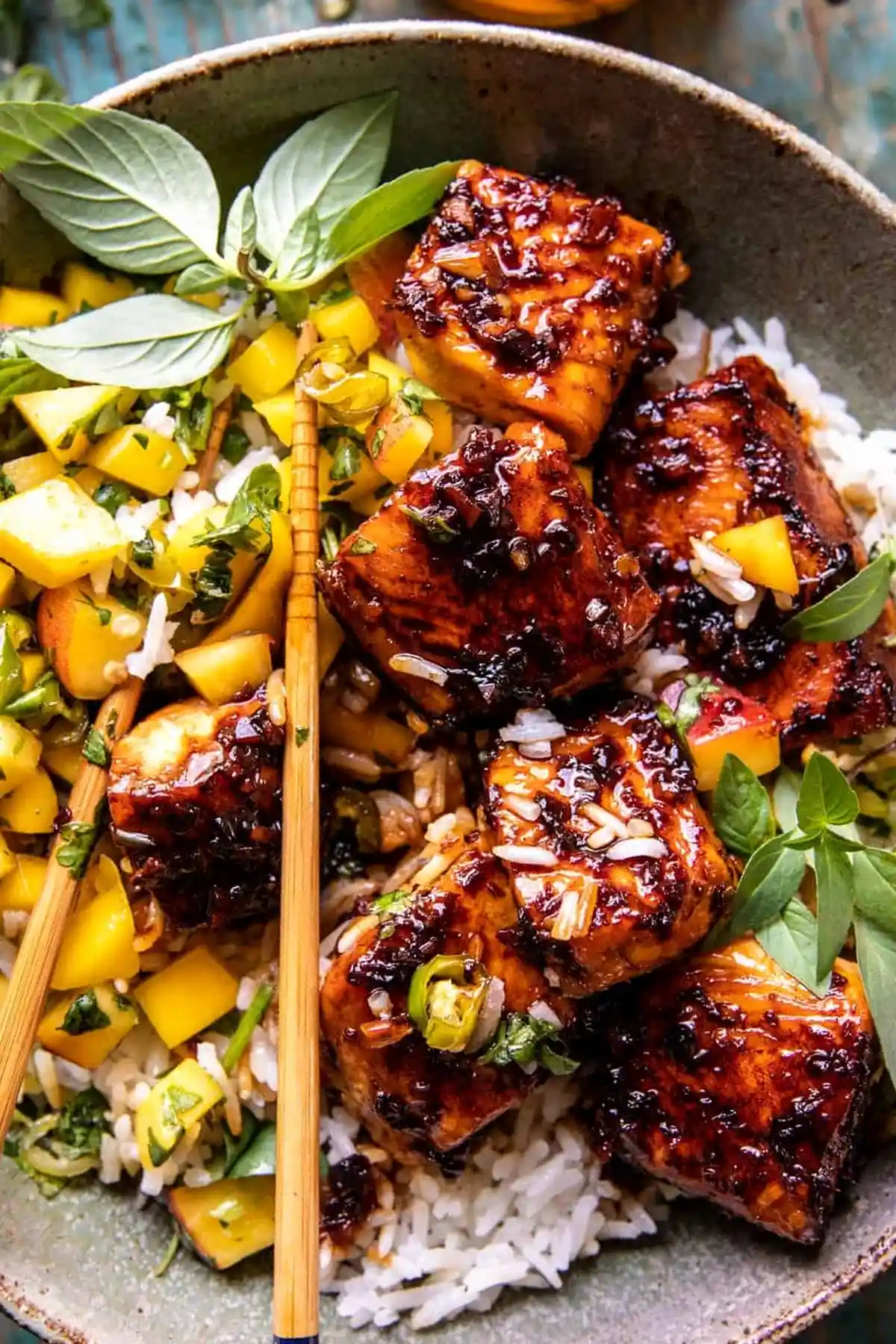
This meal combines pan-seared salmon chunks with a sweet and savory ginger glaze served over fluffy rice. A fresh mango and peach salsa adds a bright, acidic contrast to the rich fish.
List of ingredients
- 1/4 cup tamari or soy sauce – provides the salty base for the glaze.
- 2 teaspoons fish sauce – adds deep umami and complexity.
- 3 tablespoons honey – creates the sticky texture and sweetness.
- 1 tablespoon fresh grated ginger – provides a pungent, zesty flavor.
- 2 tablespoons chili paste (sambal oelek) – adds a spicy kick to the sauce.
- 4 (4-6 ounce) salmon filets, cut into chunks – the primary protein source.
- 4 tablespoons salted butter – used for searing to achieve a crispy crust.
- 6 cloves garlic, chopped – adds aromatic depth during the cooking process.
- 3-4 cups cooked rice – serves as the hearty base for the bowl.
- 1 cup diced mango – adds tropical sweetness to the salsa.
- 1 ripe peach, diced – adds a soft, sweet floral note to the salsa.
- 1/4 cup candied jalapeños – provides a balance of sweetness and heat.
- 1/4 cup cilantro, chopped – adds a fresh, herbaceous finish.
- 1/4 cup basil, chopped – complements the sweetness of the mango.
- 2 tablespoons lime juice – provides the necessary acidity to brighten the salsa.
step-by-step instructions
- Prepare the Glaze: In a small mixing bowl, whisk together the tamari, fish sauce, honey, ginger, and chili paste until the honey is fully dissolved.
- Sear the Salmon: Melt the salted butter in a large skillet over medium-high heat. Place salmon chunks skin side down and cook for 3 minutes until the skin is crisp. Flip the chunks, reduce the heat to medium, add the chopped garlic, and cook for another minute.
- Glaze the Fish: Pour the prepared sauce into the skillet. Cook for approximately 3 minutes, stirring occasionally, until the sauce thickens and glazes the salmon. Remove the salmon from the skillet and set aside.
- Reduce the Pan Sauce: Add 1/4 cup of water to the skillet. Use a spatula to scrape up the browned bits from the bottom and simmer until the sauce is smooth and thickened.
- Mix the Salsa: In a separate bowl, combine the diced mango, peach, candied jalapeños, chopped cilantro, chopped basil, and lime juice. Season with salt to taste.
- Assemble the Bowls: Portion the cooked rice into four bowls. Place the glazed salmon chunks on top of the rice and drizzle with the remaining pan sauce. Top each bowl with a generous portion of the fruit salsa.
Salmon Preparation Techniques
Remove Surface Moisture for Better Searing
Use a clean kitchen towel or paper towels to pat the salmon filets completely dry before cutting. Removing surface moisture prevents the fish from steaming in the pan, which is essential for achieving a golden-brown, crispy crust.
Cut Salmon into Uniform Chunks
Slice the filets into equal-sized cubes, roughly one to two inches in diameter. Uniform pieces ensure that every piece of fish cooks at the same rate, preventing smaller pieces from overcooking while larger ones remain raw.
Allow Salmon to Reach Room Temperature
Take the salmon out of the refrigerator about 15 to 20 minutes before cooking. Bringing the fish closer to room temperature helps it cook more evenly and prevents the outside from burning before the center is done.
Avoid Overcrowding the Skillet
Ensure there is enough space between the salmon chunks in the pan. If the skillet is too full, the temperature will drop rapidly, and the butter will not brown properly, leading to a soggy rather than crispy texture.
Rice Preparation and Variations
Prepare Creamy Coconut Rice
Simmer one 14-ounce can of coconut milk and 1/2 cup of water in a pot until boiling. Stir in 1 cup of jasmine rice and a pinch of salt, cover, and cook on the lowest heat for 10 minutes. Turn off the heat and let it sit covered for 20 minutes before fluffing.
Substitute with Brown Rice for More Fiber
Brown rice provides a nuttier flavor and more nutrients compared to white rice. Because brown rice takes longer to cook, prepare it in advance or use a rice cooker to ensure it is tender before assembling the bowls.
Use Quinoa as a Gluten-Free Base
Quinoa is a high-protein alternative that pairs well with the sweet and spicy glaze. Rinse the quinoa thoroughly before boiling to remove the natural saponins, which can leave a bitter taste in the finished bowl.
Steam Jasmine Rice for a Neutral Base
Jasmine rice offers a fragrant, slightly sticky texture that absorbs the pan sauce effectively. Use a 1:1.5 ratio of rice to water and allow the rice to steam undisturbed for the best consistency.
Salsa Customization and Tips
Select Ripe Tropical Fruits
Ensure the mango and peach are ripe but still firm to the touch. Overripe fruit will become mushy when diced and mixed, while underripe fruit will lack the sweetness needed to balance the spicy jalapeños.
Create Homemade Candied Jalapeños
Bring 1/3 cup of honey to a gentle boil and simmer for 5 minutes. Pour the hot honey over sliced jalapeños in a jar, adding 2 tablespoons of apple cider vinegar and a pinch of salt for a sweet-heat condiment.
Balance Acidity with Fresh Lime
Freshly squeezed lime juice is superior to bottled juice for this salsa. The acidity cuts through the richness of the salmon and butter, brightening the flavors of the mango and peach.
Adjust Heat with Chili Peppers
If candied jalapeños are unavailable, use fresh diced jalapeños and a teaspoon of honey. For those who prefer less heat, remove the seeds and membranes from the peppers before adding them to the mix.
Sauce Modifications and Substitutions
Use Tamari for a Gluten-Free Option
Tamari is a Japanese soy sauce that is typically brewed without wheat, making it a safe alternative for those avoiding gluten. It has a richer, slightly sweeter flavor profile than standard soy sauce.
Substitute Honey with Maple Syrup
Pure maple syrup can replace honey to provide a different kind of sweetness. While honey creates a thicker glaze, maple syrup offers a distinct woody flavor that pairs well with the ginger.
Adjust Garlic for Milder Flavor
If six cloves of garlic are too intense, reduce the amount to three or four. Sautéing the garlic for only one minute prevents it from burning, which would otherwise introduce a bitter taste to the glaze.
Swap Fish Sauce with Coconut Aminos
For a version without fish sauce, use coconut aminos or an extra splash of soy sauce. While you will lose some of the fermented depth, the glaze will remain salty and savory.
Professional Searing Secrets
The Role of Salted Butter
Butter contains milk solids that brown when heated, adding a nutty flavor known as beurre noisette. This browning process enhances the caramelization of the salmon skin and the honey in the glaze.
Manage Pan Temperature Carefully
Keep the skillet at medium-high heat during the initial sear to lock in juices. Reducing the heat to medium when adding garlic and sauce prevents the sugars in the honey from burning and becoming bitter.
Identify the Perfect Doneness
Salmon is cooked through when the internal temperature reaches 145 degrees Fahrenheit. The fish should flake easily with a fork but remain moist and translucent in the center for the best texture.
Storage and Food Safety
Refrigerate Salmon and Rice Separately
Store the cooked salmon and the rice in separate airtight containers in the refrigerator. This prevents the rice from absorbing too much moisture from the salmon, which can lead to a mushy consistency.
Keep Salsa Chilled and Fresh
Store the fruit salsa in a glass jar for up to two days. Because of the lime juice and salt, it stays fresh, but the fruit may release more liquid over time, so stir it before serving.
Avoid Freezing the Salsa
Do not freeze the mango and peach salsa, as the cell walls of the fresh fruit will break down during the freezing process. This results in a watery, unappealing texture once thawed.
Reheating Instructions
Use an Oven for Crispy Texture
Place the salmon on a baking sheet and heat at 350 degrees Fahrenheit for 5-7 minutes. This method helps maintain the crispness of the edges better than a microwave.
Microwave Salmon Gently
Heat the rice and salmon on a medium power setting to avoid overcooking the fish. Add a teaspoon of water to the rice and cover the dish to create steam, which keeps the grains moist.
Reheat Sauce Separately
If the glaze has thickened too much in the fridge, heat it in a small saucepan with a splash of water. Stir over low heat until it returns to a pourable consistency before drizzling it over the reheated fish.
Serving Suggestions
Add Fresh Leafy Greens
Serve the salmon and rice on a bed of baby spinach or shredded kale. The heat from the rice slightly wilts the greens, adding a nutritional element and a color contrast to the bowl.
Garnish with Toasted Sesame Seeds
Sprinkle toasted white and black sesame seeds over the final dish. This adds a subtle crunch and a professional visual finish that complements the Asian-inspired flavors.
Pair with Steamed Broccoli
Serve the bowls alongside steamed broccoli or snap peas. These vegetables provide a clean, crisp taste that balances the richness of the honey-butter glaze.
Troubleshooting Common Issues
Fixing a Sauce That Is Too Thin
If the glaze does not thicken during the cooking process, simmer it for an additional two minutes without the fish. The sugars in the honey will eventually reduce and create a syrupy consistency.
Preventing Salmon from Sticking
Ensure the butter is shimmering and hot before adding the fish. Avoid moving the salmon chunks too early; they will naturally release from the pan once a proper crust has formed.
Managing Watery Fruit Salsa
If the salsa releases too much liquid, use a slotted spoon to serve it over the rice. This allows you to get the fruit chunks without adding excess liquid to the base of the bowl.
Frequently Asked Questions
Can I use frozen salmon for this recipe?
Yes, but you must thaw the salmon completely in the refrigerator overnight. Pat it dry thoroughly with paper towels, as frozen fish often holds more moisture than fresh fish.
How long can I store the candied jalapeños?
Candied jalapeños can be kept in a sealed glass jar in the refrigerator for up to two weeks. Ensure the honey and vinegar completely cover the peppers to maintain freshness.
Can I make this dish dairy-free?
Replace the salted butter with a high-smoke point oil like avocado oil or a plant-based butter alternative. The searing process will still work, though the nutty flavor of browned butter will be absent.
Print
Honey Ginger Glazed Salmon Bowls with Fruit Salsa
- Total Time: 30 minutes
- Yield: 4 servings 1x
- Diet: General
Description
Served with a fresh mango salsa with candied jalapeños for a balance of spicy, sweet, and savory…and made in 30 mins!
Ingredients
- 1/4 cup tamari or soy sauce
- 2 teaspoons fish sauce
- 3 tablespoons honey
- 1 tablespoon fresh grated ginger
- 2 tablespoons chili paste (sambal oelek)
- 4 (4-6 ounce) salmon filets, cut into chunks
- 4 tablespoons salted butter
- 6 cloves garlic, chopped
- 3–4 cups cooked rice
- 1 cup diced mango
- 1 ripe peach, diced
- 1/4 cup candied jalapeños
- 1/4 cup cilantro, chopped
- 1/4 cup basil, chopped
- 2 tablespoons lime juice
Instructions
- Step 1: In a bowl, combine the tamari, fish sauce, honey, ginger, and chili paste.
- Step 2: Melt the butter in a large skillet over medium-high heat. Add the salmon, skin side down and cook for 3 minutes, until the salmon is crisp. Flip, reduce the heat to medium and add the garlic. Cook another minute.
- Step 3: Pour in the sauce. Cook another 3 minute, until the sauce thickens. Remove the salmon from the skillet.
- Step 4: To the skillet add 1/4 cup water. Scrape up any sauce in the pan and simmer until the sauce comes back together.
- Step 5: Meanwhile, make the salsa. Combine all ingredients in a bowl. Season with salt.
- Step 6: Spoon the salmon over the bowls of rice. Pour the sauce over the salmon. Top with the salsa and enjoy!
Notes
Coconut Rice: Combine 1 (14 ounce) can coconut milk and 1/2 cup water in a medium pot. Bring to a low boil. Add 1 cup jasmine rice and a pinch of salt. Stir, cover, cook on lowest setting for 10 minutes, then let sit covered for 15-20 minutes. Candied Jalapeños: Bring 1/3 cup honey to a gentle boil, simmer 3-5 minutes. Pour over 2-3 sliced jalapeños in a glass jar with 2 tablespoons apple cider vinegar and a pinch of salt.
- Prep Time: 20 minutes
- Cook Time: 10 minutes
- Category: Main Course
- Method: Stove-top
- Cuisine: American
Nutrition
- Serving Size: 1 serving
- Calories: 499 kcal
- Sugar: 18 g
- Sodium: 980 mg
- Fat: 22 g
- Saturated Fat: 11 g
- Unsaturated Fat: 11 g
- Trans Fat: 0 g
- Carbohydrates: 45 g
- Fiber: 5 g
- Protein: 28 g
- Cholesterol: 95 mg