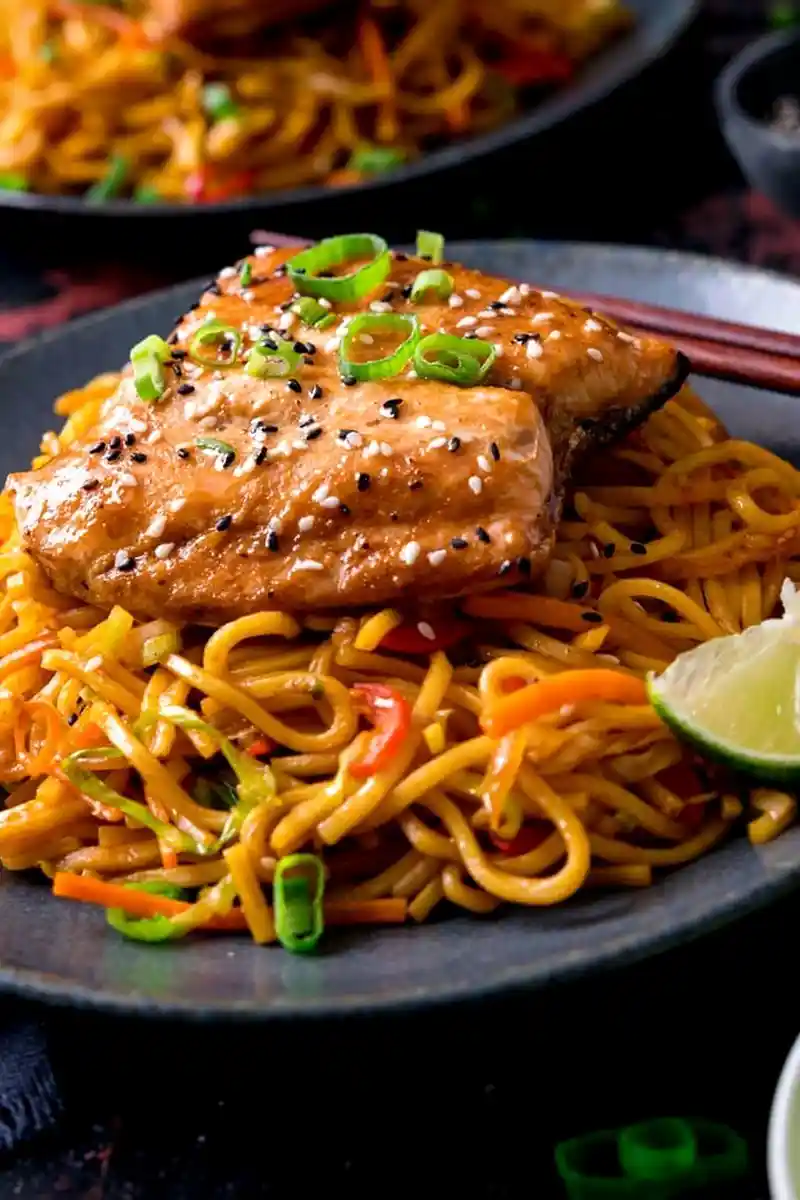
This recipe combines tender, caramelized salmon fillets with a vibrant bed of sweet and spicy noodles. It is a fast, nutrient-dense meal that balances savory soy notes with a bright citrus finish.
List of ingredients
- 4 tail-end salmon fillets – wider, flatter cuts are ideal for glazing.
- 1 tbsp olive oil – used for the initial salmon sear.
- 1/4 tsp garlic salt – provides a savory base.
- 1 tbsp light soy sauce – adds saltiness to the glaze.
- 1 tbsp dark soy sauce – adds deep color and rich flavor to the glaze.
- 1 tbsp sesame oil – adds a nutty aroma to the glaze.
- Pinch of black pepper – for a subtle spicy kick.
- 3 tbsp light brown sugar – creates the sticky caramelization.
- 1 tbsp sesame oil – for frying the noodles.
- 1 tbsp neutral oil – avocado oil is recommended for high-heat frying.
- 1 onion – finely sliced.
- 1 red bell pepper – finely sliced.
- 1 medium carrot – peeled and sliced into fine strips.
- 1/4 green cabbage – sliced into thin strips.
- 2 chillies – sliced (use red and green Fresno variety for flavor and color).
- 3 cloves garlic – minced.
- 800 g (1.75 lbs) cooked/fresh medium egg noodles – or 400g dried noodles, cooked.
- 1 tbsp light soy sauce – for the noodle seasoning.
- 1 tbsp dark soy sauce – for the noodle seasoning.
- 1 tbsp chilli sauce – sriracha is a great choice.
- 2 tbsp tomato ketchup – adds sweetness and thickness.
- Zest and juice of half a lime – provides acidity and freshness.
- 1/4 tsp white pepper – for a mild, earthy heat.
- 4 spring onions/scallions – chopped.
- 1 lime – cut into wedges for serving.
- 2 spring onions/scallions – chopped finely for garnish.
- 1 tsp sesame seeds – a mixture of black and white seeds looks best.
step-by-step instructions
- Prep the Salmon: Preheat your grill (broiler) to high. Place the salmon fillets on a foil-lined grill tray with the skin-side facing up.
- Initial Sear: Place the salmon under the grill for 2 minutes to cook the skin.
- Make the Glaze: While the fish sears, whisk together olive oil, garlic salt, light soy sauce, dark soy sauce, sesame oil, black pepper, and light brown sugar in a small bowl.
- Glaze and Finish: Flip the salmon fillets over. Drizzle the prepared glaze over the flesh side, allowing any extra sauce to pool on the tray. Grill for another 4-6 minutes, basting once or twice, until the fish is just cooked through.
- Rest the Fish: Remove the tray from the heat and cover the fillets loosely with foil to keep them moist.
- Fry the Aromatics: Heat 1 tbsp sesame oil and 1 tbsp neutral oil in a wok or large frying pan over high heat. Add sliced onion, bell pepper, and carrot, frying for 2 minutes while stirring regularly.
- Add Quick-Cooking Veggies: Stir in the sliced cabbage, sliced chillies, and minced garlic. Fry for one additional minute.
- Incorporate Noodles: Add the egg noodles to the pan and toss everything together for 2 minutes using tongs.
- Season the Noodles: Stir in light soy sauce, dark soy sauce, chilli sauce, tomato ketchup, lime zest, lime juice, white pepper, and chopped spring onions.
- Final Toss: Continue to fry and toss for 2-3 minutes until the noodles are thoroughly heated.
- Assemble: Divide the noodles between four plates. Top each portion with a glazed salmon fillet.
- Garnish: Drizzle any remaining glaze from the tray over the fish. Serve with lime wedges, finely chopped spring onions, and sesame seeds.
Salmon Selection and Preparation
Choosing Tail-End Fillets
Selecting the tail-end of the salmon is beneficial because these pieces are wider and flatter. This increased surface area allows more glaze to adhere to the fish, ensuring every bite is flavorful. It also makes the fillet sit more securely on a bed of noodles for better presentation.
Maintaining Moisture with Skin
Keeping the skin on during the grilling process acts as a protective barrier. This helps the fish retain its internal moisture and prevents it from drying out under the high heat of the broiler. If you prefer not to eat the skin, it can be easily peeled away after the fish has rested.
Using Alternative Fish Types
If salmon is unavailable, rainbow trout is an excellent substitute as it shares a similar fat content. Sea bass or white fish like cod and pollack also work well. Note that thinner fillets like trout or sea bass require 1-2 minutes less cooking time to avoid overcooking.
Mastering the Noodle Base
Handling Fresh vs. Dried Noodles
Fresh egg noodles provide a softer texture and quicker cook time. If using dried noodles, boil them according to the package instructions until just tender. Ensure they are not overcooked during the boiling stage, as they will cook further in the wok.
Preventing Noodle Clumping
To stop noodles from sticking together, rinse them under cold running water immediately after draining. This removes excess surface starch and cools them down. Keep the cooled noodles in a strainer until you are ready to toss them into the stir-fry.
Adjusting the Spice Profile
The heat level of the noodles depends on the variety of chillies and the amount of sriracha used. For a milder version, remove the seeds from the fresh chillies or reduce the sriracha to one teaspoon. For more heat, add a pinch of dried red pepper flakes during the vegetable fry.
Optimizing Vegetable Textures
Consistent Slicing for Even Cooking
Slicing onions, carrots, and peppers into thin, uniform strips ensures they all cook at the same rate. Using a julienne peeler for the carrots helps them soften quickly without losing their snap. Consistency prevents some vegetables from burning while others remain raw.
The Importance of High Heat
Stir-frying requires a very hot pan to sear the vegetables quickly. If the heat is too low, the vegetables will release moisture and steam rather than brown. This results in a soggy texture instead of the desired crisp-tender finish.
Adding Extra Vegetables
You can easily customize the nutrient profile by adding more greens to the mix. Sugar snap peas, sliced mushrooms, or baby corn pair well with these flavors. Add these during the first frying stage with the onions and peppers.
Perfecting the Glaze and Flavor
Balancing Sweet and Salty Notes
The combination of light soy sauce and brown sugar creates a classic sweet-savory balance. The light soy provides the primary salt content, while the brown sugar caramelizes under the broiler. This creates a sticky coating that clings to the salmon.
The Role of Dark Soy Sauce
Dark soy sauce is used primarily for its aesthetic and deep, molasses-like flavor. It is less salty than light soy but provides the rich, mahogany color typical of professional Asian glazes. Without it, the dish will taste the same but look much paler.
Adding Brightness with Lime
The zest and juice of a lime cut through the richness of the salmon and the sweetness of the glaze. Adding the citrus at the end of the noodle cooking process preserves the volatile oils in the zest. This ensures the final dish has a fresh, zesty aroma.
Cooking Techniques for Best Results
The Broiler Method for Salmon
Using the broiler (grill) on high allows for rapid caramelization of the sugars in the glaze. This creates a charred, sticky exterior while keeping the inside of the fish tender. Always use a foil-lined tray for easy cleanup and to prevent the glaze from sticking to the pan.
Basting for a Thick Coating
Basting the salmon once or twice during the final minutes of grilling helps build up layers of glaze. This process ensures the sauce doesn’t just pool on the bottom but wraps around the fillet. It results in a more intense flavor concentration on the surface.
Wok vs. Frying Pan
A wok is ideal for this recipe because its sloped sides allow for easy tossing of the noodles. The shape concentrates heat at the bottom, facilitating a true stir-fry. If using a flat frying pan, ensure it is large enough to prevent overcrowding, which can lead to steaming.
Serving and Presentation
Plating for Visual Appeal
For the best presentation, divide the noodles into shallow bowls first. Carefully place the salmon fillet on top of the noodles to keep the fish prominent. This prevents the salmon from sinking into the noodles and keeps the glaze visible.
Using Strategic Garnishes
Garnishes are not just for looks; they add texture and flavor. Toasted sesame seeds provide a slight crunch and nutty flavor. Freshly chopped spring onions add a sharp, raw contrast to the cooked components of the dish.
Recommended Side Pairings
While this is a complete meal, you can serve it with steamed bok choy or edamame for extra greens. A side of pickled ginger or a simple cucumber salad with rice vinegar also complements the sweetness of the glazed salmon.
Storage and Reheating Guidelines
Optimal Refrigeration Methods
Store the salmon and noodles in separate airtight containers to maintain their respective textures. The noodles can stay fresh in the refrigerator for up to 48 hours. The salmon should be consumed within 24 to 48 hours for the best quality.
Best Reheating Methods
To reheat the noodles, use a skillet over medium heat with a splash of water to loosen them. For the salmon, avoid the microwave as it can make the fish rubbery. Instead, warm the salmon in a low-temperature oven (around 300F) for a few minutes until just heated through.
Serving as a Cold Salad
This dish works exceptionally well as a cold lunch. Simply cook the components, allow them to cool completely, and toss them together. The lime and soy flavors remain vibrant even when served chilled, making it a refreshing meal prep option.
Advanced Make-Ahead Strategies
Prepping Vegetables in Advance
You can slice the onion, peppers, carrots, and cabbage up to 24 hours in advance. Store them in a single container or separate bags in the refrigerator. This reduces the active prep time during the evening cooking process.
Preparing the Glaze Ahead
The soy and brown sugar glaze can be mixed and stored in a glass jar for several days. Keeping it in the fridge ensures the flavors meld together before application. Bring the glaze to room temperature before drizzling it on the salmon.
Parboiling Noodles
If using dried noodles, you can boil and rinse them the day before. Store them in a container with a tiny drizzle of oil to keep them from sticking. When ready to serve, they only need a few minutes in the wok to heat through.
Troubleshooting Common Issues
What to do if the Glaze Burns
Because of the high sugar content in brown sugar, the glaze can burn if the broiler is too close. If you notice the sauce darkening too quickly, move the tray to a lower rack. You can also add a teaspoon of water to the glaze to slightly thin it.
Fixing Mushy Noodles
Mushy noodles usually occur from overboiling or overcrowding the pan. To avoid this, cook dried noodles one minute less than the package suggests. If the noodles are already soft, stir-fry them on the highest possible heat to evaporate excess moisture quickly.
Handling Salmon that Sticks
If the salmon sticks to the foil or pan, ensure the oil is hot before placing the fish down. Do not attempt to flip the fish too early. Once a proper sear has formed, the salmon will naturally release from the surface.
Frequently Asked Questions
Can I use a different type of sugar?
Honey or maple syrup can be used as a substitute for brown sugar. Honey will create a stickier, glossier glaze, while maple syrup adds a distinct woody sweetness. Use the same quantity as the brown sugar.
What is the best substitute for sriracha?
If you don’t have sriracha, you can use any hot chili sauce or a mixture of sambal oelek and a pinch of sugar. For a non-spicy version, replace the chili sauce with extra ketchup or a mild hoisin sauce.
How do I know when the salmon is perfectly cooked?
The salmon is done when the flesh changes from translucent to an opaque pink. When pressed gently with a fork, the fish should flake easily along its natural lines. Avoid overcooking, as salmon continues to cook for a few minutes after being removed from the heat.
Can I make this recipe gluten-free?
Yes, you can make this gluten-free by substituting the light and dark soy sauces with tamari or coconut aminos. Additionally, ensure the egg noodles are replaced with rice noodles or gluten-free noodles.
Do I have to peel the carrots?
Peeling the carrots is recommended for a smoother texture and a cleaner look. However, if you are using organic young carrots, you can simply scrub them clean and leave the skin on for added nutrients.
Print
Glazed Asian Salmon with Chili Lime Noodles
- Total Time: 25 minutes
- Yield: 4 servings 1x
- Diet: General
Description
Soft, fall-apart salmon with a soy sauce and brown sugar glaze, nestled on a bed of Asian-style sweet and spicy noodles.
Ingredients
- 4 tail-end salmon fillets
- 1 tbsp olive oil
- ¼ tsp garlic salt
- 1 tbsp light soy sauce
- 1 tbsp dark soy sauce
- 1 tbsp sesame oil
- pinch black pepper
- 3 tbsp light brown sugar
- 1 tbsp sesame oil
- 1 tbsp neutral oil
- 1 onion, finely sliced
- 1 red bell pepper, finely sliced
- 1 medium carrot, peeled and sliced into fine strips
- ¼ green cabbage, sliced into thin strips
- 2 chillies, sliced
- 3 cloves minced garlic
- 800 g cooked/fresh medium egg noodles
- 1 tbsp light soy sauce
- 1 tbsp dark soy sauce
- 1 tbsp chilli sauce
- 2 tbsp tomato ketchup
- zest and juice of half a lime
- ¼ tsp white pepper
- 4 spring onions, chopped
- 1 lime, cut into wedges
- 2 spring onions, chopped finely
- 1 tsp sesame seeds
Instructions
- Grill Salmon: Preheat the grill (broiler) to high. Place the salmon fillets, skin-side up on a grill tray lined with foil and grill for 2 minutes.
- Glaze Salmon: Mix together olive oil, garlic salt, light soy sauce, dark soy sauce, sesame oil, black pepper, and light brown sugar. Turn the salmon over, drizzle the glaze over the fillets, and grill for a further 4-6 minutes, basting once or twice until just cooked. Remove from grill and cover with foil to rest.
- Fry Vegetables: Heat 1 tbsp sesame oil and 1 tbsp neutral oil in a wok or large frying pan over a high heat. Add sliced onion, bell pepper, and carrot; fry for 2 minutes. Add sliced cabbage, chillies, and minced garlic; stir fry for one minute.
- Cook Noodles: Add the noodles to the pan and toss everything together for 2 minutes.
- Season Noodles: Add light soy sauce, dark soy sauce, chilli sauce, tomato ketchup, lime zest and juice, white pepper, and chopped spring onions. Toss together, heating for a further 2-3 minutes until hot throughout.
- Serve: Divide the noodles between 4 plates and top each with a piece of salmon. Drizzle over any remaining sauce from the tray and garnish with lime wedges, finely chopped spring onions, and sesame seeds.
Notes
If using dried noodles, cook per pack instructions, drain, and run under cold water to prevent sticking. Trout, sea bass, cod, or pollack can be used as substitutes; adjust cooking time for thinner fillets. This dish can be refrigerated and eaten cold for lunch.
- Prep Time: 10 minutes
- Cook Time: 15 minutes
- Category: Dinner
- Method: Grilling and Stir-frying
- Cuisine: Asian
Nutrition
- Serving Size: 1 serving
- Calories: 775 kcal
- Sugar: 21 g
- Sodium: 1378 mg
- Fat: 30 g
- Saturated Fat: 4 g
- Unsaturated Fat: 25 g
- Trans Fat: 1 g
- Carbohydrates: 81 g
- Fiber: 7 g
- Protein: 48 g
- Cholesterol: 152 mg