Garlic Parmesan chicken thighs offer a perfect balance of crispy, golden skin and tender, succulent meat infused with a savory, aromatic sauce. This straightforward oven-baked meal is an ideal choice for busy evenings when you need reliable results that appeal to the whole family. By searing the meat first and finishing it with a buttery cheese sauce, you achieve a professional-quality dinner with minimal effort in your own kitchen.
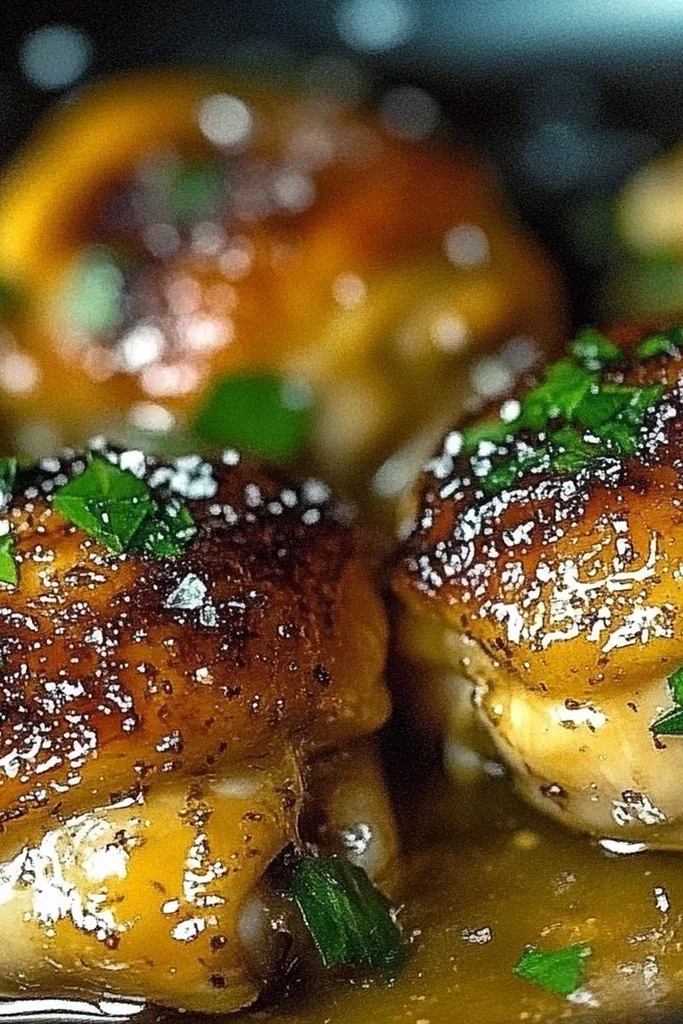
List of ingredients
- 4 pieces bone-in, skin-on chicken thighs
- 1 teaspoon kosher salt
- 1 teaspoon freshly ground black pepper
- 4 tablespoons unsalted butter, divided
- 2 tablespoons olive oil
- 6 cloves garlic, minced
- 1/2 cup freshly grated Parmesan cheese
- 1 teaspoon Italian seasoning
- 1/2 teaspoon paprika
- 1/4 teaspoon red pepper flakes (optional)
- 1/4 cup fresh parsley, chopped (for garnish)
step-by-step instructions
- Preparation: Preheat your oven to 400°F (200°C). Position a rack in the middle. Pat the chicken thighs dry with paper towels. Season both sides generously with salt and pepper. Heat an oven-safe skillet over medium-high heat. Add 2 tablespoons of butter and 2 tablespoons of olive oil. When the fat is shimmering, place the thighs skin-side down in the skillet. Sear for 6 to 8 minutes until the skin turns golden brown. Flip the thighs and cook for an additional 1 to 2 minutes. Remove chicken from the skillet and set aside.
- Making Sauce: Lower the heat to medium. Add the remaining butter and let it melt. Then, add the minced garlic, paprika, Italian seasoning, and red pepper flakes. Cook until fragrant. Stir in the grated Parmesan until it begins to melt. Return the chicken to the pan, and spoon the sauce over the top.
- Baking: Transfer the skillet to the oven and bake for 15 to 20 minutes until the internal temperature of the chicken reaches 165°F. For an extra crispy top, broil for an additional 1 to 2 minutes. Allow the dish to rest for 5 minutes before serving, garnished with chopped parsley.
Refining your pan-searing technique
Maintaining consistent skillet temperature
To ensure your chicken skin becomes uniformly golden rather than burnt in patches, monitor the heat carefully throughout the searing process. If the butter begins to darken too quickly, reduce the heat slightly. Starting with a properly preheated pan ensures the skin immediately forms a barrier, which helps keep the juices trapped inside the meat throughout the baking duration.
Selecting the right cooking vessel
Using a heavy-bottomed cast iron skillet is highly recommended for this recipe because it provides even heat distribution and retains heat effectively. If you do not have a cast iron skillet, a stainless steel oven-safe pan works well, provided it has a thick base to prevent hot spots. Avoid using non-stick pans if you plan to broil, as high temperatures can occasionally damage certain non-stick coatings.
Understanding internal temperature safety
Using a digital meat thermometer
The only reliable way to ensure your chicken is safe and cooked to perfection is by using an instant-read digital thermometer. Insert the probe into the thickest part of the thigh, ensuring you do not touch the bone, as the bone conducts heat differently and may provide an inaccurate reading. Aim for an internal temperature of 165°F to ensure the collagen breaks down sufficiently while maintaining moist texture.
Resting for improved moisture retention
Always allow the chicken to rest on a cutting board or platter for at least five minutes before diving in. Resting allows the juices, which have migrated toward the surface during the baking process, to redistribute back into the muscle fibers. This ensures that every bite remains succulent rather than dry.
Creative variations and substitutions
Substituting Parmesan for different flavor profiles
While Parmesan is the traditional choice for this sauce, you can experiment with other hard, aged cheeses if you prefer a different intensity. Pecorino Romano adds a saltier, sharper edge, while an aged Asiago brings a nutty, creamy element that melts beautifully. For a milder flavor, try a high-quality aged white cheddar, though note that it will melt differently than an Italian-style hard cheese.
Adjusting the herbal profile
If you prefer a brighter, more aromatic profile, you can customize the Italian seasoning blend. Freshly chopped oregano or rosemary can be added alongside the garlic to introduce a more robust earthy flavor. If you prefer a citrus-forward note, finely grate some lemon zest into the sauce at the very end to cut through the richness of the butter and cheese.
Effective storage and maintenance
Maintaining texture during refrigerator storage
Store leftover chicken in an airtight container to keep it from absorbing other refrigerator odors. While the skin may lose some of its initial crunch, storing the chicken separate from any excess sauce helps preserve the integrity of the crust for longer. When ready to eat, store it in the refrigerator for no more than four days to ensure optimal quality.
Reviving crispy skin in the oven
Avoid using the microwave for leftovers, as it will inevitably steam the skin and make it rubbery. To revive the dish, place the chicken on a rimmed baking sheet and reheat it in an oven set to 350°F (175°C) for about 10-12 minutes. If the skin needs a boost, turn the oven to broil for the final minute, keeping a very close watch to prevent burning.
Commonly asked questions
Is it necessary to use bone-in thighs?
Bone-in, skin-on chicken thighs are recommended because the bone acts as an insulator, slowing the cooking process and allowing the meat to stay juicy. The skin provides essential fat that renders down into the pan, flavoring the sauce significantly. While boneless, skinless options can be used, you will need to adjust the cooking time down by approximately 5 to 7 minutes to prevent the meat from drying out.
Can this recipe be prepared in a standard casserole dish?
You can sear the chicken in a regular pan and then transfer it to a baking dish before adding the sauce. However, using an oven-safe skillet is more efficient as it allows you to utilize the flavorful drippings left in the pan after searing. If using a casserole dish, scrape any browned bits from the searing pan into your sauce to ensure no flavor is lost.
Why is my sauce splitting?
If the sauce separates, it is likely due to the heat being too high when adding the cheese or improper mixing. Ensure you keep the heat at a gentle medium level and whisk or stir the Parmesan in slowly, allowing the butter and cheese to emulsify together. If the sauce looks too thick, a small splash of chicken broth can help smooth it out and emulsify the fats.
How can I make this dish more nutritious?
To balance the richness of the butter and Parmesan, consider serving the chicken alongside roasted root vegetables like carrots or parsnips. You can also toss in some fresh baby spinach at the very end of the sauce-making step, allowing it to wilt in the residual heat. This adds fiber and vitamins without overwhelming the core flavors of the garlic and chicken.
Print
Garlic Parmesan Chicken Thighs
- Total Time: 45 minutes
- Yield: 4 servings 1x
- Diet: Gluten-Free
Description
A comforting dish with juicy chicken thighs, a golden crust, and a savory garlic-Parmesan sauce that’s perfect for weeknight dinners.
Ingredients
- 4 pieces bone-in, skin-on chicken thighs
- 1 teaspoon kosher salt
- 1 teaspoon freshly ground black pepper
- 4 tablespoons unsalted butter, divided
- 2 tablespoons olive oil
- 6 cloves garlic, minced
- 1/2 cup freshly grated Parmesan cheese
- 1 teaspoon Italian seasoning
- 1/2 teaspoon paprika
- 1/4 teaspoon red pepper flakes (optional)
- 1/4 cup fresh parsley, chopped (for garnish)
Instructions
- Preparation: Preheat your oven to 400°F (200°C). Position a rack in the middle. Pat the chicken thighs dry with paper towels. Season both sides generously with salt and pepper. Heat an oven-safe skillet over medium-high heat. Add 2 tablespoons of butter and 2 tablespoons of olive oil. When the fat is shimmering, place the thighs skin-side down in the skillet. Sear for 6 to 8 minutes until the skin turns golden brown. Flip the thighs and cook for an additional 1 to 2 minutes. Remove chicken from the skillet and set aside.
- Making Sauce: Lower the heat to medium. Add the remaining butter and let it melt. Then, add the minced garlic, paprika, Italian seasoning, and red pepper flakes. Cook until fragrant. Stir in the grated Parmesan until it begins to melt. Return the chicken to the pan, and spoon the sauce over the top.
- Baking: Transfer the skillet to the oven and bake for 15 to 20 minutes until the internal temperature of the chicken reaches 165°F. For an extra crispy top, broil for an additional 1 to 2 minutes. Allow the dish to rest for 5 minutes before serving, garnished with chopped parsley.
Notes
This dish pairs well with creamy mashed potatoes, a light salad, or rustic bread. For added flavor, you can marinate the chicken thighs in olive oil, garlic, and Italian seasoning before cooking. For substitutions, skinless chicken thighs can be used, and Parmesan can be replaced with another hard cheese.
- Prep Time: 15 minutes
- Cook Time: 30 minutes
- Category: Dinner
- Method: Oven Baked
- Cuisine: American
Nutrition
- Serving Size: 1 piece
- Calories: 350 kcal
- Sugar: 1 g
- Sodium: 600 mg
- Fat: 26 g
- Saturated Fat: 12 g
- Unsaturated Fat: 14 g
- Trans Fat: 0 g
- Carbohydrates: 3 g
- Fiber: 0 g
- Protein: 28 g
- Cholesterol: 110 mg