This vibrant pesto pasta salad combines fresh summer flavors with a creamy homemade basil dressing, making it a perfect dish for any occasion. It is designed to be prepared in under twenty minutes, offering a nutritious balance of vegetables, fiber, and heart-healthy fats. Whether you are hosting a backyard gathering or looking for an efficient meal prep option, this Mediterranean-inspired salad is sure to become a staple in your kitchen rotation.
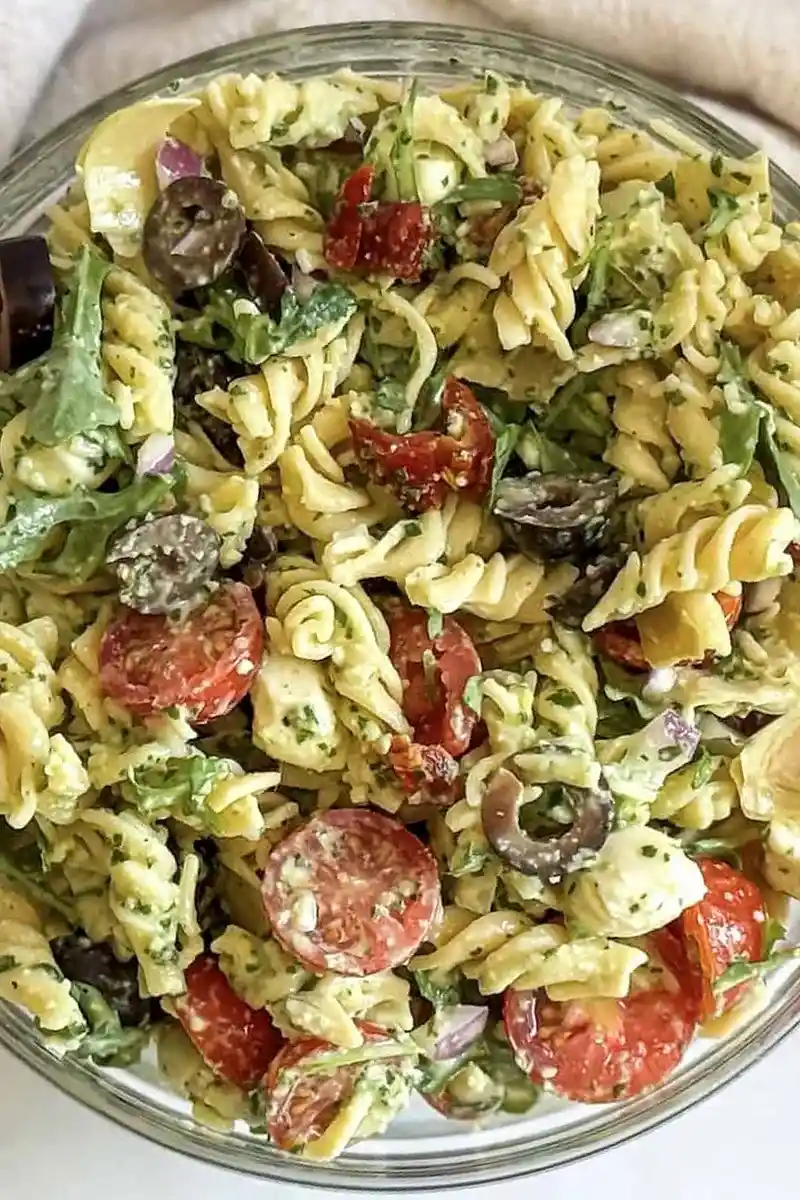
List of ingredients
- 8 oz pasta, dry
- 1½ cups cherry tomatoes, halved
- ¼ cup sun-dried tomatoes packed in oil, chopped
- 1 cup arugula
- ½ cup red onion, chopped
- ½ cup black olives, halved
- ½ cup mozzarella balls
- ½ tsp red pepper flakes
- ½ cup artichoke hearts, chopped
- ¼ cup pine nuts
- 2 cups fresh basil leaves
- 3 Tbsp lemon juice
- 1 clove garlic
- ½ cup parmesan, grated
- ⅓ cup extra-virgin olive oil
- ½ tsp kosher salt
- ¼ tsp black pepper
step-by-step instructions
- Step: Start by cooking your pasta in a large pot according to the package directions. Salt your pasta water, drain, and rinse under cold water. Toss with a drizzle of olive oil and let cool.
- Step: Make the pesto by adding the ingredients to a food processor and pulsing until blended, drizzling in the olive oil last.
- Step: Halve the cherry tomatoes and black olives and chop the artichoke hearts, red onion, and sun-dried tomatoes.
- Step: Assemble the salad by adding the cooked pasta and prepared vegetables to a large bowl, pouring the pesto on top, and tossing until well coated.
Essential Preparation Techniques
Achieving the Perfect Pasta Texture
To ensure your pasta salad maintains the right bite, never overcook the noodles. If the pasta is soft when it enters the cold water, it will become mushy after absorbing the dressing oils. Aiming for a firm, al dente finish ensures that the structure of the pasta remains intact even after several hours in the refrigerator.
Maximizing Surface Area for Dressing
Using pasta shapes with ridges, such as cavatappi, fusilli, or rotini, is a tactical choice. These shapes are designed to capture the pesto sauce within their twists and turns, ensuring that every mouthful contains a burst of flavor. Smooth pastas, like spaghetti or penne, often allow the dressing to slide off, resulting in a bland salad experience.
Practical Culinary Adjustments
Optimizing Flavor Balance
If you find the pesto flavor too intense, simply increase the amount of lemon juice or add a small splash of vegetable broth to thin it out. Conversely, if you prefer a more robust profile, increasing the amount of garlic or toasted pine nuts will deepen the earthy notes of the dish. Always taste the dressing before combining it with the pasta to make necessary adjustments to the salt or acid levels.
Managing Moisture in the Salad
Sun-dried tomatoes often come packed in flavorful oils, which add depth to the dish. However, if they are overly oily, blot them with a paper towel before chopping to avoid making the salad too greasy. Similarly, ensure the artichoke hearts and mozzarella are well-drained so that they do not release excess water into the bowl, which could dilute your pesto.
Strategic Ingredient Swaps
Nut and Seed Alternatives
If pine nuts are unavailable or you have a sensitivity, toasted walnuts or sunflower seeds are excellent alternatives. Walnuts provide a slightly earthier flavor that pairs beautifully with the bitter undertones of the arugula. Sunflower seeds offer a nut-free option while maintaining the necessary texture and healthy fat content needed for a balanced pesto.
Vegetable Substitutions
Feel free to rotate the vegetables based on what is in season. If you lack red onion, shallots provide a more delicate, sweeter flavor profile that is less likely to overpower the basil. In the winter months, you can swap fresh cherry tomatoes for roasted red peppers, which provide a sweeter, charred flavor that complements the sun-dried tomatoes perfectly.
Serving and Presentation Strategies
Temperature Considerations for Serving
While this salad is delicious chilled, it is often best when served at room temperature to allow the flavors of the olive oil and fresh basil to shine. If you have been storing the salad in the refrigerator, pull it out about twenty minutes before your guests arrive. This allows the olive oil in the pesto to soften, resulting in a creamier mouthfeel compared to a cold, set dressing.
Enhancing the Visual Appeal
Before serving, top the salad with a few whole fresh basil leaves and a handful of toasted pine nuts for a professional finish. These elements not only add a fresh aesthetic but also give guests a visual cue of the primary ingredients used in the dressing. For a pop of color, you can also sprinkle a little extra freshly grated parmesan cheese over the top just before it hits the table.
Storage and Make-Ahead Advice
Maintaining Freshness During Storage
This salad stores well in an airtight container for up to three to four days in the refrigerator. However, because of the arugula, it is best to add the greens right before serving if you are planning to keep the salad for more than a day. This ensures the leaves remain crisp rather than wilting into the dressing, maintaining the structural integrity of the dish.
Efficient Make-Ahead Planning
You can save significant time by preparing the pesto sauce up to a week in advance and storing it in a small, sealed glass jar. When you are ready to assemble the salad, simply cook your pasta and chop the vegetables, then stir the prepared sauce in at the last minute. This separates the labor-intensive part of the recipe from the final assembly, allowing you to get a fresh meal on the table in minutes.
Frequently Asked Questions
Can I make this salad a gluten-free dish?
Yes, you can easily substitute the traditional wheat pasta with your favorite gluten-free alternative. Chickpea or lentil-based pasta varieties work especially well because they provide additional protein and hold up well to the weight of the pesto dressing. Ensure you cook the gluten-free pasta carefully, as it can sometimes become brittle if cooked too long.
Why does my pasta stick together after cooking?
Pasta often sticks because of the starch released during the boiling process. To combat this, rinse the pasta thoroughly under cold water immediately after draining it to wash away excess starch. Adding a small drizzle of olive oil while the pasta is still slightly warm also creates a barrier that prevents the strands from clinging together as they cool.
Is it necessary to toast the pine nuts?
While optional, toasting the pine nuts is highly recommended. The dry heat of a pan coaxes out the natural oils in the nuts, which significantly deepens the flavor of the entire pesto sauce. It only takes about two to three minutes over medium heat, and the difference in the final aromatic profile of the dish is substantial.
How do I prevent the basil from turning brown?
Basil can oxidize quickly if exposed to air. To prevent this, ensure your pesto is processed quickly and immediately covered with a thin layer of olive oil if you aren’t using it right away. Adding the lemon juice to the food processor at the same time as the basil also helps preserve the vibrant green color by providing a protective acidic environment for the herbs.
Print
Easy Pesto Pasta Salad with Sun-Dried Tomatoes Recipe
- Total Time: 15 minutes
- Yield: 6 servings 1x
- Diet: Vegetarian
Description
This Pesto Pasta Salad with Sun Dried Tomatoes is a must-make for a summer party! It has the best combination of flavors with a creamy pesto dressing and it all comes together easily in less than 20 minutes!
Ingredients
- 8 oz pasta, dry
- 1½ cups cherry tomatoes, halved
- ¼ cup sun-dried tomatoes packed in oil, chopped
- 1 cup arugula
- ½ cup red onion, chopped
- ½ cup black olives, halved
- ½ cup mozzarella balls
- ½ tsp red pepper flakes
- ½ cup artichoke hearts, chopped
- ¼ cup pine nuts
- 2 cups fresh basil leaves
- 3 Tbsp lemon juice
- 1 clove garlic
- ½ cup parmesan, grated
- ⅓ cup extra-virgin olive oil
- ½ tsp kosher salt
- ¼ tsp black pepper
Instructions
- Step: Start by cooking your pasta in a large pot according to the package directions. Salt your pasta water, drain, and rinse under cold water. Toss with a drizzle of olive oil and let cool.
- Step: Make the pesto by adding the ingredients to a food processor and pulsing until blended, drizzling in the olive oil last.
- Step: Halve the cherry tomatoes and black olives and chop the artichoke hearts, red onion, and sun-dried tomatoes.
- Step: Assemble the salad by adding the cooked pasta and prepared vegetables to a large bowl, pouring the pesto on top, and tossing until well coated.
Notes
Nutrition calculated using chickpea pasta. Expert tip: Add pesto just before serving if making in advance to keep textures fresh. Store in an airtight container for 3-4 days.
- Prep Time: 5 minutes
- Cook Time: 10 minutes
- Category: appetizers and side dishes
- Method: Boiling
- Cuisine: Mediterranean
Nutrition
- Serving Size: 1 cup
- Calories: 290 kcal
- Sugar: 4 g
- Sodium: 420 mg
- Fat: 19 g
- Saturated Fat: 3 g
- Unsaturated Fat: 16 g
- Trans Fat: 0 g
- Carbohydrates: 26 g
- Fiber: 4 g
- Protein: 11 g
- Cholesterol: 8 mg