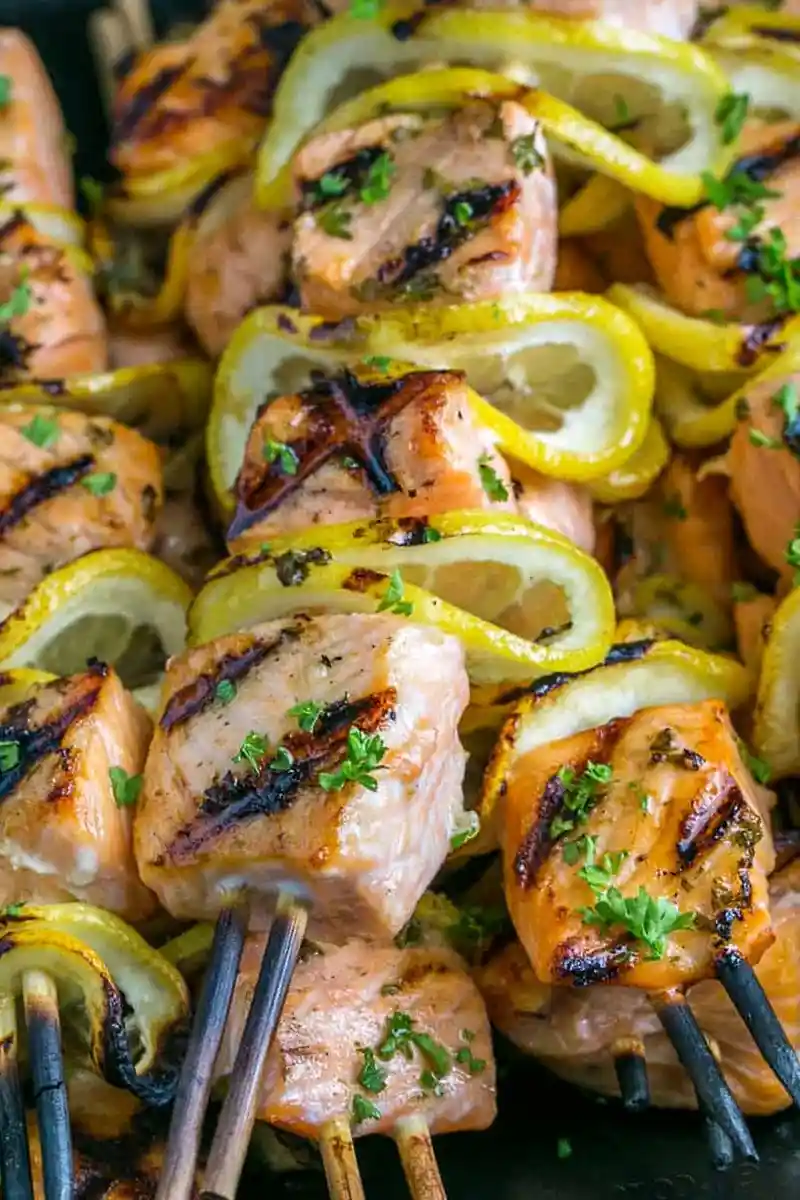
These flavorful salmon skewers combine zesty lemon and savory dijon for a fast, high-protein meal. The grilling process ensures a charred exterior while keeping the fish tender and juicy inside.
List of ingredients
- 1.5 lbs salmon fillets – cut into 1-inch squares for even cooking.
- 2 large lemons – thinly sliced into rounds.
- 16 10-inch bamboo skewers – soaked in water to prevent burning.
- 2 Tbsp parsley – freshly chopped for a bright finish.
- 2 large or 3 small garlic cloves – pressed to release oils.
- 1/2 Tbsp Dijon mustard – such as Grey Poupon for a sharp tang.
- 1/2 tsp salt – to enhance the natural flavors of the fish.
- 1/8 tsp ground black pepper – for a hint of warmth.
- 2 Tbsp light olive oil – chosen for its higher smoke point than extra virgin.
- 2 Tbsp fresh lemon juice – squeezed from about one small lemon.
step-by-step instructions
- Prepare Equipment: Soak bamboo skewers in water for at least 1 hour to prevent them from catching fire. Preheat your grill to medium heat, approximately 375°F.
- Mix Marinade: In a medium bowl, combine the chopped parsley, pressed garlic cloves, Dijon mustard, salt, black pepper, light olive oil, and fresh lemon juice. Stir until well blended.
- Assemble Skewers: Thread the salmon cubes and folded lemon slices intermittently onto two skewers at a time. Using a double skewer prevents the fish from rotating or slipping when you flip them. Brush both sides of the assembled skewers generously with the marinade.
- Grill the Salmon: Oil the grill grates to prevent sticking. Carefully place the skewers on the hot BBQ and grill for 3-4 minutes per side. Remove when the salmon is cooked through and the flesh is opaque.
Professional Preparation Techniques
Optimal Bamboo Skewer Preparation
Soaking wooden skewers is essential when grilling over high heat. This process saturates the wood fibers, significantly raising the temperature at which the bamboo will ignite. If you skip this step, the skewers may char or burn, which can impart a bitter taste to the salmon.
Achieving Uniform Salmon Cuts
Cut the salmon fillets into precise 1-inch squares to ensure consistent cooking. When pieces vary in size, smaller cubes will overcook and become dry before larger pieces are fully done. Using a sharp chef’s knife and a steady hand helps maintain these uniform dimensions.
Selection of Quality Salmon Fillets
Choose center-cut fillets for the best results in skewers. This part of the fish has a consistent thickness and fewer thin edges that are prone to overcooking. Ensure the salmon is fresh, with a vibrant color and a firm texture that springs back when touched.
Garlic Pressing for Maximum Flavor
Using a garlic press rather than chopping ensures that the garlic is fully emulsified into the marinade. Pressing ruptures the cell walls of the garlic more effectively, releasing the pungent oils that penetrate the fish during the short grilling time. This results in a more cohesive and intense garlic flavor.
Mastering the Grilling Process
Calibrating Grill Temperature
Maintain a medium heat of around 375°F for the ideal balance of searing and cooking. If the grill is too hot, the marinade will burn before the salmon reaches the safe internal temperature. If it is too cool, the salmon will steam rather than sear, losing that characteristic grilled crust.
Effective Grate Seasoning and Oiling
Clean the grates thoroughly to remove old residue, then apply a thin layer of oil using a folded paper towel held by tongs. This creates a non-stick barrier between the fish and the metal. This is particularly important for salmon, as its delicate proteins tend to bond quickly to hot surfaces.
The Mechanics of Double Skewering
Threading each piece of salmon onto two parallel skewers provides structural stability. Salmon is a flaky fish, and the weight of the cubes often causes them to spin on a single skewer when flipped. Double skewering locks the pieces in place, ensuring a clean turn and preventing the fish from falling into the coals.
Timing and Rotation Strategies
Limit the cooking time to 3-4 minutes per side to avoid drying out the fillets. Rotate the skewers only once to maximize the development of sear marks. Frequent flipping can lead to uneven cooking and may cause the fish to break apart more easily.
Identifying the Perfect Doneness
Salmon is cooked through when it changes from a translucent pink to an opaque light pink. Use a fork to gently press the top of a cube; if the flakes separate easily, it is ready. For those using a thermometer, an internal temperature of 145°F is the USDA recommendation for safety.
Ingredient Substitutions and Adaptations
Alternative Mustard Varieties
While Dijon is recommended for its sharp profile, whole-grain mustard can be used for a more rustic texture. Honey mustard is an option if you prefer a sweeter glaze, though it may burn faster due to the sugar content. Ensure any substitute maintains a similar acidity to balance the richness of the salmon.
Herb Swaps for Fresh Parsley
Fresh dill is an excellent alternative to parsley as it pairs traditionally well with salmon. Fresh cilantro can be used for a more citrusy, zesty profile. If fresh herbs are unavailable, use a smaller quantity of dried herbs, as dried versions are more concentrated in flavor.
High-Smoke Point Oil Options
If light olive oil is unavailable, avocado oil is a superior choice due to its very high smoke point. Grapeseed oil or canola oil also work well for grilling applications. Avoid using extra virgin olive oil, as its low smoke point can cause the oil to break down and smoke at 375°F.
Adjusting Acidity Levels
If you find the lemon juice too potent, you can replace a portion of it with white wine vinegar or apple cider vinegar. This changes the flavor profile slightly but maintains the acid needed to break down the proteins and brighten the taste. Always taste the marinade before applying it to the fish.
Serving and Presentation Ideas
Pairing with Complex Carbohydrates
Serve these skewers over a bed of fluffy quinoa or wild rice to soak up the remaining marinade. Roasted fingerling potatoes or a wild rice pilaf provide a hearty contrast to the lightness of the grilled fish. A side of couscous with lemon zest also complements the flavors well.
Choosing Refreshing Vegetable Sides
Grilled asparagus or sautéed spinach provide a nutrient-dense accompaniment that matches the garlic notes. A crisp cucumber salad with a light vinaigrette offers a cooling contrast to the charred salmon. Steamed broccoli with a squeeze of lemon is another healthy and simple option.
Creating a Complementary Dipping Sauce
A side of Greek yogurt mixed with lemon zest and fresh dill creates a creamy contrast to the savory skewers. Alternatively, a simple garlic aioli can enhance the existing garlic flavors. For those who prefer spice, a touch of Sriracha mixed with mayonnaise adds a modern kick.
Storage, Preservation, and Reheating
Safe Refrigeration Practices
Store leftover salmon skewers in an airtight container in the refrigerator for up to two days. Ensure the fish is cooled slightly before sealing to prevent excessive moisture buildup, which can make the salmon mushy. Keep the skewers separate from other foods to avoid flavor transfer.
Low-Heat Reheating Techniques
To reheat, use a toaster oven or a conventional oven set to 275°F. Gently warm the skewers for 5-10 minutes until heated through, avoiding high heat which would overcook the fish. Microwaving is not recommended as it often results in a rubbery texture.
Freezer Storage Guidelines
Grilled salmon does not freeze as well as raw salmon, but it can be stored for up to a month. Wrap the pieces tightly in foil and place them in a freezer-safe bag. Thaw slowly in the refrigerator overnight before reheating in the oven to maintain as much moisture as possible.
Troubleshooting Common Issues
Resolving Salmon Fragmentation
If the salmon falls apart during grilling, it may be due to under-frozen or overly soft fish. Try chilling the cut cubes in the freezer for 15 minutes before skewering to firm them up. Additionally, ensure you are not flipping the skewers too early; wait until a crust has formed to lock the structure.
Preventing Garlic Burn
Garlic can burn and become bitter if exposed to direct high flame for too long. By mixing the pressed garlic into the oil-based marinade, you create a protective layer around the garlic particles. This helps the garlic infuse into the fish rather than burning on the surface.
Managing Excessive Sticking
If the fish sticks to the grill, it usually means the grate was not hot enough or not oiled sufficiently. Allow the salmon to sear for a full 3 minutes before attempting to flip it. Often, the fish will naturally release from the grate once a proper crust has developed.
Frequently Asked Questions
Can I use metal skewers?
Yes, metal skewers are a great alternative and do not require soaking. However, be aware that metal conducts heat, which can cook the interior of the salmon faster than bamboo does.
How long should I marinate the fish?
Because of the lemon juice’s acidity, you should not marinate the salmon for more than 30 minutes. Prolonged exposure to acid can break down the proteins too much, resulting in a mushy texture.
Is an oven-broiler a viable alternative?
Yes, you can place the skewers on a baking sheet under a broiler on high. Turn them every 3-4 minutes, but monitor them closely as the broiler can burn the marinade very quickly.
Can I use frozen salmon?
You can use frozen salmon, but it must be fully thawed in the refrigerator first. Attempting to skewer or grill partially frozen salmon will lead to uneven cooking and a higher likelihood of the fish sticking to the grill.
Print
Garlic and Dijon Grilled Salmon Skewers
- Total Time: 28 minutes
- Yield: 4 servings (8 skewers) 1x
- Diet: General
Description
These take less than 30 minutes to make and you end up with such juicy, flaky and flavorful salmon… you’ll want seconds!
Ingredients
- 1.5 lbs salmon fillets (cut into 1-inch squares)
- 2 large lemons thinly sliced
- 16 10-inch bamboo skewers
- 2 Tbsp parsley (freshly chopped)
- 2 large or 3 small garlic cloves (pressed)
- 1/2 Tbsp Dijon mustard
- 1/2 tsp salt
- 1/8 tsp ground black pepper
- 2 Tbsp light olive oil
- 2 Tbsp fresh lemon juice
Instructions
- Prep: Soak bamboo skewers at least 1 hour to keep them from catching fire. Preheat Grill to medium heat (about 375˚F).
- Marinade: In a medium bowl, stir together all of the marinade ingredients: 2 Tbsp chopped parsley, 2 pressed garlic cloves, 1/2 Tbsp dijon, 1/2 tsp salt, 1/8 tsp pepper, 2 Tbsp olive oil, 2 Tbsp lemon juice.
- Assemble: Double skewer the salmon and lemon slices folded in half intermittently onto two skewers at a time. Brush both sides of skewered salmon with marinade.
- Grill: Oil the grates then carefully place salmon skewers onto the hot BBQ. Grill kebobs for 3-4 minutes per side or until salmon is cooked through and opaque.
Notes
The double skewer aids in turning the salmon kebobs on the grill.
- Prep Time: 20 minutes
- Cook Time: 8 minutes
- Category: Main Course
- Method: Grilling
- Cuisine: American
Nutrition
- Serving Size: 2 skewers
- Calories: 550 kcal
- Sugar: 4 g
- Sodium: 325 mg
- Fat: 27 g
- Saturated Fat: 5 g
- Unsaturated Fat: 22 g
- Trans Fat: 0 g
- Carbohydrates: 7 g
- Fiber: 2 g
- Protein: 35 g
- Cholesterol: 150 mg