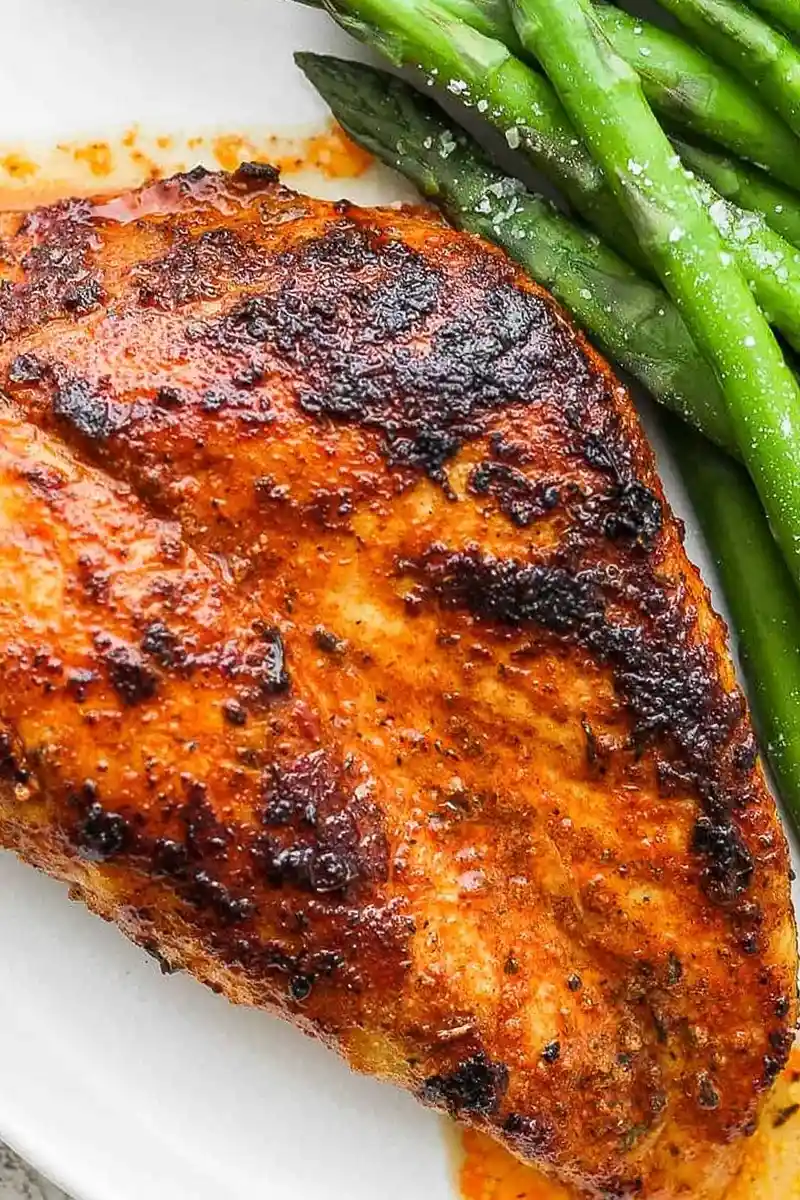
This blackened chicken provides a bold, spicy flavor profile that is perfect for quick weeknight meals. It is a versatile protein that pairs well with salads, pasta, or roasted vegetables.
List of ingredients
- 4 boneless, skinless chicken breasts – ensures a lean and high-protein base.
- 1 tablespoon paprika – adds rich color and a mild, sweet base.
- 2 teaspoons onion powder – provides a concentrated savory depth.
- 2 teaspoons garlic powder – contributes a sharp, aromatic punch.
- 1 teaspoon dried oregano leaves – adds an earthy, herbal note.
- 1 teaspoon dried thyme leaves – lends a subtle woody flavor.
- 1 teaspoon kosher salt – balances the heat and enhances overall taste.
- ½ teaspoon ground black pepper – provides a foundational spicy warmth.
- ½ teaspoon cayenne pepper – delivers the primary heat and spice level.
- ¼ teaspoon chipotle pepper – adds a distinct smoky undertone.
- 2-3 tablespoons extra virgin olive oil – used for coating the meat and searing in the pan.
step-by-step instructions
- Tenderize the meat: Place the chicken breasts on a cutting board and cover them with plastic wrap. Use the flat side of a meat tenderizer to pound the chicken until each breast is approximately 1/2 inch thick for uniform cooking.
- Prepare the spice blend: Combine the paprika, onion powder, garlic powder, oregano, thyme, salt, black pepper, cayenne, and chipotle pepper in a small mixing bowl. Stir until the spices are evenly distributed.
- Season the chicken: Pat the chicken breasts dry using clean paper towels to remove excess moisture. Rub the spice blend thoroughly over all surfaces of the meat.
- Apply oil: Drizzle the olive oil over the seasoned chicken and rub it in. This helps the spices adhere and prevents the meat from sticking to the pan.
- Sear the chicken: Heat a large cast iron skillet over medium-high heat. Add a small amount of olive oil and swirl to coat. Place the chicken in the pan and sear for 2-4 minutes on each side until blackened.
- Finish cooking: Continue to flip the chicken every 2-4 minutes in the skillet until cooked through. Alternatively, place the entire cast iron skillet into a 400°F oven for 10-20 minutes until the internal temperature reaches 165°F.
- Rest and serve: Transfer the chicken to a plate and let it rest for 5-10 minutes. This allows the juices to redistribute before you slice the meat.
Optimizing Your Cooking Equipment
Benefits of Using a Cast Iron Skillet
Cast iron is the ideal choice for blackening because of its superior heat retention. It maintains a steady, high temperature that creates the charred crust essential for this style of cooking. This prevents the chicken from steaming in its own juices.
Meat Thermometer Accuracy
Using an instant-read digital thermometer is the only way to guarantee the chicken is safe without overcooking it. Aim for an internal temperature of 165°F at the thickest part of the breast. This ensures the meat remains juicy while being fully cooked.
Tenderizer Selection
Use the smooth side of a meat mallet rather than the spiked side. The smooth side flattens the meat without breaking the muscle fibers too aggressively. This maintains the texture of the chicken while ensuring even heat penetration.
Customizing the Spice Profile
Adjusting the Heat Level
To reduce the spice, omit the cayenne pepper or replace it with a smaller pinch. For those who prefer more heat, increase the cayenne or add an extra pinch of chipotle pepper. The chipotle adds a different dimension of heat compared to the sharp sting of cayenne.
Using Smoked Paprika
Substituting regular paprika with smoked paprika increases the depth of the flavor. This adds a fire-roasted quality to the chicken even when cooking on a stovetop. It complements the chipotle pepper and enhances the blackened effect.
Adding Fresh Herbs
While dried herbs are used in the rub for better adherence, you can finish the dish with fresh parsley or cilantro. Garnish the sliced chicken with these herbs just before serving. This adds a fresh contrast to the heavy, spicy rub.
Alternative Protein Options
Using Chicken Thighs
Boneless, skinless chicken thighs are a great alternative to breasts. They have a higher fat content, which makes them more forgiving and harder to overcook. Follow the same seasoning and searing process, but allow for a few extra minutes of cook time due to the thickness of thighs.
Adapting for Other Meats
This specific spice blend works well with salmon fillets or shrimp. For shrimp, reduce the cooking time significantly to 2-3 minutes per side. For salmon, sear the skin side first to achieve a crisp texture before flipping.
Serving and Pairing Suggestions
Pairing with Creamy Pasta
The heat of the blackened chicken is balanced perfectly by a creamy Alfredo sauce. Slice the chicken into strips and place it atop a bed of fettuccine. The richness of the cream cuts through the spice of the cayenne and chipotle.
Creating a Blackened Chicken Salad
Serve the chicken sliced over a bed of mixed greens, corn, and black beans. Add diced avocado and a lime-cilantro vinaigrette to enhance the Southwestern flavors. This creates a healthy, high-protein meal suitable for lunch or dinner.
Choosing Complementary Side Vegetables
Steamed green beans or roasted asparagus provide a fresh, crisp contrast to the charred chicken. Alternatively, try a side of sautéed spinach with lemon. These greens help cleanse the palate between bites of the spicy seasoning.
Starch Pairings for Balance
Serve the chicken with herbed roasted potatoes or a wild rice pilaf. These neutral starches absorb the excess seasoning and juices from the pan. They provide the necessary bulk to make the meal more filling.
Storage and Preservation
Refrigeration Guidelines
Store leftover chicken in an airtight glass or plastic container. Keep it refrigerated at or below 40°F. The chicken will remain fresh and safe to eat for 3 to 4 days.
Freezing Leftovers
You can freeze cooked blackened chicken for up to three months. Wrap the meat tightly in foil and then place it in a freezer-safe bag to prevent freezer burn. Thaw the chicken in the refrigerator overnight before reheating.
Reheating Best Practices
Avoiding Rubbery Texture
Avoid using the microwave on high power, as this often makes the chicken rubbery. Instead, use a skillet over medium-low heat with a tablespoon of water or broth. Cover the pan with a lid to create steam, which rehydrates the meat.
Oven Reheating Method
Place the chicken in a baking dish and add a splash of chicken broth to the bottom. Cover the dish with foil to trap moisture. Heat at 325°F for 10-15 minutes until warmed through.
Troubleshooting Common Issues
Preventing Burnt Spices
If the seasoning burns before the chicken is cooked, your pan temperature is too high. Lower the heat to medium and add a small amount of oil to lubricate the surface. This allows the spices to toast without carbonizing.
Fixing Dry Chicken
Dry chicken is usually the result of overcooking or failing to rest the meat. Always use a thermometer to pull the chicken off the heat exactly at 165°F. If the meat is already dry, serve it with a sauce or melted butter to add moisture.
Handling Uneven Browning
Uneven browning often happens if the chicken breasts are different thicknesses. Ensure you use the meat tenderizer to create a uniform height across each piece. Also, make sure the skillet is fully preheated before adding the meat.
Frequently Asked Questions
Can I use frozen chicken breasts for this recipe?
Yes, but they must be completely thawed before cooking. Cooking frozen chicken will result in a steamed texture rather than a seared crust, and the center may remain raw while the outside burns.
What is the difference between blackening and charring?
Blackening involves coating the meat in a heavy layer of spices and searing it at high heat so the spices form a dark crust. Charring is the result of direct flame or extreme heat burning the surface of the food itself.
Can I make this recipe in an air fryer?
Yes, you can air fry the seasoned chicken at 375°F for about 12-15 minutes. However, you will not get the same intense crust that a cast iron skillet provides. For the best results, sear in a pan first and then finish in the air fryer.
Is it necessary to use plastic wrap when tenderizing?
Plastic wrap prevents the meat from tearing and keeps your cutting board clean. It also prevents the meat from sticking to the mallet. You can also use a heavy-duty freezer bag for the same effect.
Can I substitute olive oil with butter?
You can use butter for flavor, but butter has a lower smoke point than olive oil and can burn quickly at high temperatures. A combination of oil and butter is recommended for both high-heat searing and rich taste.
What if I don’t have a cast iron skillet?
A stainless steel skillet is the next best option. Avoid non-stick pans for this recipe, as they cannot withstand the high temperatures required for blackening and may release toxic fumes if overheated.
Can I prepare the spice rub in advance?
Yes, you can mix the dry spices and store them in an airtight jar at room temperature for several months. This makes the preparation process much faster for future meals.
How do I know when to flip the chicken?
Flip the chicken when it releases easily from the pan. If the meat sticks, it hasn’t developed a proper crust yet. Once a dark brown or blackened layer forms, it will naturally lift away from the surface.
} Print
Flavorful Blackened Chicken Recipe
- Total Time: 30 minutes
- Yield: 8 servings 1x
- Diet: Dairy-Free, Gluten Free, Paleo, Whole30
Description
Our easy and simple Blackened Chicken recipe is delicious on its own, on top of a salad or on your favorite pasta recipe!
Ingredients
- 4 boneless, skinless chicken breasts
- 1 tablespoon paprika
- 2 teaspoons onion powder
- 2 teaspoons garlic powder
- 1 teaspoon dried oregano leaves
- 1 teaspoon dried thyme leaves
- 1 teaspoon kosher salt
- ½ teaspoon ground black pepper
- ½ teaspoon cayenne pepper
- ¼ teaspoon chipotle pepper
- 2–3 tablespoons extra virgin olive oil (divided)
Instructions
- Prep Chicken: Place 4 boneless, skinless chicken breasts on a cutting board and wrap with plastic wrap. Use the flat side of a meat tenderizer to flatten chicken until it is approximately ½ inch thick. Place chicken on a large plate or platter.
- Season: In a small bowl, add 1 tablespoon paprika, 2 teaspoons onion powder, 2 teaspoons garlic powder, 1 teaspoon dried oregano leaves, 1 teaspoon dried thyme leaves, 1 teaspoon kosher salt, ½ teaspoon ground black pepper, ½ teaspoon cayenne pepper, and ¼ teaspoon chipotle pepper. Mix to combine. Pat chicken dry with clean paper towel. Rub Blackened Seasoning all over it. Drizzle seasoned chicken with 2-3 tablespoons extra virgin olive oil and rub all over.
- Cook: Bring a large cast iron skillet to medium-high heat. Add a teaspoon or two of olive oil and swirl to coat the pan. Place chicken in the hot pan and sear both sides 2-4 minutes. Continue cooking in the large skillet (continuing to flip every 2-4 minutes) until fully cooked OR place the cast iron skillet in a 400℉ oven (middle rack) for 10-20 minutes or until fully cooked.
- Rest & Serve: Place chicken on a plate and let meat rest 5-10 minutes before cutting. Enjoy any way you want!
Notes
Spice level: feel free to omit or reduce the cayenne pepper if you want to lower the spice level. Fully cooked: chicken is fully cooked when it reaches an internal temp of 165 degrees F.
- Prep Time: 5 minutes
- Cook Time: 25 minutes
- Category: Dinner/Entree
- Method: Stove Top
- Cuisine: American
Nutrition
- Serving Size: 1 serving
- Calories: 104 kcal
- Sugar: 0.2 g
- Sodium: 358 mg
- Fat: 5 g
- Saturated Fat: 1 g
- Unsaturated Fat: 4 g
- Trans Fat: 0.01 g
- Carbohydrates: 2 g
- Fiber: 1 g
- Protein: 12 g
- Cholesterol: 36 mg