This quick dinner brings restaurant-style flavors to your kitchen in under 30 minutes. It features tender chicken and crisp vegetables tossed with soft egg noodles in a savory soy-based sauce.
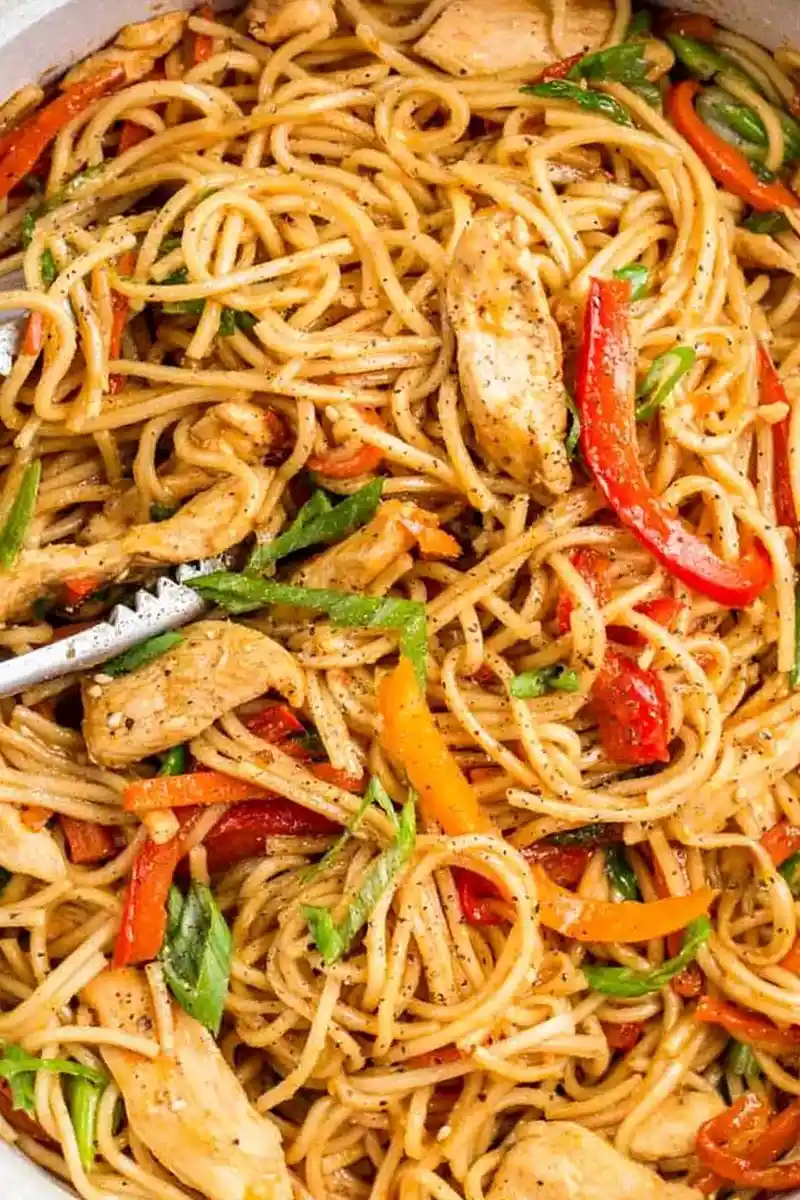
List of ingredients
- 8 oz lo mein noodles – use store-bought egg noodles for authenticity.
- 3/4 lb chicken breast – boneless and skinless, cut into thin strands.
- 2 Tbsp oil – divided for sautéing the chicken and vegetables.
- 2 Tbsp unsalted butter – divided for added richness during sautéing.
- 1/4 tsp salt – for seasoning the meat.
- 1/4 tsp ground black pepper – for basic flavor.
- 1 large carrot – julienned into thin strips.
- 1 red pepper – julienned into thin strips.
- 3 garlic cloves – minced finely.
- 1 Tbsp ginger – freshly grated.
- 2 Tbsp green onion – sliced for the final garnish.
- 1/2 cup chicken broth – used as the liquid base for the sauce.
- 1/4 cup soy sauce – provide the salty, umami flavor.
- 1/2 tsp sriracha or hot sauce – optional, for a hint of spice.
- 1 tsp sesame oil – adds a nutty aroma.
- 1 tsp cornstarch – used as a thickener for the sauce.
- 3 Tbsp honey – adds sweetness to balance the salt.
step-by-step instructions
- Prepare the noodles: Cook the lo mein noodles according to the package instructions. Once cooked, rinse them under cold water to stop the cooking process and set them aside.
- Cut the meat: Slice the chicken breast into thin strands to ensure quick and even cooking.
- Sear the chicken: Heat 1 Tbsp of oil and 1 Tbsp of butter in a pan. Add the chicken, season with salt and pepper, and let it cook undisturbed for a few minutes before stirring.
- Set chicken aside: Remove the cooked chicken from the pan and place it on a separate plate.
- Sauté the vegetables: Add another 1 Tbsp of oil and 1 Tbsp of butter to the same pan. Sauté the julienned carrots and red peppers until tender, then stir in the minced garlic and grated ginger until fragrant.
- Prepare the sauce: In a separate bowl, whisk together the chicken broth, soy sauce, sriracha, sesame oil, cornstarch, and honey.
- Combine everything: Add the cooked noodles, seared chicken, and the prepared sauce mixture into the pan. Increase the heat to allow the sauce to thicken and coat the noodles.
- Finish and serve: Once the sauce has thickened and the noodles are reheated, garnish the dish with sliced green onions.
Choosing the Best Components
Selecting Authentic Lo Mein Noodles
For the best texture, look for fresh egg noodles specifically labeled as lo mein. These are thicker than spaghetti and have a slight chewiness that holds onto the sauce. If you cannot find them, wide rice noodles or high-quality ramen can work, though the texture will differ.
Picking the Right Cut of Chicken
Boneless, skinless chicken breasts are ideal because they cook quickly and remain lean. To ensure the chicken stays juicy, avoid overcooking it during the initial searing phase. Alternatively, boneless chicken thighs can be used for a richer flavor and more moisture.
Using Fresh Ginger and Garlic
Fresh aromatics provide a significantly more punchy flavor than powdered versions. Grate the ginger finely to distribute the flavor evenly throughout the sauce. Mince the garlic just before adding it to the pan to prevent the essential oils from dissipating.
The Role of Sesame Oil
Sesame oil is used as a finishing oil rather than a primary cooking oil. It provides a toasted, nutty aroma that is characteristic of Chinese stir-fry dishes. Use a toasted sesame oil for the most intense flavor profile.
Customizing Your Stir Fry
Adding Seasonal Garden Vegetables
You can expand the nutritional value by adding more vegetables. Broccoli florets, sliced mushrooms, snow peas, and shredded cabbage are excellent additions. Ensure all vegetables are cut into uniform sizes so they cook at the same rate.
Integrating Alternative Proteins
While chicken is the standard, this recipe works well with flank steak or shrimp. If using steak, slice it very thinly across the grain. For shrimp, add them to the pan last since they cook much faster than chicken.
Modifying the Heat Level
The sriracha in this recipe is optional and provides a mild kick. For a spicier version, add crushed red pepper flakes or a tablespoon of chili garlic sauce. If you prefer a mild flavor, omit the sriracha entirely.
Substituting the Sweetener
Honey provides a thick consistency and a floral sweetness. You can replace it with brown sugar or maple syrup if needed. Brown sugar offers a deeper, molasses-like flavor that complements the soy sauce well.
Advanced Cooking Techniques
Cutting Meat Against the Grain
To achieve maximum tenderness, identify the muscle fibers in the chicken breast and cut perpendicular to them. This shortens the fibers, making the meat easier to chew. This is especially important when cutting the chicken into thin strands.
Preventing Noodle Clumping
Rinsing noodles in cold water after boiling removes excess surface starch. This prevents the noodles from sticking together while they wait to be added to the pan. For extra insurance, you can toss them with a teaspoon of oil after rinsing.
Achieving the Perfect Sauce Consistency
The combination of cornstarch and honey acts as the thickening agent. When the sauce hits the hot pan, the starch granules swell and create a glossy glaze. If the sauce remains too thin, continue simmering on medium-high heat for an additional minute.
Maintaining Vegetable Crunch
Avoid overcooking the carrots and peppers to keep a pleasant snap in every bite. Sauté them over medium-high heat and move them constantly. Remove them from the heat as soon as they are tender-crisp.
Serving and Pairing Suggestions
Complementary Side Dishes
Serve this lo mein alongside vegetable fried rice for a complete meal. Steamed dumplings or spring rolls make excellent appetizers to accompany the dish. A side of steamed bok choy adds a fresh, green element to the plate.
Enhancing the Dish with Garnishes
Beyond green onions, you can add toasted sesame seeds for extra crunch. Freshly chopped cilantro or a squeeze of lime juice can add brightness to the heavy soy flavors. Crushed roasted peanuts are also a great way to add texture.
Pairing with Fresh Salads
A crisp cucumber salad with rice vinegar and sesame oil balances the richness of the noodles. An Asian-style slaw with shredded cabbage and a ginger dressing also works well. These acidic sides cleanse the palate between bites.
Storage and Maintenance
Proper Refrigeration Methods
Store leftover lo mein in an airtight container in the refrigerator. It will remain fresh and safe to eat for up to five days. Ensure the noodles have cooled slightly before sealing the container to avoid excess moisture buildup.
The Best Ways to Reheat
Reheating in a skillet over medium heat is the best method to maintain the noodle texture. Add a tablespoon of water or chicken broth to loosen the sauce as it warms. If using a microwave, cover the dish with a damp paper towel to prevent the noodles from drying out.
Why You Should Not Freeze Lo Mein
Freezing is not recommended because the starch structure in the egg noodles breaks down. Upon thawing, the noodles often become mushy or develop an unpleasant texture. It is better to cook smaller batches or rely on refrigeration.
Troubleshooting Common Issues
Correcting Overly Salty Sauce
If the sauce tastes too salty, add a small amount of extra honey or a splash of water. Adding more vegetables, such as sliced zucchini, can also help absorb and balance the salt. You can also add a teaspoon of rice vinegar to cut through the saltiness.
Fixing Soft or Mushy Noodles
Mushy noodles usually result from overboiling. To avoid this, cook them for one minute less than the package directions. If they are already too soft, avoid over-stirring them in the pan to prevent them from breaking further.
Managing Pan Temperature
If the garlic and ginger burn, they will taste bitter. Add them only after the vegetables have softened and just before adding the sauce. If the pan is smoking too much, lower the heat slightly before adding the aromatics.
Frequently Asked Questions
Can I use regular soy sauce instead of light soy sauce?
Yes, regular soy sauce is a perfect substitute. However, since regular soy sauce is often saltier, you may want to slightly reduce the amount of added salt in the chicken seasoning.
What other noodles can be used?
If lo mein noodles are unavailable, spaghetti is a common substitute. Ramen noodles also work well, though you should discard the flavor packet and cook them slightly under-done before adding them to the pan.
What if my sauce isn’t getting thick?
Ensure that the cornstarch is fully dissolved in the liquid before adding it to the pan. If it is still thin, turn up the heat to medium-high and stir constantly for a few minutes to activate the thickening properties of the starch.
Can I substitute honey?
Yes, you can use brown sugar or cane sugar. Brown sugar is the most similar in flavor and will provide the same syrupy consistency once heated with the broth and soy sauce.
Print
Easy Homemade Chicken Lo Mein
- Total Time: 25 minutes
- Yield: 6 servings 1x
- Diet: General
Description
This chicken lo mein recipe makes the most perfect entree. This restaurant-style entree is so easy to make, and the results are incredible. We love ours, loaded with chicken and tender vegetables.
Ingredients
- 8 oz lo mein noodles
- 3/4 lb chicken breast (boneless skinless)
- 2 Tbsp oil (divided)
- 2 Tbsp unsalted butter (divided)
- ¼ tsp salt
- ¼ tsp ground black pepper
- 1 large carrot (julienned)
- 1 red pepper (julienned)
- 3 garlic cloves minced
- 1 Tbsp ginger (grated)
- 2 Tbsp green onion (sliced)
- 1/2 cup chicken broth
- 1/4 cup soy sauce
- ½ tsp sriracha or hot sauce (optional)
- 1 tsp sesame oil
- 1 tsp cornstarch
- 3 Tbsp honey
Instructions
- Step 1: Cook the lo mein noodles according to package instructions. Once cooked, rinse the noodles under cold water to stop the cooking process, and then set aside.
- Step 2: Cut the chicken into strands.
- Step 3: Add 1 Tbsp of oil and 1 Tbsp of butter to the pan. Once the pan is hot, add the chicken and season with salt and pepper. Leave the chicken alone to cook for a couple of minutes before lightly stirring.
- Step 4: Remove the cooked chicken from the pan and set aside.
- Step 5: Add 1 Tbsp of oil and 1 Tbsp of butter to the pan and add the carrots and peppers. Saute lightly until the vegetables are cooked. Add in the garlic and ginger and cook until fragrant.
- Step 6: In a bowl, mix together the sauce ingredients.
- Step 7: To the pan, add the noodles, chicken, and sauce. Turn the heat up to let the sauce thicken. Once the sauce has thickened and the noodles are reheated, the lo mein is ready for serving.
- Step 8: Garnish with green onions and enjoy!
Notes
Rinse the cooked lo mein noodles under cold water to prevent overcooking and sticky noodles. Cut the chicken into strands against the grain. Keep leftover noodles in the fridge, stored in an airtight container for up to 5 days.
- Prep Time: 10 minutes
- Cook Time: 15 minutes
- Category: Main Course
- Method: Stir-fry
- Cuisine: Chinese
Nutrition
- Serving Size: 1 serving
- Calories: 294 kcal
- Sugar: 10 g
- Sodium: 810 mg
- Fat: 8 g
- Saturated Fat: 1 g
- Unsaturated Fat: 7 g
- Trans Fat: 0 g
- Carbohydrates: 40 g
- Fiber: 2 g
- Protein: 17 g
- Cholesterol: 36 mg