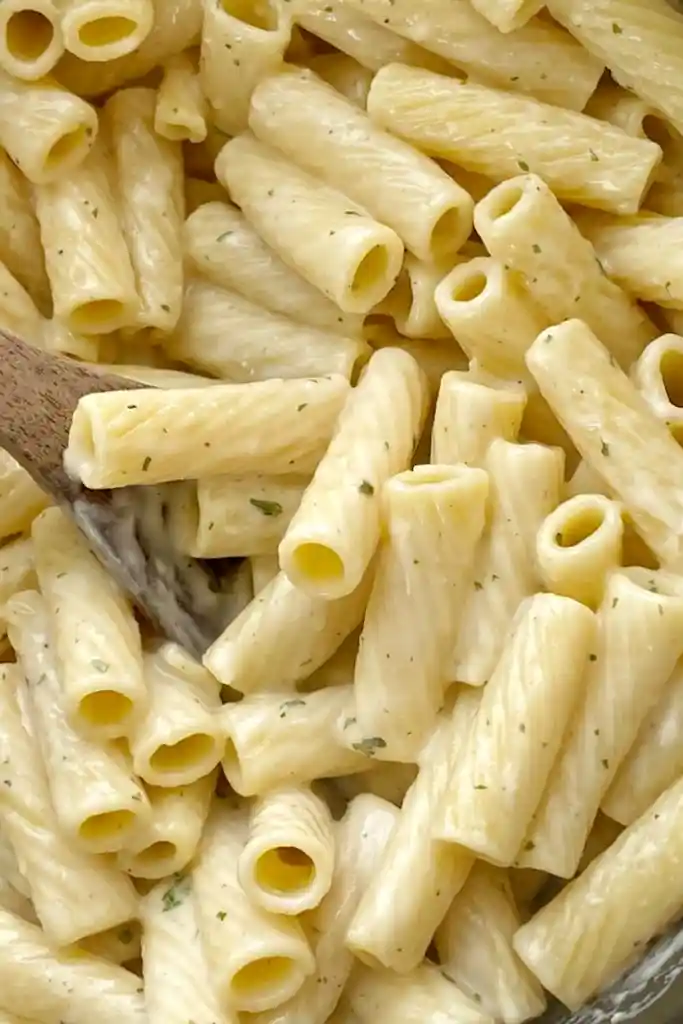
This creamy garlic parmesan pasta is a quick 20-minute meal perfect for busy weeknights. It features a rich, velvety white sauce that coats every noodle for a satisfying and hearty dinner.
List of ingredients
- 1 box (16 oz) large tube-shaped pasta (such as rigatoni, penne, or ziti) – chosen for its ability to hold sauce.
- 3 tablespoons butter – used to create the roux.
- 4 cloves garlic (minced, pressed, or paste) – the primary aromatic base.
- 3 tablespoons all-purpose flour – acts as the thickening agent.
- 1 cup reduced-sodium chicken broth – provides a savory depth.
- 1 cup whole milk – ensures a creamy consistency.
- ½ teaspoon salt – balances the flavors.
- ¼ teaspoon pepper – adds a light spice.
- 2 teaspoons dried parsley – adds color and an herbal note.
- 1½ cups shredded parmesan cheese (grated from a wedge) – essential for a smooth melt.
step-by-step instructions
- Boil the Pasta: Cook the pasta according to the package directions. Be sure to add about 1 teaspoon of salt to the boiling water to ensure the noodles are well-seasoned.
- Sauté the Aromatics: In a sauce pan over medium heat, melt the butter. Add the garlic and stir for approximately 30 seconds until fragrant.
- Build the Roux: Stir in the all-purpose flour and whisk for 30 seconds. The mixture will form a thick paste, which is the base for the thickening process.
- Simmer the Sauce: While whisking, slowly pour in the chicken broth, milk, salt, and pepper. Stir and cook for several minutes until the mixture thickens. Use low heat if necessary to prevent the sauce from boiling or burning.
- Incorporate Cheese: Once the sauce has thickened, remove the pan from the heat. Stir in the dried parsley and shredded parmesan cheese until the cheese is melted and the sauce is smooth.
- Combine and Finish: Drain the cooked pasta, but do not rinse it. Add the creamy sauce to the pasta and stir well to coat every piece before serving.
Choosing the Right Pasta Shape
Tube-Shaped Pasta Options
Using pasta like rigatoni, penne, or ziti is highly recommended for this recipe. The hollow center of these shapes allows the creamy garlic sauce to get inside the noodle. This ensures a more balanced ratio of sauce to pasta in every bite.
Spiral Pasta Alternatives
Rotini or fusilli are excellent alternatives if you do not have tube pasta. The twists and curls of spiral pasta trap the sauce in their grooves. This makes the dish feel very hearty and ensures the sauce clings well to the surface.
Long Pasta Variations
While fettuccine or spaghetti can be used, they do not hold the sauce as effectively as shaped pasta. If using long noodles, ensure the sauce is slightly thinner to allow for better coating. Toss them thoroughly using tongs to avoid clumping.
Mastering the Creamy Sauce
Understanding the Roux Process
The combination of butter and flour creates a roux, which is the foundation of the sauce. Cooking the flour for 30 seconds removes the raw flour taste while preparing it to bind with the liquids. This process prevents the sauce from remaining watery.
Preventing Sauce Lumps
To achieve a smooth texture, add the chicken broth and milk slowly while whisking constantly. Adding liquids too quickly can cause the flour paste to clump together. A whisk is more effective than a spoon for breaking up these small pockets of flour.
Managing Sauce Temperature
Keep the heat at a medium or low setting to avoid scorching the milk. If the sauce boils too vigorously, the dairy may separate or burn at the bottom of the pan. Frequent stirring is the best way to maintain an even temperature throughout the sauce.
Ingredient Modifications and Substitutes
Adjusting Milk Fat Content
Whole milk is preferred for its speed of thickening and rich taste. Skim milk can be used, but the sauce will take longer to thicken and will have a lighter flavor. For an extra indulgent version, substitute whole milk with half-and-half.
Using Alternative Broths
Reduced-sodium chicken broth provides a savory base, but vegetable broth is a great substitute. Vegetable broth maintains the savory profile while making the dish suitable for those avoiding chicken products. Ensure the broth is not too salty to avoid over-seasoning.
Selecting the Best Garlic Format
Freshly minced garlic offers the most pungent and aromatic flavor. Garlic paste from a tube is a convenient time-saver that blends easily into the butter. Jarred minced garlic is also acceptable, though it may have a slightly more acidic taste due to preservatives.
The Importance of Cheese Quality
Freshly Grated vs Pre-Shredded
Always grate parmesan from a wedge rather than using pre-shredded bags. Pre-shredded cheeses are coated in potato starch or cellulose to prevent clumping. These additives prevent the cheese from melting smoothly, often resulting in a gritty or grainy sauce.
Alternative Hard Cheeses
If you want a sharper flavor, you can substitute a portion of the parmesan with Pecorino Romano. Pecorino is saltier and more intense, so you may need to reduce the added salt in the recipe. Asiago is another great option for a nuttier flavor profile.
Adjusting Cheese Quantities
The amount of cheese can be adjusted based on your preference for richness. While 1.5 cups is recommended, using as little as 1 cup still produces a creamy result. Adding more cheese will make the sauce thicker and more savory.
Protein and Vegetable Pairings
Adding Grilled Chicken
Grilled chicken breast is a classic pairing that turns this side dish into a full meal. Slice the chicken into strips and place them on top of the plated pasta. You can also stir rotisserie chicken directly into the sauce for easier serving.
Incorporating Sautéed Shrimp
Shrimp adds a lighter, seafood-inspired twist to the garlic parmesan flavor. Sauté the shrimp in a separate pan with a bit of butter and garlic until pink. Fold the shrimp and their juices into the pasta at the very end.
Adding Fresh Vegetables
Steam some broccoli florets or peas and stir them in with the pasta. Fresh baby spinach can be stirred into the hot sauce just before serving, allowing it to wilt naturally. These additions provide color and nutritional balance to the meal.
Storage and Reheating Advice
Refrigerator Storage
Store leftover pasta in an airtight container in the refrigerator for up to 3 to 4 days. The sauce will naturally thicken and absorb into the pasta as it cools. This is normal and can be easily corrected during the reheating process.
Freezing Considerations
It is not recommended to freeze this pasta due to the high dairy content. Cream-based sauces often separate or become grainy when frozen and thawed. For the best quality, it is better to eat the dish fresh or refrigerated.
Stovetop Reheating Method
To reheat on the stove, place the pasta in a pan over low heat. Add a splash of milk or water to loosen the sauce and restore the creamy consistency. Stir gently until heated through to avoid overcooking the noodles.
Microwave Reheating Tips
When using a microwave, heat the pasta in short 30-second intervals. Stir the pasta between each interval to ensure even heating and to redistribute the sauce. Adding a teaspoon of water before heating helps prevent the pasta from drying out.
Troubleshooting Common Issues
Fixing a Sauce That is Too Thick
If the sauce becomes too thick, stir in a tablespoon of milk or reserved pasta water. Do this slowly while the sauce is over low heat. Continue adding liquid until the desired consistency is reached.
Addressing a Thin Sauce
If the sauce is too thin, let it simmer for a few more minutes without the lid on. You can also stir in an extra handful of grated parmesan cheese. The cheese acts as a natural thickener as it melts into the liquid.
Preventing Grainy Texture
Graininess is usually caused by using pre-shredded cheese or overheating the sauce. To prevent this, remove the pan from the heat before stirring in the cheese. Ensure the cheese is finely grated to encourage a smooth melt.
Frequently Asked Questions
Can I make this recipe gluten-free?
Yes, you can use a gluten-free pasta of your choice. To replace the all-purpose flour, use a gluten-free flour blend or a cornstarch slurry (mix equal parts cornstarch and water) to thicken the sauce.
How do I prevent the sauce from burning?
Use a medium-low heat setting and stir the sauce frequently with a whisk. If you notice the butter browning too quickly, lower the heat immediately. Constant movement prevents the milk solids from sticking to the pan.
Can I use a different herb instead of parsley?
Fresh or dried basil is a wonderful alternative for a more traditional Italian flavor. Dried oregano or thyme also work well, though they provide a more earthy taste. Use the same quantity as specified for the parsley.
Why should I not rinse the pasta?
Rinsing the pasta removes the natural starches that cling to the surface of the noodles. These starches act as a glue that helps the creamy sauce adhere to the pasta. Without them, the sauce is more likely to slide off the noodles and pool at the bottom of the plate.
Print
Easy Garlic Parmesan Pasta
- Total Time: 20 minutes
- Yield: 6 servings 1x
- Diet: General
Description
Easy Garlic Parmesan Pasta is a family favorite 20 minute dinner recipe! Pasta noodles covered in a creamy garlic parmesan white sauce.
Ingredients
- 1 box (16 oz) large tube-shaped pasta (rigatoni, penne, ziti)
- 3 tablespoons butter
- 4 cloves garlic
- 3 tablespoons all-purpose flour
- 1 cup reduced-sodium chicken broth
- 1 cup whole milk
- ½ teaspoon salt
- ¼ teaspoon pepper
- 2 teaspoons dried parsley
- 1½ cup shredded parmesan cheese
Instructions
- Step: Cook pasta according to package directions. Salt the water so you don’t have bland pasta. I add about 1 teaspoon salt into the boiling water with the pasta.
- Step: In a sauce pan, over medium heat, melt the butter. Add the garlic and cook and stir for 30 seconds. Add the flour and stir with a whisk for 30 seconds. It will be a thick paste. That’s ok.
- Step: While whisking, slowly add in the chicken broth, milk, salt, and pepper. Stir and cook for several minutes until mixture has thickened. Careful not to let this boil and burn. Lower the heat if needed. You don’t have to stir constantly, but you should stir very often.
- Step: Once sauce is thickened, take off the heat and add in the dried parsley and shredded parmesan cheese. Let melt and then stir together to combine.
- Step: Drain the pasta but DO NOT rinse it. Add the creamy sauce to the cooked pasta and stir together. Serve!
Notes
For the creamiest sauce, shred your own parmesan cheese from a wedge rather than using pre-shredded cheese. Whole milk is recommended for better taste and faster thickening, though any milk can be used.
- Prep Time: 5 minutes
- Cook Time: 15 minutes
- Category: Dinner
- Method: Stove-top
- Cuisine: Italian
Nutrition
- Serving Size: 1 serving
- Calories: 472 kcal
- Sugar: 4 g
- Sodium: 822 mg
- Fat: 15 g
- Saturated Fat: 9 g
- Unsaturated Fat: 6 g
- Trans Fat: 0 g
- Carbohydrates: 63 g
- Fiber: 3 g
- Protein: 21 g
- Cholesterol: 36 mg