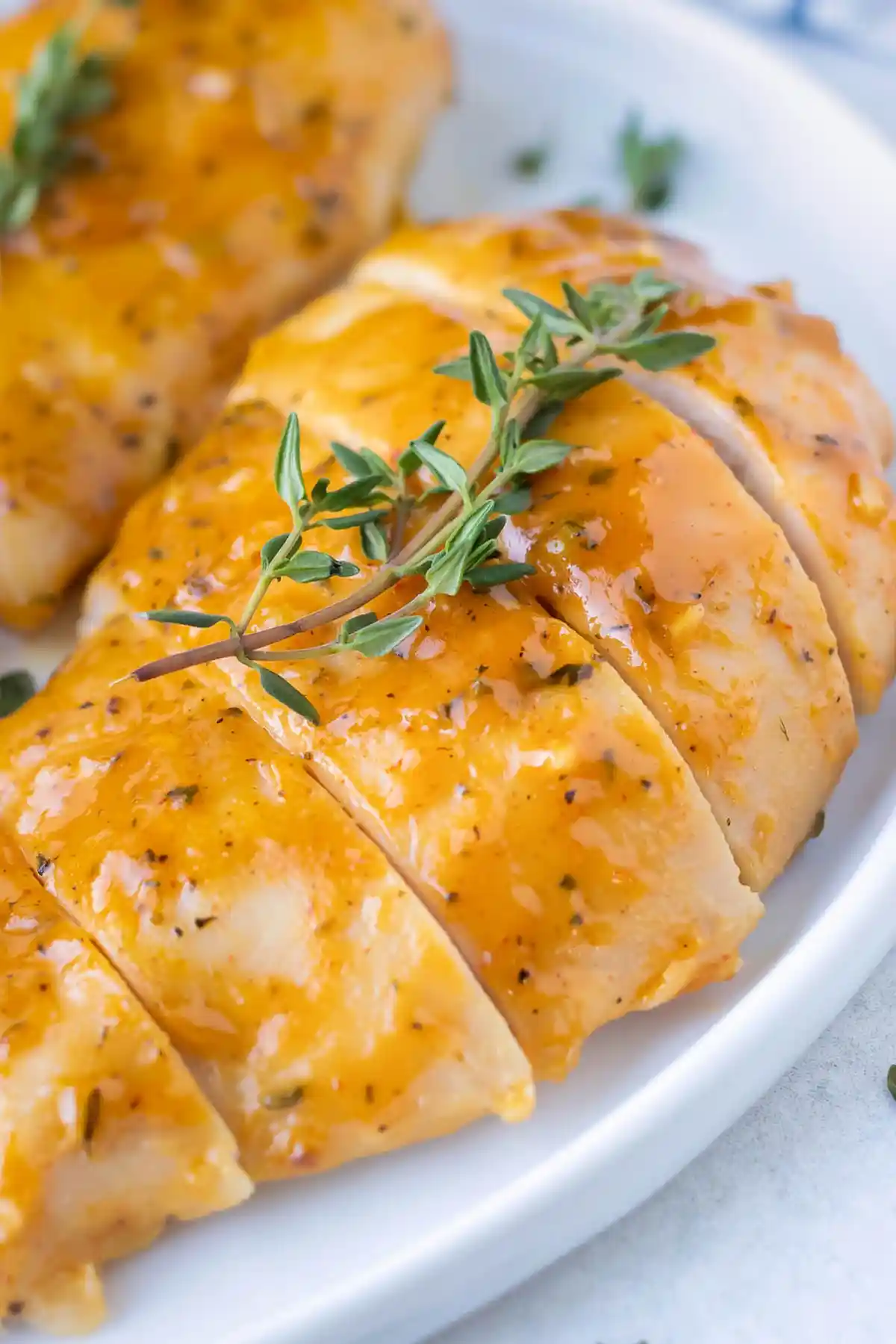
This baked chicken breast recipe combines sweet honey and tangy mustard for a flavorful weeknight meal. It is designed for easy preparation and can be marinated ahead of time for maximum taste.
List of ingredients
- 1 – 1 ¼ pounds chicken breasts (pounded and cut into 4-5 oz. portions) – ensure uniform thickness for even cooking.
- 2 tablespoons Dijon mustard – provides a sharp and tangy flavor base.
- 2 tablespoons honey – balances the acidity of the mustard with natural sweetness.
- 2 tablespoons olive oil – keeps the meat moist during the baking process.
- ½ teaspoon Worcestershire sauce – adds a layer of savory umami depth.
- ¾ teaspoon fresh thyme (finely chopped) – provides an earthy, aromatic herbal note.
- 1 clove garlic (crushed) – adds a pungent, savory element to the marinade.
- ½ teaspoon salt – enhances all the individual flavors in the sauce.
- ⅛ teaspoon black pepper – provides a mild, warm spice.
- ⅛ teaspoon paprika – contributes a subtle smokiness and golden color.
step-by-step instructions
- Preheat Oven: Set your oven to 375 degrees to ensure it is fully heated before the chicken goes in.
- Prepare Chicken: Use a meat mallet to pound the chicken breasts to a 1-inch thickness and cut them into portions weighing 4-5 ounces each.
- Mix Sauce: In a large mixing bowl, whisk together the Dijon mustard, honey, olive oil, Worcestershire sauce, thyme, garlic, salt, pepper, and paprika until the mixture is smooth.
- Save Garnish: Carefully reserve 2 tablespoons of the honey mustard sauce to use as a final glaze after baking.
- Coat Meat: Place the chicken portions into the bowl with the marinade and toss them until every piece is well coated.
- Marinate: Refrigerate the coated chicken for at least 20 minutes, or leave it overnight in a gallon-sized Ziploc bag for deeper flavor penetration.
- Arrange in Dish: Lightly coat a 9-inch square baking dish with non-stick cooking spray and place the chicken breasts inside.
- Bake: Cook in the preheated oven for 20-25 minutes until the internal temperature reaches 160 degrees.
- Glaze and Rest: Remove the dish from the oven and brush the reserved honey mustard sauce over the chicken; let it rest so the internal temperature reaches 165 degrees.
- Serve: Garnish each breast with a fresh sprig of thyme before serving.
Sauce Customization and Alternatives
Using Spicy Brown Mustard for More Heat
If you prefer a bolder flavor, replace the Dijon mustard with spicy brown mustard. This substitution provides a more pungent kick that cuts through the sweetness of the honey. The overall texture remains similar, ensuring the sauce adheres well to the meat.
Substituting Maple Syrup for Honey
Maple syrup is a great alternative for those who want a different kind of sweetness. It adds a distinct woody and caramel-like flavor to the glaze. Keep the ratio 1:1 with the mustard to maintain the correct sauce consistency.
Using Dried Thyme Instead of Fresh
When fresh thyme is unavailable, you can use dried thyme as a substitute. Use ¼ teaspoon of dried thyme to replace the ¾ teaspoon of fresh herbs. Dried herbs are more concentrated, so a smaller amount is required for the same effect.
Replacing Fresh Garlic with Garlic Powder
Garlic powder is a convenient substitute for crushed fresh garlic. Use about ¼ teaspoon of powder to achieve a similar savory profile. This option is particularly useful for those who prefer a more uniform sauce texture without small garlic bits.
Chicken Preparation Techniques
The Importance of Pounding Chicken Breasts
Pounding chicken to a uniform 1-inch thickness ensures that every piece cooks at the same rate. Without this step, the thinner end of the breast often overcooks and dries out before the thickest part is safe to eat. A meat mallet or rolling pin is ideal for this process.
Working with Chicken Tenders
Chicken tenders are a great alternative to full breasts and typically do not require pounding. Because they are naturally smaller, you may need to reduce the baking time by 5-10 minutes. Check the internal temperature frequently to avoid overcooking.
Adjusting for Boneless Skinless Thighs
Chicken thighs are more forgiving and stay juicier than breasts due to their higher fat content. If using thighs, expect a slightly longer cooking time in the oven. Ensure they reach the safe internal temperature of 165 degrees before removing them from the heat.
Tips for Slicing Uniform Portions
When cutting breasts into 4-5 ounce portions, try to keep the shapes consistent. Uniform sizes lead to consistent cooking times across the entire baking dish. Using a sharp chef’s knife allows for clean cuts without tearing the meat.
Temperature and Cooking Guidelines
Using a Digital Meat Thermometer
A digital thermometer is the only way to guarantee the chicken is cooked perfectly. Insert the probe into the thickest part of the breast to get an accurate reading. This removes the guesswork and prevents the meat from becoming rubbery.
Understanding Carry-Over Cooking
Carry-over cooking occurs when the internal temperature of the meat continues to rise after it is removed from the heat source. By pulling the chicken at 160 degrees, the resting period allows it to reach 165 degrees naturally. This method preserves the juices inside the meat.
Preventing Overcooked Meat
Avoid leaving the chicken in the oven beyond the 25-minute mark if the breasts are small. Overcooked chicken loses its moisture and becomes tough. If you are unsure, check the temperature starting at 20 minutes.
Ensuring Accurate Oven Calibration
Ovens can often fluctuate in temperature, which affects baking times. Using an oven thermometer ensures that your oven is actually at 375 degrees. Proper calibration prevents the exterior of the chicken from burning while the center remains raw.
Serving and Pairing Ideas
Pairing with Roasted Root Vegetables
Roasted carrots, parsnips, and sweet potatoes complement the honey mustard glaze perfectly. Toss them in olive oil and salt, then roast them on a separate sheet pan at the same temperature. The sweetness of the vegetables echoes the honey in the chicken.
Serving with Steamed Grains
Quinoa, brown rice, or farro serve as excellent bases for the honey mustard sauce. The grains absorb the extra glaze from the baking dish, adding flavor to the side of the plate. Steaming them just before serving keeps the meal fresh.
Adding a Fresh Green Salad
A crisp garden salad with a light lemon vinaigrette provides a refreshing contrast to the rich sauce. Use mixed greens, cucumber, and radishes to add a crunch to the meal. The acidity of the dressing helps balance the sweetness of the honey.
Complementing with Sautéed Greens
Sautéed spinach or kale with a hint of garlic is a nutrient-dense pairing. The bitterness of the greens cuts through the tanginess of the Dijon mustard. Cook them quickly in a pan with olive oil for a vibrant side dish.
Storage and Preservation
Refrigerating Leftovers Safely
Place leftover chicken in an airtight container once it has cooled to room temperature. Store it in the main body of the refrigerator, avoiding the door where temperatures fluctuate. This keeps the meat safe and the sauce from drying out.
Freezing Cooked Chicken
Cooked honey mustard chicken can be frozen for up to two months for future meals. Wrap the portions tightly in foil or place them in a heavy-duty freezer bag. Squeeze out as much air as possible to prevent freezer burn.
Determining Maximum Storage Duration
Refrigerated chicken is best consumed within 3 to 4 days. Beyond this window, the texture may degrade and the risk of spoilage increases. Always smell the chicken and check for sliminess before reheating.
Avoiding Freezer Burn
To keep the sauce quality high during freezing, use a double-wrap method. Wrap the chicken in plastic wrap first and then place it in a freezer bag. This adds an extra layer of protection against air exposure.
Reheating Methods for Quality
Oven Reheating for Best Texture
Reheating in the oven at 350 degrees is the best way to maintain the meat’s texture. Place the chicken in a baking dish and add a splash of water or broth to the bottom. Cover the dish with foil to trap moisture during the process.
Microwave Reheating for Speed
For a faster option, use the microwave in short 30-second bursts. This prevents the chicken from overheating in one spot while remaining cold in others. Cover the plate with a damp paper towel to keep the meat moist.
Preventing Dryness During Reheating
Chicken breasts dry out easily when reheated because they lack fat. Adding a small amount of butter or extra honey mustard sauce before reheating helps. This reinstates the moisture lost during the initial baking and resting phase.
Refreshing the Glaze
If the sauce has thickened too much in the fridge, brush a tiny bit of fresh honey and mustard on top before reheating. This gives the chicken a glossy, fresh-baked appearance. It also restores the vibrant flavor of the marinade.
Meal Prep and Planning
Preparing the Marinade in Advance
The honey mustard sauce can be whisked together and stored in a jar for up to three days. This saves time on busy weeknights. Simply pour the pre-made sauce over the chicken when you are ready to cook.
Marinating Chicken Overnight
Overnight marination allows the flavors to penetrate deeper into the meat fibers. This results in a more intense taste and a slightly more tender texture. Use a sealed bag to ensure the chicken is fully submerged in the sauce.
Pre-portioning for Weekly Meals
If you are meal prepping for the week, bake several portions at once. Divide the chicken and sides into separate containers immediately after cooling. This makes it easy to grab and go for lunches.
Using Freezer Bags for Marination
Gallon-sized freezer bags are superior to bowls for marinating. They allow you to shake the chicken and sauce together, ensuring total coverage with minimal mess. They also make the transition to the refrigerator seamless.
Troubleshooting Common Issues
Fixing a Sauce That is Too Sweet
If the honey dominates the flavor, add a small pinch of extra salt or a teaspoon of apple cider vinegar. The acidity helps neutralize the sugar and brings back the tang of the mustard. Stir well and taste before applying to the meat.
Managing Unevenly Cooked Chicken
If some pieces are done while others are raw, check your pounding technique. Ensure all pieces are the same thickness before baking. You can also rearrange the chicken in the pan halfway through the cooking time.
Addressing a Thin Glaze
If the sauce is too thin and doesn’t cling to the meat, you can simmer the reserved sauce in a small pan for a few minutes. This reduces the water content and concentrates the honey. Brush the thickened glaze on during the last two minutes of baking.
Solving Dry Meat Texture
Dry chicken is usually a result of overcooking or skipping the resting period. Always use a thermometer to pull the meat at 160 degrees. If the meat is already dry, serve it with extra sauce or a side of creamy mashed potatoes.
Frequently Asked Questions
Can I use chicken thighs instead of breasts?
Yes, boneless skinless thighs are an excellent substitute and generally stay juicier than breasts. You will likely need to increase the baking time by 5 to 10 minutes to ensure they are cooked through.
How do I know when the chicken is done?
The chicken is safely cooked when a meat thermometer reads 160 degrees internally. After removing it from the oven, the temperature will rise to 165 degrees during the resting period.
Can I make this recipe ahead of time?
You can prepare the marinade and marinate the chicken up to 24 hours in advance. However, for the best texture and flavor, it is recommended to bake the chicken fresh right before serving.
How do I store leftover baked honey mustard chicken?
Store leftovers in an airtight container in the refrigerator for up to 3 to 4 days. Ensure the chicken has cooled down before sealing the container to prevent excess moisture buildup.
Does it reheat well?
Yes, it reheats well if you use a gentle method like a low-temperature oven or a covered microwave. Adding a bit of moisture during reheating prevents the breast meat from drying out.
Can I freeze it?
You can freeze cooked chicken for up to 2 months. While the sauce may separate slightly upon reheating, the flavor remains intact. Thaw in the refrigerator overnight before reheating.
Print
Baked Honey Mustard Chicken
- Total Time: 55 minutes
- Yield: 4 servings 1x
- Diet: General
Description
Baked Honey Mustard Chicken is the kind of easy dinner you can count on when you want something flavorful without a lot of work. Tender chicken bakes in a sweet, tangy honey mustard sauce that comes together with simple pantry ingredients.
Ingredients
- 1 – 1 ¼ pounds chicken breasts, pounded and cut into 4–5 oz. portions
- 2 tablespoons Dijon mustard
- 2 tablespoons honey
- 2 tablespoons olive oil
- ½ teaspoon Worcestershire sauce
- ¾ teaspoon fresh thyme, finely chopped
- 1 clove garlic, crushed
- ½ teaspoon salt
- ⅛ teaspoon black pepper
- ⅛ teaspoon paprika
Instructions
- Preheat: Preheat oven to 375 degrees.
- Prepare: Prepare chicken by pounding to 1-inch thick and cutting into 4-5 ounce portions.
- Whisk: Whisk mustard, honey, oil, Worcestershire, thyme, garlic, salt, pepper, and paprika in a large bowl until smooth.
- Reserve: Reserve 2 tablespoons of the honey mustard sauce.
- Coat: Place chicken into the bowl with the sauce. Toss until chicken is well coated.
- Marinate: Marinate chicken in the refrigerator for at least 20 minutes, or up to overnight.
- Place: Place chicken breasts in a 9-inch square baking dish that has been lightly coated with non-stick cooking spray.
- Bake: Bake chicken in preheated oven for 20-25 minutes, or until the internal temperature reaches 160 degrees.
- Brush: Brush chicken with reserved honey mustard sauce.
- Serve: Serve with a sprig of fresh thyme and enjoy.
Notes
Herbs: You can also use ¼ teaspoon of dried thyme. Mustard: Yellow mustard or spicy brown mustard can be substituted for an added kick. Chicken: Using a meat mallet, pound your chicken breasts until they reach about 1-inch thick. Marinade: Reserve a couple tablespoons of the marinade before adding the meat to top the chicken after cooking.
- Prep Time: 10 minutes
- Cook Time: 25 minutes
- Category: Dinner
- Method: Baking
- Cuisine: American
Nutrition
- Serving Size: 1 serving
- Calories: 225 kcal
- Sugar: 6 g
- Sodium: 461 mg
- Fat: 11 g
- Saturated Fat: 2 g
- Unsaturated Fat: 9 g
- Trans Fat: 0 g
- Carbohydrates: 7 g
- Fiber: 1 g
- Protein: 25 g
- Cholesterol: 73 mg