This creamy salmon and asparagus pasta features a zesty lemon garlic sauce that balances rich cream with fresh vegetables. It is a cohesive meal that can be prepared in approximately 30 minutes, making it ideal for a quick dinner. 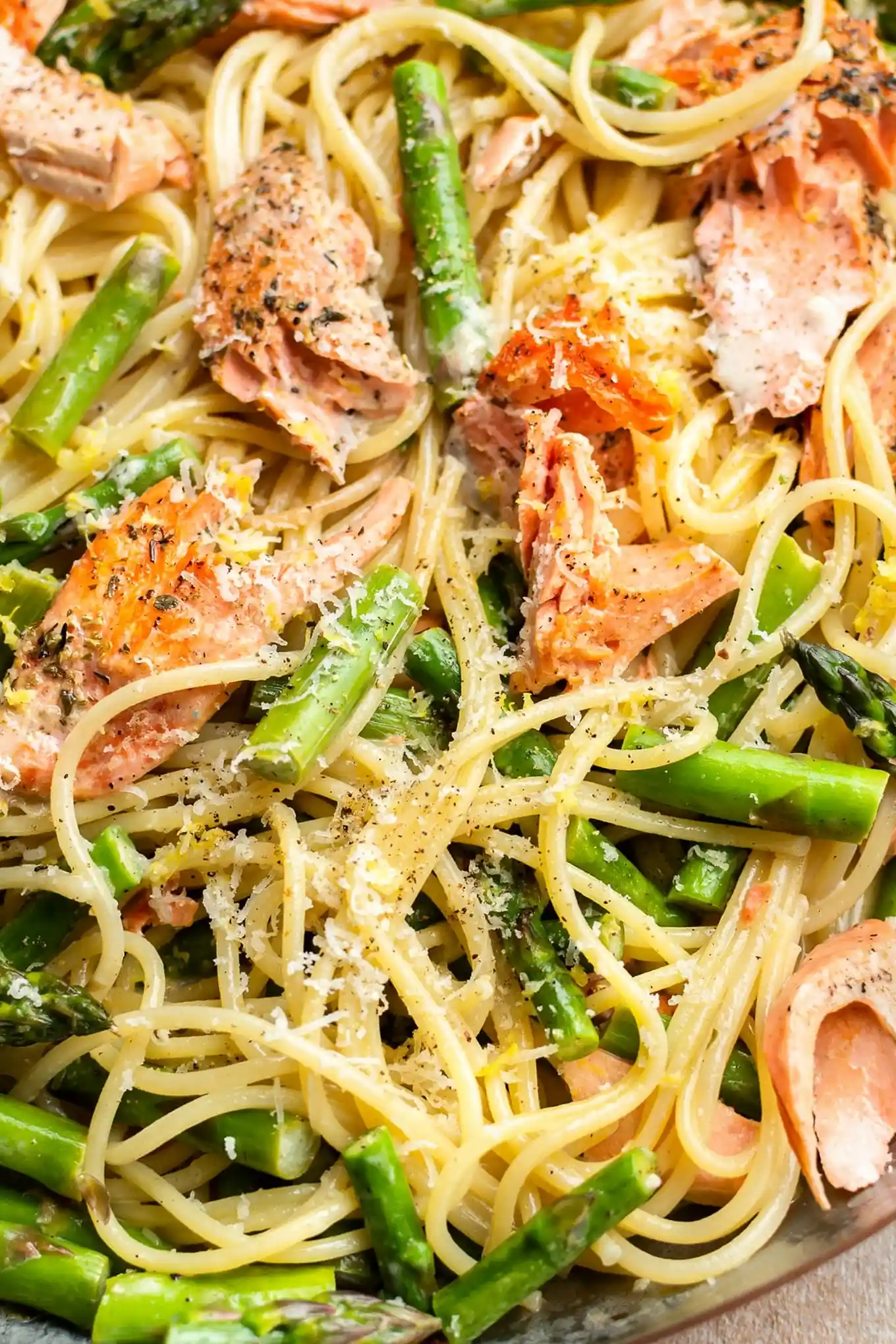
List of ingredients
- 8 ounces uncooked pasta – any shape works, though spaghetti or penne are common.
- 1 bunch asparagus – ends trimmed and cut into pieces.
- 1 pound fresh salmon – cut into portions and seasoned.
- Salt & pepper – added to taste for seasoning.
- 1/4 teaspoon Italian seasoning – adds a herbal depth to the fish.
- 1 tablespoon olive oil – used for searing the salmon.
- 1 tablespoon butter – adds richness to the sauté.
- 3 cloves garlic – minced finely.
- 1 tablespoon lemon juice + zest from 1/2 lemon – provides essential acidity.
- 1/2 cup freshly grated parmesan cheese – for a salty, nutty flavor.
- 3/4 cup heavy/whipping cream – the base for the creamy sauce.
step-by-step instructions
- Boil Pasta: Start by boiling a pot of salted water. Cook the pasta al dente according to the specific package directions.
- Prepare Ingredients: Trim about 1.5 inches off the ends of the asparagus and cut the spears into smaller pieces. Season the salmon fillets with salt, pepper, and Italian seasoning.
- Sear Salmon: Heat the butter and olive oil in a skillet over medium-high heat. Cook the salmon for 3 minutes per side, then remove it from the pan and set it aside.
- Sauté Asparagus: Add the asparagus pieces to the same skillet. Cook for 2-3 minutes, depending on the thickness of the spears and your preference for softness.
- Add Garlic: Stir in the minced garlic and cook for approximately 30 seconds until fragrant.
- Create Sauce: Pour in the lemon juice, lemon zest, heavy cream, and parmesan cheese. Stir well to combine the ingredients.
- Finish Salmon: Return the seared salmon to the pan and use a spoon to break it into smaller chunks. Simmer for a few more minutes until the salmon is fully cooked and the sauce has reduced slightly.
- Combine: Toss the drained pasta into the sauce and serve immediately.
Professional Cooking Tips
Ensuring a Perfect Sear on Salmon
Use a high-smoke point oil alongside butter to prevent burning. Avoid moving the fish too early in the pan to allow a golden crust to form, which locks in moisture and enhances flavor.
Choosing the Right Pasta Shape
While spaghetti is a classic choice, shapes like fusilli, penne, or farfalle have more surface area. These ridges and curves hold the cream sauce more effectively, ensuring every bite is flavorful.
Trimming Asparagus Precisely
To find the exact point where the woody end ends, use the snap method. Hold a spear and bend it gently until it breaks naturally, then trim the rest of the bunch at that same length.
Fresh Lemon Zest for Brightness
Always use fresh zest rather than pre-packaged alternatives. The essential oils in the lemon skin provide a punchy citrus aroma that cuts through the heaviness of the cream and cheese.
The Benefit of Freshly Grated Parmesan
Avoid pre-shredded cheeses which often contain cellulose to prevent clumping. Freshly grated parmesan melts more smoothly into the sauce without becoming grainy or clumped.
Ingredient Substitutions
Replacing Salmon with Other Seafood
Shrimp or scallops can be used as a protein alternative. Sauté them quickly for 2 minutes per side and add them back to the sauce at the very end to prevent overcooking.
Using Frozen Peas as an Asparagus Alternative
If asparagus is unavailable, frozen peas offer a similar color and sweetness. Stir them into the cream sauce during the final simmering stage until they are heated through.
Coconut Cream for Dairy-Free Needs
Full-fat canned coconut milk can be used to replace heavy cream for a dairy-free version. Note that this will introduce a subtle coconut flavor to the overall dish.
Using Pecorino Romano for Sharper Flavor
Pecorino is a saltier, sharper alternative to Parmesan cheese. If you make this swap, reduce the amount of added salt in the recipe to maintain a balanced flavor profile.
Adding Baby Spinach for Extra Nutrition
Stir in a handful of fresh baby spinach just before adding the pasta to the pan. The residual heat from the sauce will wilt the leaves perfectly without overcooking them.
Serving and Pairing Suggestions
Pairing with a Crisp Side Salad
A light arugula or spinach salad with a lemon-olive oil vinaigrette complements this meal. The acidity of the salad provides a fresh contrast to the rich, creamy pasta sauce.
Toasting Pine Nuts for Added Texture
Lightly toast pine nuts in a dry pan over medium heat until golden brown. Sprinkle them over the finished pasta to add a nutty crunch and a professional visual touch.
Using Fresh Parsley for Garnish
Finely chopped Italian flat-leaf parsley adds a pop of vibrant green to the plate. It also provides a clean, peppery finish that brightens the heavy cream and garlic notes.
Storage and Reheating Guide
Storing Leftovers Safely
Keep the remaining pasta in an airtight container in the refrigerator for up to two days. Allow the dish to cool slightly before sealing to prevent excess condensation from making the pasta mushy.
Reheating with Added Liquid
Cream sauces naturally thicken and absorb liquid during refrigeration. Add a tablespoon of water, milk, or cream when reheating on the stove to restore the original silky consistency.
Preventing Sauce Separation
Reheat the pasta over low to medium heat and stir constantly. Avoiding high heat prevents the fats in the cream and cheese from separating, which keeps the sauce smooth.
Make-Ahead Strategies
Prepping Vegetables in Advance
You can trim and cut the asparagus several hours before you plan to cook. Store them in a sealed container with a damp paper towel to keep the spears crisp and fresh.
Parboiling Pasta for Later Use
Cook the pasta slightly under the al dente stage and toss it with a drizzle of olive oil. This prevents the noodles from sticking together and prevents overcooking when finally combined with the sauce.
Troubleshooting the Recipe
Managing Sauce Curdling
To prevent the cream from curdling, add the lemon juice and zest slowly while stirring. This gradual introduction of acid helps the dairy proteins remain stable under heat.
Adjusting for Thick Asparagus
Thicker asparagus spears require an additional minute of sautéing to reach the proper texture. Ensure they are tender-crisp before adding the garlic to prevent the garlic from burning.
Thinning an Overly Thick Sauce
If the sauce reduces too much during the simmering process, stir in a small amount of reserved pasta water. The starch in the water helps emulsify and loosen the sauce effectively.
Thickening a Sauce That is Too Thin
Simmer the sauce for an additional 2 to 3 minutes without a lid. The evaporation process concentrates the cream and cheese, resulting in a thicker, more cohesive consistency.
Frequently Asked Questions
Can I use frozen salmon?
Yes, frozen salmon works well as long as it is completely thawed. Pat the fillets dry with paper towels before seasoning to ensure they sear properly rather than steaming in the pan.
Is heavy cream mandatory?
Heavy cream is highly recommended for stability and the desired texture. Substitutes like milk or half-and-half are more likely to curdle when they react with the lemon juice.
How do I avoid overcooking the salmon?
Remove the salmon from the pan while it is still slightly underdone in the center. It will finish cooking through perfectly when it is returned to the simmering sauce at the end.
What if I do not have Italian seasoning?
You can create a quick substitute by mixing dried oregano, basil, and a pinch of thyme. Use equal parts of these herbs to achieve a similar flavor profile for the salmon.
Print
Creamy Salmon and Asparagus Pasta
- Total Time: 30 minutes
- Yield: 4 servings 1x
- Diet: General
Description
This salmon and asparagus pasta is simple to make, and you will love the lemony garlic cream sauce. Ready in about 30 minutes!
Ingredients
- 8 ounces uncooked pasta
- 1 bunch asparagus (ends trimmed)
- 1 pound fresh salmon
- Salt & pepper to taste
- 1/4 teaspoon Italian seasoning
- 1 tablespoon olive oil
- 1 tablespoon butter
- 3 cloves garlic (minced)
- 1 tablespoon lemon juice + zest from 1/2 lemon
- 1/2 cup freshly grated parmesan cheese
- 3/4 cup heavy/whipping cream
Instructions
- Step 1: Boil a salted pot of water for your pasta. Cook it al dente according to package directions.
- Step 2: Trim asparagus and cut into smaller pieces. Sprinkle the salmon with salt, pepper, and Italian seasoning.
- Step 3: Heat butter and oil in a skillet over medium-high heat. Cook salmon for 3 minutes per side, then remove and set aside.
- Step 4: Add asparagus to the skillet and cook for 2-3 minutes.
- Step 5: Stir in garlic and cook for 30 seconds.
- Step 6: Add lemon juice, zest, cream, and parmesan. Stir and add salmon back, breaking it into smaller pieces. Cook until salmon is done and sauce reduces.
- Step 7: Toss the sauce with the drained pasta and serve immediately.
Notes
Use a bunch of asparagus around 1 pound; adjust cooking time based on the thickness of the spears.
- Prep Time: 10 minutes
- Cook Time: 20 minutes
- Category: Main Course
- Method: Stovetop
- Cuisine: American
Nutrition
- Serving Size: 1 serving
- Calories: 657 kcal
- Sugar: 3 g
- Sodium: 289 mg
- Fat: 35 g
- Saturated Fat: 16 g
- Unsaturated Fat: 19 g
- Trans Fat: 0 g
- Carbohydrates: 48 g
- Fiber: 4 g
- Protein: 38 g
- Cholesterol: 142 mg