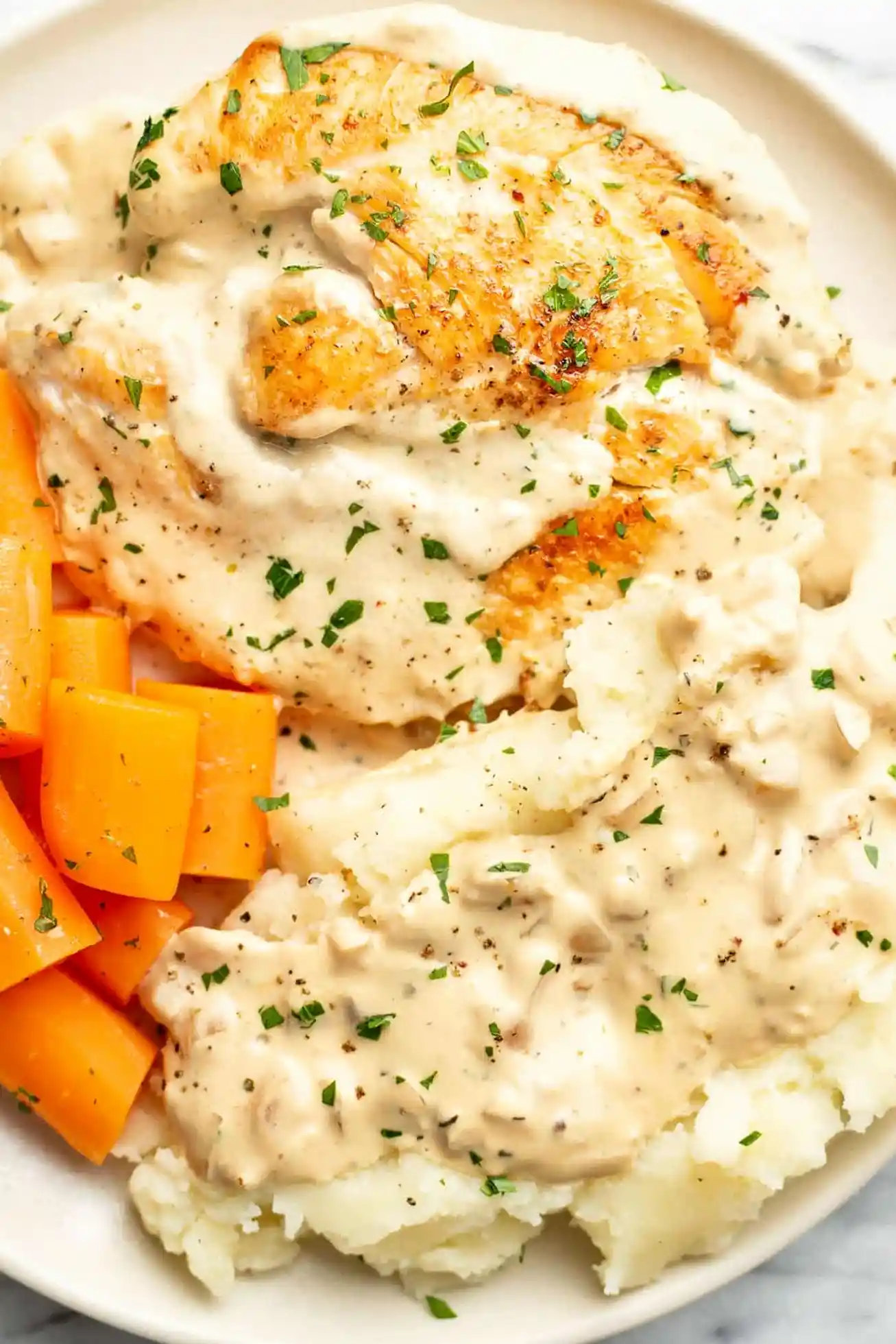
Prepare a rich and satisfying dinner in just 30 minutes with this simple creamy chicken dish. This recipe transforms basic pantry staples into a luxurious garlic herb sauce that pairs perfectly with various sides.
List of ingredients
- 8 ounces cream cheese, softened – use a standard block for the best consistency.
- 2 large chicken breasts – boneless and skinless.
- 1/2 teaspoon garlic powder – adds a concentrated savory base to the meat.
- Salt and pepper – adjust to your taste preferences.
- 1 tablespoon butter – provides richness and helps with browning.
- 1 tablespoon olive oil – prevents the butter from burning at high heat.
- 1/2 medium onion, chopped – provides aromatic sweetness to the sauce.
- 3 cloves garlic, minced – fresh garlic adds a pungent, savory depth.
- 3/4 cup chicken broth – the liquid base that thins the cream cheese.
- 1/2 teaspoon Italian seasoning – a blend of dried herbs for a classic flavor.
- 1/4 teaspoon crushed red pepper flakes – adds a subtle warmth without being overly spicy.
- Fresh chopped parsley, optional – used for a fresh garnish and color.
step-by-step instructions
- Prepare the cheese: Microwave the cream cheese until it is very soft. Cut it into smaller pieces to ensure it melts evenly into the sauce later.
- Prep the chicken: Cut the chicken breasts in half lengthwise to create four thinner cutlets. Season both sides with garlic powder, salt, and pepper.
- Sear the meat: Melt butter and olive oil in a skillet over medium-high heat. Once the pan is hot, cook chicken for 5-6 minutes per side until golden and the internal temperature reaches 165F. Transfer chicken to a plate.
- Sauté aromatics: Lower the heat to medium. Add the chopped onions and sauté for 5-7 minutes until they are softened and lightly browned.
- Add garlic: Stir in the minced garlic and cook for only 30 seconds to avoid burning.
- Create the sauce: Pour in the chicken broth and add the softened cream cheese, Italian seasoning, and red pepper flakes. Stir continuously for a few minutes until the sauce is completely smooth.
- Combine and serve: Return the chicken to the skillet and warm through. If the sauce is too thick, stir in a splash more chicken broth. Season with extra salt or pepper if needed, sprinkle with parsley, and serve immediately.
Optimal Cooking Techniques
Ensuring Cream Cheese is Properly Softened
Cold cream cheese tends to clump when added to hot liquids, which can result in a grainy sauce. Microwaving the block for 15 to 30 seconds makes it pliable and allows it to melt quickly. Alternatively, you can let it sit at room temperature for an hour before starting the recipe.
Using a Meat Thermometer for Precision
Chicken breasts can dry out quickly if overcooked by even a few degrees. Using an instant-read thermometer ensures the meat hits exactly 165F. Probe the thickest part of the breast to confirm it is safe to eat while remaining juicy.
Achieving the Perfect Golden Sear
To get a professional brown crust, pat the chicken dry with paper towels before seasoning. This removes surface moisture that would otherwise steam the meat instead of searing it. Ensure the oil and butter are shimmering before adding the chicken to the pan.
Managing Pan Temperature to Avoid Burning Garlic
Garlic has a much lower burn point than onions. Always add the minced garlic after the onions have already softened. Cooking the garlic for only 30 seconds provides the aroma without the bitter taste of burnt cloves.
Ingredient Substitutions
Switching to Chicken Thighs for More Moisture
If you prefer a richer taste and more tender meat, use boneless skinless chicken thighs. Thighs are more forgiving and less likely to dry out than breasts. Note that they may require an extra 2-3 minutes of cooking time per side.
Replacing the Cream Cheese
For a different profile, you can substitute the cream cheese with a mixture of heavy cream and a small amount of cornstarch. While the tanginess of the cream cheese will be lost, you will still achieve a thick, velvety sauce. Mascarpone is another excellent substitute for a milder, creamier result.
Substituting Chicken Broth with Vegetable Stock
If you do not have chicken broth on hand, vegetable stock is a suitable alternative. It provides the necessary liquid to emulsify the sauce without significantly altering the taste. Ensure the stock is low-sodium to maintain control over the seasoning.
Replacing Wine with Lemon and Broth
Some variations suggest white wine for acidity, but you can achieve the same effect using extra chicken broth and a squeeze of fresh lemon juice. Add the lemon juice at the very end of the cooking process to keep the flavor bright. This provides the necessary tang to cut through the richness of the cheese.
Flavor Variations
Incorporating Smoked Paprika for Depth
Add a half teaspoon of smoked paprika to the chicken seasoning or the sauce for a woody, smoky flavor. This pairs exceptionally well with the cream cheese and gives the dish a slightly deeper color. It transforms the meal into something reminiscent of a campfire-style dish.
Adding Fresh Spinach for Color and Nutrients
Stir in two cups of fresh baby spinach right after the sauce has smoothed out. The heat from the sauce will wilt the spinach in about one minute. This adds a pop of green and a boost of vitamins to the meal.
Using Different Herb Blends
While Italian seasoning is a great all-in-one option, you can customize the flavor. Try a mix of dried thyme, rosemary, and oregano for a more earthy taste. For a French-inspired version, use herbes de Provence.
Adding Sliced Mushrooms for Texture
Sauté sliced cremini or button mushrooms along with the onions. The mushrooms absorb the garlic and butter, adding a meaty texture to the sauce. Cook them until the moisture has evaporated and they have turned golden brown.
Serving and Pairing Suggestions
Serving Over Creamy Mashed Potatoes
Mashed potatoes are the ideal companion because they soak up the extra garlic sauce. For the best results, boil peeled Yukon Gold potatoes and mash them with butter and a splash of milk. Create a well in the potatoes to hold the chicken and sauce.
Pairing with Fluffy White or Brown Rice
Rice provides a neutral base that allows the herb flavors of the sauce to shine. Rinse your basmati or jasmine rice thoroughly before cooking to remove excess starch. This ensures the grains remain separate and fluffy.
Combining with Buttered Noodles or Pasta
Wide noodles like pappardelle or fettuccine work best with this thick sauce. Toss the cooked pasta in butter and parsley before topping it with the chicken. The creamy sauce clings to the pasta for a hearty, comforting meal.
Adding Steamed Broccolini or Roasted Carrots
Balance the richness of the cream cheese with a bright, crisp vegetable. Steamed broccolini with a squeeze of lemon or maple-roasted carrots adds a necessary sweetness and acidity. These sides prevent the meal from feeling too heavy.
Storage and Meal Prep
Safe Refrigeration Guidelines
Store leftover chicken and sauce in an airtight container in the refrigerator. The dish will remain fresh for 3 to 4 days. Ensure the container is fully sealed to prevent the sauce from absorbing other fridge odors.
The Best Method for Reheating Creamy Sauces
Avoid the microwave if possible, as it can cause the cream cheese sauce to split or become oily. Instead, reheat the chicken in a saucepan over low heat. Add a tablespoon of water or broth to loosen the sauce as it warms through.
Why Freezing is Not Recommended
Cream-based sauces often change texture when frozen and thawed, often becoming grainy or separating. While the chicken itself freezes well, the emulsion of the cream cheese may not recover its smoothness. It is best to enjoy this dish fresh or refrigerated.
Make-Ahead Preparation Tips
You can prep the vegetables and season the chicken a day in advance. Store the chopped onions and minced garlic in separate containers. Keep the seasoned chicken in a sealed bag in the fridge to allow the flavors to penetrate the meat.
Common Cooking Challenges
Fixing a Sauce That Is Too Thick
If the sauce becomes too heavy or paste-like, add chicken broth one tablespoon at a time. Stir constantly over low heat until the desired consistency is reached. This allows you to thin the sauce without diluting the savory flavor.
Correcting a Thin or Runny Sauce
If the sauce is too thin, let it simmer for a few more minutes without a lid to allow the liquid to reduce. Alternatively, you can whisk in a small pinch of cornstarch mixed with cold water. Be careful not to over-reduce, or the sauce may become too salty.
Preventing Cream Cheese from Clumping
Clumping usually happens if the cheese is added while too cold or if the heat is too high. Always use softened cheese and stir vigorously as you incorporate it into the broth. If clumps persist, use a whisk to blend the sauce more effectively.
Avoiding Overcooked Chicken Breasts
If the chicken feels rubbery, it was likely cooked too long at too high a temperature. To prevent this, always remove the chicken from the pan as soon as it hits 165F. Let the meat rest for 5 minutes before adding it back to the sauce.
Frequently Asked Questions
Which brand of cream cheese works best?
Standard full-fat cream cheese brands like Philadelphia provide the most consistent melting point and creaminess. Low-fat versions can sometimes separate or fail to thicken the sauce properly.
Can this recipe be made with frozen chicken?
Yes, but the chicken must be completely thawed in the refrigerator before cooking. Cooking frozen chicken leads to uneven heat distribution and releases excess water, which prevents the meat from searing.
How long does the sauce stay fresh?
The sauce stays fresh for up to 4 days when stored in an airtight container. Because it contains dairy, it should be kept at a consistent cold temperature of 40F or below.
Can I reduce the fat content?
You can use light cream cheese or substitute some of the butter with olive oil. However, be aware that this will slightly change the richness and the thickness of the final sauce.
Print
Creamy Garlic Herb Chicken with Cream Cheese
- Total Time: 30 minutes
- Yield: 4 servings 1x
- Diet: General
Description
This easy cream cheese chicken is a 30-minute meal made with pantry staples! Transform a block of cream cheese into the best creamy garlic herb sauce.
Ingredients
- 8 ounces cream cheese (softened)
- 2 large chicken breasts
- 1/2 teaspoon garlic powder
- Salt & pepper (to taste)
- 1 tablespoon butter
- 1 tablespoon olive oil
- 1/2 medium onion (chopped)
- 3 cloves garlic (minced)
- 3/4 cup chicken broth
- 1/2 teaspoon Italian seasoning
- 1/4 teaspoon crushed red pepper flakes
- Fresh chopped parsley (optional, to taste)
Instructions
- Step: Microwave the cream cheese until very soft. Cut it into smaller pieces and set aside until needed.
- Step: Cut the chicken breasts in half lengthwise so you have 4 thinner pieces. Season them with the garlic powder and some salt & pepper.
- Step: Melt the butter and oil in a skillet over medium-high heat. When the pan is hot, add the chicken and cook for about 5-6 minutes/side or until golden and cooked through (165F). Transfer the chicken to a plate.
- Step: Reduce the heat to medium, then add the onions to the skillet and sauté for 5-7 minutes or until softened and lightly browned.
- Step: Stir in the garlic and cook for 30 seconds.
- Step: Add in the chicken broth, cream cheese, Italian seasoning, and crushed red pepper flakes. Stir until the sauce is smooth (this may take a few minutes).
- Step: Add the chicken back to the skillet and warm through. If you need to thin the sauce, add a splash more chicken broth. Season with extra salt & pepper if needed, sprinkle with parsley if desired, and serve immediately.
Notes
The sauce is meant to be fairly thick, but you can easily thin it out as needed by adding some more chicken broth or water.
- Prep Time: 10 minutes
- Cook Time: 20 minutes
- Category: Main Course
- Method: Pan-frying
- Cuisine: American
Nutrition
- Serving Size: 1 serving
- Calories: 397 kcal
- Sugar: 3 g
- Sodium: 498 mg
- Fat: 29 g
- Saturated Fat: 14 g
- Unsaturated Fat: 11 g
- Trans Fat: 0.1 g
- Carbohydrates: 6 g
- Fiber: 0.5 g
- Protein: 28 g
- Cholesterol: 138 mg