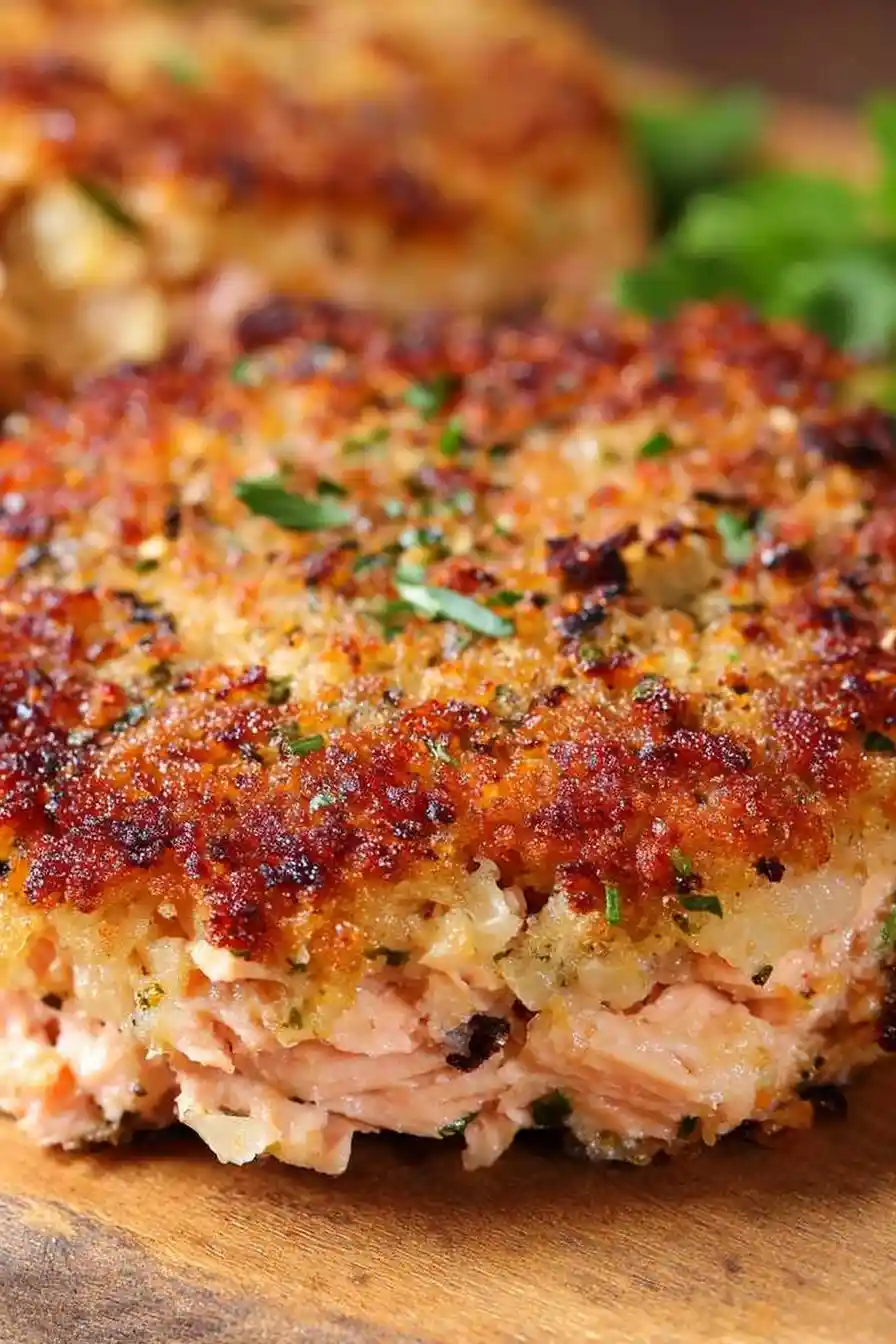
These canned salmon patties provide a fast and protein-rich meal solution using simple pantry staples. They are designed to be crisp on the outside and tender on the inside with minimal preparation time.
List of ingredients
- 14 oz canned salmon – drained and flaked for better texture.
- 2 large eggs – used as the primary binding agent.
- ½ cup bread crumbs – helps absorb moisture and create a crust.
- ¼ cup onion – finely diced to distribute flavor evenly.
- 1 tbsp lemon juice – adds acidity to balance the richness.
- 1 tbsp mayonnaise – provides moisture and creamy texture.
- 1 tsp Dijon mustard – adds a sharp, savory depth.
- Salt and pepper – seasoned to taste for basic flavor enhancement.
- Oil for searing – use a neutral oil with a high smoke point.
step-by-step instructions
- Combine Ingredients: Place the drained salmon in a bowl and mix in the eggs, bread crumbs, onion, lemon juice, mayonnaise, mustard, salt, and pepper until well combined.
- Shape Patties: Divide the mixture into 4 to 6 equal portions and form them into patties approximately ½ inch thick.
- Heat the Pan: Add oil to a skillet over medium heat until the oil shimmers but does not smoke.
- Sear: Place patties in the pan and cook for 4 minutes per side until a golden-brown crust forms.
- Final Touch: Transfer the patties to a paper towel-lined plate to drain excess oil and serve warm with lemon wedges.
Cooking Success Tips
Selecting the Right Canned Salmon
Opt for wild-caught canned salmon to achieve a firmer texture and cleaner taste. If using pink salmon, ensure it is drained thoroughly to prevent the patties from becoming too wet.
The Importance of Proper Drainage
Excess liquid in the canned salmon can dilute the binder and cause the patties to fall apart. Press the salmon firmly against the strainer to remove as much water or oil as possible.
Maintaining the Correct Binding Ratio
The balance between eggs and bread crumbs is critical for structural integrity. If the mixture feels too loose to hold a shape, add bread crumbs one tablespoon at a time until firm.
Achieving an Even Sear
Use a heavy-bottomed nonstick or cast-iron skillet to ensure heat is distributed evenly across the pan. This prevents hot spots that might burn one side of the patty while leaving others undercooked.
Managing the Searing Temperature
Keep the stove at a consistent medium heat throughout the process. High heat will char the exterior before the interior sets, while low heat will cause the patties to absorb too much oil.
Alternative Ingredient Options
Using Almond Flour for Low-Carb Diets
Replace the bread crumbs with an equal amount of almond flour to make the recipe low-carb. Almond flour provides a nutty flavor and maintains a similar binding property.
Substituting Canned Tuna or Mackerel
This same base recipe works effectively with canned tuna or mackerel. Ensure these fish are also well-drained and flaked before mixing with the other ingredients.
Adding Fresh Herb Profiles
Stir in one tablespoon of chopped fresh dill or parsley to add brightness to the salmon. These herbs complement the acidity of the lemon juice and the richness of the fish.
Incorporating Spicy Elements
For a spicy version, add a pinch of cayenne pepper or a few drops of hot sauce to the mixture. This provides a subtle heat that cuts through the creaminess of the mayonnaise.
Creating an Asian-Inspired Flavor
Swap the lemon juice for a tablespoon of soy sauce and add a teaspoon of grated fresh ginger. This variation shifts the flavor profile toward a savory, umami-rich taste.
Serving and Pairing Suggestions
Fresh Leafy Green Salads
Serve the patties alongside a garden salad with a light vinaigrette. The crispness of fresh greens balances the fried texture of the salmon cakes.
Grain-Based Accompaniments
Pair these patties with a side of steamed brown rice or quinoa for a complete meal. The grains absorb any remaining juices and provide lasting energy.
Constructing a Salmon Burger
Place a patty on a toasted whole-grain bun with a slice of tomato and fresh lettuce. This turns the recipe into a hearty sandwich suitable for lunch.
Recommended Dipping Sauces
Serve with a side of tartar sauce or a mixture of Greek yogurt and lemon. These tangy sauces enhance the savory notes of the seared crust.
Storage and Preservation
Refrigerating Leftover Patties
Place cooked patties in an airtight container and store them in the refrigerator for up to three days. Ensure they are cooled completely before sealing to prevent condensation.
Freezing Uncooked Patties
Shape the raw patties and place them on a baking sheet lined with parchment paper to freeze individually. Once frozen, transfer them to a freezer-safe bag for up to two months.
Proper Thawing Techniques
Thaw frozen patties slowly in the refrigerator overnight before cooking. Avoid thawing them at room temperature to maintain the best texture and food safety.
Reheating Methods
Stovetop Reheating for Maximum Crispness
Reheat leftover patties in a skillet over medium heat for 3 to 4 minutes per side. This method restores the golden crust that is lost during refrigeration.
Using the Oven for Large Batches
Arrange patties on a baking sheet and heat at 350°F for about 10 minutes. This is the most efficient way to reheat multiple servings at once without adding more oil.
Avoiding the Microwave
Refrain from using a microwave to reheat salmon patties. The microwave traps steam, which makes the breading soggy and ruins the contrast between the crust and center.
Make-Ahead Strategies
Pre-Shaping for Weeknight Meals
Prepare the mixture and shape the patties up to 24 hours in advance. Store them on a plate covered with plastic wrap to speed up the cooking process on busy evenings.
Preparing Dipping Sauces in Advance
Mix your tartar or yogurt sauce a day early and keep it chilled. Cold sauces provide a refreshing temperature contrast when paired with hot, seared patties.
Common Troubleshooting
Preventing Patties from Falling Apart
Ensure the pan is fully preheated before adding the patties. A hot surface sears the exterior immediately, creating a structural shell that holds the inside together.
Managing Excess Oil During Searing
If the patties appear too greasy, pat them gently with a paper towel immediately after removing them from the pan. This removes surface oil without affecting the flavor.
Adjusting the Texture of the Mix
If the mixture is too dry and crumbly, stir in an extra teaspoon of mayonnaise. If it is too sticky, add a small amount of bread crumbs until it can be shaped easily.
Frequently Asked Questions
Can I use fresh salmon instead of canned?
Yes, you can use fresh salmon by cooking and flaking about one pound of fillet. Once the fresh salmon is cooked and cooled, follow the same mixing and searing steps.
Can I bake them instead of frying?
Yes, place the patties on a parchment-lined sheet and bake at 400°F for 15 to 18 minutes. Flip them halfway through the cooking time to ensure both sides are firm.
Are canned salmon patties healthy?
Canned salmon is high in protein and omega-3 fatty acids, making this a nutritious choice. Using minimal oil and pairing them with vegetables keeps the meal balanced.
Print
Quick and Savory Canned Salmon Patties
- Total Time: 20 minutes
- Yield: 4 servings 1x
- Diet: General
Description
Crisp on the outside and tender on the inside, these canned salmon patties are a quick, high-protein meal prepared in less than 30 minutes using simple pantry staples.
Ingredients
- 14 oz canned salmon, drained and flaked
- 2 large eggs
- ½ cup bread crumbs
- ¼ cup finely diced onion
- 1 tbsp lemon juice
- 1 tbsp mayonnaise
- 1 tsp Dijon mustard
- ½ tsp salt
- ¼ tsp black pepper
- 2 tbsp olive oil for searing
Instructions
- Combine: Combine all ingredients in a bowl and mix well.
- Shape: Form the mixture into 4–6 patties.
- Heat: Heat oil in a skillet over medium heat.
- Sear: Sear patties 4 minutes per side until golden.
- Serve: Drain and serve warm with lemon wedges.
Notes
For the best flavor, use wild-caught canned salmon. If the mixture is too wet, add a bit more bread crumbs. Patties can be refrigerated for up to 24 hours or frozen with parchment paper between them.
- Prep Time: 10 minutes
- Cook Time: 10 minutes
- Category: Main Course
- Method: Pan-Searing
- Cuisine: American
Nutrition
- Serving Size: 1 serving
- Calories: 300 kcal
- Sugar: 3 g
- Sodium: 680 mg
- Fat: 16 g
- Saturated Fat: 4 g
- Unsaturated Fat: 12 g
- Trans Fat: 0 g
- Carbohydrates: 14 g
- Fiber: 1 g
- Protein: 24 g
- Cholesterol: 155 mg